In short
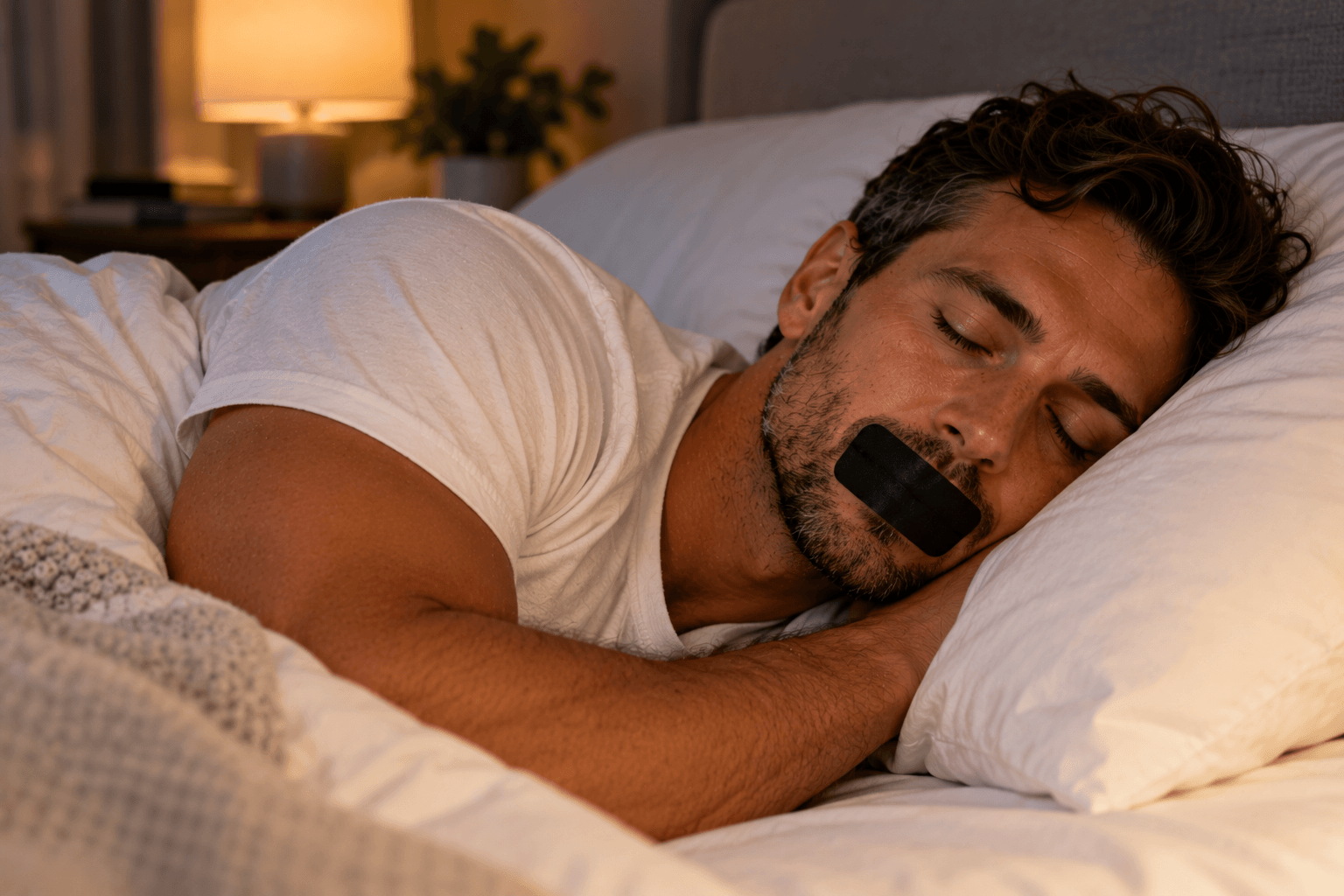
- Mouth tape is a strip of skin-safe tape worn over the lips at night to keep you breathing through your nose while you sleep.
- In a small 2022 study of mouth breathers, 13 of 20 participants cut their snoring index by at least half after a week of taping.
- Nose breathing warms, filters and moistens the air you take in, which is the main reason people want to keep their mouth closed at night.
- The research is still early and the studies are small, so the honest evidence rating is limited.
- It suits adults with a clear nose who sleep with their mouth open. Children and anyone with a blocked nose or signs of sleep apnea should skip it.
- Start slowly with a tape made for skin, practice while you're awake, and stop if it ever makes breathing feel hard.
Mouth tape is one of the simplest sleep tools there is: a small strip of tape that keeps your lips together so you breathe through your nose at night. For people whose mouths fall open as they sleep, early research suggests it can cut snoring. This guide covers what it does, what the studies have found, who it suits and how to get started well.
What is mouth tape and why do people use it?
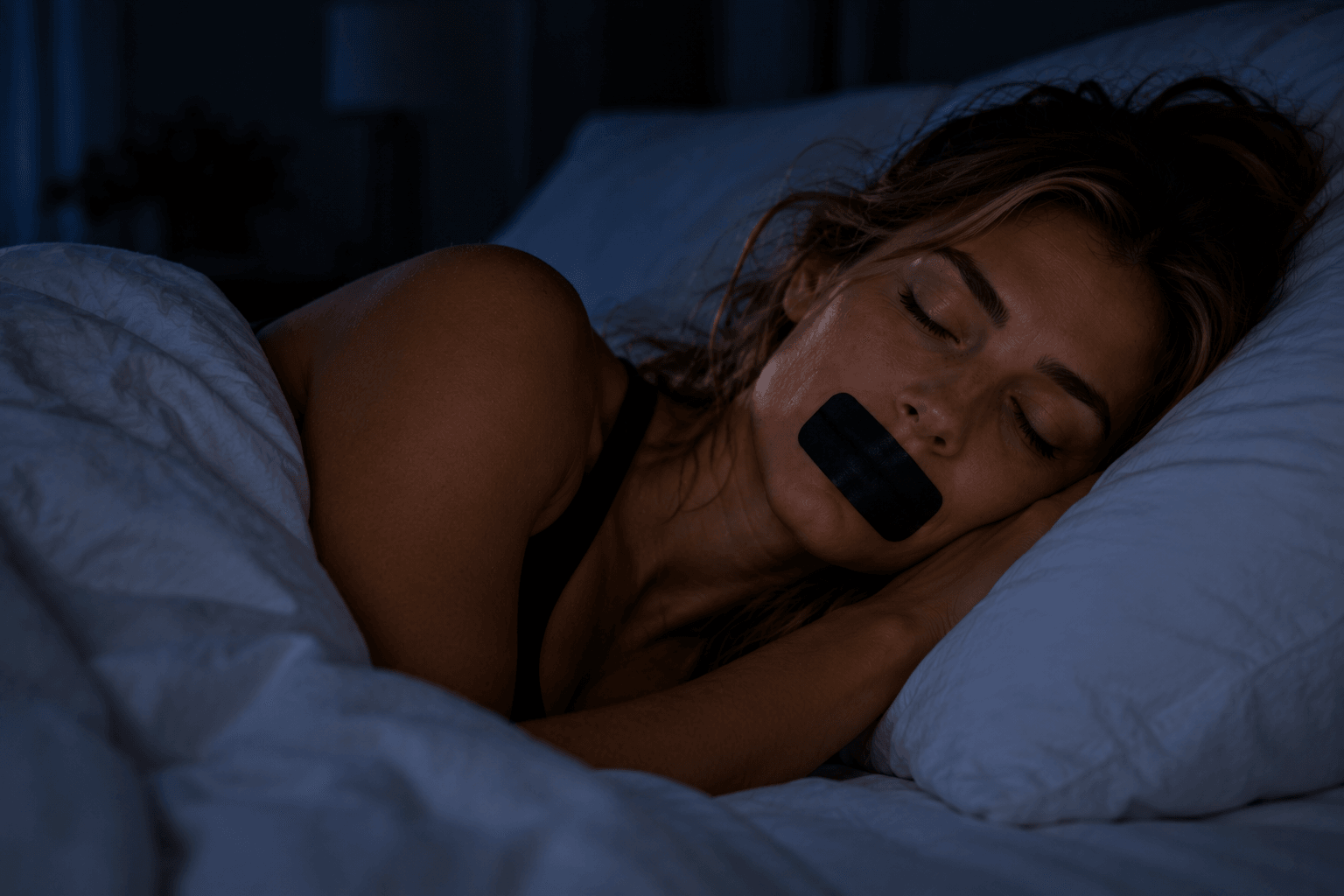
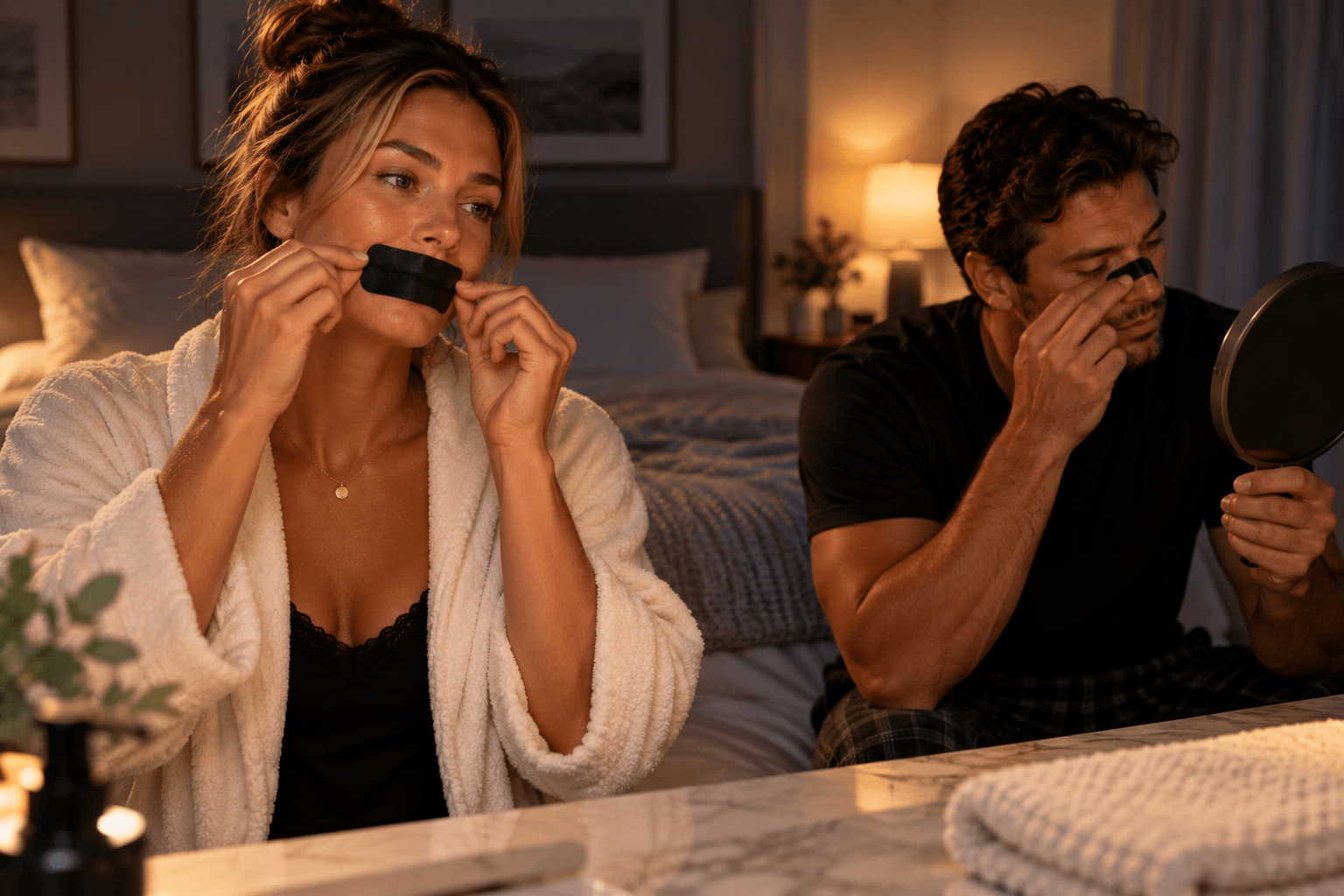
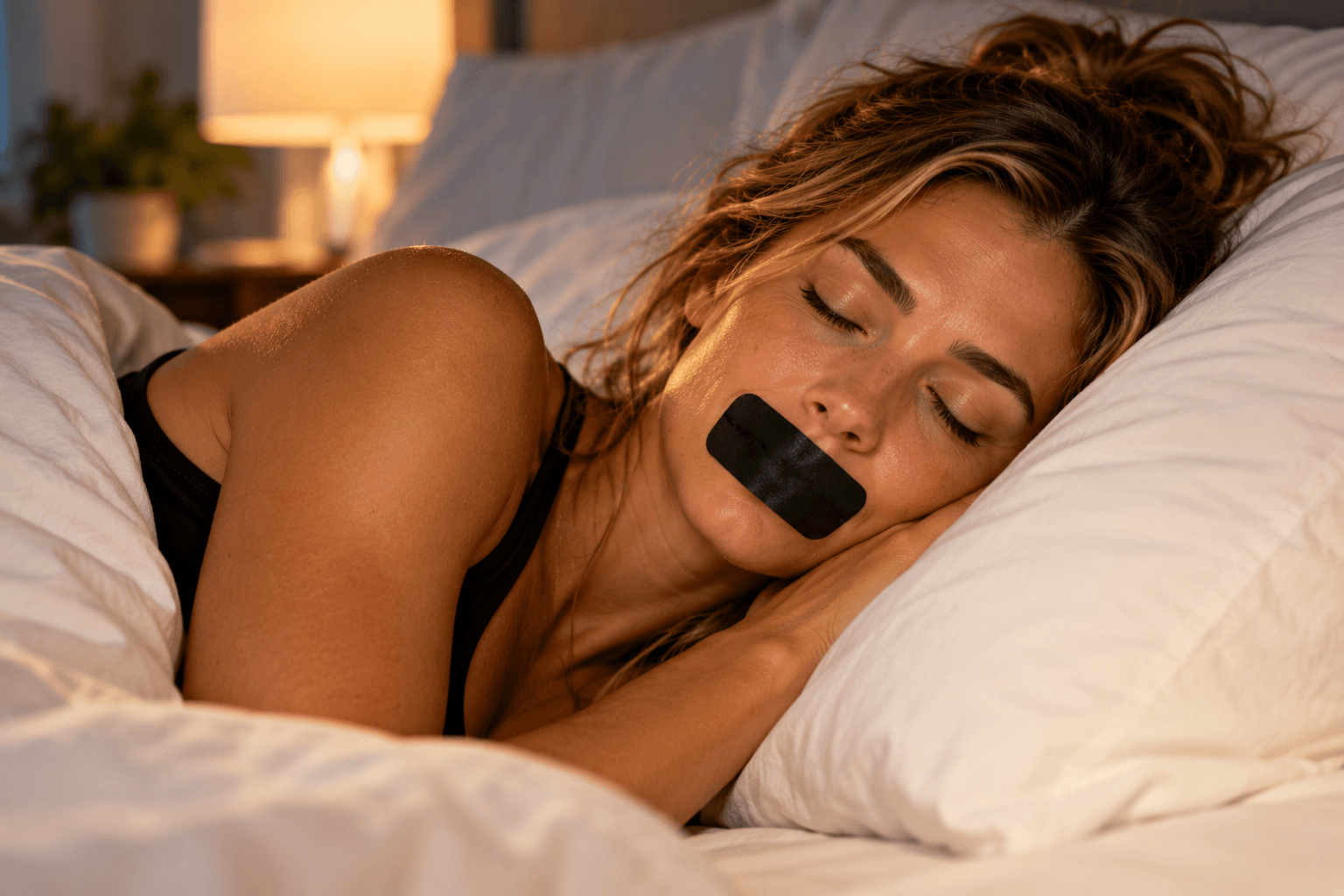
Mouth tape is a soft, skin-safe adhesive strip that you put over your lips before bed. It doesn't seal your mouth like a gag. It's a gentle reminder that holds your lips closed so the easiest way to breathe is through your nose. A common way to wear it is a single strip down the middle of the lips, which leaves the corners free.
People use it for a few different reasons. The most common is snoring, especially the kind that happens when the mouth drops open in deeper sleep. Others want to stop waking up with a parched mouth, or they've read about nose breathing and want to do more of it at night. Sleep Foundation describes the practice as a way to encourage nasal breathing and potentially stop snoring.
If you're brand new to the idea, our beginner's guide to what mouth taping is goes through the basics in more detail.
What happens when you breathe through your mouth at night?
Your nose does work that your mouth can't. A 2009 study in Respiratory Medicine puts it simply: nose breathing makes sure the air you breathe in is warm, filtered and moist. Sleep Foundation adds that nasal breathing helps filter allergens and humidify incoming air.
When you breathe through your mouth for hours at a stretch, that air skips the nose entirely. Cleveland Clinic lists the common symptoms of mouth breathing as bad breath, drooling in your sleep, dry mouth, feeling tired all the time, hoarseness and snoring. If you regularly wake up with a dry mouth and a damp pillow, mouth breathing is a likely suspect. Our article on why you wake up with a dry mouth covers the other causes too.
It's worth knowing why it happens. Cleveland Clinic says most people breathe through their mouths because they can't get enough air through their nose, whether that's from congestion, allergies, a deviated septum or nasal polyps. For other people the nose is clear and the mouth simply falls open during sleep. Mouth tape is a good fit for that second group. If your nose is the problem, start there. Our guide to why you breathe through your mouth at night can help you work out which group you're in.
What the research has found so far
Research: limited (what this means)The most encouraging study so far comes from Taiwan in 2022. Researchers taped the mouths of 20 adults who breathed through their mouths at night, using a silicone, hypoallergenic tape, and compared a home sleep test before taping with one after a week of taping. Thirteen of the 20 participants (65%) were counted as good responders, meaning their snoring index dropped by at least half. Across the group, the median snoring index fell by 47%.
Two more details from that study are useful if you're deciding whether to try it. First, the people who snored most at the start tended to improve the most. Second, everyone in the study had mild sleep apnea and was taking part in a supervised hospital study, so the results come from a monitored group, not from people taping on their own at home. That's also why mouth tape isn't a substitute for proper care if you might have sleep apnea.
Other research points the same way, with some caveats. A scoping review in the American Journal of Otolaryngology found nine studies of mouth taping during sleep and concluded that some research indicates it may be useful for snoring, along with a few other uses. A study in people without sleep apnea reported improved snoring when mouth taping was combined with other measures.
There's also good news on comfort. In a 2009 study of 50 adults with asthma who taped their mouths at night for four weeks, participants taped for a median of 26 of the 28 nights, and 36 of them said mouth taping was very or fairly acceptable. That study was looking at asthma, and taping didn't change asthma control, but it does show that most people can wear tape night after night without much trouble.
Mouth tape has also been tested alongside CPAP. A 2025 randomized crossover trial in the Journal of Clinical Sleep Medicine found that 62 people with obstructive sleep apnea who breathed through their mouths on CPAP used their machines 51.8 more minutes a day with mouth tape. Each person used tape for 30 days and went without it for 30 days, in random order, and the odds of good CPAP adherence were 4.5 times higher with tape. The tape was used alongside CPAP, not in place of it, and the authors reported adverse effects. This trial is about helping people stick with CPAP, so it isn't evidence that tape treats sleep apnea.
Now the limits. The research is still early and the studies are small. A 2025 systematic review in PLOS One found 10 studies with 213 patients in total. Some showed improvements and others showed no difference. Some studies discussed risks for people who tape with a blocked nose, and the authors warned of potential harm for people who tape without care. Many of the studies excluded anyone with nasal obstruction, which is one reason the advice below puts so much weight on checking your nose first.
So the fair summary is that mouth tape looks promising for people who snore because they breathe through their mouth, and it's easy to try safely if your nose is clear. It hasn't been proven for snoring in general, and it doesn't treat any medical condition. For a closer look at snoring specifically, read does mouth tape help with snoring?, and for the claims that go beyond the research, see mouth taping myths.
Who is mouth tape best for?
Mouth tape suits adults who can breathe comfortably through their nose but tend to sleep with their mouth open. Signs you might be in that group include a partner telling you your mouth hangs open when you snore, waking up with a dry mouth even though your nose feels clear, or drool on your pillow.
A quick check: close your mouth and breathe only through your nose for two minutes while sitting still. If that feels easy, you're a reasonable candidate. Our two-minute nose test walks you through it and asks a few safety questions at the end.
It also suits people who are happy to experiment a little. Mouth tape is easy to stop, so trying it for a couple of weeks and seeing how you feel is a sensible approach. If you'd like a different way to keep your mouth closed, our comparison of mouth tape and chin straps covers the main alternative.
Who should skip mouth tape?
A few groups should not use mouth tape, or should talk to a doctor first.
- Anyone who can't breathe easily through their nose, including during a cold, an allergy flare or with a known blockage like a deviated septum.
- Anyone with signs of sleep apnea. The American Academy of Sleep Medicine says snoring paired with choking, gasping or silent pauses in breathing is a reliable indicator of sleep apnea, and that daytime sleepiness is another warning sign.
- People with a lung condition such as asthma or COPD, unless their doctor says it's fine.
- Children. Kids shouldn't use mouth tape at home, and a child who mouth breathes should be seen by their pediatrician.
- Anyone at risk of vomiting in their sleep.
- People who find it makes them panicky and can't get past that with practice.
Most of these come from Sleep Foundation's list, which also says that people with untreated sleep apnea shouldn't tape because it can make breathing disruptions worse. Our full guide to whether mouth taping is safe and our safety page go into each of these. For children specifically, read mouth tape for kids.
Check this first. Skip mouth tape and see a doctor if you snore loudly, wake up gasping, have been told you stop breathing in your sleep, or can't breathe comfortably through your nose. More on safety
If you want to try mouth tape, our pick is the Titan Bamboo Silk Mouth Tape.
If you use CPAP, don't add tape without talking to your sleep team first. Our article on mouth tape and CPAP explains why.
How to choose a mouth tape
Use tape that's made for skin. Sleep Foundation recommends a porous tape intended for use on human skin, and warns that masking tape or other tape not made for the body is more likely to cause irritation or an allergic reaction. The 2022 study that found a benefit used a silicone, hypoallergenic tape.
Silicone adhesives are worth looking for. A 2017 report in the Indian Journal of Anaesthesia notes that silicone-based adhesives have much lower peel adhesion than acrylate tapes, which means much less skin trauma when they come off. That matters when you're putting tape on the thin skin around your lips every night.
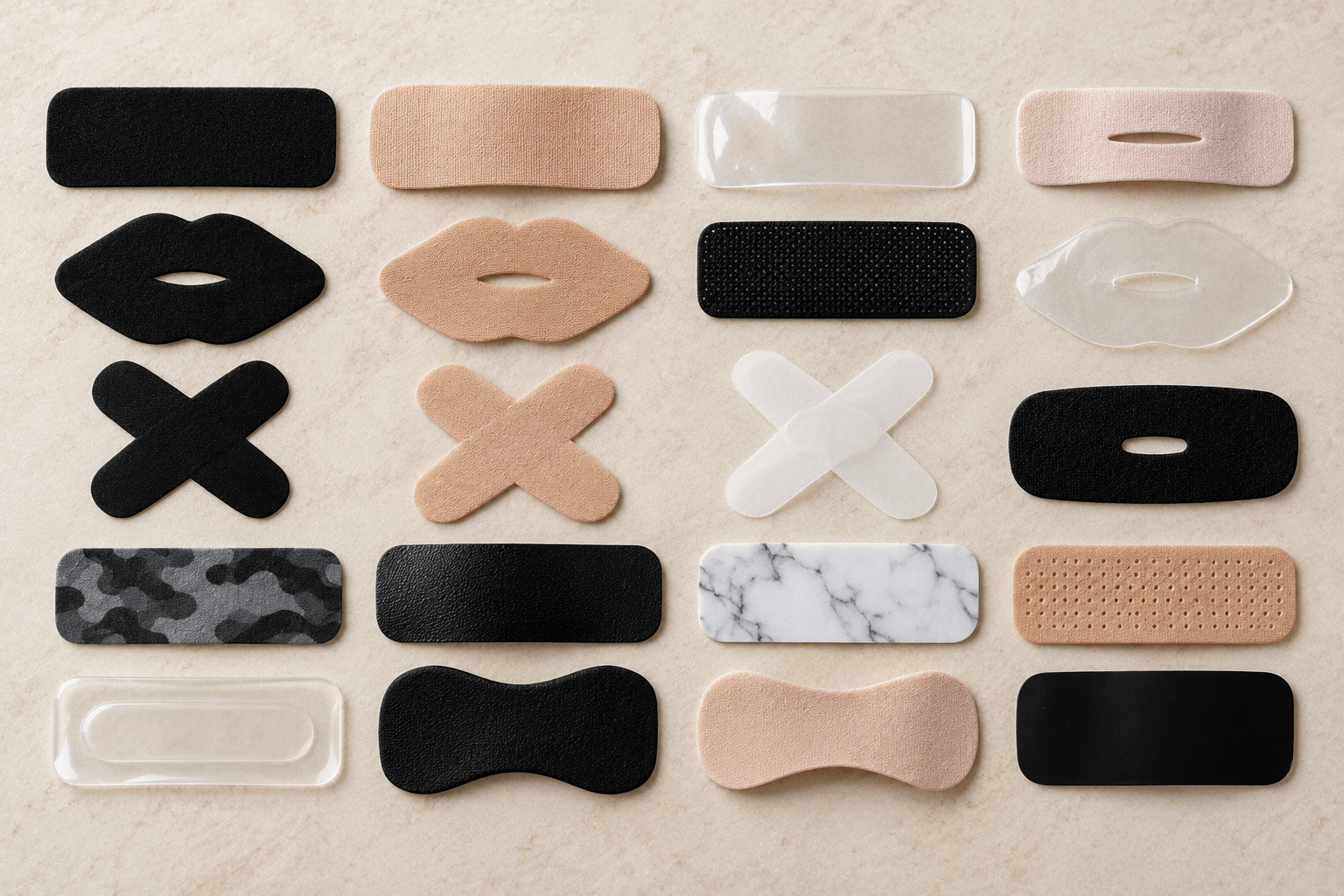
Beyond the adhesive, the main choice is shape. A narrow vertical strip is the most common and leaves the corners of your mouth open. Wider strips and full lip patches hold more firmly but cover more skin. Our guide to the best type of mouth tape compares the options, including what to look for if you have sensitive skin.
How to start mouth taping: your first week
A gradual first week gives you time to get used to the feeling before you have to sleep with it. Sleep Foundation suggests testing the tape during the day to make sure you can breathe easily through your nose, which is exactly where to begin.
- On the first few days, wear the tape while you're awake for 15 to 20 minutes, while you read or watch something. Get used to the feel of breathing through your nose with your lips held closed.
- Once that feels normal, wear it as you fall asleep. It's fine if it comes off during the night.
- When falling asleep with it feels easy, try a full night.
Before you put it on, wash and dry your lips, close them gently without clenching, and press the strip on. Fold over one corner before bed so you have a tab to pull in the morning, as Sleep Foundation suggests. Always check you can pull it off easily with one hand.
The first-week guide goes through each day in more detail, and common mouth taping mistakes covers the things that trip people up most often. If you're wondering how many nights it'll take before it feels natural, read how long it takes to get used to mouth tape.
Tips for common problems
Mouth tape with a beard
Facial hair makes it harder for tape to stick. Sleep Foundation notes that tape can pull on facial hair and make removal uncomfortable. The fix is usually simple: trim the hair right where the tape sits, wipe off any beard oil, and press the tape on firmly. When you take it off, peel slowly in the direction the hair grows. Our guide to mouth tape with a beard has the full routine.
Sore or irritated skin
Adhesive can cause redness or a rash around the lips, according to Sleep Foundation. How you take the tape off matters. The 2017 Indian Journal of Anaesthesia report recommends removing tape slowly, keeping it close to the skin, and supporting the newly exposed skin with a finger. It also says moisturizer can be used to soften the tape before you peel it.
Switching to a gentler silicone tape can help, and so can giving your skin a night or two off. If a rash keeps coming back, stop and read our guide to mouth tape skin irritation.
Lip balm and dry lips
Balm under the tape stops it sticking, so apply it after you take the tape off in the morning, or wipe it away before bed. Our article on lip balm and mouth tape explains how to time it.
Feeling anxious or panicky
Some people feel trapped the first time they tape. Sleep Foundation lists anxiety and panic as possible side effects, especially for people prone to claustrophobia. Short, awake practice sessions are the best way through it, and a vertical strip that leaves the corners open may feel less confining than a full patch. Take the tape off any time you feel short of breath. Our guide to mouth taping anxiety has more on getting comfortable.
Tape coming off in the night
If the tape comes off during the night, that isn't a problem in itself. Clean, dry skin with no balm or oil helps the tape stay on, and so does trimming facial hair. If it comes off every night, try a different shape or a tape designed for sleep before you give up.
When you have a cold
Leave the tape off until your nose clears. If you can't breathe comfortably through your nose, taping your mouth makes breathing harder. Our article on mouth tape with a cold covers when it's fine to start again.
Mouth tape with nasal strips
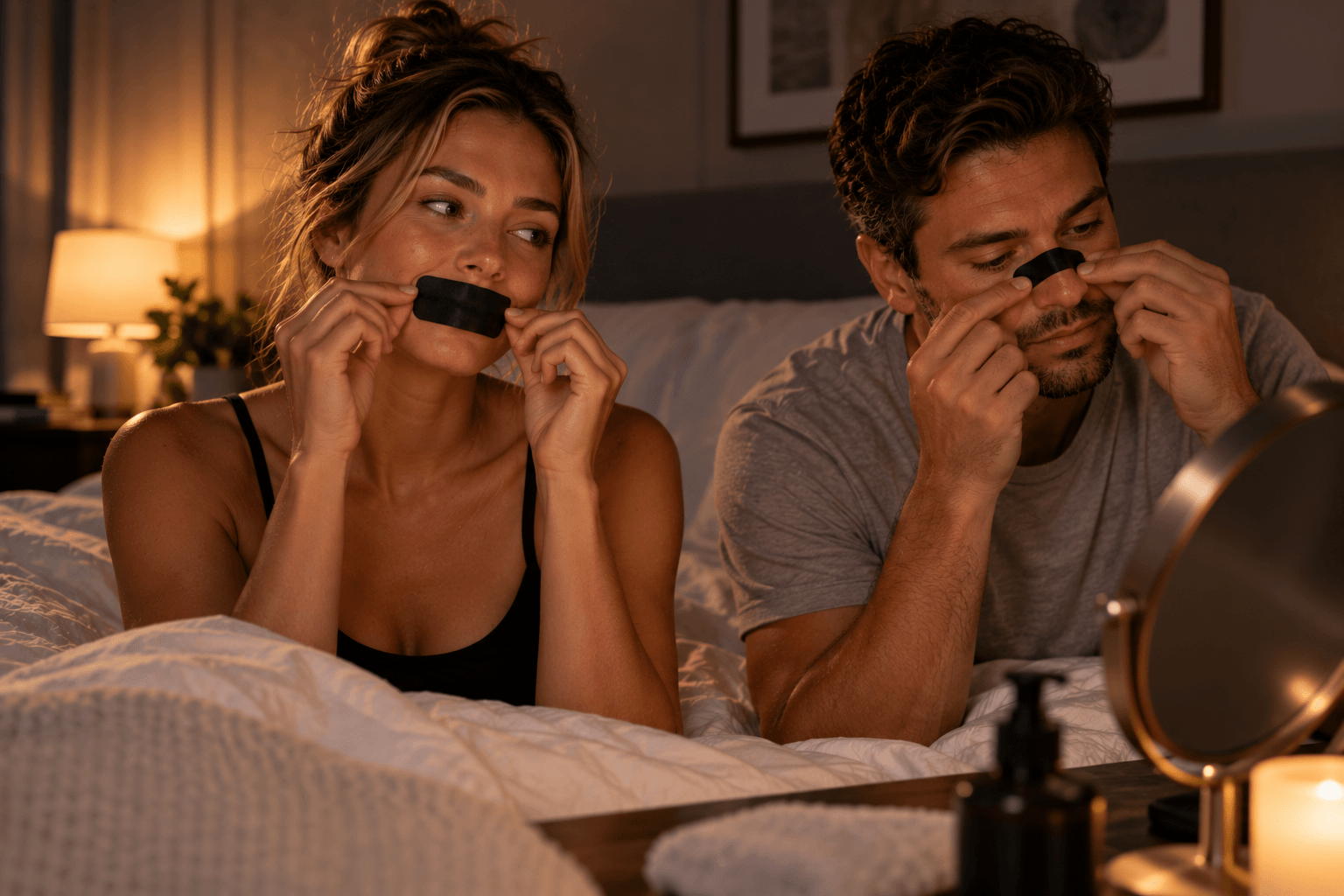
Mouth tape and nasal strips do different jobs, and they work well together. A nasal strip sits on the outside of your nose and is designed to hold your nostrils a little more open. Mouth tape keeps your lips closed so you actually use that open nose.
Nasal strips have their own small evidence base. In a randomized trial of 12 people with chronic rhinitis, snoring frequency dropped to about 173 snores an hour with a nasal strip, compared with about 258 with a placebo strip. The strip didn't change snoring loudness or sleep quality in that study, and Sleep Foundation describes nasal strip research overall as mixed, but for people whose nose feels a bit tight at night they're an easy thing to add.
If you're on the edge of the nose test, a strip can make mouth taping more comfortable. Our comparison of mouth tape and nasal strips explains when you'd use one, the other, or both, and how nasal strips work covers putting one on.
What to expect
Expect the first few nights to feel a little strange. That's normal, and the 2009 asthma study suggests most people settle in. Once you're sleeping through with the tape on, the things to watch for are the ones you started for: whether your partner mentions less snoring, and whether your mouth feels less dry in the morning. Less dry mouth hasn't been measured much in studies, so your own mornings are the best test.
Give it a couple of weeks before you decide. If your snoring improves, that's a good sign your mouth was part of the problem. If nothing changes, your snoring may be coming from your throat rather than your mouth, and our snoring vs sleep apnea guide can help you decide whether it's worth getting checked.
Don't expect it to change your face. Claims that mouth tape reshapes your jawline come from social media, and the scoping review in the American Journal of Otolaryngology found that few of those claims have ever been tested. Our article on whether mouth taping changes your jawline looks at where the idea came from.
And if it isn't for you, that's fine. Some people never get comfortable with tape, and a nasal strip on its own or a different sleep position may suit them better. The goal is easier nose breathing at night, and mouth tape is one good way to get there for the people it fits.
Common questions
Does mouth tape actually work?
For some people, it seems to. In a small 2022 study of mouth breathers, 13 of 20 participants cut their snoring by at least half after a week of taping. The studies so far are small, so it works best as something to try if you breathe through your mouth at night, not as a guaranteed fix.
Is it safe to tape your mouth shut at night?
If you can breathe easily through your nose, Sleep Foundation's advice is to use a tape made for skin and test it during the day first. Skip it if your nose is blocked, if you have signs of sleep apnea like gasping or choking in your sleep, if you have a lung condition and haven't asked your doctor, or for children.
What kind of tape should I use for mouth taping?
Use a porous tape made for skin, ideally one designed for mouth taping. Avoid office tape, masking tape and duct tape. The 2022 study that found a benefit used a silicone, hypoallergenic tape.
Does mouth tape help with snoring?
It can help if your snoring happens because your mouth falls open at night. In the 2022 study, the median snoring index fell by 47% with taping. If your snoring comes from further back in your throat, keeping your lips closed may not change much.
Can I use mouth tape and nasal strips together?
Yes, and many people do. A nasal strip helps keep your nose open, and mouth tape encourages you to use it. If your nose feels stuffy, sorting that out comes first.
How long does it take to get used to mouth tape?
It varies. Most people do best by wearing it for short spells while awake for a few days before sleeping with it. In a 2009 study, most participants found nightly taping acceptable and used it on almost every night of the four-week study.
Can kids use mouth tape?
No. Children shouldn't use mouth tape at home. If your child breathes through their mouth or snores, ask their pediatrician to check their nose and airway.
Can you use mouth tape if you have a beard?
Yes. Trim the hair where the tape sits, make sure the skin is clean and dry, and peel the tape off slowly in the direction the hair grows.
Sources
- The impact of mouth-taping in mouth-breathers with mild obstructive sleep apnea: a preliminary study
- Breaking social media fads and uncovering the safety and efficacy of mouth taping in patients with mouth breathing, sleep disordered breathing, or obstructive sleep apnea: A systematic review
- Nocturnal mouth-taping and social media: A scoping review of the evidence
- Effect of mouth taping at night on asthma control: a randomised single-blind crossover study
- The role of mouth tape for CPAP use in patients with mouth breathing and OSA
- Mouth taping for sleep: does it work?
- Mouth breathing: symptoms, complications and treatment
- Is it more than a snore? Recognizing sleep apnea warning signs
- External nasal dilation reduces snoring in chronic rhinitis patients: a randomized controlled trial
- Facial skin injury caused by acrylate-based adhesive tapes in a post-menopausal patient: a preventable cause
Last checked October 3, 2026. This content is for informational and educational purposes only and is not medical advice. It is not intended to diagnose, treat, cure or prevent any disease or health condition. Talk to a qualified healthcare provider about your health.