In short
- The American Academy of Sleep Medicine and Sleep Research Society recommend that adults sleep 7 or more hours a night on a regular basis.
- Breathing through your nose helps keep your mouth and throat moist. Sleeping with your mouth open can leave you with a dry mouth or a sore throat in the morning.
- Most snorers without sleep apnea snored less on their side in a 2003 sleep-lab study, and a nasal strip cut how often people with chronic rhinitis snored in a small 2000 trial.
- Mouth tape and nasal strips are simple options worth trying for adults whose snoring or dry mouth comes from mouth breathing, though the research on tape is still small.
- Snoring with choking, gasping or pauses in breathing, or heavy daytime sleepiness, is a reason to see a doctor. Tape and strips don't treat sleep apnea.
- Caffeine timing has some of the clearest evidence among everyday sleep habits. A 2023 review suggested a regular coffee at least 8.8 hours before bed.
Good sleep depends on more than the number of hours you spend in bed. The way you breathe at night and the habits around your evening both shape how rested you feel in the morning. This guide pulls together what the research says and the practical things worth trying, with links to our deeper articles on each part.
How much sleep do adults need?
The American Academy of Sleep Medicine (AASM) and the Sleep Research Society reviewed the evidence in 2015 and agreed that adults should sleep 7 or more hours a night on a regular basis. Their statement says that regularly getting less than 7 hours is associated with weight gain and obesity, diabetes, high blood pressure, heart disease and stroke, depression and a higher risk of death. Short sleep is also linked with weaker immune function, more pain, more errors and a greater risk of accidents.
The same panel was less certain about long sleep. It says more than 9 hours a night may be appropriate for young adults, people catching up on lost sleep and people who are ill, and that for everyone else it's unclear whether sleeping that long carries a health risk. Sleep need also varies from person to person, which the panel puts down to genetic, behavioral, medical and environmental factors.
If you're regularly short of 7 hours, that's the first thing to look at, before any product or technique. There's more detail, including how the numbers change with age, in how much sleep do adults need?
How breathing affects your sleep
Your nose does a quiet but useful job at night. Cleveland Clinic explains that breathing through your nose helps keep moisture in your mouth and throat. When your nasal passages aren't clear, you can end up breathing through your mouth instead, and then your saliva either dries out or escapes as drool. Neither keeps your throat comfortable.
That's why mouth breathing at night so often shows up the next morning as a dry mouth or a scratchy throat, and it can play a part in morning breath too. We cover these in why do I wake up with a dry mouth?, sore throat in the morning and does mouth breathing cause bad breath?
The NHS also lists a mouth that falls open during sleep as one of the causes of snoring, alongside the tongue partly blocking the back of the throat and blocked or narrow airways in the nose. So for some people, getting back to nose breathing at night is a practical way to sleep more comfortably. Before you try anything that keeps your mouth closed, make sure your nose is up to the job. Our nose test takes a minute and helps you check whether you can breathe comfortably through your nose for a sustained stretch.
If your nose is often blocked at night, start there. How to sleep with a stuffy nose walks through the options.
Why do people snore?
The NHS describes snoring as the sound of your tongue, mouth, throat or nasal airways vibrating as you breathe. It happens because these tissues relax and narrow while you sleep. You're more likely to snore if you're overweight, smoke, drink too much alcohol or sleep on your back.
Snoring is very common, and the NHS says it's not usually caused by anything serious. It can still wear on you and on whoever shares your room, and it's worth working out which of those causes applies to you, because each has a different fix. Our full guide is how to stop snoring.
Snoring: what you can try at home
Research: limited (what this means)The NHS advice for snoring is simple. It suggests losing weight if you're overweight, sleeping on your side, not smoking, not drinking too much alcohol and avoiding sleeping pills, which it says can sometimes cause snoring. None of these needs a prescription, and most are worth doing anyway. The research behind each individual change is fairly small, which is why we rate the overall evidence as limited.
Sleep on your side
Position has some of the better evidence. A 2003 study looked at 72 people who snored habitually and had overnight sleep studies. Most of those without sleep apnea snored less on their side than on their back, measured both by how long they snored and how loudly. People with sleep apnea had mixed results, and many kept snoring on their side.
Staying on your side all night is the tricky part. The NHS suggests taping or stitching a tennis ball to the back of your sleepwear, or using a special pillow or bed wedge. There's more in sleep position and snoring.
Go easy on alcohol in the evening
The NHS lists drinking too much alcohol as one of the things that makes snoring more likely, and the AASM's healthy sleep habits include avoiding alcohol before bedtime. If you notice you only snore after a few drinks, that pattern is worth paying attention to. We look at the research in alcohol and snoring.
Open up your nose with a nasal strip
Nasal strips stick across the outside of your nose and help hold it open while you sleep. The NHS lists nasal dilators and strips that hold your nose open as an option when blocked or narrow nasal airways are behind the snoring. Cleveland Clinic's ear, nose and throat specialist also recommends nasal strips, or a steroid nasal spray, for longer-term relief when congestion is pushing you into mouth breathing.
The best-known trial is small but encouraging. In a 2000 randomized, placebo-controlled study of 12 people with chronic rhinitis, snoring dropped from about 258 snores an hour with a placebo strip to 173 with a real strip. The strip didn't change how loud the snoring was or the measured quality of sleep, so it's best thought of as a way to breathe more easily through your nose rather than a guaranteed quiet night.
Keep your mouth closed with mouth tape
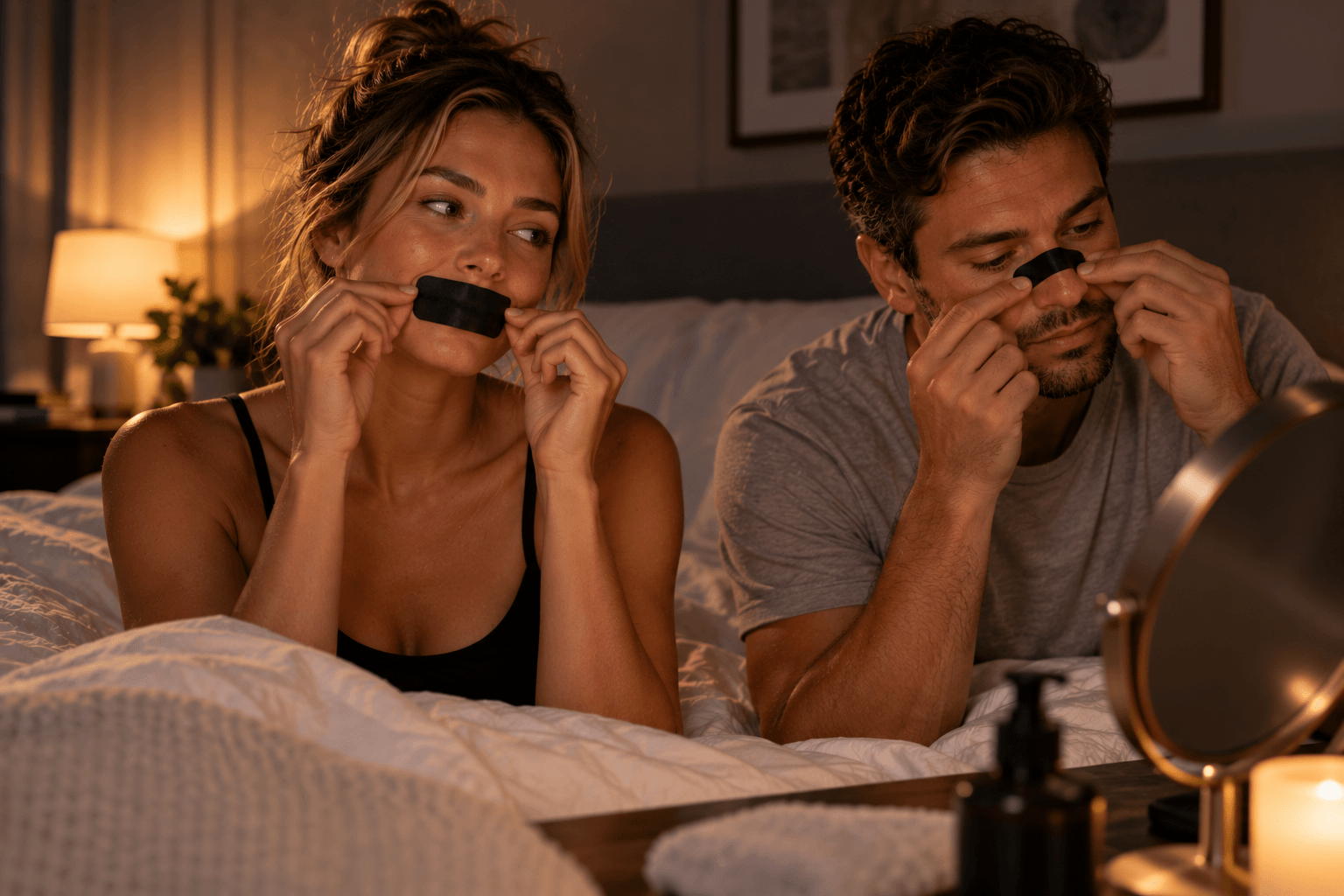
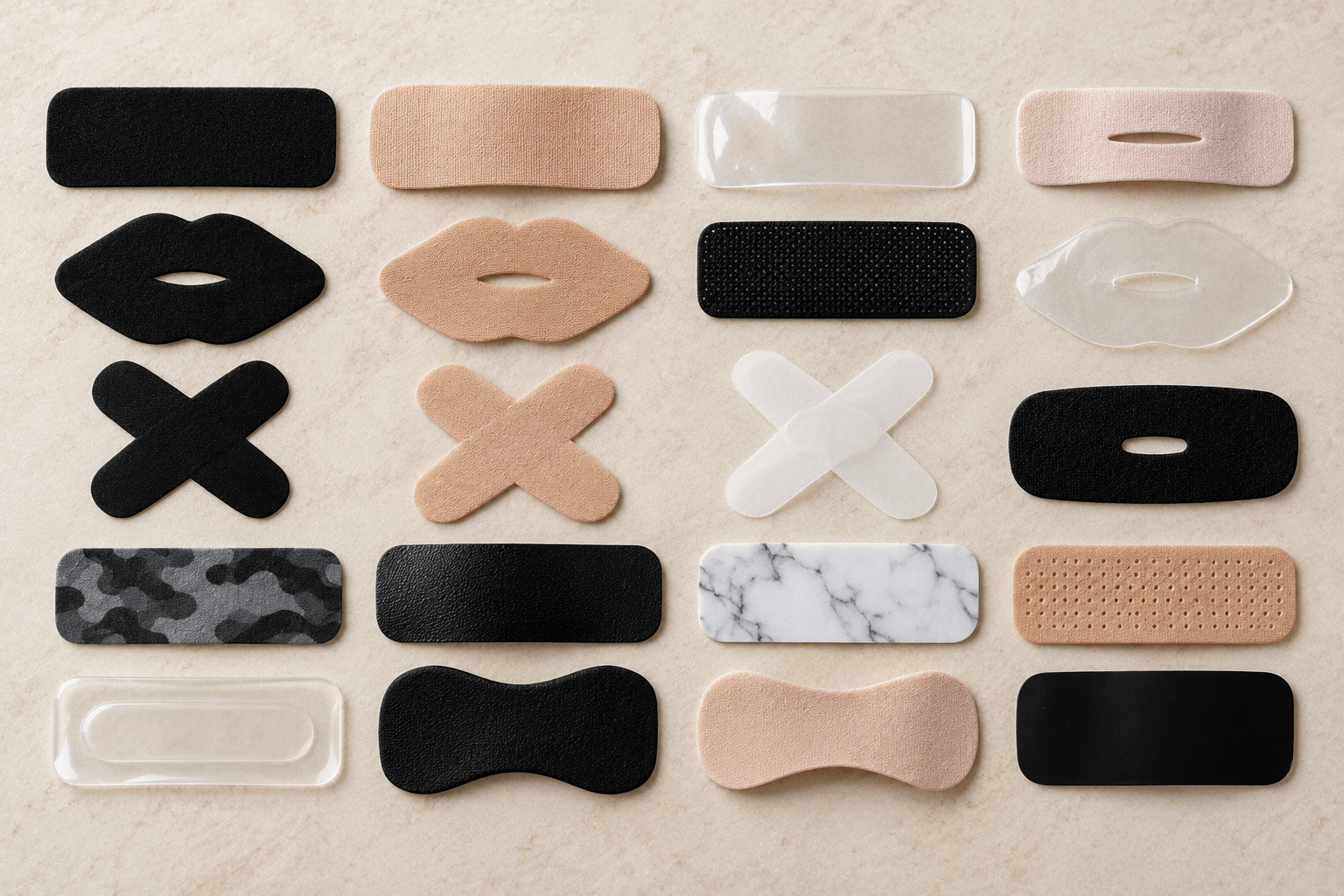
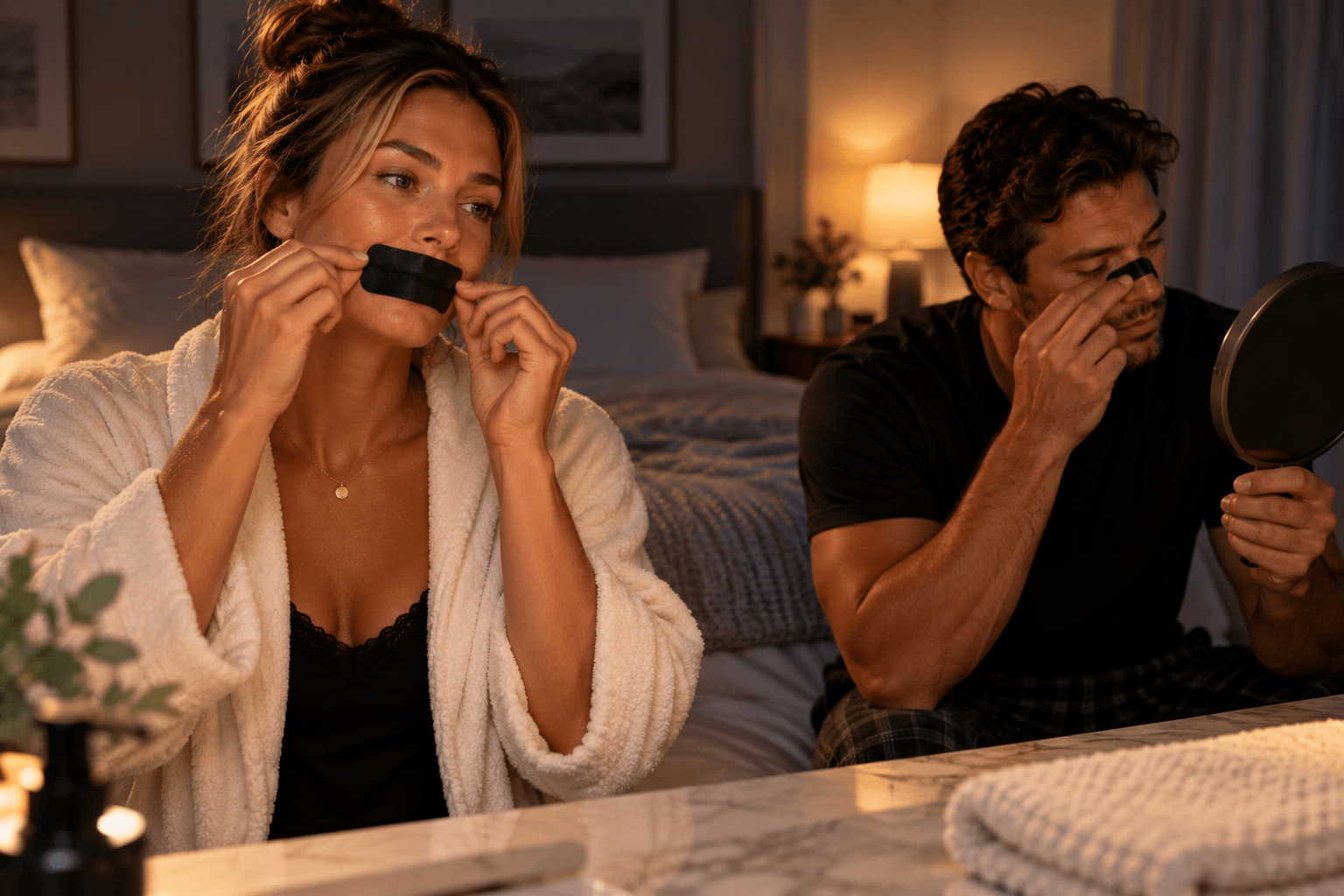
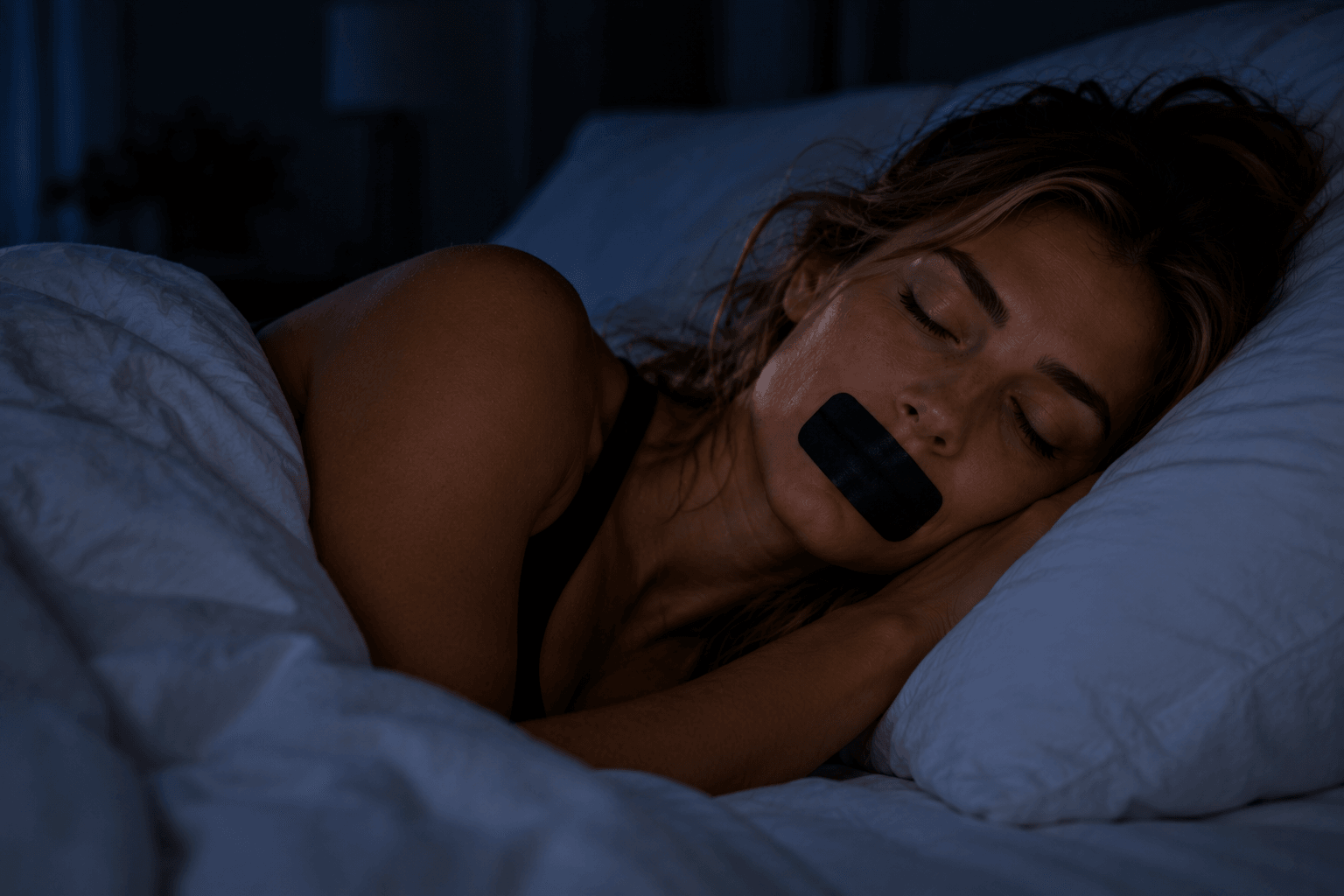
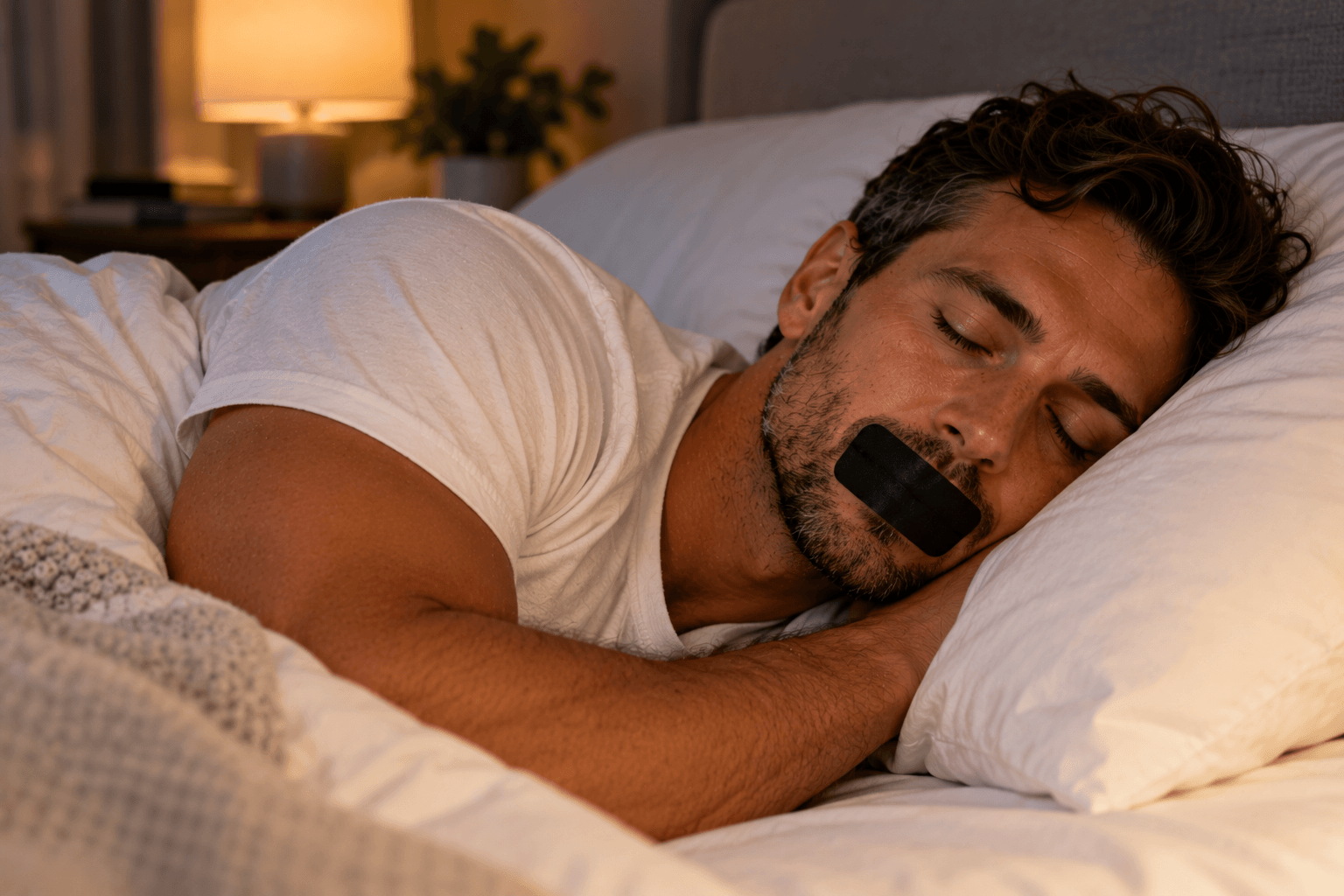
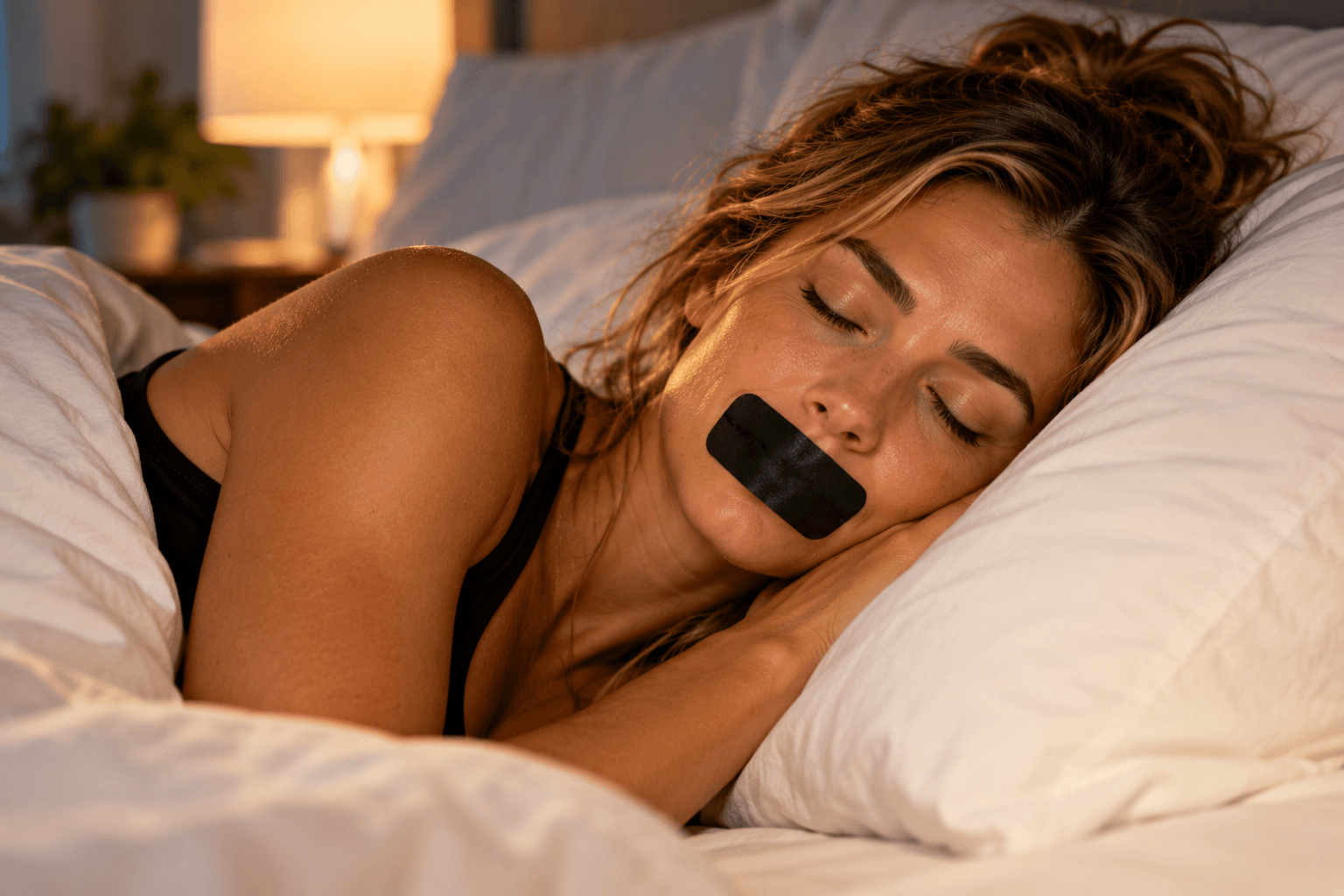
If your snoring or dry mouth happens because your mouth drops open as you sleep, mouth tape is a simple option to try. It's a small strip of gentle tape that encourages your lips to stay together so you keep breathing through your nose. The NHS lists a chin strap to hold your mouth closed for the same cause, and mouth tape works on the same idea.
The honest picture is that the research is still young. A 2025 systematic review found 10 studies with 213 patients in total. Results were mixed, many studies excluded people with nasal blockage, and the authors noted a risk of breathing problems if the nose is obstructed. So mouth tape only makes sense for adults who can breathe easily through their nose, and it won't help snoring that comes from the throat. We go through the studies in does mouth tape help with snoring?
Check this first. Skip mouth tape and see a doctor if you snore loudly, wake up gasping, have been told you stop breathing in your sleep, or can't breathe comfortably through your nose. More on safety
If you want to try mouth tape and nasal strips together, our pick is the Titan Sleep System, which pairs TitanAir Nasal Strips with Titan Mouth Tape.
Mouth tape and nasal strips are comfort aids. They don't treat, cure or prevent any medical condition, and they are not a treatment for sleep apnea. Our safety page covers who should skip them.
When snoring is a warning sign
The NHS says snoring is not usually caused by anything serious, but sometimes it is, and this is the part of the guide to take most seriously. The AASM says that while not everyone who snores has sleep apnea, snoring is a warning sign that should be taken seriously. When snoring comes with choking, gasping or silent breathing pauses during sleep, the AASM calls it a reliable indicator of sleep apnea.
Other warning signs the AASM lists are excessive daytime sleepiness, obesity and high blood pressure. It notes that between 30 and 40 percent of adults with high blood pressure also have sleep apnea. Other common symptoms include unrefreshing sleep, insomnia, morning headaches, waking at night to use the bathroom, trouble concentrating, irritability and difficulty staying awake while watching TV or driving.
The NHS says to see a GP if you feel sleepy during the day, your breathing stops and starts while you sleep, or you make gasping or choking noises. It also suggests seeing a doctor if lifestyle changes aren't helping or your snoring is having a big impact on you or your partner. It can help to bring the person who has heard you snore, since they can describe it.
If any of this sounds like you, see a doctor before trying tape, strips or anything else at home. The AASM points out that people with sleep apnea may be completely unaware of the breathing disruptions while they sleep, and that treatment can improve overall health and quality of life. Snoring vs. sleep apnea explains the difference in more detail.
If you already use CPAP, mouth tape is not a substitute for it. Talk to your sleep doctor before changing anything, and read mouth tape and CPAP first.
What about a home sleep test?
Only a sleep test can diagnose sleep apnea. The AASM's Sleep Education site explains that a home sleep apnea test lets you sleep in your own bed wearing equipment that records your breathing and blood oxygen. A provider may recommend one if you're very likely to have moderate to severe sleep apnea and have no other significant medical conditions. People with certain lung, neuromuscular or heart conditions, or who may have a different sleep disorder, may be offered an in-lab study instead.
The sleep team scores and interprets the results, which can take several days or weeks. One limit matters: the AASM says a negative home test isn't sophisticated enough to rule out sleep apnea, so if your symptoms still fit, further testing is needed. Our home sleep apnea test guide covers what to expect.
Waking up with a dry mouth, sore throat or headache
Morning symptoms are often clues about what happened overnight. Cleveland Clinic says that unless you have other signs of a cold or infection, a sore throat on waking is more likely to come from something that irritated your throat while you slept. It names dry air, mouth breathing, acid reflux, sleep apnea and dehydration, and also lists allergies and the postnasal drip they cause.
For a mouth-breathing cause, the fixes are the ones above. Cleveland Clinic's specialist suggests a decongestant at bedtime for a few days for short-term relief, and a steroid nasal spray or nasal strips for longer-term relief, noting you might snore less as a bonus. Once your nose is clear, mouth tape is another way some adults keep their mouth closed and their throat more comfortable.
Cleveland Clinic suggests seeing a doctor if a sore throat that isn't from a virus lasts all day or isn't improving after a couple of weeks, and says any change in voice or swallowing is worrying. A dry mouth or sore throat that comes with loud snoring, gasping or daytime sleepiness belongs in the warning-sign section above.
Morning headaches deserve the same care. The AASM lists them among the common symptoms of obstructive sleep apnea, so a headache on waking that keeps coming back, especially with snoring, is worth raising with a doctor. Morning headaches covers the other common causes.
Setting up your bedroom
The AASM's healthy sleep habits keep the bedroom advice short. It suggests making your bedroom quiet and relaxing, keeping it at a comfortable, cool temperature and limiting bright light in the evening. For the actual numbers and what the research says about heat and sleep stages, see the best bedroom temperature for sleep.
Humidity matters too, especially if you wake up with a dry mouth or throat. The U.S. Environmental Protection Agency says humidifiers are commonly used to relieve a dry nose, throat, lips and skin. It also warns that too much moisture encourages dust mites and mold, and advises not humidifying above 50 percent relative humidity. A hygrometer from a hardware store will tell you where you are.
If you use a portable humidifier, the EPA recommends emptying, wiping dry and refilling it every day, cleaning it every third day and using water with low mineral content, such as distilled water. Steam vaporizers can cause burns, so keep them out of reach of children. Humidifier for sleep has the details.
Allergies are worth thinking about here as well, since a stuffy nose pushes you toward mouth breathing. Cleveland Clinic's specialist suggests changing air filters more often, using an air purifier, putting hypoallergenic protectors on your mattress and pillows, and keeping windows closed if you have seasonal allergies.
Habits with the best evidence
Sleep advice can feel endless, so it helps to start with the habits that have the clearest support.
Watch your caffeine timing
Caffeine timing has some of the strongest evidence of any everyday habit. A 2023 meta-analysis of 24 studies found that caffeine cut total sleep time by 45 minutes and sleep efficiency by 7%, and reduced deep sleep. To avoid losing sleep, the authors suggested drinking a regular coffee (about 107 mg of caffeine) at least 8.8 hours before bed, and a standard pre-workout supplement (217.5 mg) at least 13.2 hours before. For an 11pm bedtime, that puts your last coffee a little after 2pm. The AASM gives similar, simpler advice: avoid caffeine in the afternoon or evening. There's more in caffeine and sleep.
Keep a consistent schedule
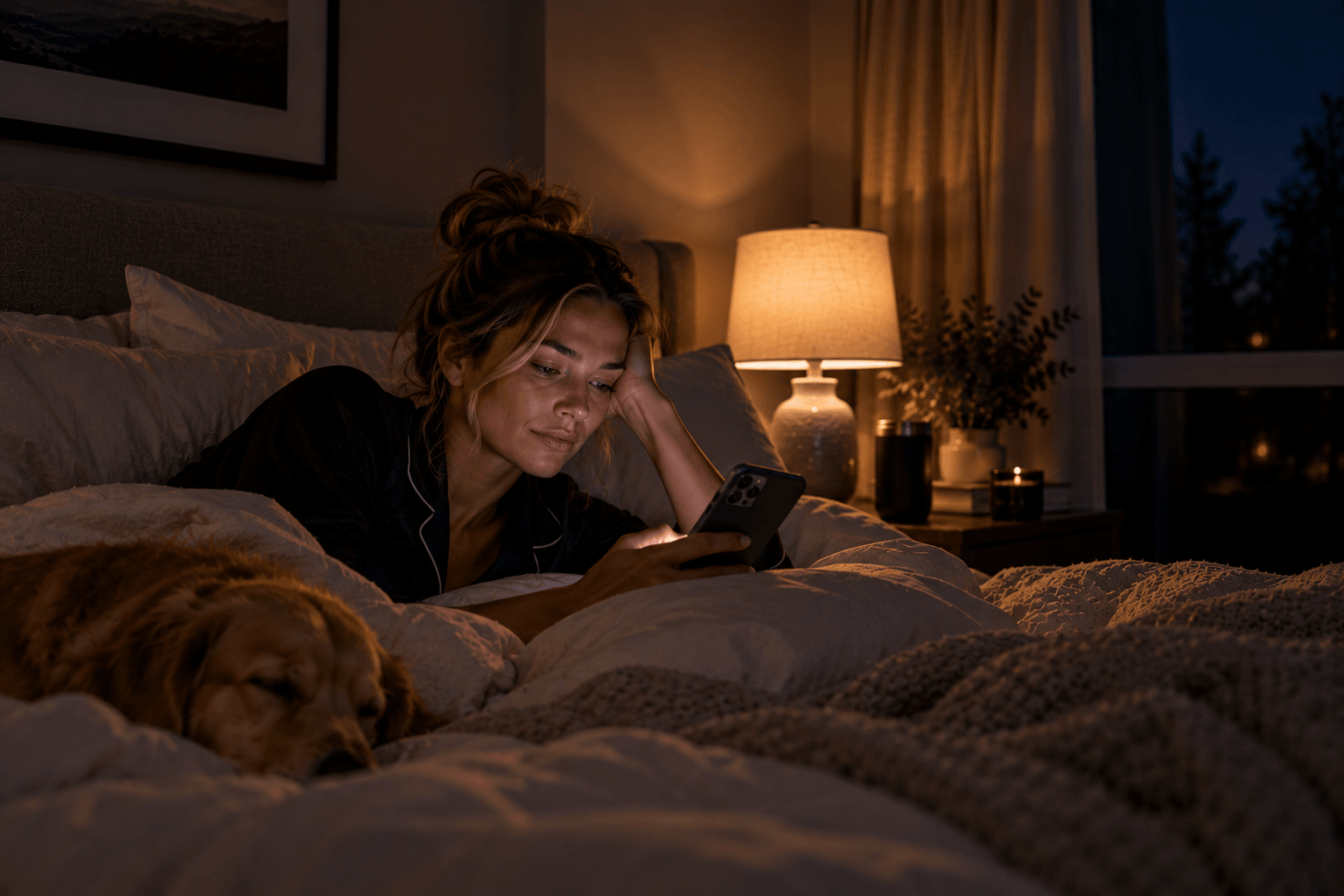
The AASM's first tip is to keep a consistent sleep schedule, getting up at the same time every day, weekends and holidays included, and setting a bedtime early enough to get at least 7 to 8 hours. It also suggests only going to bed when you're sleepy. If you don't fall asleep after 20 minutes, it recommends getting out of bed and doing something quiet in low light, away from electronics. That same approach helps if you tend to wake in the small hours, which we cover in why do I wake up at 3am?
Build a wind-down routine
The AASM recommends a relaxing bedtime routine and turning off electronic devices at least 30 minutes before bed. It also suggests avoiding a large meal close to bedtime and cutting back on fluids in the evening. Our sleep hygiene tips article explains which of these habits have been tested and how well.
Slow breathing is a popular part of a wind-down, and it's free and easy to try. The evidence for it as a sleep aid is still early. In a 2020 randomized crossover pilot of 20 young adults, 30 minutes of slow breathing before bed raised heart rate variability during the session, and some measures pointed toward better sleep, but there was no clear overall effect on sleep quality. If it helps you settle, it's a reasonable part of your routine. Slow breathing for sleep shows how to do it.
If you've tried good habits for a while and still struggle to sleep, the AASM suggests talking to your medical provider. It describes cognitive behavioral therapy as the most effective long-term treatment for chronic insomnia, with sleep habits as one part of it.
Sharing a bed with a snorer
Snoring affects whoever shares the room as much as the snorer. The AASM found in a 2021 survey that nearly 70% of Americans who sleep with a bed partner say their partner snores.
The NHS suggests that snorers consider asking their partner to use earplugs if the snoring affects their sleep. That gives the listener relief tonight. The longer-term answer usually lies with the snorer: side sleeping, less alcohol in the evening and, where mouth breathing or a blocked nose is part of the picture, a nasal strip or mouth tape once they've checked they can breathe comfortably through their nose.
The bed partner is also often the first to notice the warning signs. If you hear your partner stop breathing, gasp or choke in their sleep, encourage them to see a doctor, and go along to describe what you heard. There are more ideas in sleeping next to a snorer.
Where to start
If you only change a couple of things, start with the basics that have the clearest support: aim for 7 or more hours with a steady wake-up time, and stop caffeine early in the day. If you snore or wake with a dry mouth, try side sleeping and less evening alcohol, and check your nose with our nose test. From there, a nasal strip or mouth tape is a simple, low-cost way to try staying a nose breather through the night.
Keep the warning signs in mind throughout. Loud snoring with gasping, choking or pauses in breathing, or feeling exhausted during the day, needs a doctor rather than a home fix.
Common questions
How many hours of sleep does an adult need?
The American Academy of Sleep Medicine and Sleep Research Society recommend 7 or more hours a night on a regular basis. They say regularly sleeping less than 7 hours is associated with weight gain, diabetes, high blood pressure, heart disease, depression and a higher risk of death.
Why do I wake up with a dry mouth and sore throat?
Often because you slept with your mouth open. Cleveland Clinic explains that nose breathing helps keep moisture in your mouth and throat, and that a blocked nose is a common reason people end up breathing through their mouth. Dry air, reflux, allergies and snoring can also play a part.
Can mouth tape help with snoring?
It may help if your snoring happens because your mouth falls open, as long as you can breathe comfortably through your nose. It won't help snoring that starts in the throat. A 2025 review found only 10 small studies on mouth taping, so the evidence is still limited.
Do nasal strips help you sleep better?
They can make it easier to breathe through your nose. In a small randomized trial of people with chronic rhinitis, a nasal strip lowered how often they snored compared with a placebo strip, though it didn't change snoring loudness or measured sleep quality.
When is snoring a sign of sleep apnea?
The American Academy of Sleep Medicine says snoring paired with choking, gasping or silent breathing pauses is a reliable indicator of sleep apnea. Daytime sleepiness, morning headaches and waking at night to use the bathroom are other common symptoms. Only a sleep test can diagnose it.
Is a home sleep apnea test enough?
For some adults it is a good first step. The AASM says a provider may recommend one if you are very likely to have moderate to severe sleep apnea and have no other significant medical conditions. A negative home test can't rule sleep apnea out.
How late can I have coffee and still sleep well?
A 2023 meta-analysis of 24 studies suggested drinking a regular coffee at least 8.8 hours before bed to avoid losing sleep. For an 11pm bedtime, that means finishing it a little after 2pm.
My partner snores. What can I do tonight?
The NHS suggests snorers consider asking their partner to use earplugs if the snoring affects the partner's sleep. For the snorer, the NHS suggests side sleeping, not drinking too much alcohol and losing weight if needed.
Sources
- Recommended amount of sleep for a healthy adult: a joint consensus statement of the American Academy of Sleep Medicine and Sleep Research Society
- Snoring
- Effects of body position on snoring in apneic and nonapneic snorers
- External nasal dilation reduces snoring in chronic rhinitis patients: a randomized controlled trial
- Breaking social media fads and uncovering the safety and efficacy of mouth taping in patients with mouth breathing, sleep disordered breathing, or obstructive sleep apnea: A systematic review
- Why you have a sore throat in the morning
- Is it more than a snore? Recognizing sleep apnea warning signs
- Home sleep apnea test
- Healthy sleep habits
- Use and care of home humidifiers
- The effect of caffeine on subsequent sleep: a systematic review and meta-analysis
- The effects of presleep slow breathing and music listening on polysomnographic sleep measures: a pilot trial
Last checked October 3, 2026. This content is for informational and educational purposes only and is not medical advice. It is not intended to diagnose, treat, cure or prevent any disease or health condition. Talk to a qualified healthcare provider about your health.