In short
- The Sleep Foundation suggests an eye mask, earplugs or noise-canceling headphones, a travel pillow and an extra layer for sleeping on a plane.
- Troubled sleep on the first night somewhere new is a known effect, and a 2016 study linked it to one brain hemisphere staying more alert.
- The Sleep Foundation says nasal strips or decongestants might help if congestion makes you snore on a flight.
- The American Academy of Sleep Medicine says daylight at your destination helps reset your body clock, and to talk to a sleep provider before taking melatonin for jet lag.
- Mouth tape can travel too, but only on nights when you can breathe comfortably through your nose.
A good travel sleep kit blocks out light and noise, keeps you comfortable in a seat or strange bed, and keeps your nose clear enough to breathe through all night. Pack an eye mask, earplugs, a travel pillow, a warm layer, nasal strips and mouth tape, then add a plan for jet lag if you're crossing time zones. Here are the 12 items, with what the research and sleep experts say about each.
Why is sleep harder when you travel?
Sleep is harder when you travel partly because of the setting. The Sleep Foundation says plane noise, light, turbulence, cabin air and the upright seat all make sleeping on a plane harder. The first night somewhere new is a challenge too. A 2016 study in Current Biology found that on a first night in a new place, one side of the brain sleeps less deeply and reacts more to unusual sounds, which the authors describe as a kind of night watch. Then there's jet lag. The American Academy of Sleep Medicine (AASM) says it may begin after crossing at least two time zones and estimates about one day per time zone for your body clock to fully adjust. It adds that flying east is usually harder than flying west, and that jet lag can be made worse by sleep loss from travel, long hours sitting in an uncomfortable position, stress, caffeine and alcohol.
A little planning helps before you pack. The Sleep Foundation suggests avoiding very early or late flights that cut into your normal sleeping hours, and says a window seat gives you something to rest your head against.
For the flight and the hotel room
An eye mask
The Sleep Foundation suggests a sleep mask to block light from windows and overhead lights on a plane. It's just as handy in a hotel room with thin curtains or a glowing smoke detector.
Earplugs or noise-canceling headphones
The Sleep Foundation recommends earplugs or noise-canceling headphones to block noise from other passengers and the aircraft, and says music through headphones may help you relax. Given the first-night effect, quieter surroundings in an unfamiliar room are worth the small space in your bag.
A white noise app
A steady sound can mask unfamiliar noises like hallway doors or traffic. The Sleep Foundation says one theory is that white noise works by masking background sounds, though it notes the research is mixed. An app on your phone costs nothing to pack. Our guide to white noise for sleep looks at the studies.
A travel pillow
The Sleep Foundation says a travel pillow can support your neck while you sleep on a plane. It also suggests reclining your seat as far as you can, because research has found that sitting upright increases alertness.
A warm layer
Pack a warm layer, because cabins can be cool. The Sleep Foundation suggests bringing a sweater or blanket to stay warm on board. At the hotel, the AASM's advice for any bedroom still applies: keep it quiet and at a comfortable, cool temperature.
A refillable water bottle
The Sleep Foundation says the dry, recirculated air in a plane cabin can make you dehydrated, so it suggests staying hydrated without overdoing it, or you'll be up for the bathroom. The AASM also suggests avoiding caffeine and alcohol while crossing time zones.
Light snacks
The Sleep Foundation says digesting a big meal makes it hard to sleep well and suggests light snacks if you want to sleep on a flight. The AASM similarly advises against a large meal before bed.
For easier breathing
Research: limited (what this means)Nasal strips
If your nose tends to block up, strips are an easy thing to pack. The Sleep Foundation says that if congestion is making you snore, nasal strips or decongestants might help reduce snoring on a flight. In a small randomized trial of people with chronic rhinitis, strips lowered how often people snored compared with a placebo strip. Pack a few extra, since you might want one on the plane and one at night. How to apply nasal strips covers the fit.
Mouth tape
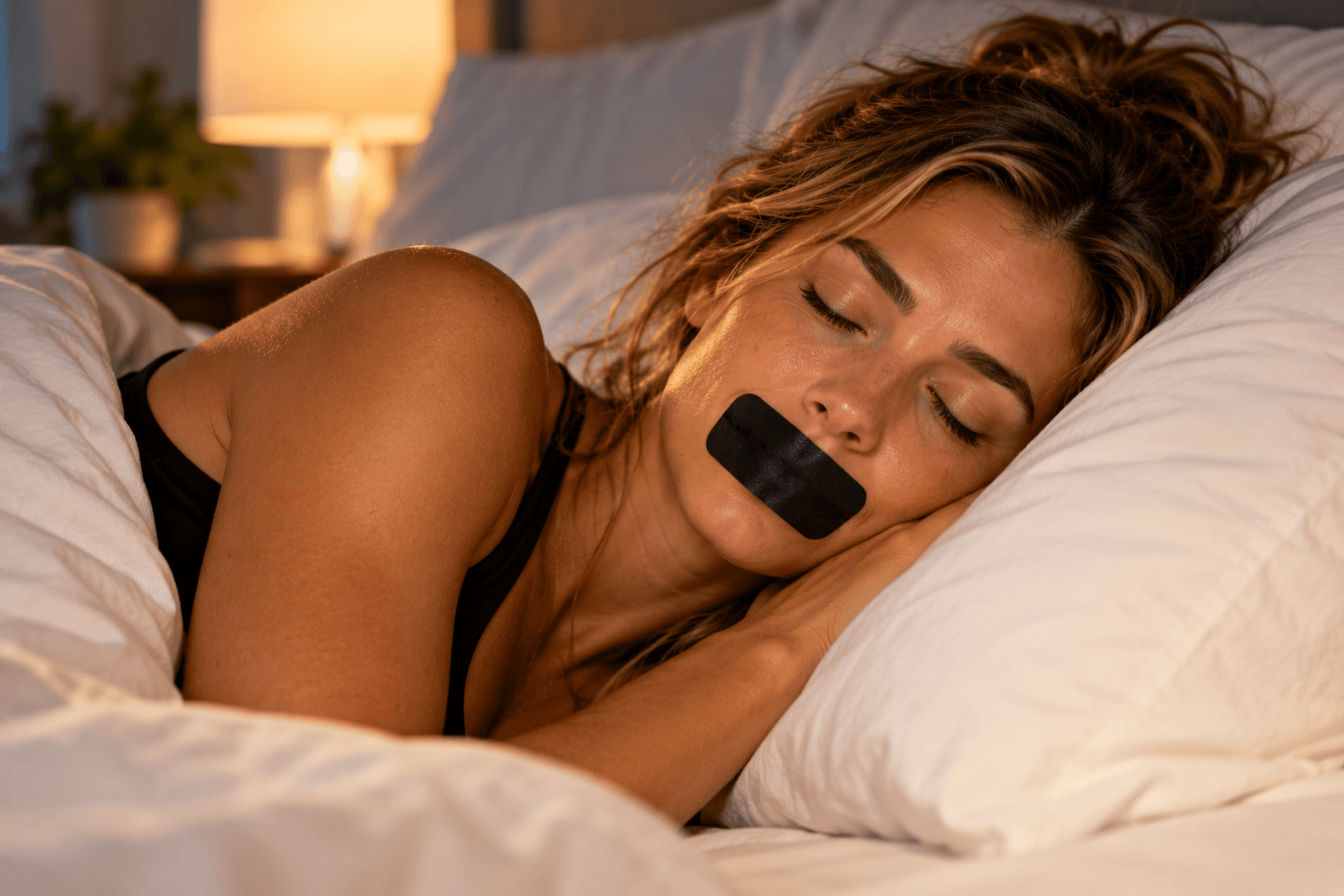
If your mouth falls open when you sleep, tape keeps your lips together so you breathe through your nose. A 2025 systematic review found three small studies in which keeping the mouth closed was followed by less snoring, though the studies were poor quality. The Sleep Foundation says not to tape when your nose is blocked from allergies, a cold or other causes, so only use it on nights your nose is clear. It also suggests testing the tape during the day first, which is worth doing at home before your trip rather than on the plane. Mouth taping when traveling has tips for planes and hotels.
Our pick for these two items is the Titan Sleep System, which pairs TitanAir nasal strips with Titan's bamboo silk mouth tape. Titan says the tape is one size, 76 mm by 38 mm, worn horizontally across the lips, and that both products are third-party tested and certified PFAS-free.
Check this first. Skip mouth tape and see a doctor if you snore loudly, wake up gasping, have been told you stop breathing in your sleep, or can't breathe comfortably through your nose. More on safety
A saline spray
The FDA says nasal spray bottles deliver a fine mist and might be useful for moisturizing dry nasal passages, while irrigation devices are better at flushing out mucus. A small spray bottle of saline fits easily in a toiletry bag. If you bring a rinse bottle, the FDA says to use only distilled, sterile or previously boiled water. See dry nose at night for more.
Your mouthpiece, if you use one
The Sleep Foundation suggests carrying an oral appliance if you snore, saying specialized mouthpieces can open up the airway to reduce snoring, and that a dentist can recommend one or fit you for a custom device. If you already have one, it belongs in the kit along with its case.
For new time zones
A plan for daylight, and melatonin only if your doctor agrees
The AASM calls sunlight a powerful tool for resetting your body clock and suggests getting outside during the day after you arrive. It also says shifting your sleep schedule gradually before the trip can make adjusting easier. Melatonin can help some people adjust, but the AASM says that taking it at the wrong time can make the misalignment worse, so talk to your sleep provider before packing it. It notes that research suggests a dose as low as 0.5 mg is as effective as higher doses. The AASM also says some studies show moderate exercise helps you adjust, and that exercising outdoors adds daylight at the same time, so packing your walking shoes counts too.
What else should you check?
Check for sleep apnea if you snore on every trip and also feel exhausted during the day, because it may not be the travel. The AASM says snoring paired with choking, gasping or silent pauses in breathing is a reliable indicator of sleep apnea. A travel kit won't fix that, and strips and tape don't treat it. Read snoring vs. sleep apnea and talk to a doctor, and see our safety page for who should skip tape.
Read next
Common questions
What is the most important thing to pack for sleep when traveling?
Something to block light and something to block noise. The Sleep Foundation suggests an eye mask and earplugs or noise-canceling headphones for sleeping on a plane, and both work just as well in a hotel room.
Why do I sleep badly on the first night in a hotel?
It's called the first-night effect. A 2016 study in Current Biology found that during the first night in a new place, one side of the brain sleeps less deeply and reacts more to unusual sounds, which can make it harder to fall asleep.
How long does jet lag last?
The American Academy of Sleep Medicine estimates it takes about one day per time zone crossed for your body clock to fully adjust, and says flying east is usually harder than flying west.
Can I wear nasal strips on a plane?
Yes. The Sleep Foundation says nasal strips or decongestants might help reduce snoring on a flight if nasal congestion is the cause.
Should I drink alcohol to help me sleep on a flight?
The Sleep Foundation suggests skipping it, because alcohol can disrupt sleep and affect nighttime breathing. The American Academy of Sleep Medicine also recommends avoiding caffeine and alcohol while traveling across time zones.
Sources
- How to sleep on a plane
- Jet lag
- Night watch in one brain hemisphere during sleep associated with the first-night effect in humans
- What is white noise?
- Mouth taping for sleep: does it work?
- Breaking social media fads and uncovering the safety and efficacy of mouth taping in patients with mouth breathing, sleep disordered breathing, or obstructive sleep apnea: A systematic review
- External nasal dilation reduces snoring in chronic rhinitis patients: a randomized controlled trial
- Is rinsing your sinuses with neti pots safe?
- Healthy sleep habits
- Is it more than a snore? Recognizing sleep apnea warning signs
- Titan Sleep System (Nasal Strips + Mouth Tape)
- Bamboo Silk Mouth Tape
About this article
- Research
- 12 published sources, listed above.
- Evidence
- Limited. How we rate it
- Last checked
- October 5, 2026
- Funding
- Paid partner of Titan Recovery. Their ads are labeled.
- Found an error?
- Tell us. We log fixes on the corrections page.
* This content is for informational and educational purposes only and is not medical advice. It is not intended to diagnose, treat, cure or prevent any disease or health condition. Talk to a qualified healthcare provider about your health.