In short
- Your nose prepares the air you breathe. Researchers describe nose breathing as making inspired air warm, filtered and moist, and Cleveland Clinic says the turbinates inside your nose moisten and clean it.
- Your sinuses produce nitric oxide, which is present in the air that comes from your nasal airways.
- Saliva flow is at its lowest during sleep, and the American Dental Association says mouth breathing can make night-time dry mouth worse.
- Lying down raises resistance in the nose: a 2022 meta-analysis of nine studies with 291 people found it increases nasal resistance and reduces airflow. Rinses, a raised pillow, a cleaner bedroom and nasal strips can all make nose breathing easier.
- Once your nose is clear, mouth tape is a simple reminder some adults use to keep their lips closed. In a 2009 trial, 50 adults with asthma taped for a median of 26 of 28 nights, and 36 of them found it very or fairly acceptable.
- Children who breathe through their mouth should see a doctor or dentist, not wear tape.
Your nose is built for breathing, and it does useful work on every breath that your mouth can't do. This guide covers what that work is, why so many people end up breathing through their mouth at night, and the practical steps that make nose breathing easier while you sleep. It links out to our shorter articles whenever you want more detail on one piece.
What your nose does with every breath
Air that comes in through your nose gets prepared before it reaches your throat and lungs. A team of respiratory researchers at the University of Nottingham summed it up in one line: nose breathing ensures that the air you breathe in is warm, filtered and moist. Cleveland Clinic describes the turbinates, the curled structures along the inside walls of your nose, as the parts that moisten and clean the air flowing past them.
That matters most at night, when you breathe for hours without thinking about it. Air that has been warmed and moistened is gentler on the back of your throat. Air that skips the nose arrives cooler and drier, which is one reason people who sleep with their mouth open often wake up feeling parched. We compare the two routes side by side in nasal vs. mouth breathing.
Your sinuses make nitric oxide
There's one more thing your nose adds to the air. In 1995, researchers at the Karolinska Institute in Stockholm reported in Nature Medicine that the nitric oxide found in air from the nasal airways is produced by cells lining the paranasal sinuses, the air-filled spaces around your nose. They measured it in sinus air at very high concentrations. The lining of the nasal cavity itself showed only weak activity of the enzyme that makes it.
Nitric oxide is known to slow the growth of bacteria, and the authors suggested it may help keep the sinuses sterile. That's a reasonable idea backed by lab and physiology work. It hasn't been tested as a sleep or health benefit in people who switch how they breathe, so we treat it as an interesting part of how the nose works rather than a reason on its own to change anything. The full story, including the small studies on oxygen uptake and humming, is in nitric oxide and nasal breathing.
What changes when you breathe through your mouth at night
Dry mouth
Saliva does a lot of quiet work. The American Dental Association says it cleanses the mouth, helps you chew and swallow, clears sugar from your mouth and buffers acids that could harm your teeth and gums. It also notes that saliva output reaches its lowest point of the day while you sleep, and that mouth breathing can make night-time dry mouth worse.
So the hours when your mouth is least protected are the same hours when an open mouth dries it out further. If you often wake with a dry, sticky mouth or a scratchy throat, the way you breathe overnight is a good first place to look.
Snoring and other signs
Cleveland Clinic lists snoring, bad breath, drooling on the pillow, hoarseness and feeling tired all the time among the signs of mouth breathing in adults. None of these proves that mouth breathing is the cause, since each one has other possible explanations. Taken together, though, they're a useful hint that your mouth is open for a good part of the night.
Snoring deserves a closer look. Plenty of people snore without any serious problem, but loud snoring with gasping, choking or pauses in breathing can be a sign of sleep apnea, which needs a doctor rather than a home fix. There's more on telling the two apart further down this page.
Teeth and gums
The ADA says reduced saliva can raise the chance of cavities, demineralization of the teeth, tooth sensitivity and oral infections. That doesn't mean everyone who breathes through their mouth at night will get cavities. Brushing, fluoride and regular checkups still do most of the work. But if you're a mouth breather, it's worth telling your dentist, because dry mouth changes how they judge your risk. We cover the research on this in mouth breathing and your teeth.
Common reasons people breathe through their mouth
Most people don't choose to breathe through their mouth. Usually the nose feels blocked, and the body takes the easier route. Cleveland Clinic lists nasal congestion from allergies, colds or sinusitis among the causes, along with a deviated septum, enlarged turbinates, swollen adenoids or tonsils, and nasal polyps. Working out which one applies to you tells you what's worth trying. Our article on why you might breathe through your mouth at night goes through them in more depth, and our two-minute nose test can help you sort out whether a blocked nose or habit is the more likely reason.
Your nose is stuffier when you lie down
If your nose seems fine during the day and blocked at night, you're not imagining it. A 2022 meta-analysis in The Laryngoscope pooled nine studies with 291 people and found that lying down increases nasal resistance and reduces nasal airflow. The effect was larger in people who snore or have sleep apnea than in healthy volunteers. The Sleep Foundation suggests changes in blood flow when you lie flat may be part of the reason. More on this in why your nose is stuffy at night.
Allergies in the bedroom
Your bed is where you spend the most hours breathing the same air, and for people with dust mite allergies that's a problem. The American Lung Association says dust mites live in bedding, mattresses, upholstered furniture, carpets and curtains, and feed on dead human skin cells. They thrive in warm, humid rooms. If your stuffiness is worst at night or first thing in the morning, see why allergies get worse at night.
The nasal cycle
It's normal for one nostril to feel more open than the other. Cleveland Clinic explains that every four to six hours, one side of the nose becomes more congested while the other side opens up, and then they switch. If you sleep on your side, the nostril facing the pillow often feels stuffier, and that usually settles soon after you get up. This is the nasal cycle, and it isn't something to fix.
A deviated septum or nasal polyps
When one side stays blocked and never switches, something structural may be in the way. Cleveland Clinic names two common causes. A deviated septum means the wall of cartilage and bone between your nostrils is off-center. Nasal polyps are soft, noncancerous growths in the lining of the nose or sinuses. Neither one clears up with a rinse or a strip, and both are worth having a doctor look at. Read more in deviated septum symptoms and nasal polyps and breathing.
Habit
Sometimes nothing obvious is blocking the nose at all. Cleveland Clinic notes that mouth breathing can become a habit, especially in children. If your nose feels open when you check it and you still wake with a dry mouth, habit may be most of the story. That's the situation where keeping your lips closed with a gentle reminder makes the most sense, which we cover below.
How to make nose breathing easier at night
The best way to breathe through your nose at night is to make it the easy option. Most of the steps below are cheap and simple, and several of them work well together.
Rinse your nose before bed
A saline rinse flushes mucus out of the nasal passages. The Sleep Foundation says rinsing each nostril once or twice a day may help clear them, and a rinse in the evening means you go to bed with a cleaner nose.
The water you use matters. The FDA says tap water isn't safe for nasal rinsing because it isn't adequately filtered or treated. Use distilled or sterile water, tap water boiled for 3 to 5 minutes and cooled until lukewarm, or water passed through a filter designed to trap infectious organisms. Boiled water can be kept in a clean, closed container and used within 24 hours. Wash your rinse bottle or neti pot and let it dry between uses. Our step-by-step guide is how to use a saline rinse.
Raise your head a little
Since lying flat is part of what makes your nose stuffier, a small change in position can help. The Sleep Foundation suggests a wedge pillow to keep your head raised, or a thick pillow or two regular pillows if you'd rather not buy anything. A warm, steamy shower before bed is another of its suggestions, because steam can thin mucus and help it drain. More quick options are in how to unblock your nose before bed.
Clean up bedroom allergens
If dust mites or pets set off your nose, the bedroom is the place to start. The American Lung Association recommends washing bedding in hot water, at least 120 degrees F, once a week, covering mattresses and pillows with allergen encasements, and keeping your home below 50 percent humidity. It also suggests a HEPA-filter vacuum, damp cloths for dusting and fewer soft furnishings where mites can build up.
Get the humidity right
Dry air can irritate the nose. The Sleep Foundation says running a humidifier while you sleep can prevent dryness that may trigger nasal irritation and congestion. It recommends using purified water, cleaning the humidifier daily, placing it at least six feet from the bed and keeping humidity at 50 percent or lower to prevent mold. That 50 percent ceiling lines up with the American Lung Association's advice for dust mites, so the target is the same whichever problem you're dealing with.
Try a nasal strip
A nasal strip is a flexible band that sits across the bridge of your nose and gently lifts the sides outward. The Sleep Foundation says strips can relieve overnight congestion for some people by opening the nasal passages to let more air through. A 2016 meta-analysis in Pulmonary Medicine found that nasal dilators, including strips, improve nasal breathing.
The same analysis found they didn't improve sleep apnea, so a strip is a comfort tool for an easier-breathing nose, not a treatment. For many people that's exactly what they want: a little more room to breathe through the nose at night with nothing to swallow. Read how nasal strips work to see whether one suits you.
Go easy on decongestant sprays
Decongestant sprays work fast, which makes them tempting every night. The Sleep Foundation warns that overuse can lead to rebound congestion, where the nose gets more blocked once the spray wears off, and that some decongestants can have a stimulating effect that may interfere with sleep. Follow the label and keep them for short-term use. We explain why in decongestant spray rebound.
Building the nose breathing habit
Once your nose is clear and comfortable, the remaining job is keeping your mouth closed while you sleep. This is where a gentle reminder can help.
Mouth tape for adults whose noses are clear
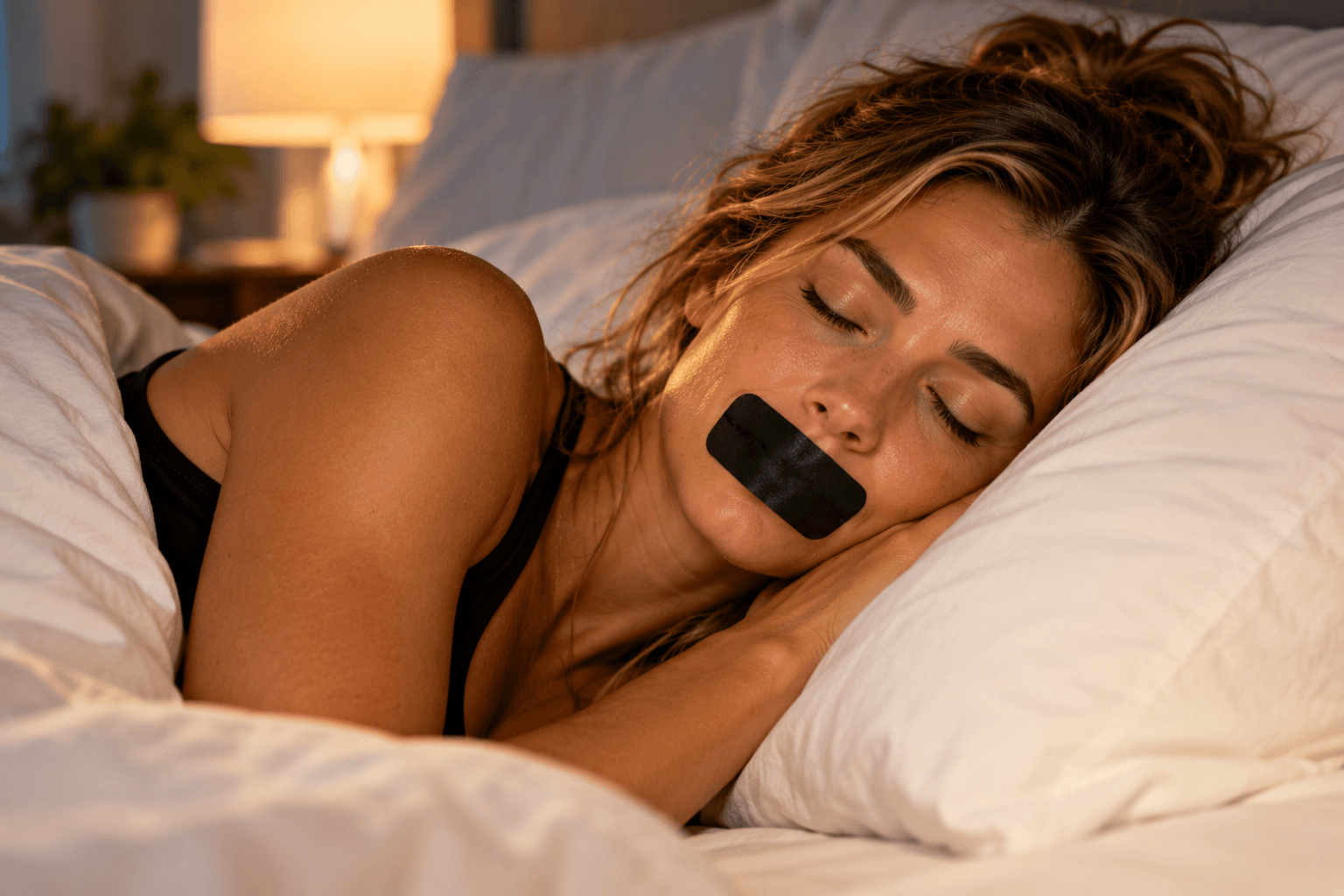
Mouth taping means placing a small strip of skin-safe tape over your lips at night, so that if your mouth starts to drift open, the tape reminds it to stay shut. Use tape made for skin that peels off easily, never office or duct tape. For adults who wake with a dry mouth and have a clear nose, it's a simple habit to try. Our introduction, what is mouth taping, covers how it works and how to start.
There's some encouraging real-world evidence on whether people can live with it. In a 2009 randomised crossover trial from the University of Nottingham, 50 adults with asthma taped their mouths at night with microporous tape. They taped for a median of 26 out of 28 nights, and 36 of them said mouth taping was very or fairly acceptable. That trial was looking at asthma control, and taping made no difference there, so it tells us more about comfort than about benefits.
Research: limited (what this means)The research on mouth tape itself is still small. A 2025 systematic review in PLOS One found 10 studies with 213 patients in total. Four of those studies raised the same warning: covering the mouth could be dangerous if the nose is blocked or if someone regurgitates. That's why we only suggest mouth tape for adults who can breathe comfortably through their nose, and why it comes after the steps above, not before them.
Check this first. Skip mouth tape and see a doctor if you snore loudly, wake up gasping, have been told you stop breathing in your sleep, or can't breathe comfortably through your nose. More on safety
If you want to try mouth tape and nasal strips together, our pick is the Titan Sleep System, which pairs TitanAir Nasal Strips with Titan Mouth Tape.
If you'd like to try it, practice while you're awake first, reading or watching something, so you get used to the feeling before you wear it overnight. Many people pair a nasal strip with mouth tape, so one keeps the nose open while the other keeps the lips closed.
Nasal breathing exercises
Breathing exercises are another way people practice nose breathing during the day. A 2020 Cochrane review pooled 22 trials with 2,880 adults with asthma and noted that breathing training often encourages nasal breathing along with relaxation and slower breathing patterns. The review found breathing exercises may have some positive effects on quality of life, hyperventilation symptoms and lung function, with evidence ranging from moderate to very low certainty.
That research was in asthma, and it didn't measure night-time mouth breathing, so we can't promise exercises will change how you breathe in your sleep. They're free, though, and many people find that a few minutes of slow nose breathing in the evening is a pleasant way to wind down. Our guide to nasal breathing exercises walks through the common ones and what the trials show. If you're interested in nose breathing while you train, see nasal breathing during exercise.
Children and mouth breathing
Kids are a different case. A child who breathes through their mouth usually has a reason, such as enlarged adenoids or tonsils, allergies or another blockage in the nose, and that reason needs a professional to find it.
Cleveland Clinic says mouth breathing in children can affect the shape of the face, with a narrow face, a receding chin and teeth that don't line up, and that airway blockages may affect growth. It also notes that some experts believe children who mouth breathe may have sleep apnea or other sleep problems, and that poor sleep can leave them irritable and restless. Its advice is to treat ongoing nasal congestion promptly and watch your child's sleep for restlessness or snoring.
If your child often breathes through their mouth or snores, talk to their pediatrician, and mention it to their dentist too. Mouth tape is not for children. Our article on mouth breathing in children has more on what to look for and what to ask.
When to see a doctor
Most stuffy nights come from colds, allergies or simply lying down, and the steps on this page are a good place to start. Some patterns are worth a professional look, though:
- Your nose is blocked most nights for weeks, even after rinsing and cleaning up the bedroom.
- One side stays blocked and never switches, which Cleveland Clinic says can point to a deviated septum or nasal polyps.
- You snore loudly, or someone has noticed you gasp, choke or stop breathing in your sleep.
- You wake up tired most days even after a full night in bed.
- Your child breathes through their mouth most of the time or snores regularly.
Cleveland Clinic lists sleep apnea itself among the causes of mouth breathing, and it's not something tape or strips can fix. A doctor can check what's going on inside your nose and, if needed, arrange a sleep study. Once you know your airway is clear and healthy, the tools on this page are there to help you enjoy easier nose breathing every night.
Common questions
Is it better to breathe through your nose while you sleep?
For most people, yes. Your nose warms, filters and moistens the air on the way in, and keeping your mouth closed helps protect your saliva, which is already at its lowest overnight.
Why does my nose get blocked when I lie down?
A 2022 meta-analysis of nine studies found that lying down increases nasal resistance and reduces nasal airflow. Raising your head with a wedge or an extra pillow is an easy thing to try.
Why is one nostril always more blocked than the other?
Usually it's the nasal cycle. Cleveland Clinic says one side of the nose becomes more congested every four to six hours while the other opens up. A blockage that stays on the same side and doesn't switch is worth having checked.
Do nasal strips help you breathe through your nose?
They can. A 2016 meta-analysis found nasal dilators improve nasal breathing, though they didn't improve sleep apnea. The Sleep Foundation says strips can relieve overnight congestion for some people.
Can mouth tape help me breathe through my nose at night?
It's a reminder to keep your lips closed, and many adults like it. Use it only if you can breathe comfortably through your nose, and skip it if you snore loudly or have been told you stop breathing in your sleep. Research on it is still small.
Can I use tap water in a saline rinse?
Not straight from the tap. The FDA says to use distilled or sterile water, tap water boiled for 3 to 5 minutes and cooled until lukewarm, or water passed through a filter designed to trap infectious organisms.
Do nasal breathing exercises work?
Most of the research is in asthma. A 2020 Cochrane review found breathing exercises may help quality of life in adults with asthma, with evidence ranging from moderate to very low certainty. They haven't been well studied for night-time mouth breathing.
My child breathes through their mouth at night. What should I do?
Talk to their pediatrician or dentist. Children usually mouth breathe because something is blocking the nose, and Cleveland Clinic says it can affect the shape of a child's face and teeth. Mouth tape is not for children.
Sources
- High nitric oxide production in human paranasal sinuses
- Effect of mouth taping at night on asthma control: a randomised single-blind crossover study
- Mouth Breathing: Symptoms, Complications & Treatment
- Xerostomia (Dry Mouth)
- The Recumbent Position Affects Nasal Resistance: A Systematic Review and Meta-Analysis
- Why Your Nose Is Blocked on One Side
- Dust Mites
- Treatment for a Blocked Nose at Night
- Is rinsing your sinuses with neti pots safe?
- Nasal Dilators (Breathe Right Strips and NoZovent) for Snoring and OSA: A Systematic Review and Meta-Analysis
- Breaking social media fads and uncovering the safety and efficacy of mouth taping in patients with mouth breathing, sleep disordered breathing, or obstructive sleep apnea: A systematic review
- Breathing exercises for adults with asthma
Last checked October 3, 2026. This content is for informational and educational purposes only and is not medical advice. It is not intended to diagnose, treat, cure or prevent any disease or health condition. Talk to a qualified healthcare provider about your health.