In short
- Mouth taping means placing a small strip of skin-safe tape over your lips at night so you keep breathing through your nose.
- People mainly try it for dry mouth and for snoring that starts when the mouth falls open during sleep.
- Early studies are encouraging. In a 2022 study of 20 adults who slept with their mouths open and had mild sleep apnea, 13 cut their snoring by at least half after a week of taping.
- The research is still young. A 2025 systematic review found 10 small studies and called for larger, better trials.
- It suits people who can breathe comfortably through their nose. Practice while awake first, and skip it on nights your nose is blocked.
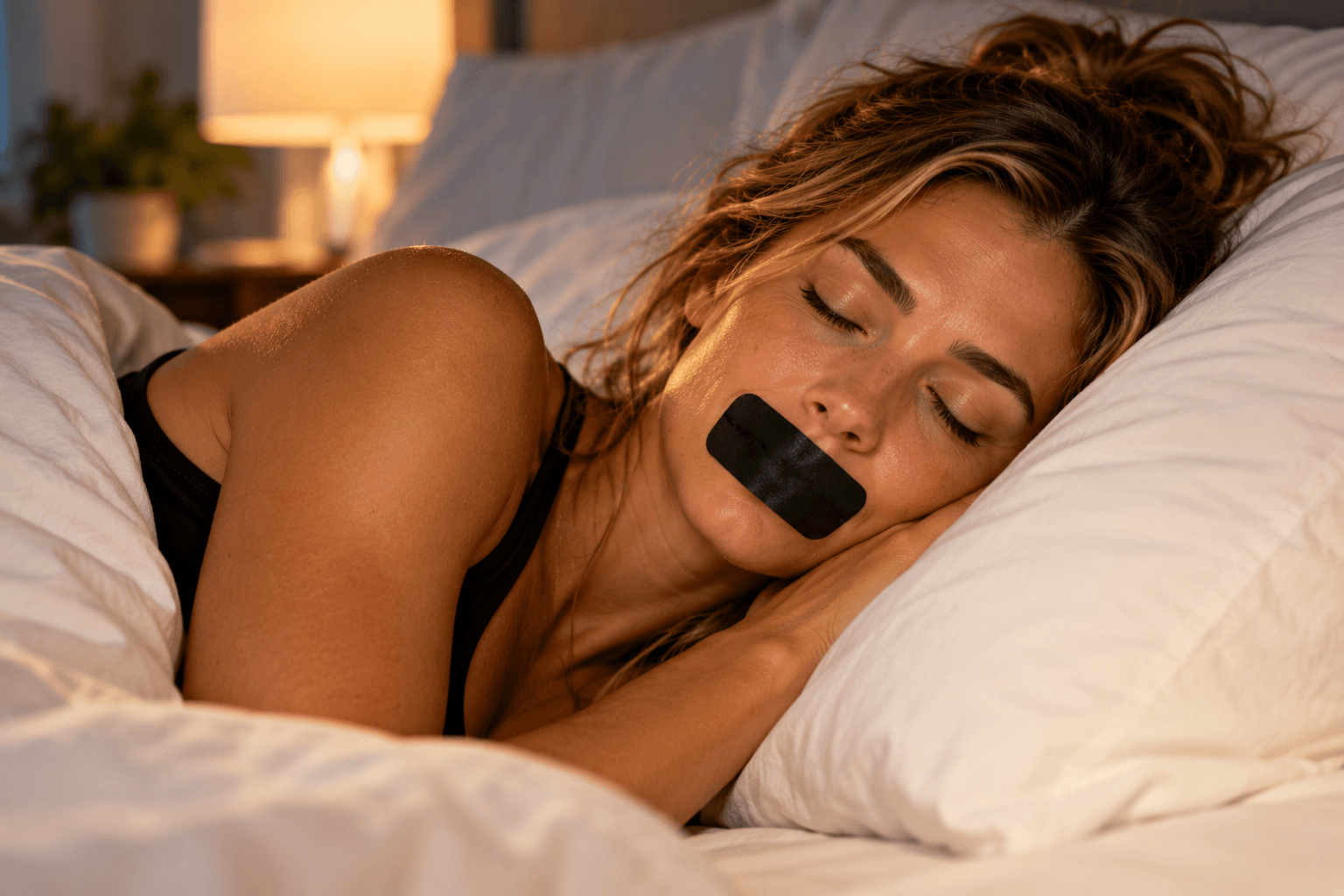
Mouth taping means putting a small strip of skin-safe tape over your lips before bed. It doesn't seal your mouth shut. It just keeps your lips together, so you keep breathing through your nose after you fall asleep.
For people who sleep with their mouths open, it's one of the simplest things to try. Small studies have found less snoring when mouth breathers tape at night, and breathing through your nose has real advantages of its own. The research is still early and it isn't for everyone, but if your nose works well, it's easy to test for yourself.
What is mouth taping, exactly?
It's a small piece of porous tape placed over your closed lips at bedtime. Sleep Foundation describes the idea as a gentle reminder: by keeping the mouth closed, the body is nudged into breathing through the nose. Cleveland Clinic describes the tape as medical-grade and skin-safe.
A simple option is a single vertical strip over the middle of the lips. In the 2022 study most often cited for mouth taping, researchers cut a 4 cm piece of silicone hypoallergenic tape and placed it from the groove under the nose down across both lips. The corners of the mouth stay free, and the tape is easy to peel off.
Why do people try mouth taping?
Usually because they wake up with a dry mouth, they snore once their mouth falls open, or they sleep badly and feel tired in the morning. Sleep Foundation notes that during sleep, muscle relaxation can cause the mouth to fall open, especially if someone is lying on their back.
Your nose filters, warms and humidifies the air you breathe. Your mouth doesn't, so a night of open-mouth breathing tends to leave your mouth and throat dry. Tape is a low-tech way to keep the lips together so the nose does that job all night.
Why does breathing through your nose matter?
Nasal breathing is the body's default for good reasons. The authors of the 2022 study point out that people prefer to breathe through the nose for its heating, humidifying and filtering functions, both during the day and while sleeping. They add that during sleep, resistance to airflow is lower when breathing through the nose than through the mouth.
Breathing with the mouth open during sleep also changes the shape of the airway. The same paper explains that an open mouth lets the soft palate shift backward and the jaw drop, which narrows the space behind them. Snoring happens when soft tissue in the throat vibrates, so a narrower airway gives it more to work with.
There's one more difference people often mention. A 1995 study in Nature Medicine found that nitric oxide is produced in the paranasal sinuses and is present in air from the nasal airways. Breathing through your mouth skips that route. No study we found has measured whether mouth tape changes how much nitric oxide you breathe in, so treat that part as an open question.
What does the research say about mouth taping?
Research: limited (what this means)The most useful studies looked at people who breathe through their mouths at night, and the results point in a good direction.
In a 2022 study in Healthcare, 20 adults who slept with their mouths open and had mild sleep apnea wore tape for a week. Their median snoring index fell from 303.8 to 121.1 snoring events an hour, a drop of about half. Thirteen of the 20 (65%) counted as good responders, meaning their snoring fell by at least 50%. People who snored the most at the start tended to improve the most.
An earlier pilot study from 2015 used a porous patch over the mouth in 30 people with the same profile. Every participant slept with their mouth closed while wearing it. Their median snoring index fell from 146.7 to 40 an hour, and snoring scores on a rating scale fell from 7.5 to 2.4.
A 2025 systematic review in PLOS One found that all three studies that measured the snoring index reported a significant drop with mouth taping or a chin strap. A scoping review in the American Journal of Otolaryngology reached a similar view, saying some research indicates mouth taping may be advantageous for snoring.
The limits are worth knowing. The PLOS One review found only 10 studies with 213 patients in total and rated all of them as poor quality. Most were small, and the 2022 study had no comparison group, so its authors couldn't rule out a placebo effect. It concluded that the data doesn't support mouth taping as a clinical treatment for sleep-disordered breathing. Mouth tape also isn't a fix for every breathing complaint: a 2009 trial in people with asthma found taping had no effect on asthma control.
That same asthma trial does say something encouraging about comfort. Its 50 participants taped their mouths for a median of 26 out of 28 nights, and 36 of them said mouth taping was very or fairly acceptable.
Who is mouth taping a good fit for?
The people in the studies above had a few things in common. In the 2022 study, everyone had been seen breathing through their mouth during sleep and woke with a dry throat. People with a blocked nose were given medicine or a nasal spray first, and anyone with very large tonsils was left out.
So the best candidates look like this. You can breathe through your nose easily while you're awake, your mouth tends to fall open at night, and you wake up with a dry mouth or snore with your mouth open. If that sounds like you, mouth tape is a reasonable thing to test. Our nose test takes two minutes and is a good first check.
Who should skip mouth tape?
Sleep Foundation lists the people who shouldn't use it. That includes anyone with sleep apnea who isn't using CPAP, anyone with a blocked nose from allergies, a deviated septum or a cold, people with asthma or COPD unless a doctor says otherwise, children unless under medical supervision, people with anxiety or panic disorders, and anyone at risk of vomiting during sleep. We don't recommend mouth tape for children. Cleveland Clinic adds sinus infections, enlarged tonsils and heart issues.
Snoring itself can be a warning sign. The American Academy of Sleep Medicine says that when snoring is paired with choking, gasping or silent breathing pauses during sleep, it's a reliable indicator of sleep apnea. Mouth tape doesn't treat sleep apnea, so that combination is a reason to see a doctor first. Our page on snoring vs. sleep apnea explains the signs.
Check this first. Skip mouth tape and see a doctor if you snore loudly, wake up gasping, have been told you stop breathing in your sleep, or can't breathe comfortably through your nose. More on safety
If you want to try mouth tape, our pick is the Titan Bamboo Silk Mouth Tape.
What kind of tape should you use?
Use a porous tape intended for skin. Sleep Foundation says masking tape or any tape not meant for the body is more likely to cause irritation or an allergic reaction. It notes that pharmacies sell hypoallergenic, surgical and athletic tape, and that some companies now make strips designed for mouth taping.
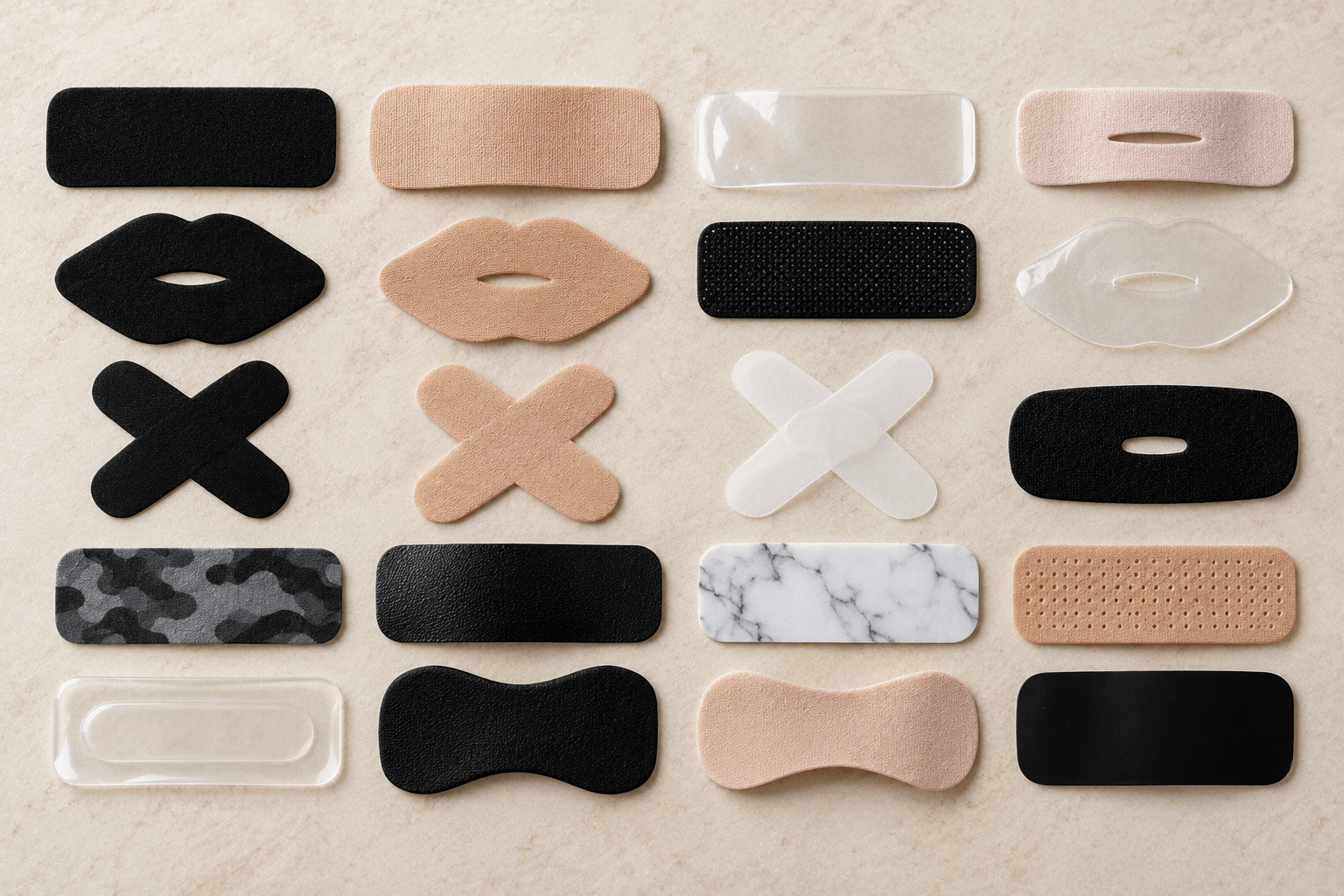
The 2022 study chose an everyday 3M silicone hypoallergenic tape because it was easy to stick on, easy to remove and non-allergenic. Our guide to the best type of mouth tape compares the main shapes and materials.
How to start mouth taping
- Close your lips and breathe through your nose for two minutes. If that's easy, you can go ahead.
- Wear the tape for about 15 minutes while you read or watch TV, to get used to it. Sleep Foundation recommends testing it during the day to make sure you can breathe easily through your nose.
- When that feels normal, put it on clean, dry lips before bed. A simple option is one vertical strip in the middle.
- Fold over one corner of the tape, as Sleep Foundation suggests, so it's easy to peel off in the morning or during the night.
- In the morning, notice how your mouth feels and how rested you are. If you share a bed, ask whether your snoring sounded different.
If your nose feels tight, a nasal strip can make nasal breathing easier. Our first-week guide lays out a day-by-day plan, and how long it takes to get used to mouth tape covers the adjustment period.
If you have a beard or mustache, look for a tape made to stick to facial hair, or trim the hair around your lips.
What if something doesn't feel right?
Most early problems have a simple fix. If your skin gets red or sore, Sleep Foundation and Cleveland Clinic both list skin irritation as a possible side effect, so give your lips a break and try a gentler tape. Our article on mouth tape skin irritation has more, and lip balm and mouth tape explains how to look after dry lips without ruining the stick.
If the tape keeps coming off overnight, check that your lips were dry and free of balm when you put it on. If facial hair is the issue, our guide to mouth taping with a beard walks through it.
If the tape makes you feel anxious or trapped, take it off. Cleveland Clinic lists increased anxiety among the possible side effects. Short daytime practice helps many people, and our article on mouth taping anxiety covers how to ease in. And if you wake up short of breath at any point, stop and check your nose before trying again.
Are there other ways to keep your mouth closed at night?
Yes. Some people prefer a chin strap, which holds the jaw closed without adhesive. We compare the two in mouth tape vs. chin strap. If your nose is the bottleneck, a nasal strip is often the better first step, and mouth tape vs. nasal strips explains how they differ.
Sleep position matters too. Sleep Foundation says decades of research show that people snore less when they sleep on their side instead of their back. For snoring in general, our guide on how to stop snoring covers the full range of options.
Read next
- Nasal breathing vs. mouth breathing
- Does mouth tape help snoring?
- Mouth taping mistakes beginners make
- Is mouth taping safe for me?
Common questions
Does mouth taping actually work?
For people whose snoring or dry mouth comes from sleeping with their mouth open, the early studies are encouraging. In a 2022 study, 13 of 20 mouth breathers with mild sleep apnea cut their snoring at least in half after a week of taping. The studies so far are small, and a 2025 systematic review called for better trials.
Is mouth taping safe?
It isn't for everyone. Skip it if you can't breathe comfortably through your nose, have a cold or blocked nose, snore loudly, or have been told you stop breathing in your sleep. Never use it on children.
What kind of tape should I use?
Use a porous tape made for skin, such as a mouth tape or a hypoallergenic surgical tape. The 2022 study used a silicone hypoallergenic tape. Don't use office tape, masking tape, duct tape or anything that's hard to peel off.
Where on my mouth does the tape go?
Over the middle of your closed lips. In the 2022 study, researchers used a 4 cm strip running from the groove under the nose down across both lips. Folding over one corner makes it easy to peel off.
How long does it take to get used to mouth tape?
A good approach is to wear it for 15 to 20 minutes while you're awake for a few days before trying it overnight. Our guide to getting used to mouth tape goes into more detail.
Does mouth tape help sleep apnea?
No. Mouth tape is not a treatment for sleep apnea. If you snore loudly and also choke, gasp or stop breathing in your sleep, see a doctor before trying it.
Sources
- Breaking social media fads and uncovering the safety and efficacy of mouth taping in patients with mouth breathing, sleep disordered breathing, or obstructive sleep apnea: A systematic review
- Nocturnal mouth-taping and social media: A scoping review of the evidence
- High nitric oxide production in human paranasal sinuses
- The impact of mouth-taping in mouth-breathers with mild obstructive sleep apnea: a preliminary study
- Novel porous oral patches for patients with mild obstructive sleep apnea and mouth breathing: a pilot study
- Effect of mouth taping at night on asthma control: a randomised single-blind crossover study
- Mouth taping for sleep: does it work?
- Is mouth tape safe to use while sleeping?
- Is it more than a snore? Recognizing sleep apnea warning signs
About this article
- Research
- 9 published sources, listed above.
- Evidence
- Limited. How we rate it
- Last checked
- October 3, 2026
- Funding
- Paid partner of Titan Recovery. Their ads are labeled.
- Found an error?
- Tell us. We log fixes on the corrections page.
* This content is for informational and educational purposes only and is not medical advice. It is not intended to diagnose, treat, cure or prevent any disease or health condition. Talk to a qualified healthcare provider about your health.