In short
- The studies with good results used gentle, skin-friendly materials: a silicone, hypoallergenic tape in 2022 and a porous patch in 2015.
- A single vertical strip is the simplest place to start. It's what the 2022 study used, and it leaves the corners of the mouth open.
- Sleep Foundation recommends a porous tape intended for use on human skin.
- A 2017 medical report says silicone adhesives have significantly lower peel adhesion, with much less skin trauma on removal.
- No study has compared shapes head to head, so the best type for you is the one that's comfortable and easy to remove.
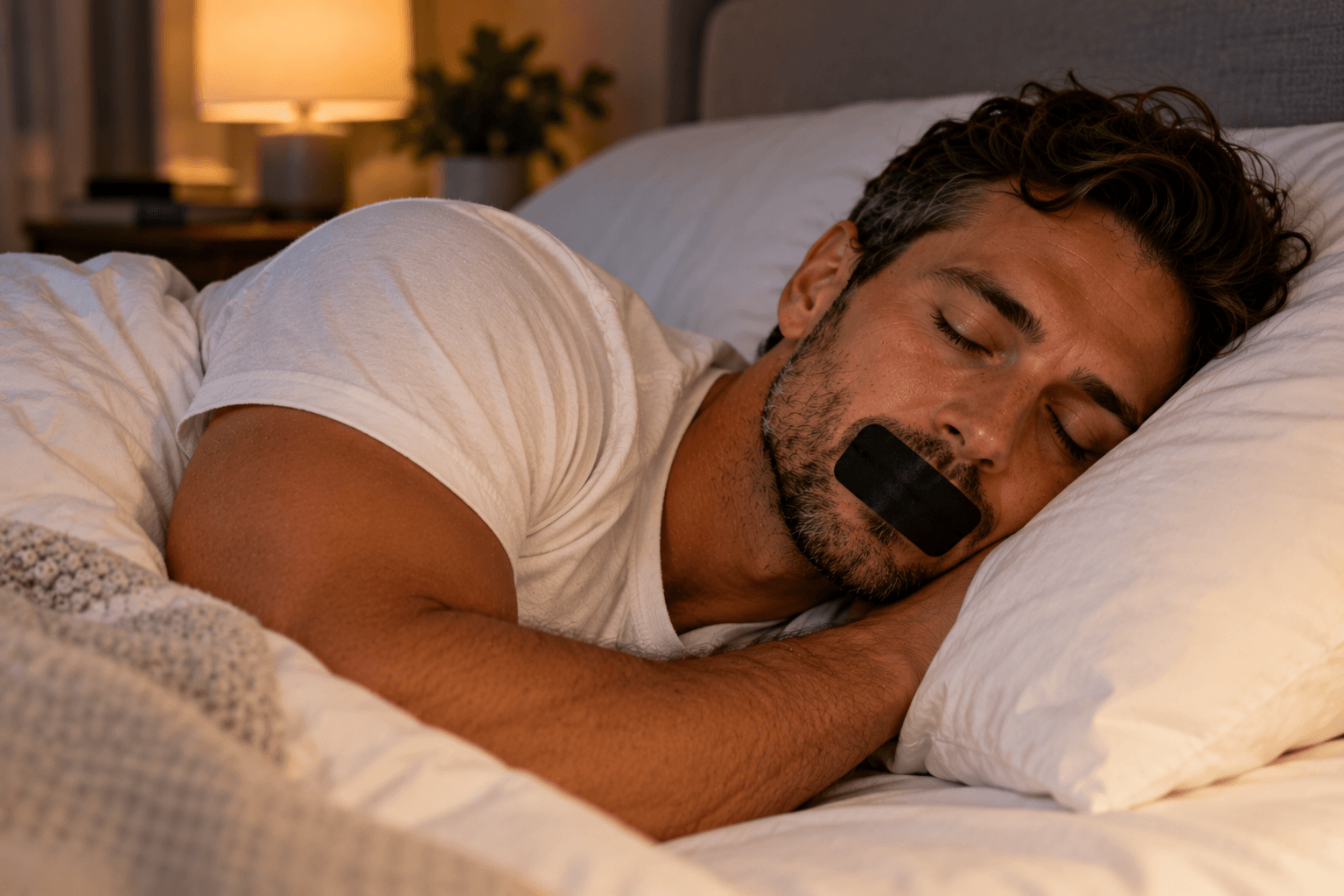
The best mouth tape is a gentle, skin-friendly tape that you find comfortable and can peel off easily. The studies with good results used exactly that kind of material: a silicone, hypoallergenic tape in a 2022 study and a soft porous patch in a 2015 one. Beyond that, the main choices are the shape, whether the material breathes, and the type of adhesive, and each comes down to what suits your face and skin.
What does the research say about tape types?
Research: limited (what this means)The studies tell us what works well enough to produce results, even though none of them compared one tape against another. A 2022 study in Healthcare used a silicone, hypoallergenic medical tape. The researchers trimmed it to 4 cm and placed it on the philtrum (the groove under your nose), spanning the upper and lower lips. After a week, 13 of the 20 participants had cut their snoring by at least half.
A 2015 pilot study used a porous oral patch, a skin pad made of three layers: a silicone sheet, polyurethane foam and polyurethane film. All 30 participants slept with their mouths closed while wearing it, and their snoring rate fell from 146.7 to 40.0 snores an hour.
Both studies only included people with mild sleep apnea, and mouth tape doesn't treat sleep apnea. A 2025 systematic review in PLOS One found 10 studies on mouth taping and similar methods and rated all of them as poor quality, so the research is still early. Eight of the 10 used either adhesive tape or a sealing device to keep the mouth closed, and two used a chin strap. We couldn't find any study that compared one tape shape or material with another.
What did researchers look for when choosing a tape?
The authors of the 2022 study explain why they picked a widely sold silicone tape over a specially designed product. They wanted something easy to apply, easy to remove and unlikely to cause allergies, and they noted it was affordable and easy to buy. They also said an earlier study's custom patch was of limited use because people couldn't easily get hold of it.
That's a useful checklist for anyone shopping. Purpose-made mouth tapes can add things like a shaped cut, a pull tab or a stronger grip for facial hair, but the core qualities the researchers wanted are the same ones to look for.
What are the common shapes?
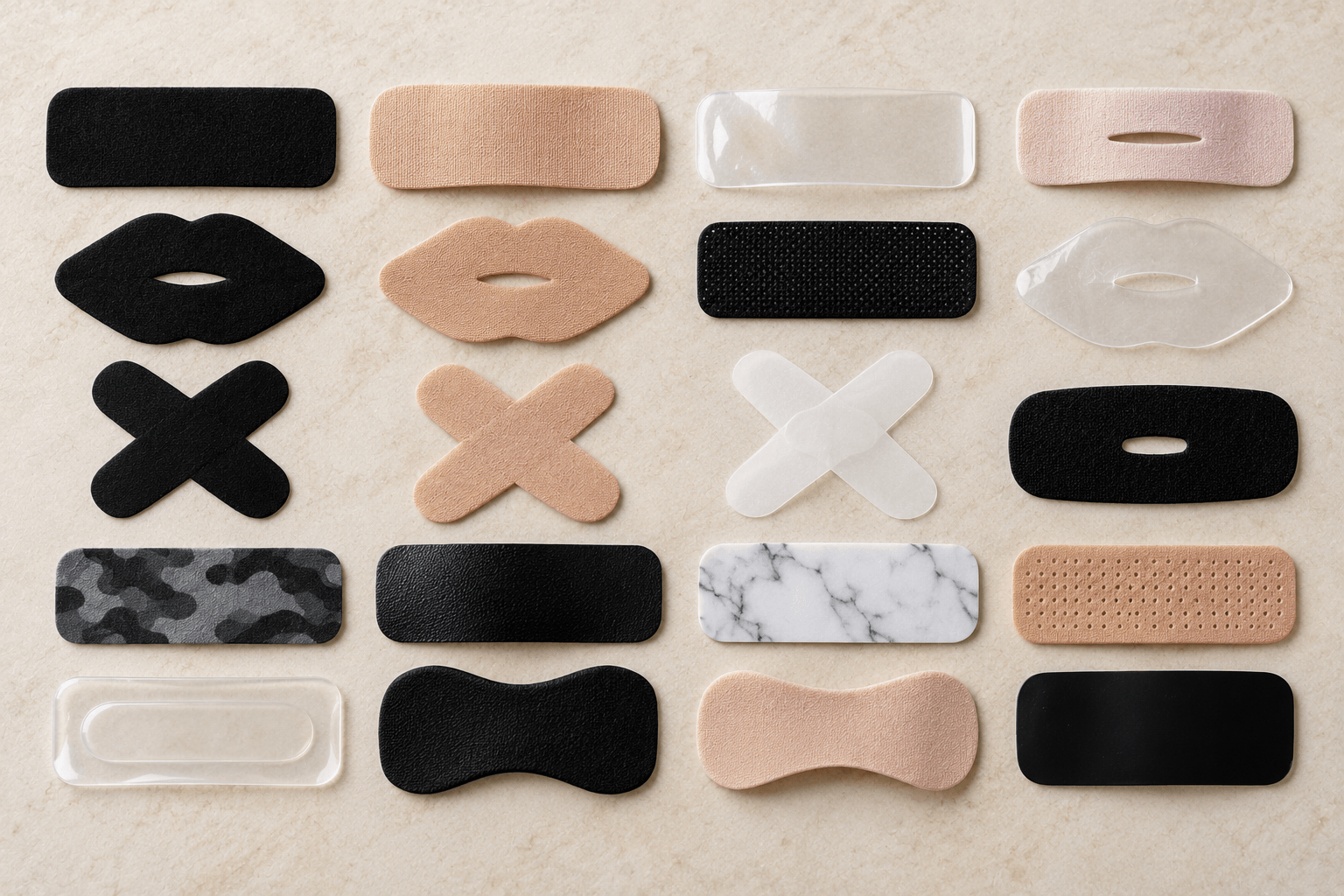
Most mouth tapes fall into a few shapes. None has been shown to work better than another, so treat these as differences in feel rather than results.
- A vertical strip runs from just under the nose to below the lower lip, covering the middle of the mouth. It leaves the corners of the mouth uncovered. This is the shape the 2022 study used.
- A horizontal strip runs across the lips from side to side, covering more of the mouth including the corners.
- An X-shape is two strips, or one cut shape, that cross over the center of the lips. It covers more area than a single vertical strip.
- A lip seal or patch is a shaped piece designed to cover most or all of the lips. The porous oral patch in the 2015 study was this kind of device.
The more of your mouth a tape covers, the more important it is that you can breathe easily through your nose and remove it fast. Whatever shape you use, you should be able to open your mouth or peel it off with one hand.
Why is a vertical strip a good place to start?
A vertical strip is the shape the best-known study used, and a newer clinical trial has chosen it too. The trial, registered as NCT06587256, uses a single piece of silicone tape placed vertically over the lips. Its description says that when the strip is placed properly, the wearer can still breathe in and out and cough around the tape if needed, but tends to keep the mouth closed otherwise.
That margin is reassuring on your first nights. If a vertical strip works for you, there may be no reason to move to anything bigger.
Porous or solid tape?
Sleep Foundation recommends a porous tape intended for use on human skin. It notes that pharmacies sell hypoallergenic tape, surgical tape and athletic tape, which are porous and commonly used on skin. It also warns that masking tape or any other tape not intended for the body is more likely to cause irritation or an allergic reaction.
There's another reason breathability matters around the mouth. 3M's guidance on medical tape describes maceration, which happens when moisture is trapped against the skin for a long time. The skin turns white or gray, softens and wrinkles, and becomes more prone to damage from friction and irritants. 3M recommends breathable tape in moist areas and avoiding occlusive tapes unless there's a clinical reason for them. Mouth tape sits right next to a moist mouth all night, so that advice applies here.
A solid plastic film tape isn't automatically a bad choice, but there's no evidence that it's better, and the general advice points toward porous tape made for skin.
Does the adhesive matter?
The adhesive can matter for your skin. A 2017 report in the Indian Journal of Anaesthesia explains that medical adhesive tapes are usually made with synthetic rubber, acrylate or silicone adhesives. It says acrylate-based tapes can cause allergic dermatitis, contact dermatitis and mechanical injuries, and that silicone-based adhesives have significantly lower peel adhesion, resulting in a much lower incidence of skin trauma on removal.
That report was about tape used during surgery, not mouth tape, but the skin on and around your lips is thin too. If you've reacted to plasters or medical tape before, a silicone adhesive is a reasonable thing to look for.
Stronger isn't always better. 3M's guidance notes that the amount of skin stripping, where the top layer of skin comes away with the tape, depends on the skin's condition, the adhesive and how often the area is taped. It recommends matching the strength of the adhesive to what you actually need. Since mouth tape goes on the same spot every night, a gentle adhesive that holds well enough is a better fit than the strongest grip you can find.
Check this first. Skip mouth tape and see a doctor if you snore loudly, wake up gasping, have been told you stop breathing in your sleep, or can't breathe comfortably through your nose. More on safety
If you want to try mouth tape, our pick is the Titan Bamboo Silk Mouth Tape.
Which type works best with a beard or sensitive skin?
Sleep Foundation notes that tape can pull on facial hair and make removal painful or irritating. The clinical trial above also excludes people whose facial hair stops them wearing the tape. A narrow vertical strip touches less hair than a wide seal, and some tapes are made to grip facial hair. Trimming the hair right around your lips helps too. Our guide to mouth tape with a beard goes into more detail.
For sensitive skin, look for a silicone adhesive, a porous material and the smallest shape that keeps your lips closed. If you still get red or sore, our guide to mouth tape skin irritation covers the next steps.
How should you choose?
Since the research doesn't pick a winner, choose based on a few practical questions.
- Is it made for skin? Avoid office tape, duct tape and anything not meant for the body.
- Can you peel it off quickly with one hand, including half asleep?
- Does it stay on your skin, including any facial hair?
- Does your skin stay calm the next morning?
Before you try any type, check that you can breathe comfortably through your nose with your mouth closed. The nose test takes two minutes. If you'd rather not tape at all, a chin strap is another way to hold the mouth closed, and we compare them in mouth tape vs chin strap.
Read next
Common questions
Is a vertical strip or a full lip seal better?
There's no research comparing them. A vertical strip leaves the corners of your mouth uncovered and was the shape used in the 2022 study. A full seal covers more of the lips. Pick the one you find comfortable and can peel off quickly.
Should mouth tape be porous?
Sleep Foundation recommends porous tape intended for use on human skin, and says tape not meant for the body is more likely to cause irritation or an allergic reaction. 3M's guidance on medical tape also recommends breathable tape in moist areas.
What adhesive is gentlest on skin?
A 2017 medical report says silicone adhesives have significantly lower peel adhesion, resulting in much less skin trauma when the tape comes off. Acrylate adhesives can occasionally cause allergic skin reactions.
Can I use regular medical tape from a pharmacy?
The 2022 study used an ordinary silicone medical tape trimmed to about 4 cm. Sleep Foundation says hypoallergenic, surgical and athletic tapes from pharmacies are porous and commonly used on skin. Avoid masking tape, office tape and duct tape.
What's the best mouth tape if I have a beard?
A vertical strip touches the least hair, and a tape made to grip facial hair helps. Sleep Foundation notes that tape can pull on facial hair and make removal painful, so trimming the hair right around your lips is another option.
How big should a mouth tape strip be?
In the 2022 study, the strip was about 4 cm long, running from the groove under the nose across both lips.
Sources
- The impact of mouth-taping in mouth-breathers with mild obstructive sleep apnea: a preliminary study
- Novel porous oral patches for patients with mild obstructive sleep apnea and mouth breathing: a pilot study
- Mouth taping for sleep: does it work?
- Facial skin injury caused by acrylate-based adhesive tapes in a post-menopausal patient: a preventable cause
- Breaking social media fads and uncovering the safety and efficacy of mouth taping in patients with mouth breathing, sleep disordered breathing, or obstructive sleep apnea: A systematic review
- Medical Adhesive Related Skin Injuries (MARSI): taping techniques
- Study to Examine the Effect of Silicone Mouth Tape on Snoring and Mild Sleep Apnea (NCT06587256)
About this article
- Research
- 7 published sources, listed above.
- Evidence
- Limited. How we rate it
- Last checked
- October 3, 2026
- Funding
- Paid partner of Titan Recovery. Their ads are labeled.
- Found an error?
- Tell us. We log fixes on the corrections page.
* This content is for informational and educational purposes only and is not medical advice. It is not intended to diagnose, treat, cure or prevent any disease or health condition. Talk to a qualified healthcare provider about your health.