In short
- Porous medical or surgical tape made for skin is a reasonable choice for mouth taping, and it's what several of the published studies used.
- A 2022 mouth taping study used a silicone hypoallergenic tape, and a 2009 trial used microporous tape.
- In two randomized trials, silicone tape was gentler on skin than paper tape, though paper tape lifted at the edges less.
- Avoid tape that isn't made for the body. Sleep Foundation says it's more likely to cause irritation or an allergic reaction.
- Whatever tape you use, put it on clean, dry skin without stretching it, and peel it off low and slow.
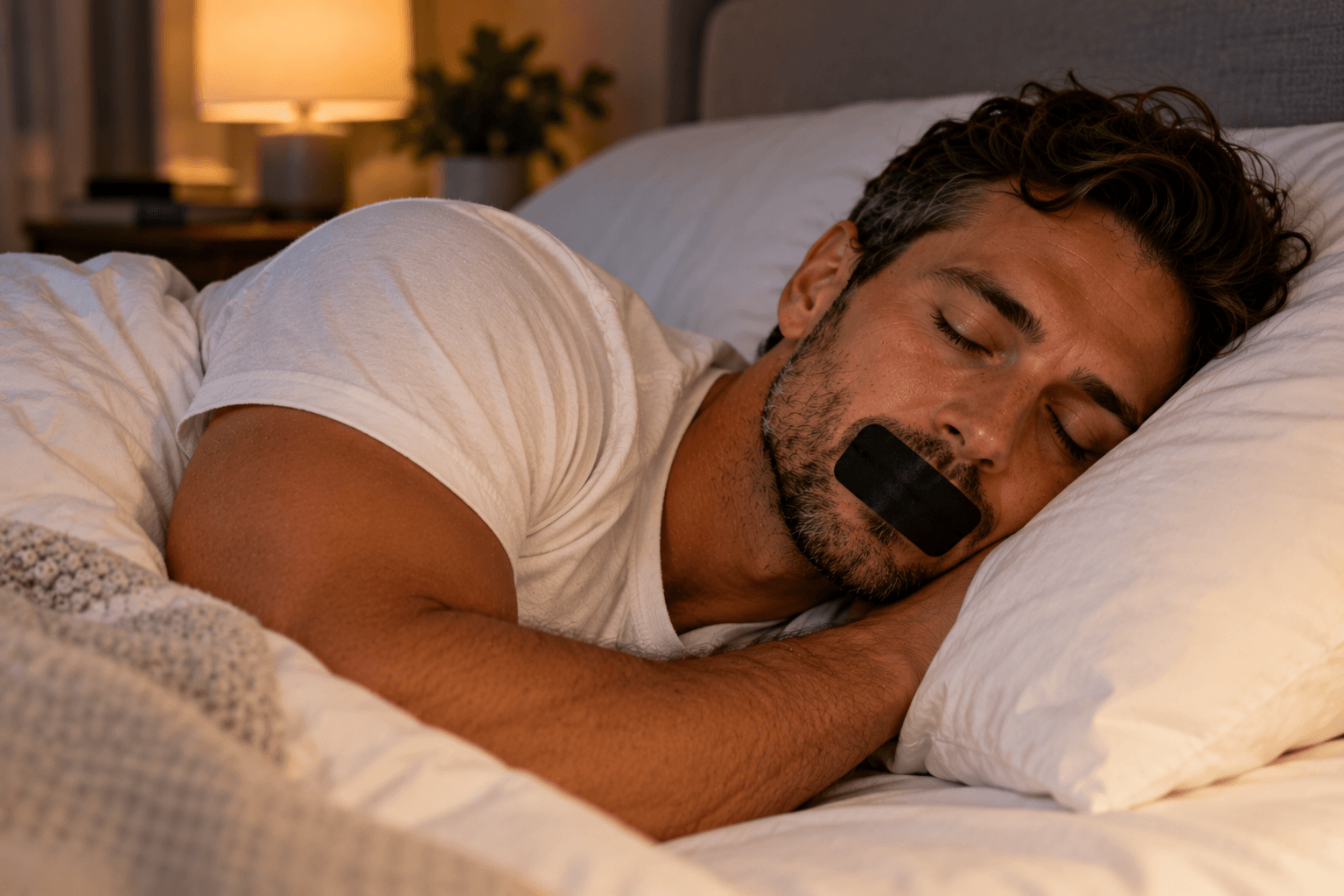
Yes, you can use medical or surgical tape for mouth taping, as long as it's a porous tape made for skin. In fact, several of the published mouth taping studies used ordinary medical tape rather than a specialty product. Silicone tape is the gentlest option for sensitive lips, while paper and microporous tapes are sold in most pharmacies and have been used in research too.
What matters most is that the tape is meant for the body, and that you put it on and take it off gently.
Is medical tape a good choice for mouth taping?
Medical tape is a sensible choice for mouth taping. Sleep Foundation advises using a porous tape intended for human skin, and notes that most pharmacies sell hypoallergenic tape, surgical tape and athletic tape, which are porous and commonly used on skin. It contrasts these with masking tape or other tape not made for the body, which it says is more likely to cause irritation or an allergic reaction.
Researchers have reached for medical tape too. In a 2022 study in Healthcare, the team deliberately chose an everyday 3M silicone hypoallergenic tape over a specially designed patch. They wrote that it was easy to stick on, easy to remove and non-allergenic, and that using a common product meant the method was easy to repeat.
What does the research say about medical tape for mouth taping?
Research: limited (what this means)The mouth taping studies are small, but the ones that used medical tape had encouraging results and good comfort.
In the 2022 study, 20 adults who slept with their mouths open and had mild sleep apnea wore a 4 cm strip of silicone tape from the groove under the nose down across both lips for a week. Their median snoring index fell from 303.8 to 121.1 events an hour. The study had no comparison group, so its authors called for larger, controlled trials.
A 2009 trial in Respiratory Medicine used microporous tape, as taught in the Buteyko breathing method, in 50 people with asthma. Taping had no effect on asthma control. But participants taped their mouths for a median of 26 out of 28 nights, and 36 of them said mouth taping was very or fairly acceptable. That's a useful sign that a simple roll of tape is something people can stick with.
For comparison, a 2015 pilot study used a purpose-built porous patch made of a silicone sheet, polyurethane foam and polyurethane film. All 30 participants slept with their mouths closed while wearing it, and their median snoring index fell from 146.7 to 40 an hour. Purpose-built and off-the-shelf options both showed promise.
Paper, silicone or microporous tape: which is gentlest?
Medical adhesive tapes are made with synthetic rubber, acrylate or silicone adhesives, according to a 2017 report in the Indian Journal of Anaesthesia. It notes that acrylate tapes can cause allergic dermatitis, contact dermatitis and mechanical skin injury, and that silicone adhesives have significantly lower peel adhesion with much less skin trauma on removal.
Two randomized trials compared silicone and paper tape directly. In a 2013 trial, 28 adults aged 55 and over had tape applied to their forearms and removed nine times over 11 days. Silicone tape caused less skin stripping, disturbed the skin barrier less and hurt less to remove, though both tapes stayed within the range of normal skin. A 2014 trial in 24 healthy young children found the same pattern, with less redness and discomfort from silicone tape. It also found that paper tape lifted at the edges significantly less than silicone tape.
So there's a trade-off. Silicone is kinder to skin and easier to peel off, while paper tape grips its edges a little better. Both studies tested tape on the arm or back rather than the lips, so treat them as a guide to the adhesives, not proof of how each feels on your mouth.
Microporous tape is what the 2009 asthma trial used, and most participants found it acceptable. If you try it and your lips get sore, a silicone tape is the natural next step.
How do you use medical tape for mouth taping?
- Check that you can breathe comfortably through your nose with your lips closed for a couple of minutes.
- Cut a short strip. The 2022 study used 4 cm, placed vertically over the middle of the lips.
- Put it on clean, dry skin without stretching it. 3M's medical taping guide says tape should be applied without tension and smoothed down with gentle pressure.
- Fold over one corner so it's easy to find and peel off, as Sleep Foundation suggests.
- In the morning, peel it low and slow, close to the skin, while one finger steadies your lips. Our guide on how to take mouth tape off has the full method.
The 3M guide also recommends breathable tape in moist areas and avoiding occlusive tapes unless there's a clinical reason. Around the mouth, that's another point in favor of porous tape.
Check this first. Skip mouth tape and see a doctor if you snore loudly, wake up gasping, have been told you stop breathing in your sleep, or can't breathe comfortably through your nose. More on safety
If you want to try mouth tape, our pick is the Titan Bamboo Silk Mouth Tape.
What if medical tape irritates your lips?
Not every red patch is an allergy. 3M's taping guide says people are sometimes wrongly thought to have a tape allergy when they actually have a non-allergic reaction. That kind of reaction can happen when irritants, such as some skin products, get trapped between the adhesive and the skin. The fix is simple: make sure your lips and the skin around them are clean and dry before the tape goes on.
The same guide describes maceration, where moisture trapped against the skin for a long time leaves it soft, wrinkled and more easily damaged. It recommends keeping taped skin clean and dry and replacing tape that gets soiled. If you suspect a true allergy, the guide suggests identifying which tape caused it and trying an alternative hypoallergenic tape. A reaction that keeps coming back is worth showing to a doctor.
Is medical tape better than tape made for mouth taping?
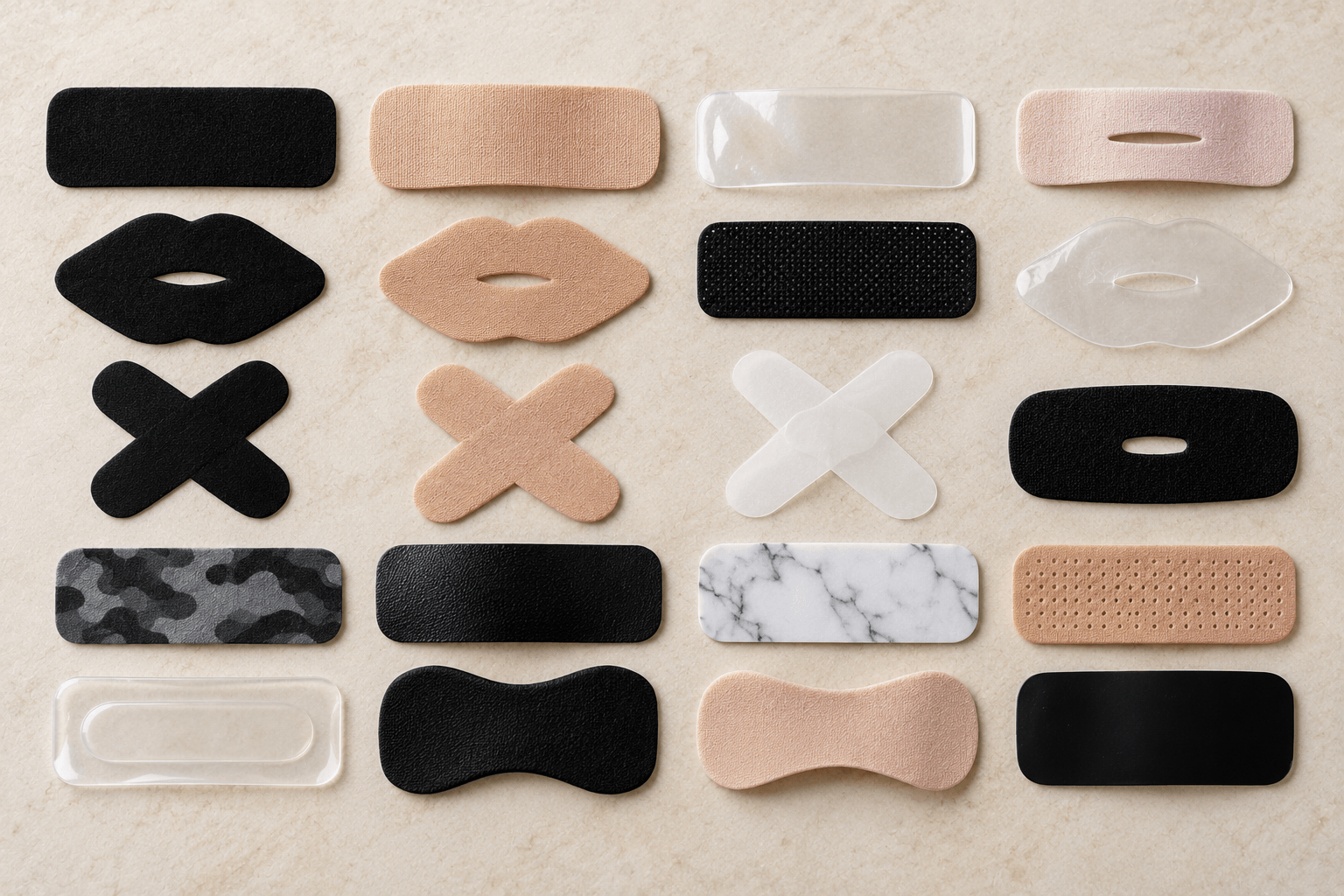
Neither medical tape nor tape made for mouth taping has been shown to be better. No study has compared a roll of medical tape with tapes sold for mouth taping. Purpose-made strips come pre-cut for the lips, while a roll of medical tape needs cutting to size. Medical tape is easy to find, since Sleep Foundation notes most pharmacies sell it. Our guide to the best type of mouth tape compares shapes and materials, and mouth taping with a beard covers what works with a mustache.
Who should skip mouth taping, whatever the tape?
The tape doesn't change who it's right for. Sleep Foundation lists people with sleep apnea who aren't using CPAP, anyone with a blocked nose from allergies, a deviated septum or a cold, people with asthma or COPD unless a doctor says otherwise, children unless under medical supervision, people with anxiety or panic disorders, and anyone at risk of vomiting during sleep. We don't recommend mouth tape for children.
If you snore loudly and also choke, gasp or stop breathing in your sleep, see a doctor first. Mouth tape doesn't treat sleep apnea. Our page on snoring vs. sleep apnea explains the warning signs, and if any tape leaves your lips red or itchy, mouth tape skin irritation covers what to do.
Read next
- What is mouth taping? A beginner's guide
- How to start mouth taping: your first week
- Mouth taping mistakes beginners make
Common questions
Is surgical tape safe for mouth taping?
Surgical tape is made for skin, and Sleep Foundation names hypoallergenic, surgical and athletic tape as porous options commonly used on skin. The usual mouth taping rules still apply: only tape if you can breathe easily through your nose, and skip it if you have signs of sleep apnea.
Is paper tape or silicone tape better for mouth taping?
Silicone tape is gentler. In a 2013 trial in adults over 55, it caused less skin stripping and less pain on removal than paper tape. Paper tape held its edges down better in a 2014 trial, so it may stay put more easily. If your lips get sore, silicone is the one to try.
Can I use microporous tape for mouth taping?
Yes. A 2009 trial of mouth taping at night used microporous tape, as taught in the Buteyko breathing method. Participants taped for a median of 26 out of 28 nights, and most found it acceptable.
What tape should I never use on my mouth?
Anything not made for skin, such as office tape, masking tape or duct tape. Sleep Foundation warns that tape not intended for the body is more likely to cause irritation or an allergic reaction.
How much medical tape do I need?
Not much. In a 2022 study, researchers cut a 4 cm piece and placed it from the groove under the nose down across both lips, leaving the corners of the mouth free.
Is medical tape as good as tape made for mouth taping?
Both can work. Tapes sold for mouth taping come pre-cut, while a roll of medical tape needs cutting to size. No study has compared the two directly.
Sources
- Mouth taping for sleep: does it work?
- The impact of mouth-taping in mouth-breathers with mild obstructive sleep apnea: a preliminary study
- Effect of mouth taping at night on asthma control: a randomised single-blind crossover study
- Novel porous oral patches for patients with mild obstructive sleep apnea and mouth breathing: a pilot study
- A randomized and controlled comparison of gentleness of 2 medical adhesive tapes in healthy human subjects
- Randomized comparison of a silicone tape and a paper tape for gentleness in healthy children
- Facial skin injury caused by acrylate-based adhesive tapes in a post-menopausal patient: a preventable cause
- Medical Adhesive Related Skin Injuries (MARSI): taping techniques
About this article
- Research
- 8 published sources, listed above.
- Evidence
- Limited. How we rate it
- Last checked
- October 4, 2026
- Funding
- Paid partner of Titan Recovery. Their ads are labeled.
- Found an error?
- Tell us. We log fixes on the corrections page.
* This content is for informational and educational purposes only and is not medical advice. It is not intended to diagnose, treat, cure or prevent any disease or health condition. Talk to a qualified healthcare provider about your health.