In short
- Facial hair doesn't rule out mouth tape. A small trimmed patch under the tape and a gentle removal technique solve most of the problem.
- Sleep Foundation notes that tape can pull on facial hair, making removal painful or irritating.
- Silicone-based adhesives have significantly lower peel adhesion, which means much less skin trauma on removal.
- Medical adhesive guidance recommends trimming hair where tape will sit and making sure the skin is clean and dry.
- Remove tape slowly, close to the skin and in the direction the hair grows, while holding the skin with your other hand.
- If tape won't stay on or always hurts to remove, a chin strap is another option, but the same nose-breathing check applies.
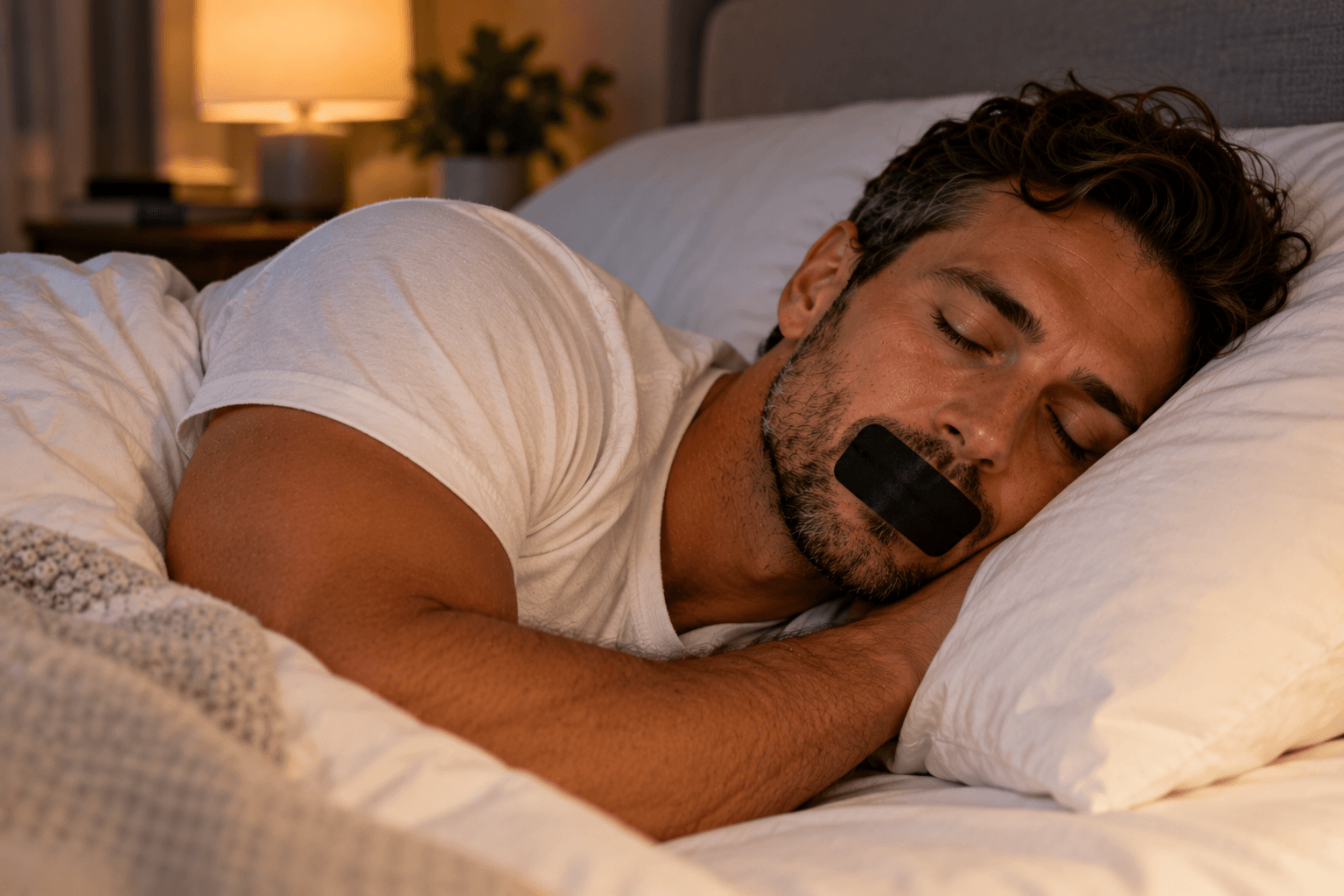
You can mouth tape with a beard or mustache. Hair makes it harder for the tape to stick and more uncomfortable to take off, but a few small changes fix most of that. Trim the hair right where the tape sits, choose a gentle tape, and peel it off slowly in the direction of hair growth.
Why is facial hair a problem for mouth tape?
Research: limited (what this means)Tape is designed to stick to skin, and facial hair gets in the way. Sleep Foundation lists discomfort for people with facial hair as one of the side effects of mouth taping, noting that tape can pull on facial hair and make removal painful or irritating.
The mustache is usually the hardest part. In the 2022 study in Healthcare that most people cite, the tape was placed on the philtrum (the groove between your nose and upper lip) and ran down across both lips. That's exactly where a mustache grows.
There's no research on mouth taping with facial hair specifically. The tips below come from general guidance on using medical adhesives on skin.
How do you prepare a beard for mouth tape?
A 2022 scoping review of guidance on skin injuries from medical adhesives recommends trimming hair at the place the adhesive will go, and making sure the skin is clean and dry before a patch is applied.
For mouth tape, that usually means:
- Trimming the mustache short where the tape will sit, and clearing hair away from the lip line.
- Washing the area and drying it well, including wiping off any beard oil, balm or lip balm.
- Pressing the tape on with gentle, firm pressure once your lips are gently closed.
You don't need to shave your whole beard. The goal is a small patch of skin, or very short hair, under the tape.
How you lay the tape down matters too. The same review collects advice to apply adhesive to dry skin without tension, meaning without pulling or stretching it, and to smooth it in place with gentle, firm pressure, avoiding gaps and wrinkles. The review notes that adhesive applied with tension can cause stress injuries to the skin.
Which kind of tape is gentlest on facial hair?
Tapes with a softer adhesive are a good place to start. The 2017 report in the Indian Journal of Anaesthesia notes that silicone-based adhesives have significantly lower peel adhesion, which leads to a much lower rate of skin trauma when they're removed. The 2022 study in Healthcare used a 3M silicone hypoallergenic tape, chosen in part because it was easy to stick on and easy to take off.
Lower peel adhesion means the tape takes less force to pull off, which is the point for a bearded face. If one brand keeps lifting, try trimming a little shorter or drying the area better before switching to something stickier. Our guide to the best type of mouth tape compares the options.
Which shape works best with facial hair?
No study has compared tape shapes for people with beards. A narrow vertical strip covers less hair than a wide horizontal strip or a full lip seal, so it can be easier to keep the area under it trimmed. Whatever shape you pick, use a tape made for skin. Sleep Foundation recommends a porous tape intended for use on human skin.
Before you tape at all, make sure you can breathe comfortably through your nose with your mouth closed. Our nose test takes two minutes. If you're new to this, the first-week guide explains how to build up gradually.
Check this first. Skip mouth tape and see a doctor if you snore loudly, wake up gasping, have been told you stop breathing in your sleep, or can't breathe comfortably through your nose. More on safety
If you want to try mouth tape, our pick is the Titan Bamboo Silk Mouth Tape.
How do you take it off without pulling hair?
Take mouth tape off a beard slowly. The scoping review describes the recommended removal technique as starting from the edges and peeling slowly, at a low angle, in the direction of hair growth and close to the skin surface. A 2017 report in the Indian Journal of Anaesthesia gives similar advice: remove tape slowly in the direction of hair growth, keep it close to the skin, and support the newly exposed skin with a finger. It adds that moisturizer can be applied to soften the tape.
Check which way the hair under the tape grows and peel in that direction. Folding over one corner before bed, as Sleep Foundation suggests, gives you a tab to start from.
The scoping review also describes keeping the tape low and folded back over itself as it comes off, with the skin supported. In practice, that means pulling the tape back along your face rather than straight out. It also mentions adhesive removers as an option for people whose skin is easily damaged.
If removal regularly leaves your skin red or sore for a while afterward, that's a sign to change something. The review defines a skin injury from medical adhesive as damage, like redness or a scrape, that lasts 30 minutes or more after the tape comes off.
What if the tape keeps coming off?
If your tape won't stay put overnight, run through these before giving up:
- Trim a little shorter under the tape, so it sits on skin or very short hair.
- Wash off beard oil and balm, then dry the area well. Medical adhesive guidance calls for clean, dry skin under any tape.
- Skip lip balm right before taping. Put it on earlier in the evening, or after you peel the tape off in the morning. Our article on lip balm and mouth tape covers the timing.
- Lay the tape down without stretching it, then smooth it firmly from the middle outward.
- Try a narrower strip that sits mostly on the lips rather than on the mustache.
The 2022 study left out people whose tape came loose by morning, so a tape that won't stay on is a known issue, not a sign you're doing it wrong. Our article on mouth tape skin irritation can help if your skin is getting sore along the way.
What if tape just won't work with your beard?
Some people find that tape never sticks well enough or always hurts to remove. That's a fine reason to stop. Sleep Foundation mentions chin straps among the supportive tools that may help encourage nasal breathing during sleep. A chin strap is another way to hold the mouth closed, and doesn't depend on adhesive. We compare the two in mouth tape vs chin strap.
The same safety rule applies to both. A 2025 systematic review in PLOS One noted that closing the mouth by taping, sealing or chin strapping could pose a serious risk of asphyxiation if the nose is obstructed. If your nose is blocked, neither is a good idea. And if you snore loudly with gasping or pauses in breathing, see a doctor rather than trying either one, because that can be a sign of sleep apnea.
Read next
Common questions
Does mouth tape work with a mustache?
It can, but tape can pull on the hairs when you take it off. Medical adhesive guidance recommends trimming hair where tape will sit, so trimming the mustache just above the upper lip is a good place to start.
How do you take mouth tape off a beard without it hurting?
Start at an edge and peel slowly at a low angle, keeping the tape close to the skin and moving in the direction the hair grows. Hold the skin next to the tape with your other hand. A moisturizer or an adhesive remover can loosen stubborn tape.
Do I have to shave to use mouth tape?
Not necessarily. Medical adhesive guidance only calls for trimming hair where the adhesive goes, so trimming the area under the tape may be enough. If your facial hair still stops the tape from sticking, or removal always hurts, you may be better off with a different approach.
What kind of tape works best with a beard?
No study has tested tapes on facial hair, but a gentler adhesive makes sense. A 2017 report notes that silicone-based adhesives have significantly lower peel adhesion and cause much less skin trauma on removal. The 2022 mouth taping study used a silicone hypoallergenic tape.
Why does my mouth tape lift off in the night?
Check for oil, balm or hair under the edges first. Medical adhesive guidance says to trim hair where tape will sit, and to apply tape to clean, dry skin without tension and smooth it down with gentle, firm pressure, avoiding gaps and wrinkles.
Is redness after taking off the tape normal?
A little brief redness can happen. Medical adhesive guidance defines a skin injury from tape as damage that lasts 30 minutes or more after removal. If yours lasts that long, or keeps coming back, change your tape or your removal technique and give your skin a break.
Sources
- Mouth taping for sleep: does it work?
- Medical adhesive-related skin injury in adult intensive care unit: scoping review
- Facial skin injury caused by acrylate-based adhesive tapes in a post-menopausal patient: a preventable cause
- The impact of mouth-taping in mouth-breathers with mild obstructive sleep apnea: a preliminary study
- Breaking social media fads and uncovering the safety and efficacy of mouth taping in patients with mouth breathing, sleep disordered breathing, or obstructive sleep apnea: A systematic review
About this article
- Research
- 5 published sources, listed above.
- Evidence
- Limited. How we rate it
- Last checked
- October 3, 2026
- Funding
- Paid partner of Titan Recovery. Their ads are labeled.
- Found an error?
- Tell us. We log fixes on the corrections page.
* This content is for informational and educational purposes only and is not medical advice. It is not intended to diagnose, treat, cure or prevent any disease or health condition. Talk to a qualified healthcare provider about your health.