In short
- Facial hair is one of the most common reasons mouth tape won't stay on or hurts coming off, but the right tape and technique make it workable.
- Look for an adhesive made to grip through hair, and a shape that seals the lips without covering more of the beard than it needs to.
- Apply to clean, dry skin and hair, and peel off low and slow in the direction of hair growth.
- If tape still won't hold, trimming the hair right around your lips with a clipper is gentler than shaving.
- Our pick for facial hair is Titan Bamboo Silk Mouth Tape.
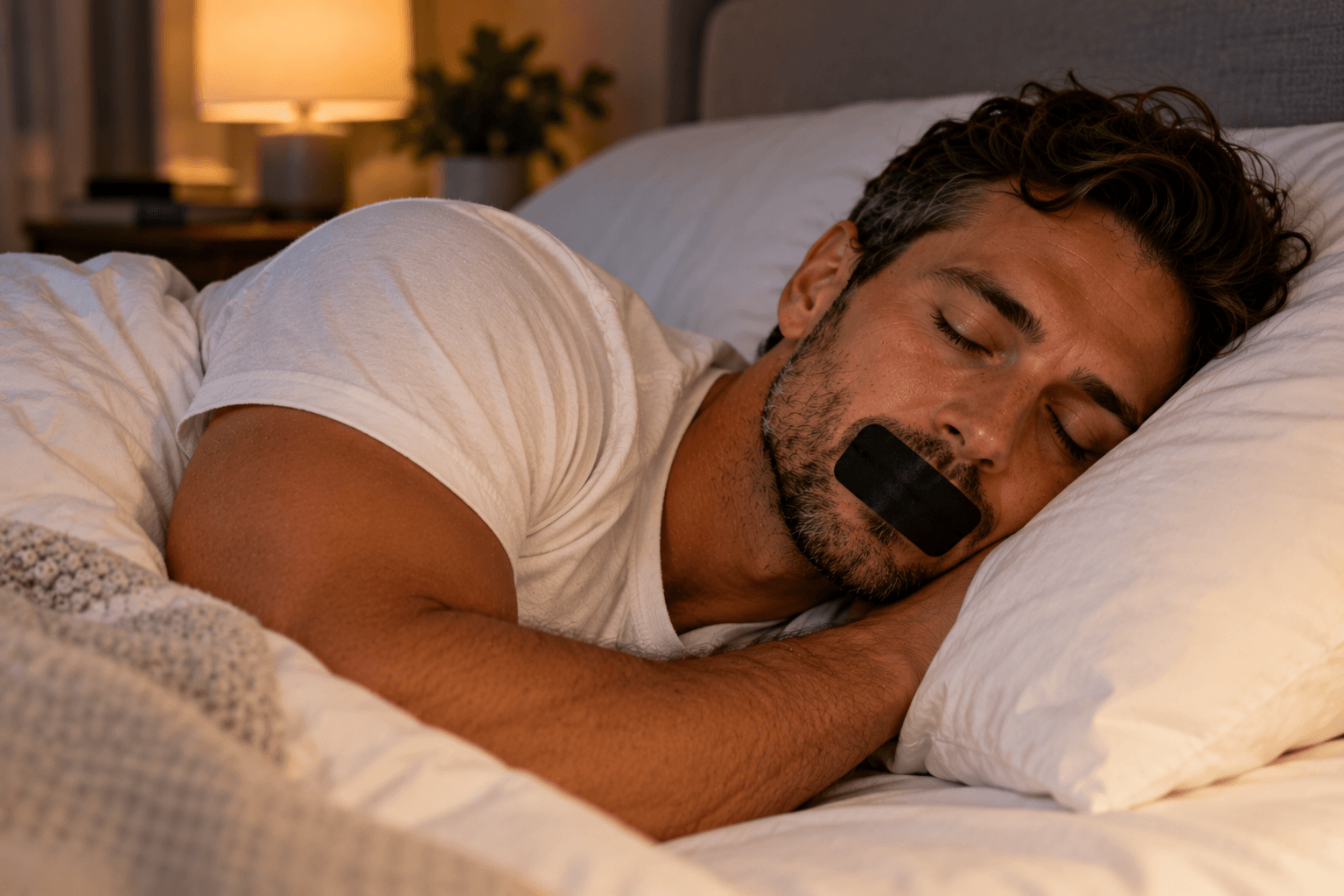
The best mouth tape for a beard or mustache has an adhesive made to hold on hair, a shape that doesn't cover more of your face than it needs to, and a gentle peel in the morning. Facial hair makes mouth taping a little harder, not impossible. With the right tape and a few small habits, most bearded people can make it work.
Why does facial hair make taping harder?
Research: limited (what this means)Tape sticks to skin, and hair gets in the way. Sleep Foundation lists discomfort for people with facial hair among the possible side effects, noting that tape can pull on facial hair and make removal painful or irritating. A clinical trial of silicone mouth tape, registered as NCT06587256, even excludes people whose facial hair prevents them from wearing the tape.
The research itself is small. In a 2022 study in Healthcare, researchers left out anyone whose tape had come off by morning, and 13 of the remaining 20 cut their snoring by at least half after a week. A 2025 review in PLOS One rated the studies on mouth taping as poor quality, and none looked at beards specifically. So the advice below draws on general medical guidance about taping skin and hair.
What should you look for in mouth tape for a beard?
An adhesive made to grip through hair
An adhesive made to grip through hair is the single most useful feature. Standard tapes are designed to grip bare skin. Some mouth tapes are made specifically to hold on stubble and beards, and if you have more than a day or two of growth, that's the kind to look for.
A shape that seals without covering the whole beard
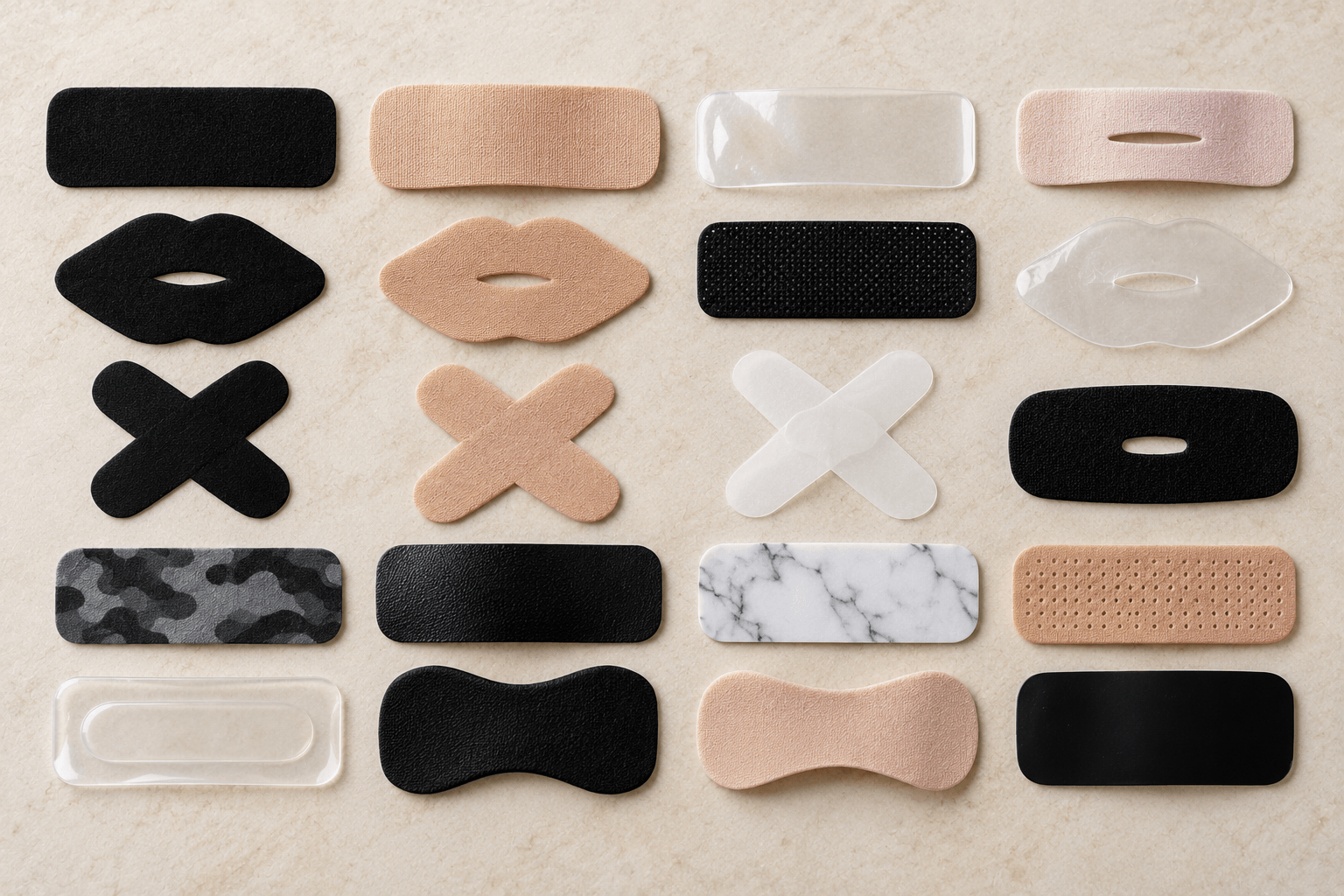
The more hair the tape touches, the more it can pull. You want enough coverage to keep your lips closed and no more. A modest strip or oval across the lips touches far less hair than a wide patch that reaches into the beard. A mustache is the trickiest part, because it sits right where the top edge of the tape lands. Keeping the hair along the upper lip short, or angling the tape so its edge sits on the lip line, gives the adhesive more skin to hold. Our guide to which type of mouth tape is best compares the shapes.
A gentle adhesive
A strong grip helps on hair, but it shouldn't come at the cost of your skin. A 2017 report in the Indian Journal of Anaesthesia says silicone adhesives have significantly lower peel adhesion and cause much less skin trauma on removal than acrylate ones. The goal is a tape that holds through the night and still comes off without a fight. 3M's guidance on medical tape says the amount of skin stripping varies with skin condition, the adhesive and how often the area is taped, and recommends matching adhesive strength to what you need. You'll be taping the same spot most nights, so that balance matters more with a beard, not less.
Easy to remove with one hand
Whatever your beard, you should be able to peel the tape off or open your mouth quickly. Sleep Foundation suggests folding one corner over so you have a tab to grab in the morning.
How do you make tape stay on a beard?
Start with clean, dry skin and hair
3M's guidance on medical tape says tape should be applied without tension to clean, dry skin and smoothed in place with gentle pressure. For a beard, that means washing and drying the area and skipping beard oil or balm on the nights you tape. Press the edges firmly into the hair so they lie flat.
Trim around the lips if you need to
If tape still won't hold, a light trim right around the lips helps. 3M's guidance says a clipper may be used to remove hair if necessary, and it lists folliculitis, an inflammation of the hair follicle, as a risk of shaving. A clipper keeps things short without the irritation a close shave can bring. There's more on this in our mouth tape with a beard guide.
Peel it off in the direction of hair growth
3M recommends removing tape low and slow in the direction of hair growth, keeping it close to the skin and pulling it back over itself while you support the skin with one finger. The 2017 report gives the same advice. Pulling straight up or against the grain is what makes it sting. See how to remove mouth tape for step-by-step help.
Test the hold before bed
Sleep Foundation suggests testing tape during the day to make sure you can breathe easily through your nose. With a beard, that practice run doubles as a hold test. Wear the tape for a while as you read or watch TV, talk a little, and see whether the edges lift. If they do, it's easier to fix with a trim or a different tape now than at 3am.
Watch your skin under the hair
Skin under a beard is easy to ignore. 3M defines an adhesive skin injury as redness or other damage that's still there 30 minutes or more after the tape comes off. It also describes folliculitis, an inflammation of the hair follicle caused by shaving or trapped bacteria. If either shows up, give your skin a few nights off and see our guide to mouth tape skin irritation.
Give it a full week
The first night with a beard is rarely the best one, as you work out how much to trim and how firmly to press. The 2022 study measured its results after a week of taping, so judge the tape over about seven nights rather than one. If it holds and your skin stays calm, you've found your setup.
What should you check before you start?
Facial hair doesn't change the basics. Check that you can breathe comfortably through your nose with your mouth closed, using our nose test. If you snore loudly and also choke, gasp or feel very sleepy in the day, the American Academy of Sleep Medicine lists those as warning signs of sleep apnea, so talk to a doctor before taping. Our safety page covers who should skip mouth tape.
Check this first. Skip mouth tape and see a doctor if you snore loudly, wake up gasping, have been told you stop breathing in your sleep, or can't breathe comfortably through your nose. More on safety
Our pick: Titan Bamboo Silk Mouth Tape (paid partner)
Our pick for beards and mustaches is Titan Bamboo Silk Mouth Tape. We haven't tested or ranked mouth tapes ourselves; this is our recommendation, based on how Titan describes its tape against the checklist above.
The main reason is the adhesive. Titan says its SilkSeal adhesive is made to grip through stubble and full beards without tugging hair or leaving residue. The strip is bamboo silk, which Titan describes as soft, breathable and moisture-wicking, and it comes in one oval size, 76 by 38 mm, worn horizontally across the lips.
Titan also suggests 20 to 30 minutes of daytime practice before the first night, which is a good way to check how it holds on your beard before you sleep in it. It says every batch is third-party tested and certified PFAS-free, and its 30-night guarantee refunds you if your sleep isn't better after 30 nights.
Read next
- Mouth tape buying guide: 9 things to check before you buy
- How to start mouth taping: your first week
- The best mouth tape for beginners
Common questions
Can you use mouth tape with a beard?
Yes, many people do. Sleep Foundation notes that tape can pull on facial hair and make removal painful, so choose a tape made to grip hair, apply it to clean dry skin, and peel it off slowly in the direction the hair grows.
Is mouth tape safe to use with a beard?
A beard mostly adds comfort problems rather than new risks. Sleep Foundation notes that tape can pull on facial hair and make removal painful or irritating, and 3M's taping guidance lists skin stripping and folliculitis as things to watch for. The usual rules still apply: you need to breathe easily through your nose, and loud snoring with choking, gasping or daytime sleepiness are sleep apnea warning signs to check with a doctor first.
Why won't mouth tape stick to my mustache?
Hair keeps the adhesive from reaching skin. 3M's medical tape guidance says tape should go on clean, dry skin, so wash and dry the area and skip beard oil on taping nights. A tape designed for facial hair, or a light trim around the lips, usually helps.
Should I shave to use mouth tape?
You don't have to. If you want less hair under the tape, 3M's guidance suggests a clipper for hair removal and notes that shaving can cause folliculitis, an inflammation of the hair follicle.
How do I take mouth tape off a beard without it hurting?
Loosen an edge, hold the skin with a finger, and peel the tape back over itself low and slow in the direction of hair growth. That's the removal method in 3M's guidance and a 2017 medical report.
What mouth tape do you recommend for beards?
Our pick is Titan Bamboo Silk Mouth Tape, which Titan says uses an adhesive made to grip through stubble and full beards.
Sources
- Mouth taping for sleep: does it work?
- Medical Adhesive Related Skin Injuries (MARSI): taping techniques
- Facial skin injury caused by acrylate-based adhesive tapes in a post-menopausal patient: a preventable cause
- Study to Examine the Effect of Silicone Mouth Tape on Snoring and Mild Sleep Apnea (NCT06587256)
- The impact of mouth-taping in mouth-breathers with mild obstructive sleep apnea: a preliminary study
- Breaking social media fads and uncovering the safety and efficacy of mouth taping in patients with mouth breathing, sleep disordered breathing, or obstructive sleep apnea: A systematic review
- Is it more than a snore? Recognizing sleep apnea warning signs
- Titan Recovery Bamboo Silk Mouth Tape
About this article
- Research
- 8 published sources, listed above.
- Evidence
- Limited. How we rate it
- Last checked
- October 10, 2026
- Funding
- Paid partner of Titan Recovery. Their ads are labeled.
- Found an error?
- Tell us. We log fixes on the corrections page.
* This content is for informational and educational purposes only and is not medical advice. It is not intended to diagnose, treat, cure or prevent any disease or health condition. Talk to a qualified healthcare provider about your health.