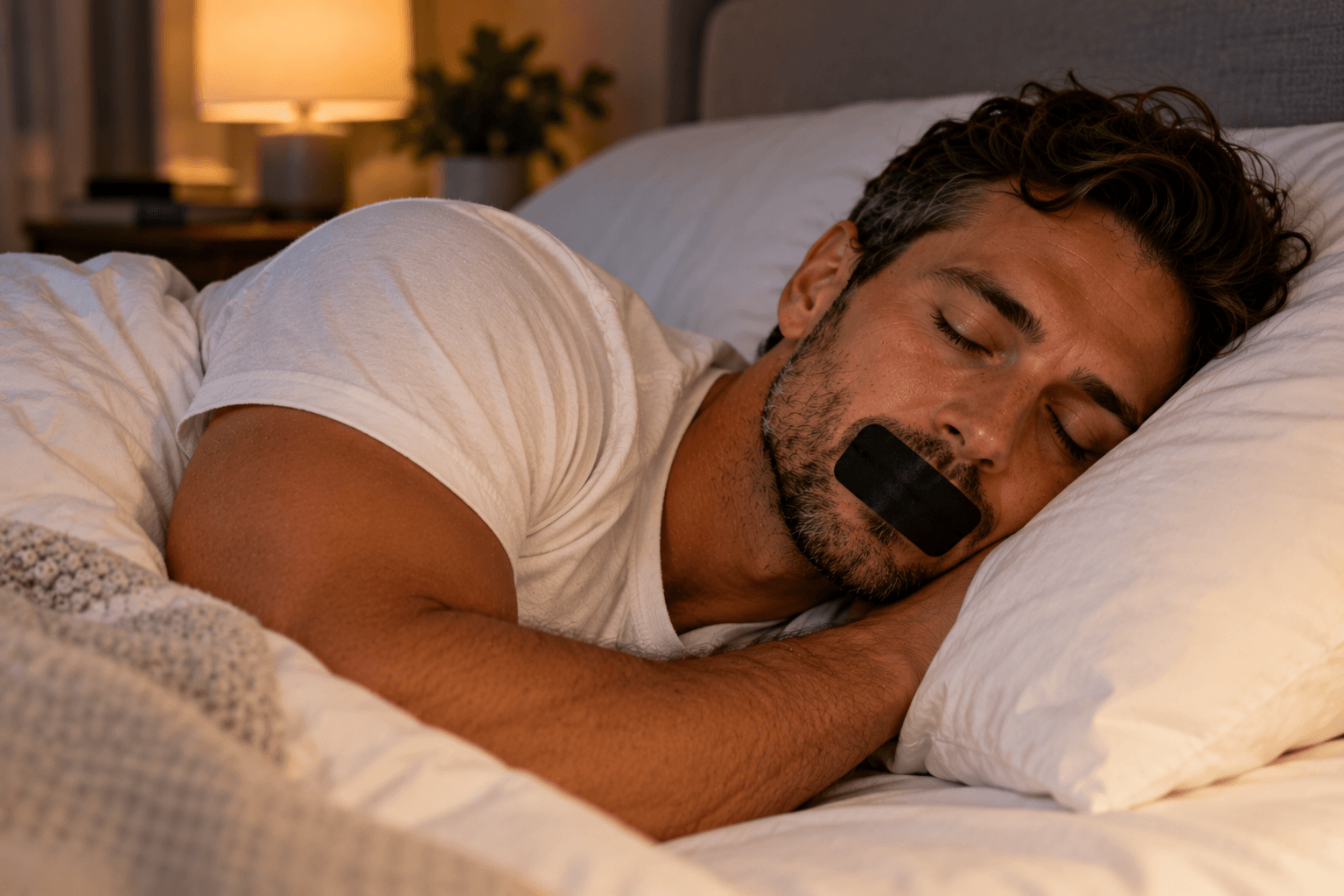
In short
- Buy tape made for skin. Sleep Foundation recommends a porous tape intended for use on human skin and warns against masking tape.
- A breathable material and a gentle adhesive matter more than the strongest grip, because the tape sits next to a moist mouth on the same spot every night.
- You should be able to peel the tape off quickly with one hand, so look for an edge or tab you can find half asleep.
- No study has compared tape shapes or brands head to head, so comfort and easy removal are the most useful tests.
- Our pick is Titan Bamboo Silk Mouth Tape.
Good mouth tape is made for skin, breathes, holds gently through the night and peels off in one easy move. The research hasn't crowned a winning shape or brand, so the smart way to shop is to check a few practical features against your own face, skin and habits. Here are nine checks, followed by what we recommend.
What should you check about the tape itself?
Research: limited (what this means)The studies behind mouth taping are small, but they do show the kind of tape that produced results. A 2022 study in Healthcare used a silicone, hypoallergenic medical tape, and after a week 13 of its 20 participants had cut their snoring by at least half. The authors said they chose that tape because it was easy to apply, easy to remove and unlikely to cause allergies. A 2025 systematic review in PLOS One rated all 10 studies it found as poor quality, so treat the research as early and promising rather than settled.
A 2015 pilot study in Otolaryngology-Head and Neck Surgery points the same way. It used a soft porous oral patch made of three layers: a silicone sheet, polyurethane foam and polyurethane film. All 30 participants slept with their mouths closed while wearing it, and their snoring index fell from 146.7 to 40.0 an hour. Both studies only included people with mild sleep apnea, and tape isn't a treatment for sleep apnea, but both chose soft, skin-friendly materials. That's a sensible starting point for anyone shopping.
It's made for skin
Sleep Foundation recommends a porous tape intended for use on human skin. It warns that masking tape or any tape not meant for the body is more likely to cause irritation or an allergic reaction. Purpose-made mouth tape, or a hypoallergenic medical tape, both meet this bar. Office tape and duct tape don't.
The material breathes
Mouth tape sits next to a moist mouth for hours. 3M's guidance on medical tape describes maceration, where moisture trapped against skin turns it white or gray and makes it softer and easier to damage. It recommends breathable tape in moist areas and avoiding occlusive tapes unless there's a clinical reason. A woven or porous material fits that advice better than a solid plastic film.
The adhesive is gentle
A 2017 report in the Indian Journal of Anaesthesia says medical tapes usually use synthetic rubber, acrylate or silicone adhesives. It notes that acrylate tapes can cause allergic and contact dermatitis, while silicone adhesives have significantly lower peel adhesion and much less skin trauma on removal. If you've reacted to plasters before, a gentle adhesive is worth prioritizing. Our sensitive skin guide goes deeper.
It holds well enough, not as hard as possible
3M says the amount of skin stripping depends on skin condition, the adhesive and how often the area is taped, and it recommends matching adhesive strength to what you actually need. You'll tape the same spot night after night, so a tape that stays on until morning without a fight is the target.
It tells you what's in it
A 2018 paper in Contact Dermatitis described allergic reactions to acrylic-based medical adhesives and said finding the culprit was hampered by poor cooperation from producers, calling adequate labelling an urgent necessity. A brand that clearly states its materials, adhesive and testing makes life easier if your skin ever reacts.
What should you check about fit and everyday use?
It comes off fast with one hand
Quick one-handed removal is the check that matters most for comfort and confidence. Sleep Foundation suggests folding over one corner so the tape is easier to remove in the morning. A tape with a clean edge or tab you can find half asleep is better than one you have to pick at. See how to remove mouth tape for the gentlest technique.
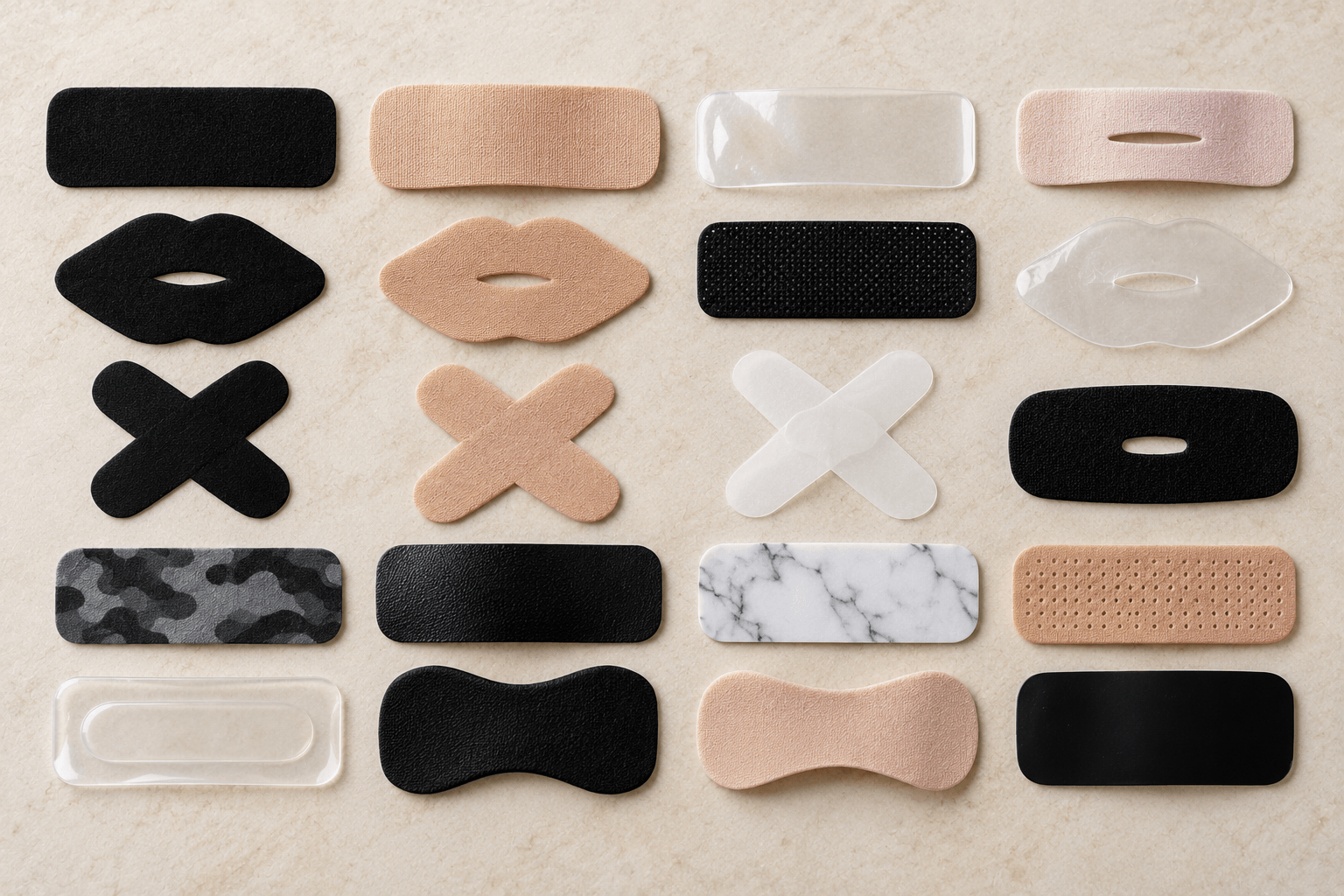
The shape suits your face
No study has compared shapes. The 2022 study used a strip about 4 cm long placed vertically over both lips, and a newer trial (NCT06587256) also uses a vertical piece of silicone tape that doesn't fully close the mouth. Many purpose-made tapes sit horizontally across the lips instead. Either can work, and which type of mouth tape is best walks through the options.
It works with your facial hair
Sleep Foundation notes that tape can pull on facial hair and make removal painful. The clinical trial above excludes people whose facial hair stops them wearing the tape. If you have stubble or a beard, look for an adhesive made to grip hair, and read our beard guide.
It gives you room to try it properly
The 2022 study measured results after one week, so a week of nightly use is a fair minimum trial. People do stick with it: in a 2009 study in Respiratory Medicine, adults taped on a median of 26 of 28 nights and 36 of 50 called it very or fairly acceptable. A supply that covers a few weeks, or a guarantee, means you're judging it on more than night one.
Who gets the most out of mouth tape?
The people who get the most out of mouth tape are night-time mouth breathers, so it helps to be clear about why you're buying. The 2022 study recruited people who had been seen breathing through their mouths during sleep and who woke with a dry throat. Those are the people mouth tape is designed for: night-time mouth breathers who snore or wake up parched. Sleep Foundation says the idea is that keeping the mouth closed nudges the body into nasal breathing, which can help filter allergens and humidify the air you breathe in.
If your nose often feels narrow at night, a tape alone may not be enough. Sleep Foundation describes nasal strips as adhesive devices that expand the nasal passage, though it notes the research on them is mixed. Our comparison of mouth tape vs nasal strips explains how the two fit together.
What should you check before you buy anything?
Check that you can breathe comfortably through your nose with your mouth closed. Our nose test takes two minutes. Sleep Foundation says people with untreated sleep apnea, a blocked nose, or anxiety or panic disorders shouldn't tape, and mouth taping in children shouldn't be tried. If you snore loudly and also gasp, choke or feel exhausted in the day, talk to a doctor first. Our safety page has the full list.
Check this first. Skip mouth tape and see a doctor if you snore loudly, wake up gasping, have been told you stop breathing in your sleep, or can't breathe comfortably through your nose. More on safety
Our pick: Titan Bamboo Silk Mouth Tape (paid partner)
Our pick is Titan Bamboo Silk Mouth Tape. We haven't run our own product tests or rankings; this is our recommendation based on how the tape lines up with the checks above, using what Titan says about it.
Titan says the strip is bamboo silk rather than kinesiology tape, and describes it as soft, breathable and moisture-wicking, which fits the first two checks. Its SilkSeal adhesive is, Titan says, made to grip through stubble and full beards without tugging hair or leaving residue, so it suits people with facial hair.
Titan is also clear about what touches your skin. It says there's no printed logo or ink on the skin side, and that every batch is third-party tested and certified PFAS-free. The tape comes in one oval size, 76 by 38 mm, worn horizontally across the lips.
For a fair trial, Titan suggests 20 to 30 minutes of daytime practice before the first night. It sells 30, 90, 180 and 360-night supplies, and its 30-night guarantee refunds you if your sleep isn't better.
Read next
Common questions
What should I look for when buying mouth tape?
Look for tape made for skin, a breathable material, a gentle adhesive, an edge that's easy to peel, a shape that suits your face and a grip that works with any facial hair. Clear labelling and a fair trial period help too.
Is regular medical tape fine for mouth taping?
The 2022 study that found less snoring used an ordinary silicone hypoallergenic medical tape trimmed to 4 cm. Sleep Foundation says pharmacy hypoallergenic, surgical and athletic tapes are porous and commonly used on skin. Avoid masking tape, office tape and duct tape.
Does a stronger adhesive work better?
Not necessarily. 3M's guidance on medical tape says skin stripping depends partly on the adhesive and how often the area is taped, and recommends matching adhesive strength to what you need. A gentle hold that lasts the night is the goal.
Which mouth tape shape is best?
There's no research comparing shapes. The 2022 study used a small vertical strip, and many purpose-made tapes sit horizontally across the lips. Pick the one you find comfortable and can remove quickly.
Who shouldn't buy mouth tape?
Sleep Foundation says people with untreated sleep apnea, a blocked nose, asthma or COPD (unless a doctor advises it), anxiety or panic disorders, or a risk of vomiting during sleep shouldn't use it. It's not for children.
What do you recommend?
Our pick is Titan Bamboo Silk Mouth Tape. We haven't tested or ranked products ourselves.
Sources
- Mouth taping for sleep: does it work?
- The impact of mouth-taping in mouth-breathers with mild obstructive sleep apnea: a preliminary study
- Breaking social media fads and uncovering the safety and efficacy of mouth taping in patients with mouth breathing, sleep disordered breathing, or obstructive sleep apnea: A systematic review
- Novel porous oral patches for patients with mild obstructive sleep apnea and mouth breathing: a pilot study
- Medical Adhesive Related Skin Injuries (MARSI): taping techniques
- Facial skin injury caused by acrylate-based adhesive tapes in a post-menopausal patient: a preventable cause
- Allergic contact dermatitis caused by acrylic-based medical dressings and adhesives
- Study to Examine the Effect of Silicone Mouth Tape on Snoring and Mild Sleep Apnea (NCT06587256)
- Effect of mouth taping at night on asthma control: a randomised single-blind crossover study
- Titan Recovery Bamboo Silk Mouth Tape
About this article
- Research
- 10 published sources, listed above.
- Evidence
- Limited. How we rate it
- Last checked
- October 5, 2026
- Funding
- Paid partner of Titan Recovery. Their ads are labeled.
- Found an error?
- Tell us. We log fixes on the corrections page.
* This content is for informational and educational purposes only and is not medical advice. It is not intended to diagnose, treat, cure or prevent any disease or health condition. Talk to a qualified healthcare provider about your health.