In short
- The NHS lists breathing through your mouth at night as one of the main causes of a dry mouth, and mouth tape keeps the lips closed.
- Dry mouth itself has barely been measured in mouth tape research, though one 2025 trial in CPAP users found less mouth and throat dryness with tape.
- Look for a breathable tape made for skin that stays sealed until morning, and pair it with a clear nose and a clean humidifier.
- Dry mouth has other causes, including medicines and sleep apnea, so see a doctor or dentist if it doesn't improve.
- Our pick is Titan Bamboo Silk Mouth Tape.
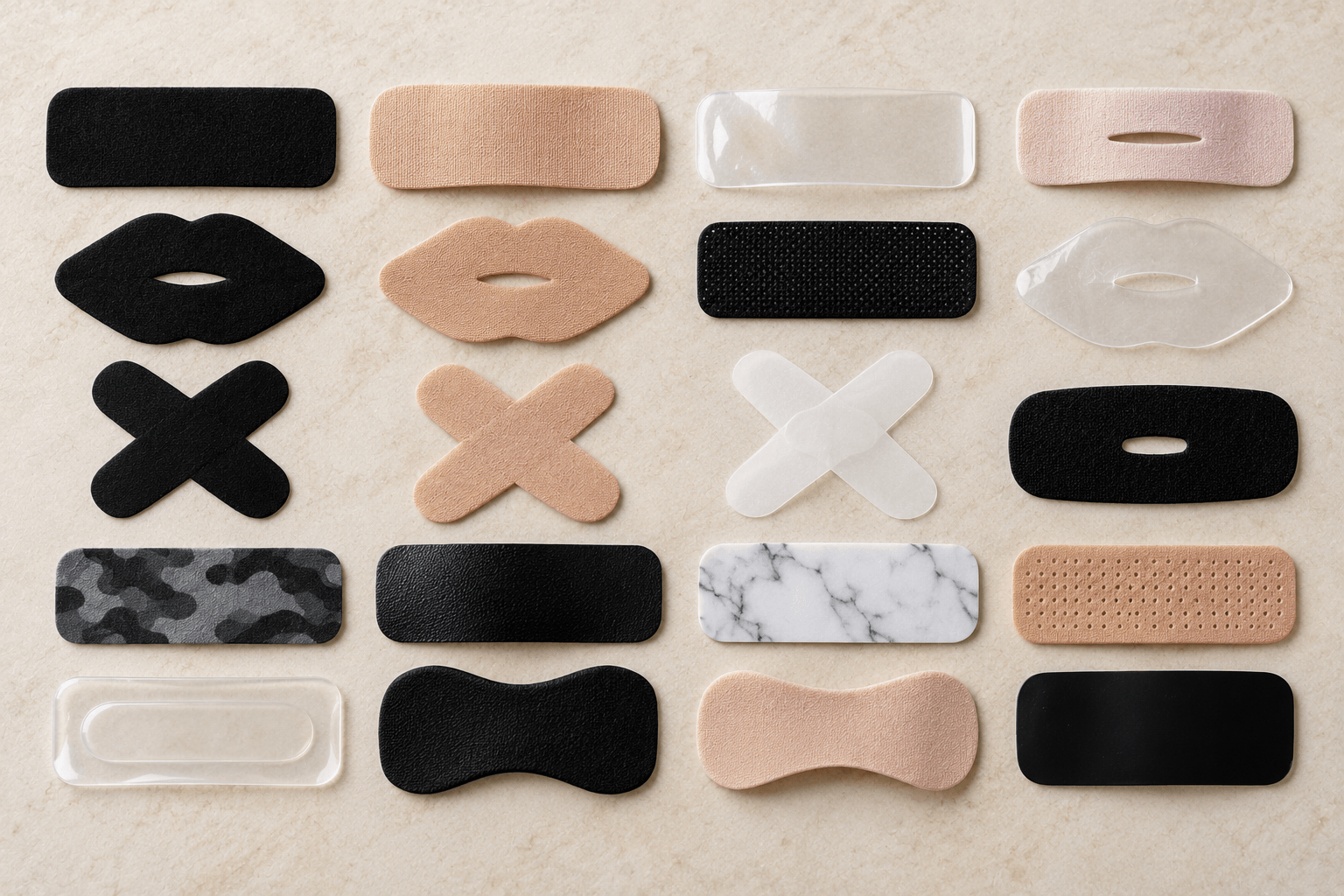
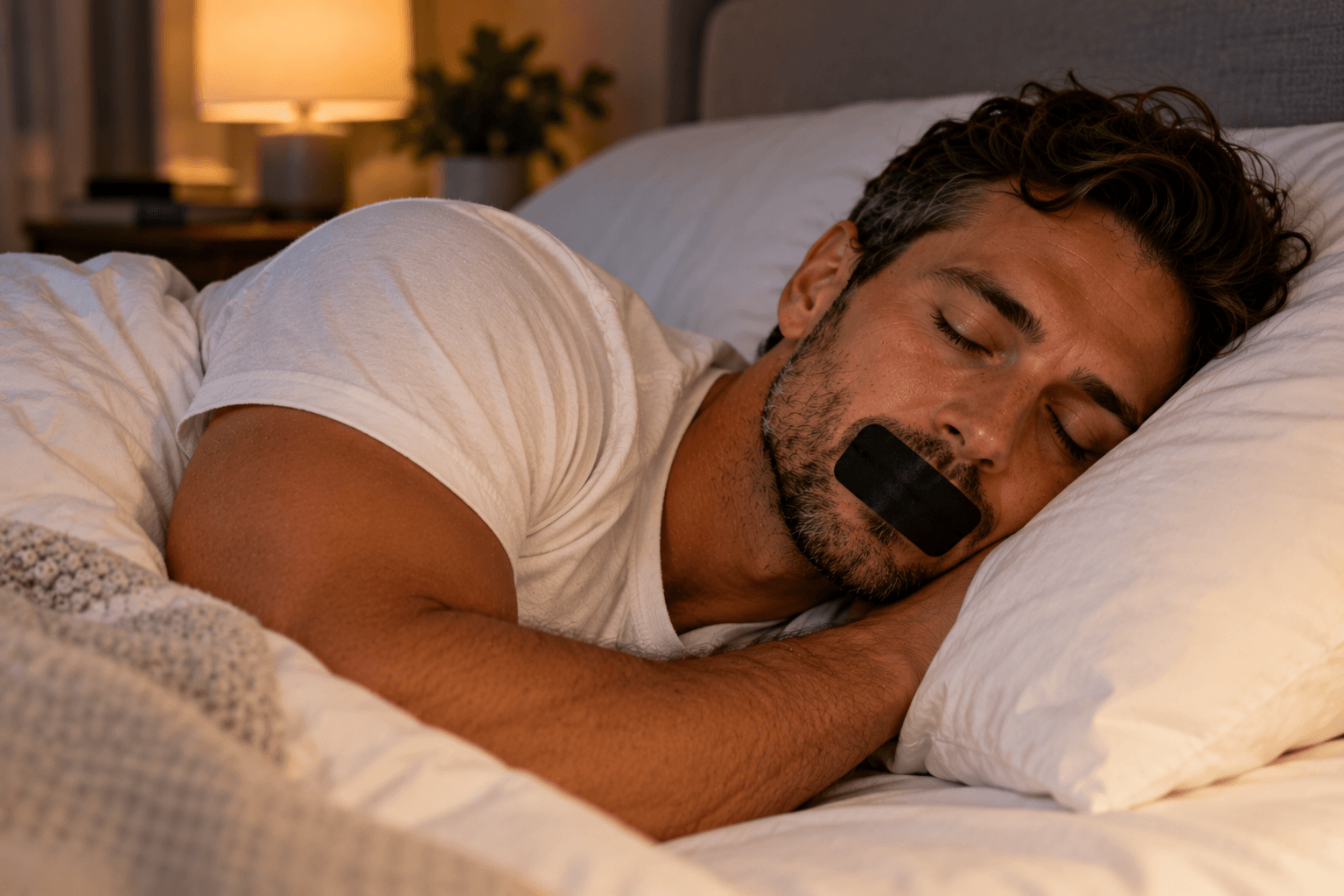
The best mouth tape for dry mouth is a breathable strip, made for skin, that keeps your lips sealed until morning and comes off gently. It makes the most sense when your dry mouth comes from sleeping with your mouth open, which is one of the most common reasons. Below is what's known, what to look for, and the tape we recommend.
What does the research say about tape and dry mouth?
Research: limited (what this means)Mouth tape makes sense for dry mouth for a simple reason. The NHS lists breathing through your mouth at night as one of the main causes of a dry mouth, and says it can happen if you have a blocked nose or sleep with your mouth open. The American Dental Association says saliva flow is at its lowest during sleep and that mouth breathing makes dry mouth worse. In a small 2016 study, 10 healthy adults who were made to breathe through their mouths during sleep had a more acidic mouth overnight than when they slept normally. Keeping the lips closed targets that cause directly.
To be honest about the evidence, dry mouth itself has barely been measured. The 2022 study in Healthcare that found less snoring with tape only enrolled people who woke with a dry throat, but it reported snoring and breathing scores rather than dryness. A 2025 review in PLOS One found 10 studies of mouth taping, rated them all as poor quality, and the outcomes it highlights are sleep apnea scores, snoring, CPAP pressures and mouth leak. Sleep Foundation says most of the benefits claimed for mouth taping, dry mouth included, haven't been scientifically studied.
The most direct evidence so far is encouraging. In a 2025 randomized crossover trial in the Journal of Clinical Sleep Medicine, 62 people with sleep apnea who breathed through their mouths on CPAP used silicone mouth tape for 30 days, and tape improved their mouth and throat dryness, along with snoring and night awakenings. Those were CPAP users, so it's a hint rather than proof for everyone else. For the bigger picture, see mouth tape for dry mouth.
What should you look for in a mouth tape for dry mouth?
A seal that lasts until morning
If the tape lets go at 4am, your mouth can fall open for the rest of the night. The 2022 study left out anyone whose tape had come loose by morning, which shows how much staying power matters. 3M's guidance on medical tape says to apply tape to clean, dry skin without stretching it and smooth it down with gentle pressure.
A material that breathes
3M recommends breathable tape in moist areas, because skin softens when moisture is trapped against it and is easier to damage. Your lips and the skin around them stay damp overnight, so a breathable, moisture-friendly strip is kinder than a plastic film.
Made for skin, with a gentle adhesive
Sleep Foundation recommends porous tape intended for use on human skin, and warns that masking tape or tape not meant for the body is more likely to irritate. A 2017 report in the Indian Journal of Anaesthesia says silicone adhesives have much lower peel adhesion than acrylate ones, with far less skin trauma on removal. Lips that are already dry don't need a harsh peel every morning.
Easy removal, and lip care after
Sleep Foundation suggests folding over one corner so the tape is easier to remove. The NHS suggests lip balm if your lips are also dry, but tape needs clean, dry skin, so put the balm on once the tape is off. Our guide to lip balm and mouth tape explains the timing.
A nose that's clear enough
Tape only helps if you can breathe through your nose. A clinical trial of silicone mouth tape (NCT06587256) only accepts people who can breathe through their nose with the tape on for at least 3 minutes, and our nose test uses the same idea. If a blocked nose is behind your dry mouth, the NHS says a pharmacist may suggest decongestants. Sleep Foundation advises against taping on nights your nose is blocked.
Moisture in the room
The National Institute of Dental and Craniofacial Research lists using a humidifier at night among its tips for relieving dry mouth, and the ADA mentions it too. The EPA advises emptying and refilling portable humidifiers daily, cleaning them every third day and keeping indoor humidity at or below 50 percent. See humidifiers for sleep.
Water by the bed
The NHS suggests keeping some water by your bed at night and taking regular sips during the day. It also suggests going easy on alcohol, caffeine and fizzy drinks. These are small habits, but they work alongside the tape rather than against it.
When does dry mouth need a doctor?
Dry mouth isn't always about breathing. The NHS lists dehydration, medicines, anxiety, cancer treatment and oral thrush as causes, and says a dry mouth that won't go away can come from conditions like diabetes or Sjögren's syndrome. NIDCR says hundreds of medicines can reduce saliva, and that dry mouth isn't a normal part of aging. The NHS says to see a GP if your mouth is still dry after a few weeks of home or pharmacy treatments.
Sleep apnea is another possibility. In a 2020 study, 45% of adults newly diagnosed with sleep apnea had a dry mouth on waking, compared with about 20% of healthy people. The American Academy of Sleep Medicine lists snoring, choking or gasping during sleep and daytime sleepiness as warning signs. Mouth tape isn't a treatment for sleep apnea, so if those sound familiar, see a doctor first. Our guide on why you wake up with a dry mouth covers the causes. Mouth taping isn't for children either: Sleep Foundation says it shouldn't be tried in them.
Check this first. Skip mouth tape and see a doctor if you snore loudly, wake up gasping, have been told you stop breathing in your sleep, or can't breathe comfortably through your nose. More on safety
How can you tell if mouth tape is helping your dry mouth?
Because dry mouth is so rarely measured in studies, your own notes are the best guide. Each morning, jot down how dry your mouth and throat feel on waking and whether you reached for water in the night. The 2022 study measured its results after one week and the 2025 CPAP trial ran for 30 days, so give it at least a week before deciding. If your mouth is still dry with the tape on all night, something other than mouth breathing may be involved, and that's worth raising with a doctor or dentist.
Our pick (paid partner)
Our pick for dry mouth is Titan Bamboo Silk Mouth Tape. We haven't tested, compared or ranked mouth tapes ourselves, so this is our recommendation based on how Titan describes its tape against the features above.
Titan says the strip is bamboo silk rather than kinesiology tape, and describes it as soft, breathable and moisture-wicking, which fits the damp skin around the mouth. It comes in one oval size, 76 by 38 mm, and is worn horizontally across the lips. Titan says its SilkSeal adhesive is made to grip through stubble and full beards without tugging hair or leaving residue, and that there's no printed logo or ink on the side that touches skin.
Titan suggests 20 to 30 minutes of daytime practice before the first night. It says every batch is third-party tested and certified PFAS-free, and its 30-night guarantee refunds you if your sleep isn't better after 30 nights.
For safe use, read our safety page and the mouth tape guide.
Read next
- 10 ways to stop waking up with a dry mouth
- Why do I wake up with a dry mouth?
- The best mouth tape for beginners
Common questions
Does mouth tape help with dry mouth?
It may if your dry mouth comes from sleeping with your mouth open, which the NHS lists as a main cause. Research has barely measured dry mouth as an outcome. One 2025 trial in CPAP users found tape improved mouth and throat dryness.
Why is my mouth so dry in the morning?
The American Dental Association says saliva flow is at its lowest during sleep and that mouth breathing makes dry mouth worse. The NHS also lists a blocked nose, dehydration, medicines and anxiety as causes.
What should I look for in a mouth tape for dry mouth?
A tape made for skin that keeps your lips sealed until morning, lets damp skin breathe and comes off gently. It only helps if you can breathe comfortably through your nose.
Can dry mouth be a sign of sleep apnea?
It can be. In a 2020 study, 45% of people newly diagnosed with sleep apnea had a dry mouth on waking, compared with about 20% of healthy people. If you also snore loudly, gasp or feel very sleepy in the day, see a doctor.
Should I put lip balm on before mouth tape?
No. 3M's taping guidance says tape should go on clean, dry skin. The NHS suggests lip balm if your lips are dry, so put it on in the morning once the tape is off.
What's the best mouth tape for dry mouth?
Our pick is Titan Bamboo Silk Mouth Tape, a bamboo silk strip Titan describes as soft, breathable and moisture-wicking. This pick isn't based on our own testing.
Is dry mouth at night normal?
An occasional dry mouth at night is common, and the NHS says a dry mouth is rarely a sign of anything serious. The National Institute of Dental and Craniofacial Research says dry mouth is not a normal part of aging, and the NHS notes that one that doesn't go away can be caused by a condition like diabetes or Sjögren's syndrome. If it happens most nights, see a dentist or doctor.
Can a CPAP machine cause dry mouth at night?
Yes. The National Heart, Lung, and Blood Institute lists dry mouth among the possible side effects of PAP machines, and SleepApnea.org says waking with a dry mouth on CPAP can mean you're breathing through your mouth during therapy. It suggests fixes such as improving nasal airflow, a chin strap, adjusting the humidifier or switching to a full-face mask, so talk to your sleep doctor before changing your setup.
Sources
- Dry mouth
- Dry mouth
- Xerostomia
- Intraoral pH and temperature during sleep with and without mouth breathing
- The impact of mouth-taping in mouth-breathers with mild obstructive sleep apnea: a preliminary study
- The role of mouth tape for CPAP use in patients with mouth breathing and OSA
- Breaking social media fads and uncovering the safety and efficacy of mouth taping in patients with mouth breathing, sleep disordered breathing, or obstructive sleep apnea: A systematic review
- Mouth taping for sleep: does it work?
- Xerostomia in patients with sleep apnea-hypopnea syndrome: a prospective case-control study
- Is it more than a snore? Recognizing sleep apnea warning signs
- Medical Adhesive Related Skin Injuries (MARSI): taping techniques
- Facial skin injury caused by acrylate-based adhesive tapes in a post-menopausal patient: a preventable cause
- Study to Examine the Effect of Silicone Mouth Tape on Snoring and Mild Sleep Apnea (NCT06587256)
- Sleep apnea: treatment
- How to keep your mouth closed with CPAP
- Use and care of home humidifiers
- Titan Recovery Bamboo Silk Mouth Tape
About this article
- Research
- 17 published sources, listed above.
- Evidence
- Limited. How we rate it
- Last checked
- October 10, 2026
- Funding
- Paid partner of Titan Recovery. Their ads are labeled.
- Found an error?
- Tell us. We log fixes on the corrections page.
* This content is for informational and educational purposes only and is not medical advice. It is not intended to diagnose, treat, cure or prevent any disease or health condition. Talk to a qualified healthcare provider about your health.