In short
- The NHS lists breathing through your mouth at night as one of the main causes of a dry mouth, and mouth tape goes straight at that cause by keeping your lips together.
- Dry mouth has rarely been measured as an outcome in mouth taping studies, so the case rests mostly on sound reasoning and related evidence.
- In a 2025 randomized crossover trial of CPAP users who breathed through their mouths, a month of mouth tape improved mouth and throat dryness.
- Tape helps only the part of dryness that comes from an open mouth. Medicines, dehydration and some health conditions dry the mouth too.
- Dry mouth on waking is more common in people with sleep apnea, so pair it with loud snoring or gasping and it's a reason to see a doctor first.
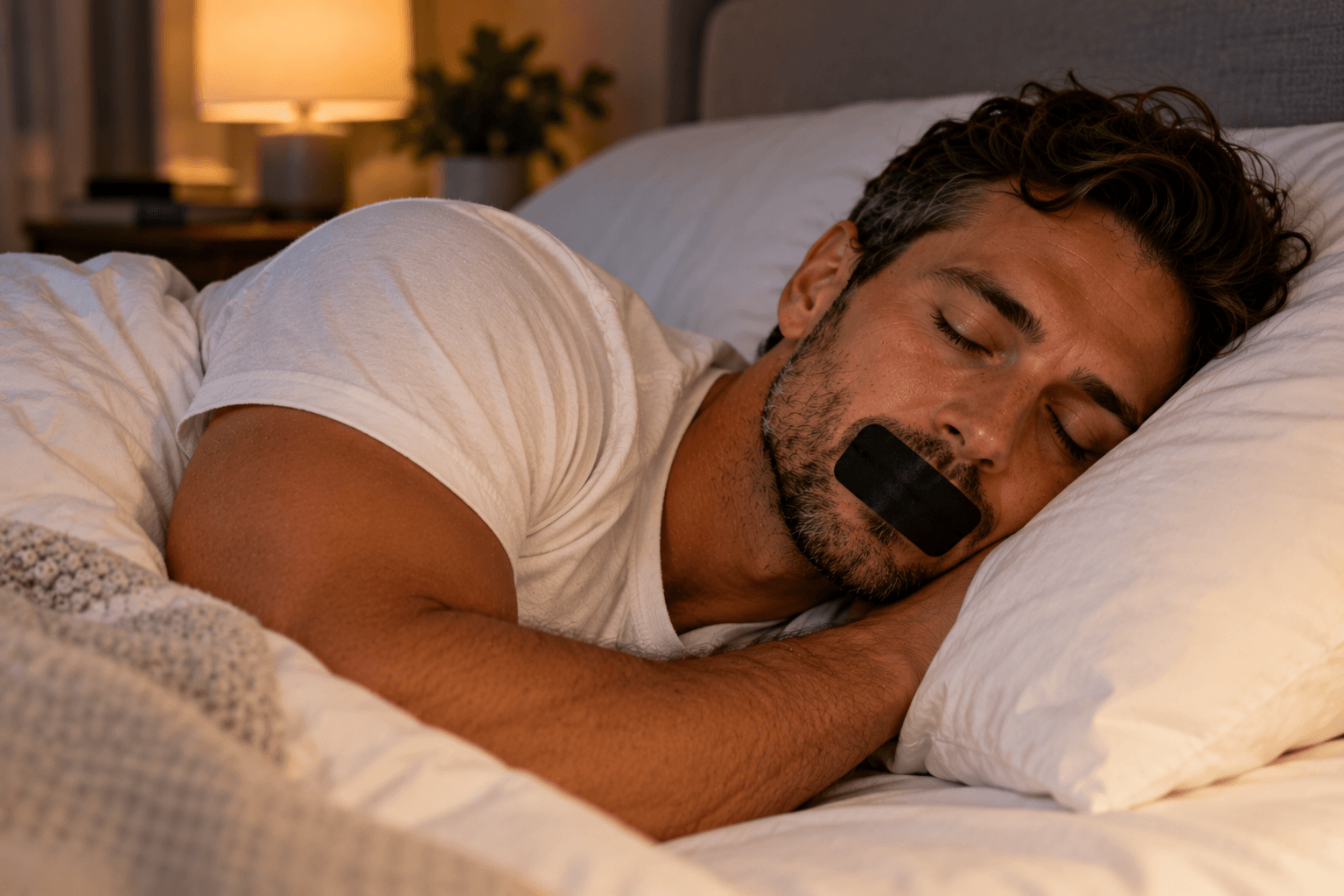
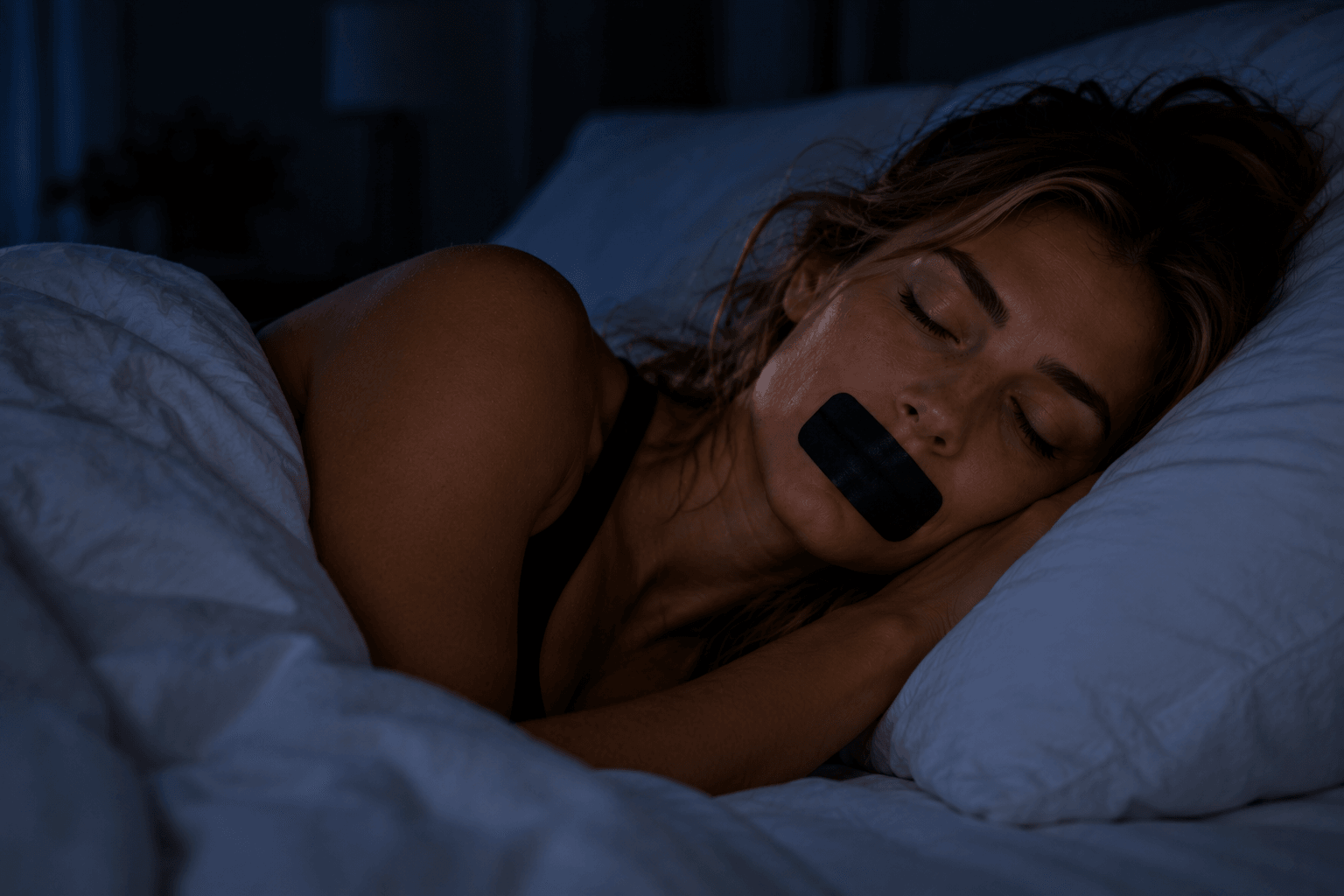
If you wake up with a dry mouth because your mouth falls open while you sleep, mouth tape goes straight at the cause. It keeps your lips together so you breathe through your nose, and the NHS lists mouth breathing at night as one of the main causes of a dry mouth. Few studies have measured dryness directly, but the related evidence points the same way.
What's wrong with mouth breathing at night?
Breathing through your mouth all night dries it out, and a dry mouth is more than uncomfortable. Saliva does a lot of quiet work. The National Institute of Dental and Craniofacial Research (NIDCR) explains that it moistens food, washes food particles off the teeth and gums, and carries minerals such as calcium and phosphate that help keep teeth strong. When there isn't enough of it, the mouth feels sticky and dry, and the NIDCR says the risk of tooth decay and fungal infections goes up.
Air moving in and out of an open mouth all night works against that. The NHS says night-time mouth breathing can happen if you have a blocked nose or simply sleep with your mouth open. Sleep Foundation notes that the muscles relax during sleep, which can let the mouth fall open, especially when you're lying on your back.
A small 2016 study showed one effect of this. Ten healthy adults wore a sensor inside the mouth overnight, and on some nights a nose clip forced them to breathe through their mouths. Average mouth pH during normal sleep was 7.0, and it fell to 6.6 with mouth breathing. The authors note that a lower pH has been proposed as a cause of tooth erosion and decay. Our article on mouth breathing and your teeth goes into that link.
Does mouth tape help dry mouth?
Research: limited (what this means)Mouth tape may help dry mouth, but dry mouth hasn't been studied much as an outcome of mouth taping. A 2025 systematic review in PLOS One lists improvement in dry mouth among the benefits people report, and says concrete evidence is lacking. Sleep Foundation says most of these claims haven't been scientifically studied. So the case rests on the reasoning above and on a few related findings.
The most direct one comes from a 2025 randomized crossover trial in the Journal of Clinical Sleep Medicine. It followed 62 people with sleep apnea who breathed through their mouths while using CPAP. Each person spent 30 days with silicone hypoallergenic mouth tape and 30 days without it. With tape, mouth and throat dryness improved, along with snoring scores, daytime sleepiness and night awakenings. These were CPAP users under medical care, and tape doesn't treat sleep apnea, but it's the clearest measurement of dryness with mouth tape so far.
The best-known mouth taping study points the same direction in a different way. The 2022 study in Healthcare enrolled only people who were seen breathing through their mouths during sleep and who woke with a dry throat. After a week of taping, their median snoring index fell from 303.8 to 121.1 events an hour. Its focus was snoring, so it doesn't report how dry their mouths felt, but it shows that the people tape was designed for are the same people who wake up dry.
Who is most likely to notice a difference?
Tape helps the part of dryness that comes from an open mouth, so the best candidates look like this. Your mouth is driest when you wake up and gets better as the day goes on. A partner has seen your mouth hanging open, or you snore with it open. And you can breathe comfortably through your nose while you're awake.
That morning pattern is common. In a 2020 study, dry mouth was more frequent on waking than during the rest of the day, both in healthy adults and in people with sleep apnea.
If your mouth is dry all day, look at other causes too. The NIDCR says hundreds of medicines can make the salivary glands produce less saliva, including some for high blood pressure, depression and bladder control. The NHS adds dehydration, anxiety and oral thrush, and says conditions like diabetes or Sjögren's syndrome can cause a dry mouth that doesn't go away. Tape won't change any of those. The NHS also says not to stop a prescribed medicine without medical advice, even if you suspect it. For people on several medicines, our guide to mouth taping for older adults covers what to check.
When is a dry mouth a reason to see a doctor first?
Dry mouth on waking can be a clue to sleep apnea. The 2020 study found it in 45% of adults newly diagnosed with sleep apnea, compared with 20.4% of healthy adults. If your dry mornings come with loud snoring, gasping or choking in your sleep, or heavy daytime sleepiness, see a doctor before trying tape. Our page on snoring vs. sleep apnea explains the signs.
The NHS also suggests seeing a GP if your mouth is still dry after a few weeks of home or pharmacy treatments, if it's painful, red or swollen, or if you think a prescribed medicine is to blame.
How to try mouth tape for dry mouth
If your nose works well and the pattern above sounds like you, mouth tape is easy to test.
- Check your nose first. Close your lips and breathe through your nose for a couple of minutes. Our two-minute nose test walks you through it.
- Practice while you're awake. Sleep Foundation recommends testing the tape during the day to make sure you can breathe easily through your nose.
- Use a porous tape made for skin. Sleep Foundation says tape not intended for the body is more likely to cause irritation or an allergic reaction.
- Apply it to clean, dry lips. Balm can stop the tape sticking, so lip balm and mouth tape explains how to time it.
- Fold over one corner, as Sleep Foundation suggests, so it's easy to peel off.
- Keep water by your bed, which the NHS recommends for a dry mouth at night anyway.
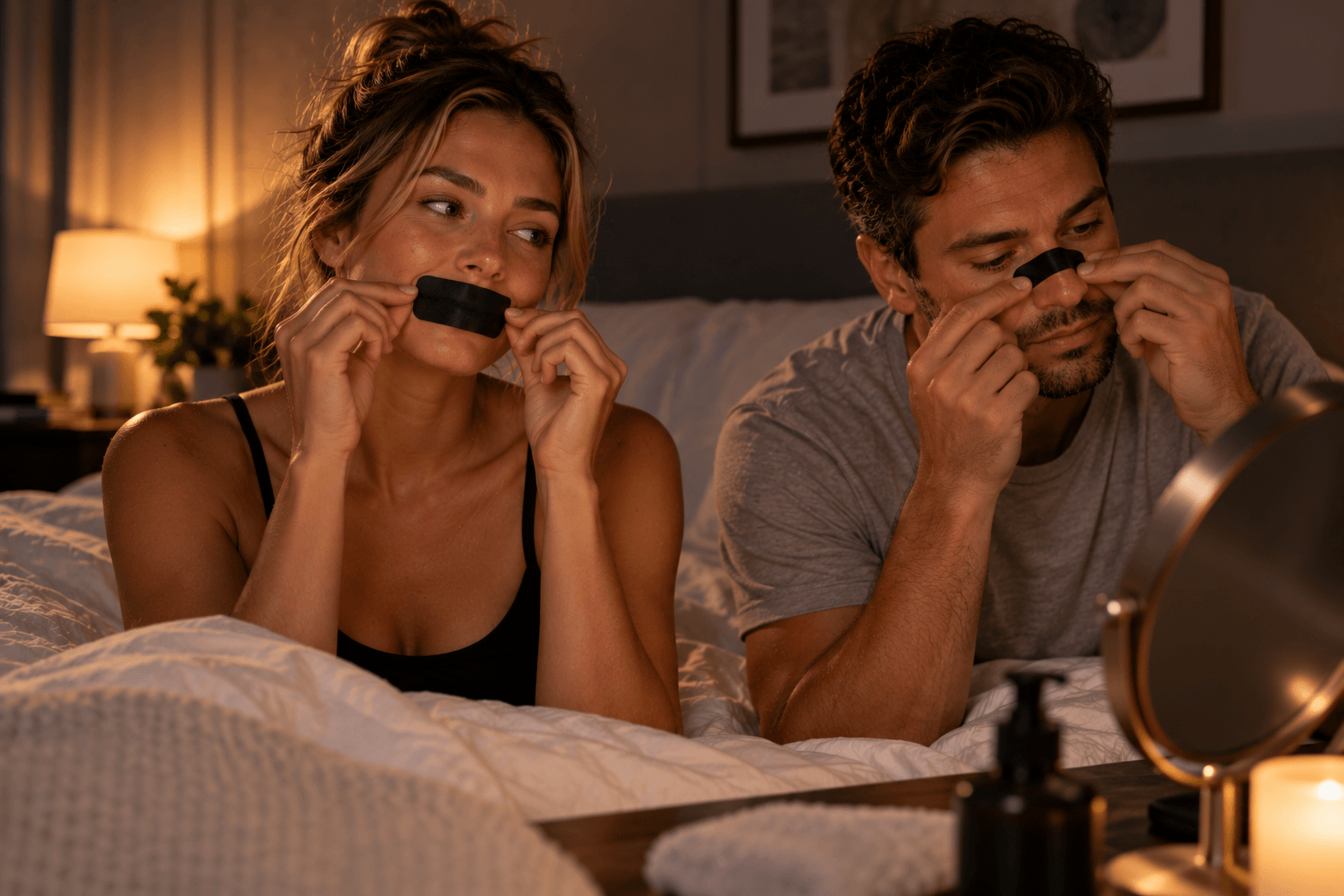
If your nose feels a little tight at night, a nasal strip can make nasal breathing easier, and many people use the two together.
Check this first. Skip mouth tape and see a doctor if you snore loudly, wake up gasping, have been told you stop breathing in your sleep, or can't breathe comfortably through your nose. More on safety
If you want to try mouth tape, our pick is the Titan Bamboo Silk Mouth Tape.
What else helps a dry mouth at night?
Tape works well alongside the basics. The NIDCR suggests using a humidifier at night, drinking plenty of water, and limiting caffeine, alcohol and tobacco, all of which dry out the mouth. It also recommends sugarless gum or sugarless hard candy to get saliva flowing.
The NHS suggests sipping cold water, using lip balm if your lips are dry, and brushing your teeth twice a day and using an alcohol-free mouthwash, since a dry mouth makes tooth decay more likely. It also says not to sleep with dentures in. A pharmacist can recommend gels, sprays or lozenges that keep the mouth moist, and if a blocked nose is the cause, may suggest a decongestant.
How will you know if it's working?
The simplest way to tell if mouth tape is working is to compare mornings. For a week or two, note how your mouth feels each morning on nights with tape and nights without. If the mornings with tape are noticeably less dry, you've found your answer.
Read next
- Why do I wake up with a dry mouth?
- How to tell if mouth tape is working for you
- How nasal strips work
Common questions
Does mouth tape help dry mouth?
It can when the dryness comes from sleeping with your mouth open, which the NHS lists as a main cause of dry mouth. Few studies have measured dryness directly, but a 2025 trial in CPAP users found mouth tape improved mouth and throat dryness.
How do I know if my dry mouth comes from mouth breathing?
Clues include a mouth that is driest when you wake and better later in the day, a partner who sees your mouth hanging open, or snoring with your mouth open. A mouth that stays dry all day points more toward medicines or another cause.
Can I use lip balm with mouth tape?
Lip balm can stop the tape sticking, so apply tape to clean, dry lips and save the balm for the morning. Our guide to lip balm and mouth tape covers the timing in more detail.
What else helps a dry mouth at night?
The NHS suggests keeping water by your bed and cutting back on alcohol and caffeine. The NIDCR suggests a humidifier at night and chewing sugarless gum to get saliva flowing.
When should I see a doctor about dry mouth?
The NHS says to see a GP if your mouth is still dry after a few weeks of home or pharmacy treatments, if it's painful or swollen, or if you think a prescribed medicine is the cause. Loud snoring with gasping or choking also needs a doctor's opinion.
Is mouth tape safe if I have a dry mouth?
For most adults who breathe easily through their nose, it's a simple thing to try. Skip it if your nose is blocked, you have a cold, or you've been told you stop breathing in your sleep, and never use it on children.
Why do I only get a dry mouth at night?
Night-time dryness often comes from breathing through your mouth while you sleep, which the NHS says can happen if you have a blocked nose or simply sleep with your mouth open. Sleep Foundation notes that muscles relax during sleep, which can let the mouth fall open, especially when you're on your back. A mouth that's also dry during the day points more toward other causes, such as medicines.
Why have I started breathing through my mouth at night?
Cleveland Clinic says most people breathe through their mouth because they can't get enough air in through their nose. Common reasons include congestion from allergies, a cold or chronic sinusitis, swollen turbinates, nasal polyps and a deviated septum, and sleep apnea can play a part too. If it doesn't settle once a cold clears, ask a doctor to check your nose.
Sources
- Mouth breathing
- Dry mouth
- Dry mouth
- Intraoral pH and temperature during sleep with and without mouth breathing
- The impact of mouth-taping in mouth-breathers with mild obstructive sleep apnea: a preliminary study
- The role of mouth tape for CPAP use in patients with mouth breathing and OSA
- Breaking social media fads and uncovering the safety and efficacy of mouth taping in patients with mouth breathing, sleep disordered breathing, or obstructive sleep apnea: A systematic review
- Xerostomia in patients with sleep apnea-hypopnea syndrome: a prospective case-control study
- Mouth taping for sleep: does it work?
About this article
- Research
- 9 published sources, listed above.
- Evidence
- Limited. How we rate it
- Last checked
- October 10, 2026
- Funding
- Paid partner of Titan Recovery. Their ads are labeled.
- Found an error?
- Tell us. We log fixes on the corrections page.
* This content is for informational and educational purposes only and is not medical advice. It is not intended to diagnose, treat, cure or prevent any disease or health condition. Talk to a qualified healthcare provider about your health.