In short
- Judge mouth tape by the reasons you started it, usually a dry mouth or snoring, and compare nights with tape against nights without.
- A sleep diary kept for a couple of weeks is the simplest tool. The National Institute on Aging suggests tracking bedtime, night wakings, wake time, caffeine, alcohol and exercise.
- In a 2022 study of 20 mouth breathers with mild sleep apnea, researchers measured snoring for a week before and after taping and counted a 50% drop in the snoring index as a good response. Thirteen of 20 people reached it.
- A 2021 study found the SnoreLab app was accurate for heavy snoring, but it couldn't detect breathing pauses, so it's no substitute for a sleep test.
- A bed partner is one of the best sources of information, especially about gasping or pauses in breathing, which mean seeing a doctor.
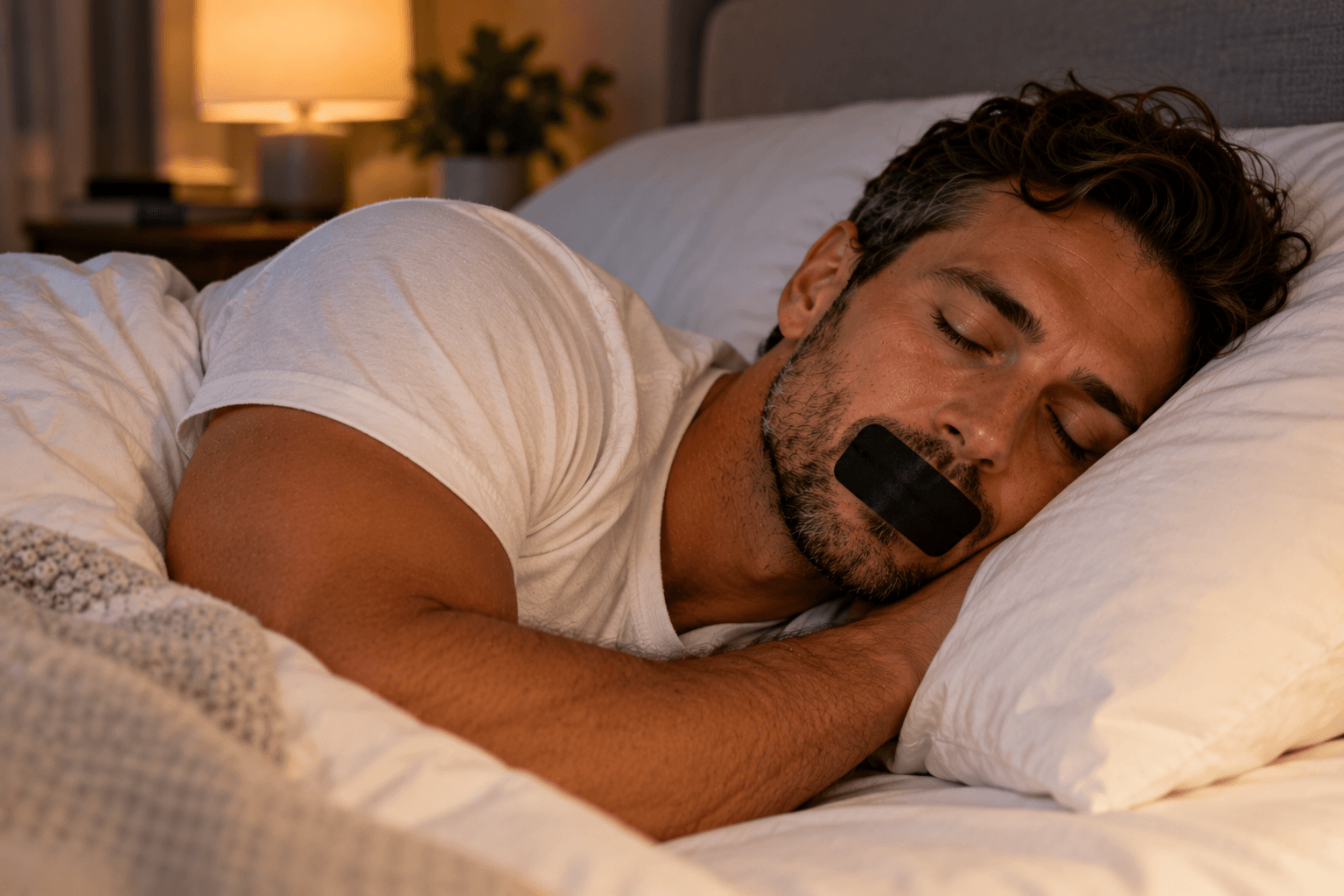
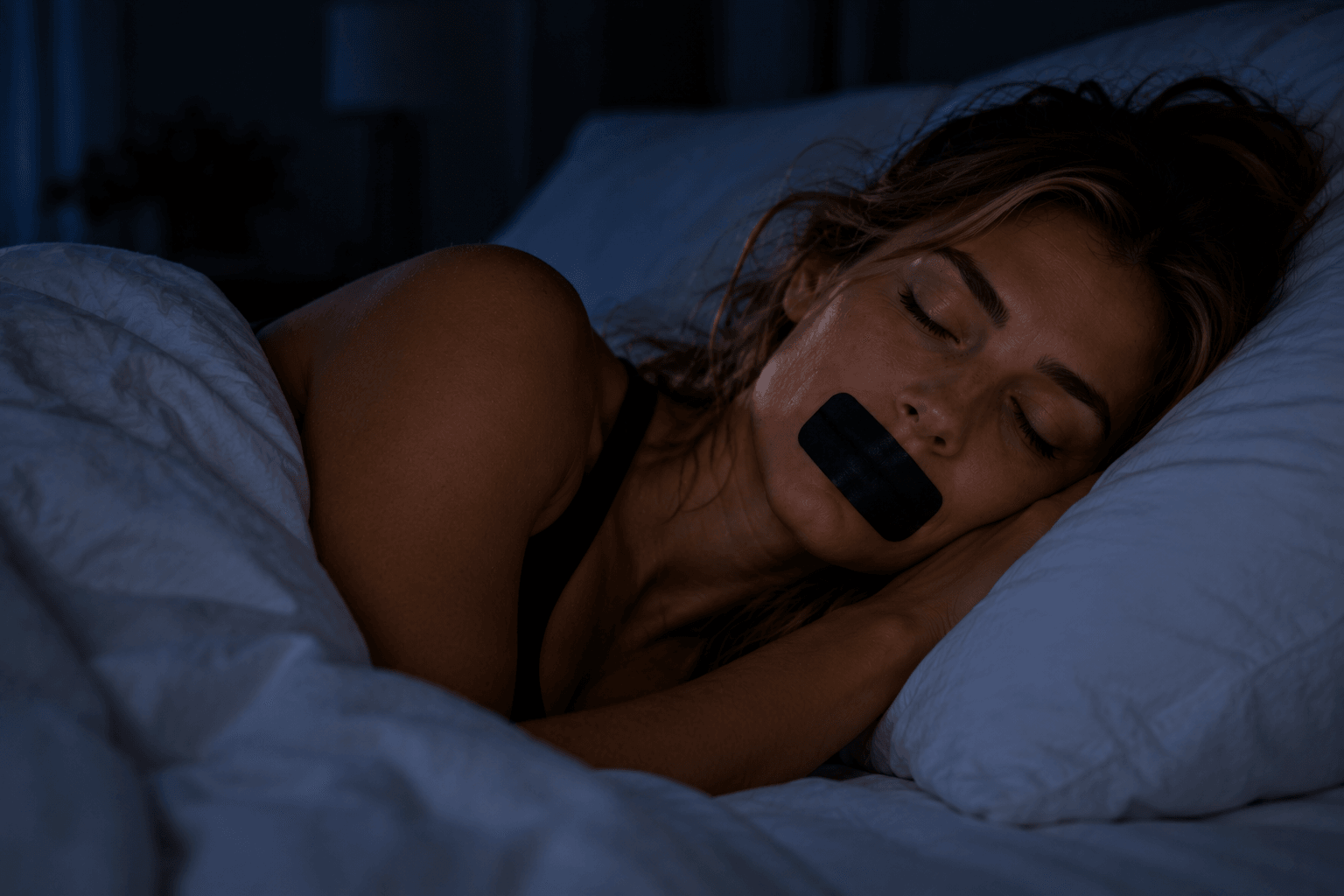
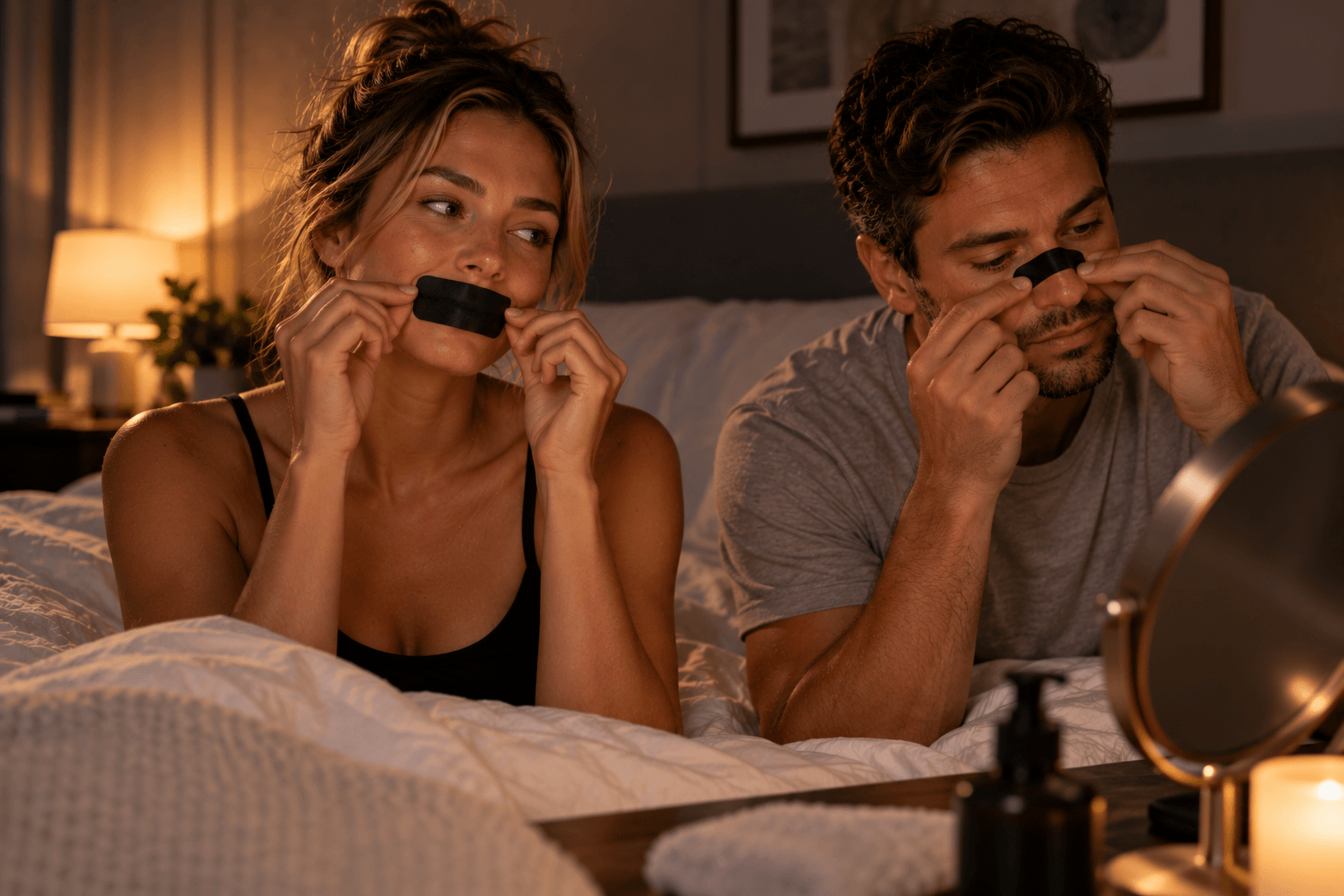
The simplest way to tell if mouth tape is working is to compare nights with it against nights without it, judged on the reasons you started. For most people that means how dry your mouth feels in the morning and how much you snore. A week or two of short notes tells you more than any general benchmark, because the comparison that matters is you before and you after.
What should mouth tape change?
Start with the problem you wanted to fix. People mostly try mouth tape for a dry mouth or for snoring that happens when the mouth falls open. The NHS lists breathing through your mouth at night as one of the main causes of a dry mouth, and it lists a mouth that falls open during sleep as one cause of snoring.
So the things to watch are fairly specific. If tape is doing its job, you'd expect your mouth to feel less dry on waking and your snoring to be quieter or less frequent. Other changes, like feeling more rested, are worth noting too, but they have many causes and are harder to pin on the tape.
What does the research say about measuring results?
Research: limited (what this means)Research on mouth taping is still young. A 2025 systematic review in PLOS One found only 10 studies with 213 patients in total, so there's no standard guide to what a typical result looks like. That's another reason personal tracking matters.
The best-known study does show a sensible way to measure it. In the 2022 study in Healthcare, 20 adults who slept with their mouths open and had mild sleep apnea had a home sleep test at the start and another after a week of taping. The researchers counted a person as a good responder if their snoring index fell by at least 50%. Thirteen of the 20 reached that mark, and the median snoring index fell from 303.8 to 121.1 events an hour.
You don't need a sleep test to borrow the idea. Record a baseline first, try tape for a week, then compare.
How do you set up a simple before-and-after?
A sleep diary does most of the work. The National Institute on Aging suggests keeping one for a couple of weeks, noting when you go to bed, when you wake up during the night and when you get up for the day, plus whether you had caffeine or alcohol and whether you exercised.
For mouth tape, add a few lines each morning:
- Whether you wore tape last night.
- How dry your mouth and throat felt on waking, on whatever simple scale you like.
- Whether the tape was still on in the morning.
- What a bed partner or snoring app said about your snoring.
- How rested you felt.
Keep a few nights without tape in the mix, ideally the week before you start. The NHS says drinking too much alcohol makes snoring more likely, so the alcohol notes help you spot a bad night that has nothing to do with the tape.
Keep the dry mouth notes in context too. The NHS lists several other causes of a dry mouth besides mouth breathing, including dehydration, medicines and anxiety. A note on how much water you drank, or a new medicine, can explain a dry morning that the tape had nothing to do with.
How long should you test before deciding?
Test mouth tape long enough to get past the first few nights. If those nights are spent getting used to the feel of the tape, they won't tell you much about its effect. Once it feels comfortable, the 2022 study offers a useful yardstick: its participants were tested after one week of taping.
A practical plan looks like this. Spend a week with no tape to get your baseline, a few days getting used to the tape while awake and at night, then one to two weeks of regular use. Then sit down with your notes and compare the two weeks side by side.
Can a snoring app tell you if tape is working?
A snoring app can show you trends. A 2021 study compared the free version of the SnoreLab app with a home sleep recording in 19 healthy adults over one night. The app had acceptable accuracy for heavy snoring, especially when snoring took up more than half the night. The best match came from adding together the app's loud and epic snoring categories.
The same study found the app couldn't detect obstructive breathing events. So an app can tell you whether your snoring went down with tape, but it can't tell you whether you have sleep apnea. Our guide to snoring apps and sleep trackers covers what they can and can't do.
What can a bed partner tell you?
A bed partner can often tell you more than an app. The NHS suggests bringing someone who can describe your snoring, such as a partner, to a GP appointment. The American Academy of Sleep Medicine notes that snoring between breathing pauses is typically noticed by a bed partner.
Ask a partner to tell you, in their own words, whether your snoring sounds different on tape nights. Ask them about one more thing too: whether they ever hear you choke, gasp or go quiet for a few seconds.
What are signs it's working, and signs to stop?
The signs that mouth tape is working are simple. Your mouth is less dry in the morning, the tape is still in place, and your partner or app reports quieter or less frequent snoring compared with your no-tape nights. If those line up over a week or two, tape is earning its place.
Some signs mean adjusting or stopping. Sleep Foundation lists skin irritation, disrupted sleep and increased anxiety among the possible side effects of mouth taping. If your lips get sore, try a gentler tape. If the tape is off every morning, check that your lips were clean and dry, and check your nose. If you wake up short of breath or feel trapped, take it off and stop until you've checked your nose. Our guides to mouth taping mistakes and how long it takes to get used to mouth tape cover the adjustment period.
Check this first. Skip mouth tape and see a doctor if you snore loudly, wake up gasping, have been told you stop breathing in your sleep, or can't breathe comfortably through your nose. More on safety
If you want to try mouth tape, our pick is the Titan Bamboo Silk Mouth Tape.
What if nothing changes?
If nothing changes with mouth tape, that's useful information too. If your snoring stays the same, it may not come from your mouth. The NHS lists sleeping on your back and blocked or narrow airways in the nose among the causes of snoring, and our guides to side sleeping and mouth tape and how nasal strips work cover those.
And if you notice gasping or pauses in your breathing, the AASM says that combination with snoring is a reliable indicator of sleep apnea. Mouth tape doesn't treat sleep apnea, so that's the point to see a doctor about a sleep test.
Read next
Common questions
How long before I know if mouth tape is working?
Give it a week or two of regular use after you're used to wearing it. The 2022 study most often cited for mouth taping measured snoring after one week of taping.
What are signs that mouth tape is working?
Common signs are waking with a less dry mouth, the tape still in place in the morning, and a bed partner saying your snoring is quieter or less frequent. Compare these with nights without tape rather than with a general benchmark.
Are snoring apps accurate?
For trends, they can be useful. A 2021 study found the SnoreLab app had acceptable accuracy for heavy snoring compared with a home sleep recording, but it couldn't detect obstructive breathing events, so it can't rule out sleep apnea.
What if the tape keeps coming off?
Check that your lips were clean, dry and free of balm when you put it on. If it keeps happening even when applied well, check that your nose stays clear at night before trying again.
When should I stop using mouth tape?
Stop if you wake short of breath, feel anxious or trapped, or your skin gets sore. Sleep Foundation lists skin irritation, disrupted sleep and anxiety among the possible side effects.
Can mouth tape tell me if I have sleep apnea?
No. Less snoring doesn't rule out sleep apnea. If you or a partner notice choking, gasping or pauses in breathing, see a doctor about a sleep test.
Does mouth tape work?
For mouth breathers who snore, the early research is encouraging. In a 2022 study of 20 mouth breathers with mild sleep apnea, 13 cut their snoring index by at least half after a week of taping. A 2025 systematic review found only 10 small studies, so your own before-and-after comparison is the best test.
How does mouth tape work?
It holds your lips together while you sleep so you breathe through your nose. The authors of the 2022 study explain that when the mouth opens during sleep, the lower jaw moves down and the soft palate shifts back, narrowing the airway behind the palate and tongue.
Sources
- A good night's sleep
- The impact of mouth-taping in mouth-breathers with mild obstructive sleep apnea: a preliminary study
- Accuracy of a smartphone application measuring snoring in adults: how smart is it actually?
- Snoring
- Dry mouth
- Is it more than a snore? Recognizing sleep apnea warning signs
- Mouth taping for sleep: does it work?
- Breaking social media fads and uncovering the safety and efficacy of mouth taping in patients with mouth breathing, sleep disordered breathing, or obstructive sleep apnea: A systematic review
About this article
- Research
- 8 published sources, listed above.
- Evidence
- Limited. How we rate it
- Last checked
- October 10, 2026
- Funding
- Paid partner of Titan Recovery. Their ads are labeled.
- Found an error?
- Tell us. We log fixes on the corrections page.
* This content is for informational and educational purposes only and is not medical advice. It is not intended to diagnose, treat, cure or prevent any disease or health condition. Talk to a qualified healthcare provider about your health.