In short
- Side sleeping and mouth tape work on different causes of snoring: one changes your position, the other keeps your lips closed so you breathe through your nose.
- In a sleep lab study of 72 habitual snorers, most of those without sleep apnea snored less, and less loudly, on their side than on their back.
- In a 2022 study, mouth breathers with mild sleep apnea who taped for a week cut their median snoring index roughly in half.
- No study has tested the two together. Each has its own support, and the side-sleeping research is the stronger of the two.
- Snoring that stays loud on your side, or comes with gasping or pauses in breathing, is a reason to see a doctor.
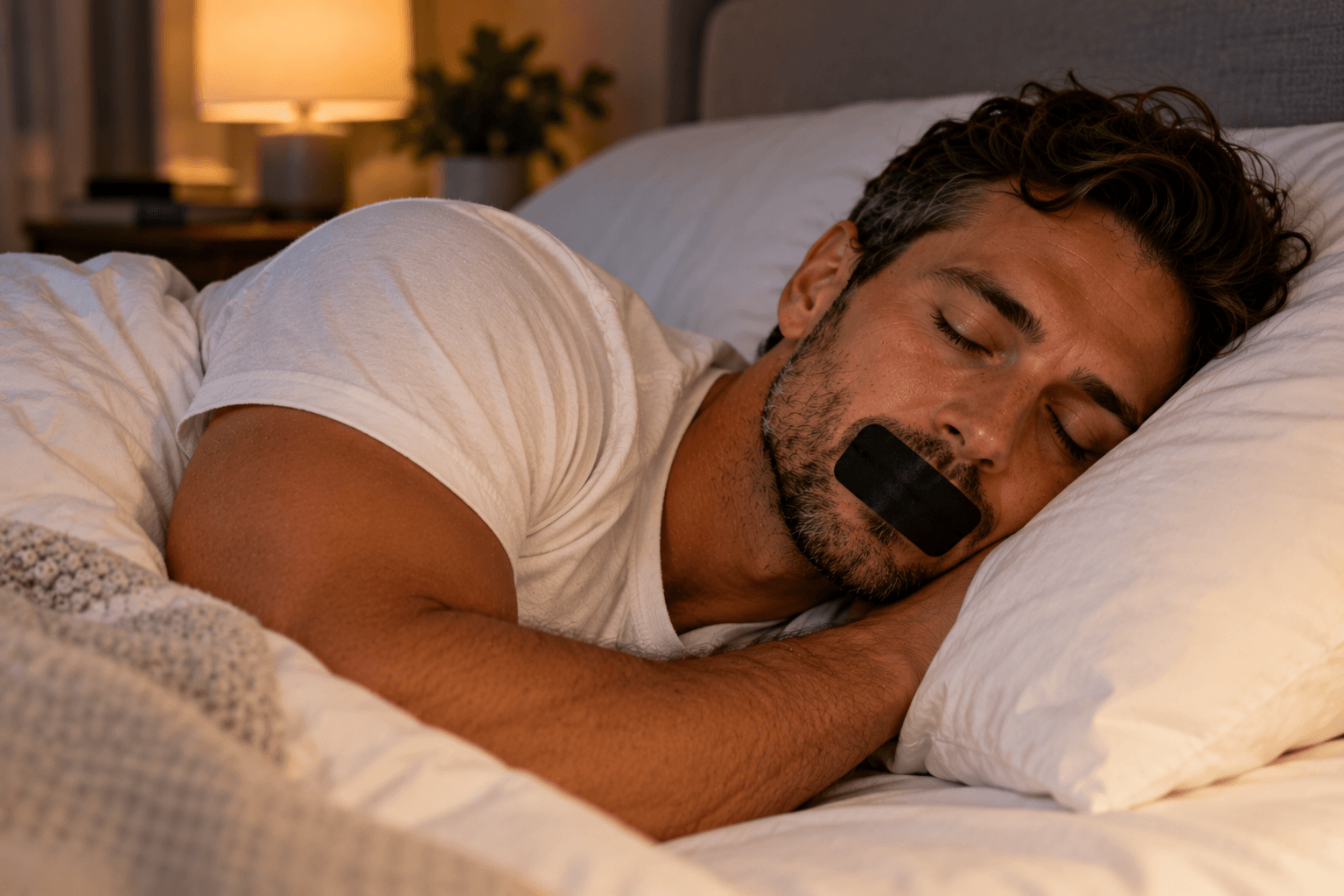
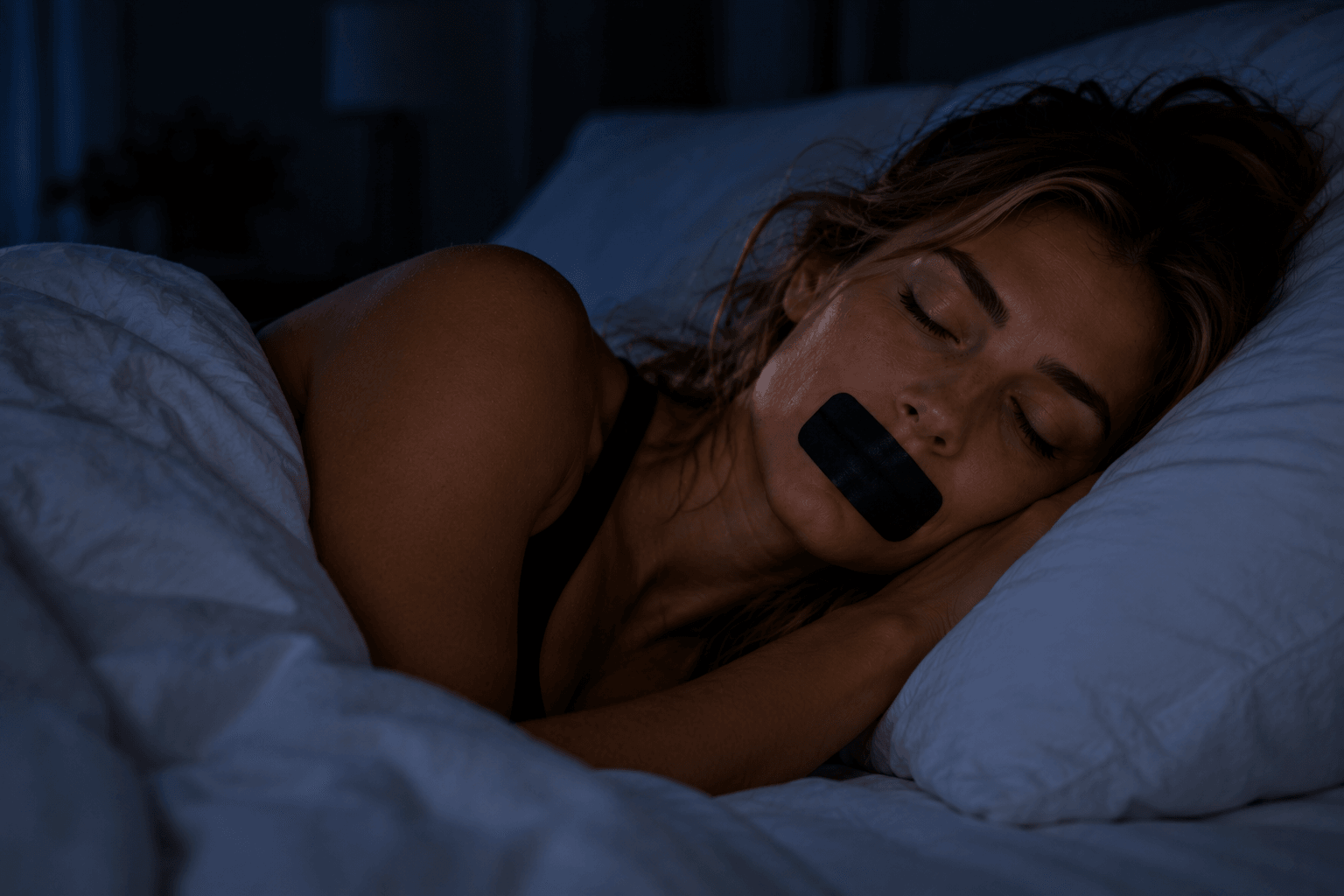
Side sleeping and mouth tape make a good pair because they work on different causes of snoring. Rolling onto your side keeps your tongue from settling back into your throat, and mouth tape keeps your lips together so you breathe through your nose. No study has tested them together, but each has its own support, and they're easy to combine.
Why does sleeping on your back make snoring worse?
Sleeping on your back makes snoring worse mostly because of gravity. Cleveland Clinic explains that sleeping on your back can cause your tongue to relax toward the back of your throat, partly blocking the airway. It cites a 2009 study of 2,077 sleep disorder patients in which sleep position was behind the snoring in 54%.
Your mouth matters too. Sleep Foundation notes that muscles relax during sleep and the mouth can fall open, especially when you're lying on your back. The NHS lists a mouth that falls open during sleep as its own cause of snoring, separate from the tongue blocking the throat.
So a back sleeper can have two things going on at once, and that's where the pairing comes in.
What does the research say about each one?
Research: limited (what this means)The evidence for side sleeping is the stronger of the two. A 2003 study in Sleep looked at overnight sleep lab recordings from 72 people who snored habitually. Among those without sleep apnea, most snored less on their side than on their back, both in how long they snored and in how loud it was. Sleep Foundation sums up the wider picture: decades of research show people snore less on their side, with or without sleep apnea.
For mouth tape, the studies are smaller but encouraging. In a 2022 study, 20 adults with mild sleep apnea who slept with their mouths open wore tape for a week, and their median snoring index fell from 303.8 to 121.1 events an hour. An earlier 2015 pilot study used a porous patch over the mouth in 30 people. Every one of them slept with their mouth closed while wearing it, and their snoring loudness fell from about 49 to 41 decibels.
Nobody has studied the combination directly, so it's fair to call the evidence for using both limited. The logic is simple, though. Each one addresses a different part of the problem, and neither gets in the way of the other.
Why use both instead of just one?
Using both helps because staying on your side all night is harder than it sounds. A 2013 review of positional therapy in Sleep and Breathing found that long-term compliance remains an issue. If you drift onto your back during the night, that's when the mouth is most likely to drop open.
Tape covers that gap. If you roll onto your back at 3 a.m., your lips stay together and you keep breathing through your nose. And on nights you do stay on your side, the tape is there if your mouth falls open anyway.
It works the other way too. Mouth tape doesn't stop the tongue from settling back on a back sleeper, so position training adds something tape can't.
Who is this combination best for?
The pairing makes the most sense for a particular kind of snorer. Your partner says the snoring is worse when you're on your back. Your mouth tends to hang open, or you wake with a dry mouth. And you can breathe comfortably through your nose while you're awake.
That profile matches the people in the studies above. The 2003 study found the clearest benefit from side sleeping in snorers without sleep apnea. The 2022 mouth tape study only enrolled people who had been seen breathing through their mouths during sleep and who woke with a dry throat.
If only one of those fits, start with that one. A back sleeper whose mouth stays closed may need nothing more than position training. Someone who snores with an open mouth on any side may get more from the tape.
Where do nasal strips fit in?
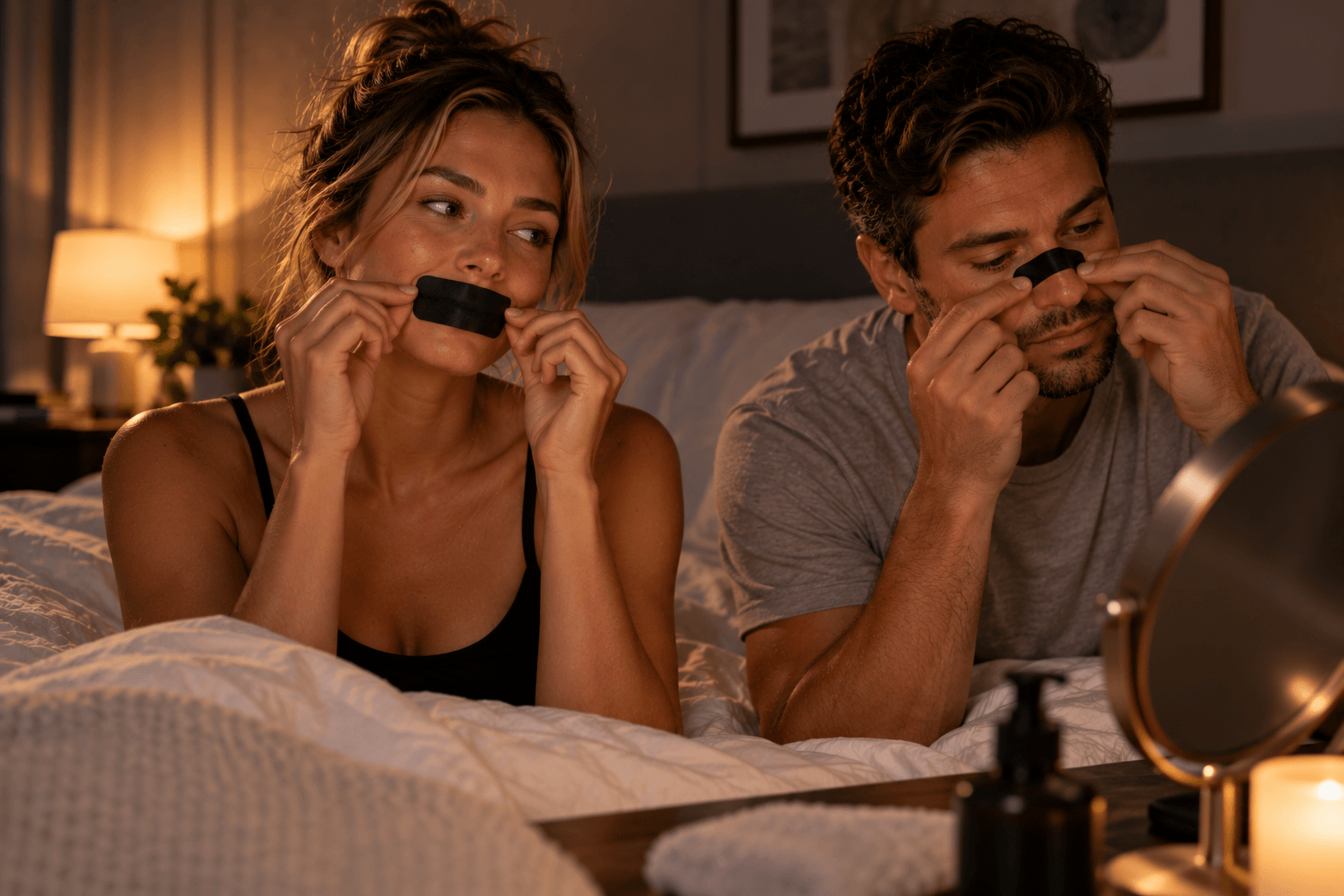
Tape only works well when your nose does. The NHS lists blocked or narrow airways in the nose as a separate cause of snoring, and names nasal dilators and strips that hold the nose open among the treatments. If your nose feels tight when you lie down, a strip can make the switch to nasal breathing easier, whichever side you're on.
Put the strip on first and check that nasal breathing feels easy before adding the tape. If your nose is properly blocked, from a cold for example, leave the tape off that night and rely on the strip and your sleep position.
How do you train yourself to sleep on your side?
The NHS suggests a few low-tech options: tape or stitch a tennis ball to the back of your sleepwear, or buy a special pillow or a bed wedge to help keep you on your side. Choose whichever you'll actually keep using, since sticking with it is the hard part.
Our guides to anti-snoring pillows and the best sleep position for breathing compare the options.
How to wear mouth tape comfortably on your side
Side sleeping puts your face against the pillow, so a few small adjustments help.
- Use a small vertical strip over the middle of your lips. It leaves the corners of your mouth free and gives the pillow less edge to catch.
- Apply it to clean, dry lips so it holds when your cheek presses into the pillow.
- Fold over one corner, as Sleep Foundation suggests, so you can peel it off easily. Fold the corner on the side that faces up.
- If you're new to tape, practice for 15 minutes or so while you're awake. Sleep Foundation recommends testing it during the day to make sure you can breathe easily through your nose.
- If your nose feels tight, add a nasal strip first. Our guide to mouth tape vs. nasal strips explains how they work together.
Check this first. Skip mouth tape and see a doctor if you snore loudly, wake up gasping, have been told you stop breathing in your sleep, or can't breathe comfortably through your nose. More on safety
If you want to try mouth tape, our pick is the Titan Bamboo Silk Mouth Tape.
What if you still snore on your side?
Still snoring on your side is worth paying attention to. The 2003 study found that people with sleep apnea often failed to snore less on their side, unlike most snorers without it. In fact, those with more severe breathing problems on their back tended to snore more on their side.
The American Academy of Sleep Medicine says that when snoring comes with choking, gasping or silent pauses in breathing, it's a reliable sign of sleep apnea. Mouth tape doesn't treat sleep apnea, so that pattern is a reason to see a doctor rather than add more tools. Our page on positional sleep apnea explains how position and apnea interact.
Read next
- Sleep position and snoring
- Does mouth tape help snoring?
- How to tell if mouth tape is working for you
Common questions
Can I wear mouth tape if I sleep on my side?
Yes. Side sleeping doesn't change how mouth tape works. A small vertical strip over the middle of your lips leaves less edge for the pillow to catch, and folding one corner makes it easy to remove.
Is side sleeping or mouth tape better for snoring?
They target different things. Side sleeping helps when snoring is worse on your back, and the research for it is stronger. Mouth tape helps when your mouth falls open during sleep. Many people get the most from using both.
How do I stay on my side all night?
The NHS suggests taping or stitching a tennis ball to the back of your sleepwear, or using a special pillow or bed wedge. Staying on your side long term is hard, and a 2013 review noted that sticking with positional therapy remains an issue.
Why do I snore more on my back?
Cleveland Clinic explains that lying on your back can let your tongue relax toward the back of your throat, partly blocking the airway. Sleep Foundation adds that the mouth is more likely to fall open when you're on your back.
What if I still snore on my side?
A 2003 study found that people with sleep apnea often didn't snore less on their side, unlike most snorers without it. If side sleeping doesn't help, or you gasp or stop breathing in your sleep, see a doctor.
What are the benefits of using mouth tape?
The best-supported benefit is less snoring for people whose mouth falls open in sleep. In a 2022 study of 20 mouth breathers with mild sleep apnea, the median snoring index fell from 303.8 to 121.1 events an hour after a week of taping, and in a 2015 pilot study everyone wearing a porous mouth patch slept with their mouth closed. Sleep Foundation notes that most other claimed benefits, such as less bad breath, are still anecdotal.
Sources
- Effects of body position on snoring in apneic and nonapneic snorers
- The undervalued potential of positional therapy in position-dependent snoring and obstructive sleep apnea: a review of the literature
- Wondering why you snore? 5 possible causes
- Snoring
- The impact of mouth-taping in mouth-breathers with mild obstructive sleep apnea: a preliminary study
- Novel porous oral patches for patients with mild obstructive sleep apnea and mouth breathing: a pilot study
- Mouth taping for sleep: does it work?
- Is it more than a snore? Recognizing sleep apnea warning signs
About this article
- Research
- 8 published sources, listed above.
- Evidence
- Limited. How we rate it
- Last checked
- October 10, 2026
- Funding
- Paid partner of Titan Recovery. Their ads are labeled.
- Found an error?
- Tell us. We log fixes on the corrections page.
* This content is for informational and educational purposes only and is not medical advice. It is not intended to diagnose, treat, cure or prevent any disease or health condition. Talk to a qualified healthcare provider about your health.