In short
- Anti-snoring pillows try to reduce snoring by changing the position of your head and neck, keeping you on your side or raising your upper body.
- In a small randomized crossover trial of 20 snorers without sleep apnea, an active pillow that shifts head position lowered the snoring index from about 269 to 162 an hour.
- A 2024 systematic review found positional devices and head-of-bed elevation can reduce snoring, but said more comparative studies are needed.
- A German guideline on adult snoring says devices that change head position when you snore should be offered, while noting the overall evidence on snoring treatments is limited.
- A pillow is unlikely to help much if your snoring comes from a blocked nose or an open mouth, and it's no substitute for a doctor if you have sleep apnea warning signs.
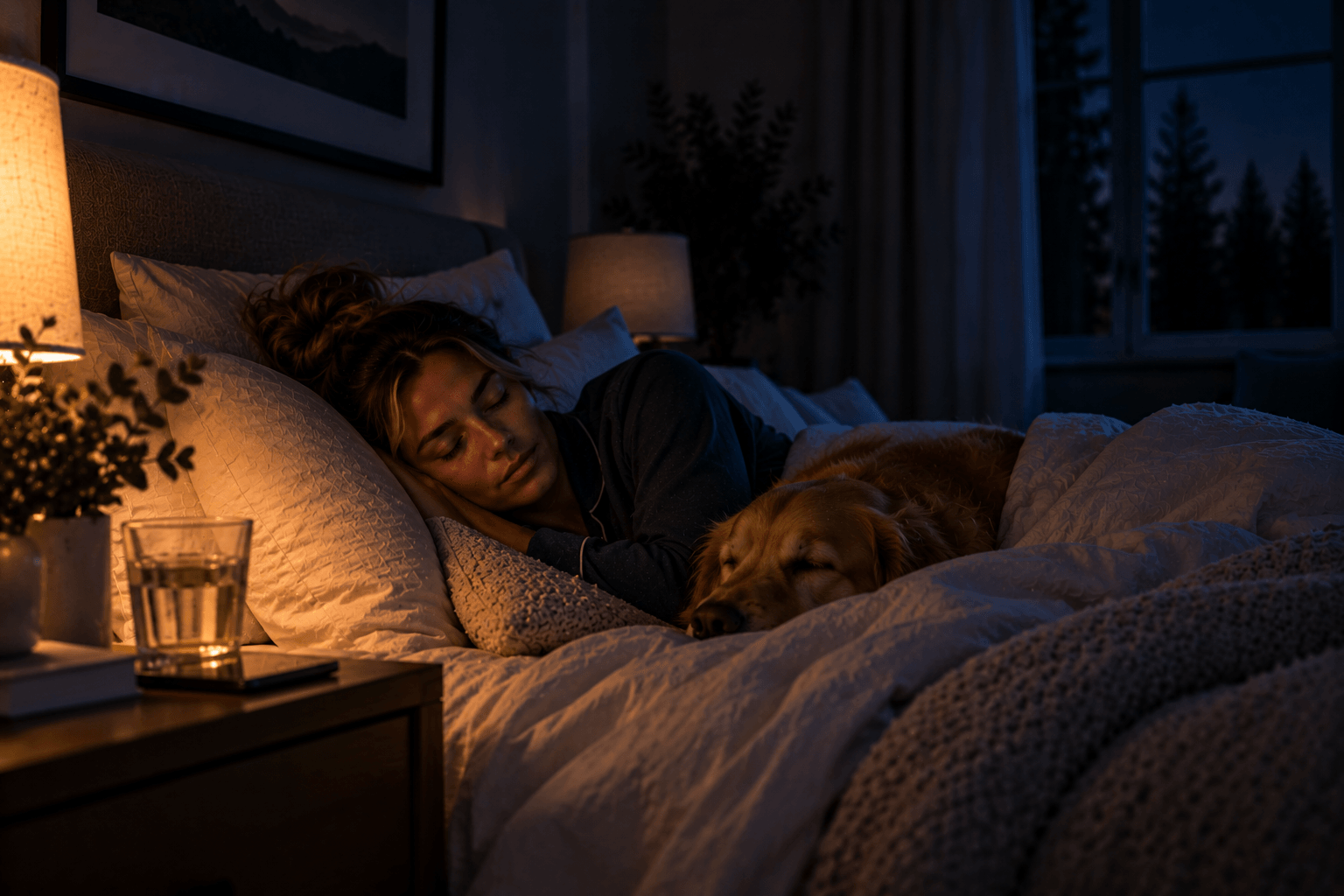
Some anti-snoring pillows do reduce snoring, mainly the ones that change the position of your head or keep you off your back. The studies behind them are small and short, and each tested a single product, so the evidence is promising but limited. A pillow makes the most sense if you snore mostly on your back, and it won't fix snoring from a blocked nose or an open mouth.
What is an anti-snoring pillow?
"Anti-snoring pillow" is a term that covers several quite different products. A 2024 systematic review in the Journal of Personalized Medicine grouped them roughly like this:
- Fixed-shape positioning pillows, which are contoured to nudge your head to one side or support your neck in a particular angle
- Active or "smart" pillows, which detect snoring and inflate air chambers or shift foam to move your head
- Head-of-bed elevation, using a wedge or an adjustable bed to raise your head and upper body
The NHS also suggests a special pillow or bed wedge to help keep you on your side, alongside the older trick of stitching a tennis ball to the back of your sleepwear. Cleveland Clinic lists a snore-reducing pillow that keeps your head in the proper position, and raising your head during sleep, among its prevention tips.
Why would a pillow change snoring?
Snoring is common enough that simple fixes get a lot of attention. The 2024 review estimates that about 45% of adults snore occasionally and 25% snore regularly, with snoring more common in men and rising in women after menopause. It also points out that snoring affects quality of life for bed partners as well as snorers.
Snoring happens when the airway is partly blocked and the tissue around it vibrates. Cleveland Clinic notes that back sleepers are more likely to snore than side sleepers, so the position of your head and body during the night matters.
The 2024 review explains the thinking. Positioning devices keep the head and neck aligned to hold the airway open, while raising the head and trunk reduces how easily the upper airway collapses. It says studies show both approaches can reduce snoring by widening the airway and lowering the pressure at which it closes.
What does the research show?
Research: limited (what this means)The best single study is a 2017 randomized crossover trial from a university sleep center in Mannheim, Germany. It enrolled 22 adult snorers who had been checked for sleep apnea and didn't have it, and 20 finished. Each person used an active pillow, which senses snoring and inflates to shift the head, both switched on and switched off. With the pillow active, the snoring index measured in the sleep lab fell from about 269 to 162 snores an hour, and bed partners rated the snoring as clearly quieter. Every participant found the pillow acceptable. One of the authors was linked to the pillow's distributor, which is worth knowing when you read the results.
A 2015 study in Scientific Reports tested a fixed head-positioning pillow in 25 adults with mild to moderate sleep apnea that was worse on their back. Over three nights, the median snoring index dropped from 218 to 115 events an hour compared with their own pillows. The improvement was clearer in people of normal weight. In the overweight group, people felt their snoring was better, but the measured snoring didn't change significantly.
A 2022 preliminary study gave 32 people with sleep apnea three hours on a standard lab pillow and three hours on either their own pillow or a memory foam pillow. Snoring events fell by about 47% on the memory foam pillow compared with the lab pillow. Three hours per pillow is a short test, and the authors called their study preliminary.
Guidelines take a cautious but positive line. The 2019 German guideline on snoring in adults says devices that change head position when you snore should be offered to reduce snoring, based on the Mannheim trial. It also says that for people who snore mainly on their back, trying to avoid that position should be offered, even though it found no trials that settled how well this works. The 2024 review concluded that positional devices and head elevation help, and that studies comparing the different devices are still needed.
Are wedge pillows and raised beds worth trying?
Raising your upper body is the simplest version of this idea, and it doesn't depend on buying a particular brand. Cleveland Clinic suggests elevating your head during sleep to improve airflow. The 2024 review groups head-of-bed elevation, where the head and trunk are raised together, alongside positioning pillows, and describes both as cost-effective options that can be tried early and are far cheaper than CPAP equipment.
A wedge that lifts your whole upper body is a different thing from stacking extra pillows under your head. The research covered in the review raised the head and trunk together, so a wedge or an adjustable bed base is closer to what was studied.
Who is most likely to benefit?
A pillow works on position, so it makes most sense if you snore mainly on your back and less on your side. Cleveland Clinic suggests asking a partner, or using an app or a noise-activated recorder, to track when and how much you snore. If the snoring drops when you roll over, a side-sleeping pillow or wedge is a reasonable thing to try. Our guide to snoring apps and sleep trackers covers the options for recording yourself.
The 2024 review also flags the downsides: some people find certain positions uncomfortable, and some can't tolerate sleeping with their head raised for long.
What if your nose or mouth is part of the problem?
A pillow can't open a blocked nose. Cleveland Clinic says congestion from allergies and colds can block airflow, and lists nasal strips, which stick to the outside of the nose to help keep the nasal passages open, among its snoring treatments. The NHS likewise matches nasal dilators or strips to blocked or narrow nasal passages. Strips pair easily with a positioning pillow, and how nasal strips work explains the mechanics.
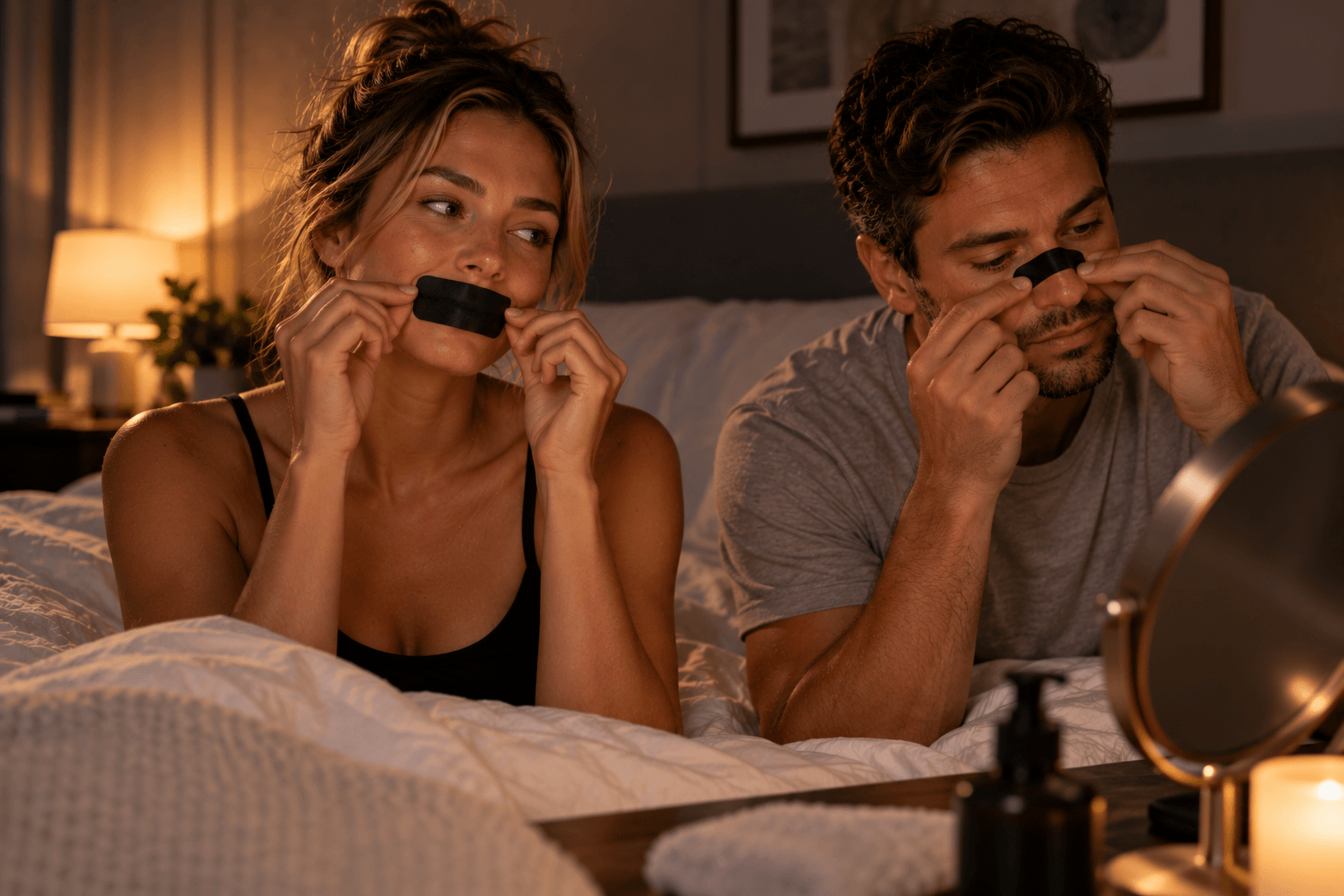
If your mouth falls open while you sleep, the NHS suggests a chin strap or a device that keeps you breathing through your nose. For adults with a clear nose, mouth tape is a simple way to do the same thing, and it works alongside a side-sleeping pillow. Start with our nose test, then read mouth tape and side sleeping and how to start mouth taping.
Check this first. Skip mouth tape and see a doctor if you snore loudly, wake up gasping, have been told you stop breathing in your sleep, or can't breathe comfortably through your nose. More on safety
If you want to try mouth tape and nasal strips together, our pick is the Titan Sleep System, which pairs TitanAir Nasal Strips with Titan Mouth Tape.
Neither strips nor tape treat sleep apnea, and the same goes for a pillow.
When should you see a doctor?
The AASM says snoring paired with choking, gasping or silent pauses in breathing is a reliable indicator of sleep apnea, and lists excessive daytime sleepiness as another warning sign. The NHS advises seeing a GP if lifestyle changes aren't helping, if your breathing stops and starts while you sleep, or if you feel sleepy during the day.
Snoring that only happens on your back can still be sleep apnea. Our guides to positional sleep apnea and snoring vs. sleep apnea explain how to tell, and what testing involves.
Read next
Common questions
Do anti-snoring pillows really work?
Some have reduced snoring in small studies. An active pillow that adjusts head position cut snoring in a randomized trial of 20 people, and a head-positioning pillow lowered a snoring measure in a three-night study of 25 people. The studies are small, short and each tested a single product.
What kind of pillow is best for snoring?
There isn't a clear winner. A 2024 review covered active pillows that inflate to move the head, fixed-shape positioning pillows and head-of-bed elevation, and called for studies comparing them. If you mainly snore on your back, something that keeps you on your side is a sensible place to start.
Does raising your head help with snoring?
It can. Cleveland Clinic suggests elevating your head during sleep to improve airflow, and the 2024 review says raising the head and trunk reduces how easily the upper airway collapses. Some people find long periods of head elevation uncomfortable.
Can a wedge pillow help me stay on my side?
The NHS suggests a special pillow or bed wedge, or a tennis ball stitched to the back of your sleepwear, to help keep you on your side if you snore on your back.
Is there a pillow for sleep apnea?
No pillow is a substitute for a sleep apnea diagnosis and treatment plan. A head-positioning pillow lowered snoring in a small 2015 study of people with mild to moderate sleep apnea that was worse on their back. If your snoring comes with gasping, choking, pauses in breathing or heavy daytime sleepiness, see a doctor.
Is a memory foam pillow good for snoring?
There's very little research. One small study in people with sleep apnea found fewer snoring events over three hours with a memory foam pillow than with a standard lab pillow, but it was short and preliminary.
What causes snoring?
Snoring happens when the airway is partly blocked and the tissue around it vibrates as you breathe. Cleveland Clinic notes that back sleepers are more likely to snore than side sleepers, which is why a pillow that changes your position can make a difference for some people.
What helps if my snoring comes from my nose?
A pillow can't open a blocked nose. Cleveland Clinic lists nasal strips, which stick to the outside of the nose to help keep the nasal passages open, among its snoring treatments, and the NHS matches nasal dilators or strips to blocked or narrow nasal passages. Strips can be worn alongside a positioning pillow.
Sources
- The effect on snoring of using a pillow to change the head position
- The potential effect of changing patient position on snoring: a systematic review
- Treatment of snoring with positional therapy in patients with positional obstructive sleep apnea syndrome
- Memory foam pillow as an intervention in obstructive sleep apnea syndrome: a preliminary randomized study
- The diagnosis and treatment of snoring in adults
- Snoring
- Snoring: causes and complications
- Is it more than a snore? Recognizing sleep apnea warning signs
About this article
- Research
- 8 published sources, listed above.
- Evidence
- Limited. How we rate it
- Last checked
- October 10, 2026
- Funding
- Paid partner of Titan Recovery. Their ads are labeled.
- Found an error?
- Tell us. We log fixes on the corrections page.
* This content is for informational and educational purposes only and is not medical advice. It is not intended to diagnose, treat, cure or prevent any disease or health condition. Talk to a qualified healthcare provider about your health.