In short
- Snoring is a sound made by vibrating throat tissue. Sleep apnea is breathing that repeatedly stops and starts during sleep.
- Not everyone who snores has sleep apnea, but snoring with choking, gasping or silent pauses in breathing is a reliable warning sign, according to the AASM.
- You can have obstructive sleep apnea without loud snoring, so daytime sleepiness and waking often matter too.
- Most sleep apnea goes unnoticed. The AASM estimates about 23.5 million of the nearly 30 million US adults with obstructive sleep apnea are undiagnosed.
- Sleep apnea can only be diagnosed with a sleep test. The AASM recommends against using questionnaires alone.
- Mouth tape and nasal strips don't treat sleep apnea. See a doctor first if you have warning signs.
Snoring is a sound. Sleep apnea is a breathing problem, where your breathing stops and starts again and again while you sleep. Plenty of people snore without having sleep apnea, but snoring with gasping, choking or pauses in breathing is a reason to see a doctor, and only a sleep test can tell the two apart.
What's the difference between snoring and sleep apnea?
Mayo Clinic describes snoring as the hoarse or harsh sound made when air flows past relaxed tissues in your throat and makes them vibrate. Nearly everyone snores now and then. For some people it's a nightly problem, and sometimes it points to something more serious.
Sleep apnea is when your breathing stops and starts while you sleep, according to the NHS. The most common type is obstructive sleep apnea, where the airway narrows or closes during sleep. Mayo Clinic says it often sounds like loud snoring followed by silence when breathing stops or nearly stops, then a snort or gasp as you briefly wake. People with obstructive sleep apnea usually have breathing slow or stop at least five times in every hour of sleep.
So the two overlap. Snoring is often part of sleep apnea, but Mayo Clinic is clear that not all snorers have it.
Why does sleep apnea so often go unnoticed?
Sleep apnea so often goes unnoticed because it happens while you're asleep. The AASM explains that in obstructive sleep apnea the airway repeatedly becomes partly or completely blocked, cutting the amount of air that reaches the lungs. Oxygen levels drop and the brain briefly rouses you, sometimes several hundred times a night in severe cases, and you may have no idea it's happening.
The numbers reflect that. The AASM says nearly 30 million US adults have obstructive sleep apnea, and estimates that about 23.5 million of those cases are undiagnosed. In its 2021 survey, nearly half of Americans (48%) said they didn't know the symptoms. Cleveland Clinic adds that people who don't snore, or don't realize they snore, often assume they can't have sleep apnea and put off getting checked.
Which signs point toward sleep apnea?
The American Academy of Sleep Medicine (AASM) says that when snoring comes with choking, gasping or silent pauses in breathing during sleep, it's a reliable indicator of sleep apnea. It also flags daytime sleepiness, obesity and high blood pressure, noting that between 30 and 40 percent of adults with high blood pressure also have sleep apnea.
Other signs Mayo Clinic lists alongside snoring include:
- Breathing pauses someone else has seen
- Excessive daytime sleepiness
- Difficulty concentrating
- Morning headaches
- A sore throat when you wake up
- Restless sleep
- Gasping or choking at night
- Chest pain at night
The NHLBI points out that you may not know about the nighttime signs until someone tells you. Signs you might notice yourself include daytime sleepiness, a dry mouth, headaches, insomnia and waking up often during the night to urinate. If you wake up with headaches regularly, our guide to morning headaches covers other possible causes too.
Can you have sleep apnea without snoring?
Yes, you can have sleep apnea without snoring. Cleveland Clinic says obstructive sleep apnea can happen with no snoring at all, or with only light snoring now and then. Signs of this quieter version include daytime sleepiness, waking up unrefreshed, morning headaches and waking many times in the night. Its sleep specialist notes that in women, obstructive sleep apnea commonly shows up as frequent nighttime waking with no history of loud snoring.
Central sleep apnea, a less common type where the brain doesn't signal the body to breathe properly, doesn't cause snoring.
That's why being a quiet sleeper doesn't rule anything out if you're exhausted during the day.
What raises the risk of sleep apnea?
Sleep apnea risk rises with factors like weight, age and alcohol, and these help put your symptoms in context. The NHS links sleep apnea to:
- Obesity and having a large neck
- Getting older, although children and young adults can get it too
- Having family members with sleep apnea
- Drinking alcohol and smoking
- Large tonsils or adenoids
- Sleeping on your back
- Chronic obstructive pulmonary disease (COPD)
Cleveland Clinic adds nasal congestion, certain jaw structures and hormonal changes, including menopause. The AASM notes that the risk rises with the amount of excess body weight. Having a risk factor doesn't mean you have sleep apnea, and you can have it without any of them, but snoring plus several of these is a stronger reason to get tested.
Can you tell the difference without a test?
Research: strong (what this means)You can't reliably tell snoring and sleep apnea apart without a test. The AASM's clinical practice guideline on diagnosing obstructive sleep apnea in adults makes a strong recommendation that questionnaires, clinical tools and prediction algorithms not be used to diagnose sleep apnea without a sleep test. Diagnosis needs either an overnight study in a sleep lab or, for the right patients, a home sleep apnea test.
What happens during a sleep test?
If a doctor thinks you might have sleep apnea, the NHS says they may refer you to a sleep clinic. You'll be given devices that check things like your breathing and heartbeat while you sleep. You can usually do this at home, though sometimes you'll need to stay overnight in the clinic. The results show whether you have sleep apnea and how severe it is, based on how often your breathing stops while you sleep, a figure called the apnea-hypopnea index (AHI).
The AASM guideline sets out when each type of test fits. For adults without other complicating conditions who show signs of moderate to severe sleep apnea, it recommends either a full overnight sleep study or a technically adequate home sleep apnea test. If a single home test comes back negative, inconclusive or technically inadequate, it recommends a full sleep study. It also recommends a full study rather than a home test for people with significant heart or lung disease, conditions that weaken the breathing muscles, chronic opioid use, a history of stroke or severe insomnia. Our guide to the home sleep apnea test explains how it works.
What can you do before your appointment?
Before your appointment, gather information for your doctor at home. The NHS suggests asking someone to stay with you while you sleep so they can check for symptoms. A partner who has noticed pauses or gasping is useful to bring along to the appointment. If you share a bed with a loud snorer, our guide to sleeping next to a snorer may help in the meantime.
When should you see a doctor?
The NHS advises seeing a doctor if your breathing stops and starts while you sleep, if you make gasping, snorting or choking noises, or if you always feel very tired during the day. Mayo Clinic adds snoring loud enough to disrupt your partner's sleep, and advises asking a pediatrician if your child snores.
It's worth acting on. The NHS says sleep apnea can be serious if it isn't diagnosed and treated, and lists high blood pressure, stroke, type 2 diabetes, heart disease and a higher chance of accidents caused by tiredness among the possible problems.
Check this first. Skip mouth tape and see a doctor if you snore loudly, wake up gasping, have been told you stop breathing in your sleep, or can't breathe comfortably through your nose. More on safety
Do mouth tape or nasal strips help with sleep apnea?
Mouth tape and nasal strips don't help with sleep apnea. Neither one is a treatment for sleep apnea, and quieting your snoring with tape or a strip is no substitute for getting the warning signs checked. The AASM says sleep apnea is typically treated with CPAP, with positional therapy, oral appliances and surgery as alternatives. Those decisions belong with a sleep doctor.
The NHS says CPAP may feel strange or awkward at first, but it works best if you use it every night, so keep at it and tell your doctor if it's uncomfortable. Other treatments the NHS lists include a mouthpiece that holds the airway open, surgery such as removing large tonsils, exercises for the mouth and face muscles, and a device that stimulates the nerve controlling the tongue. If you've been diagnosed, it also suggests losing weight if you need to, exercising regularly, sleeping on your side, cutting back on alcohol before bed and not taking sleeping pills unless a doctor recommends them, because they can make sleep apnea worse. If you breathe through your mouth on CPAP, see mouth tape and CPAP for the options to discuss with your provider.
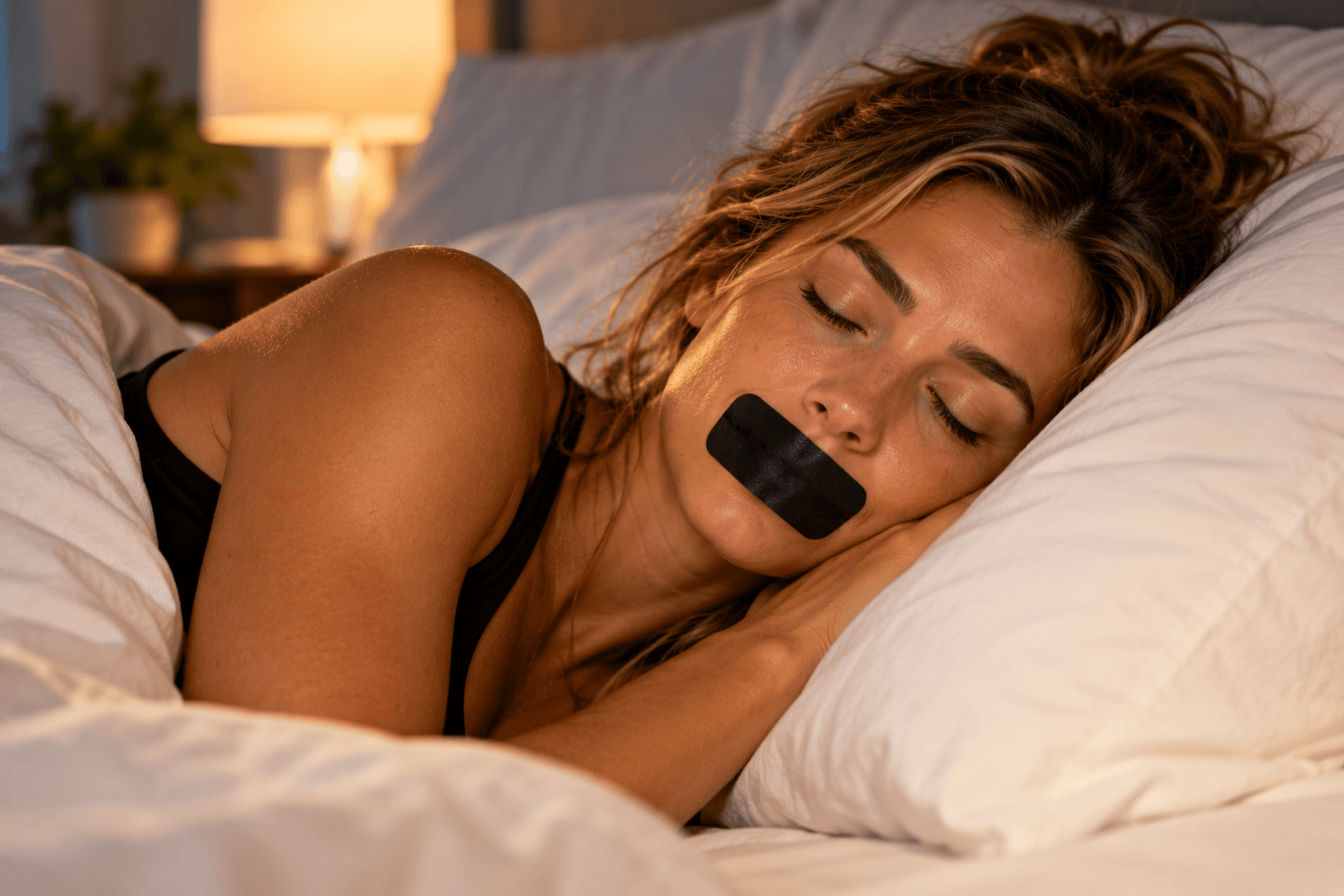
If your snoring has none of the warning signs above, or a doctor has ruled sleep apnea out, there's plenty you can try. The NHS matches snoring treatments to their cause: nasal strips or dilators when the nose is blocked or narrow, and a chin strap or a mouthpiece when the mouth falls open. Some adults with a clear nose use mouth tape for the open-mouth kind of snoring. Our guides on how to stop snoring, how nasal strips work and whether mouth tape helps snoring cover the options. If your snoring does come with warning signs, get it checked first.
Read next
Common questions
How do I know if my snoring is sleep apnea?
You can't know for sure without a sleep test. Warning signs include someone seeing you stop breathing, gasping or choking in your sleep, and feeling very tired during the day even after a full night in bed.
Can you have sleep apnea without snoring?
Yes. Cleveland Clinic says obstructive sleep apnea can happen with no snoring or only light snoring, and that in women it commonly shows up as waking many times in the night rather than loud snoring.
When should I see a doctor about snoring?
If your breathing stops and starts while you sleep, you make gasping, snorting or choking noises, or you always feel very tired during the day. Mayo Clinic also suggests seeing a doctor if your snoring is loud enough to disrupt your partner's sleep.
Is snoring without other symptoms dangerous?
Nearly everyone snores now and then, according to Mayo Clinic. Snoring on its own isn't always a sign of a health problem, but if it's loud and frequent, it's worth mentioning to a doctor.
Can a home sleep test diagnose sleep apnea?
Often, yes. The AASM recommends either an overnight sleep study or a technically adequate home sleep apnea test for uncomplicated adults with signs of moderate to severe sleep apnea. If a home test is negative or inconclusive, it recommends a full sleep study.
How common is undiagnosed sleep apnea?
Very common. The AASM says nearly 30 million US adults have obstructive sleep apnea and estimates about 23.5 million of those cases are undiagnosed. People can stop breathing many times a night without knowing it.
Why is sleep apnea so common?
Partly because its risk factors are common. The NHS links sleep apnea to obesity, a large neck, getting older, drinking alcohol and smoking, and an American Heart Association statement estimates that about 34% of middle-aged men and 17% of middle-aged women meet the criteria for obstructive sleep apnea. Many cases go unnoticed because the breathing pauses happen during sleep.
Sources
- Snoring: symptoms and causes
- Is it more than a snore? Recognizing sleep apnea warning signs
- Sleep apnoea
- Sleep apnea: symptoms
- Yes, you can have sleep apnea even if you don't snore
- Clinical practice guideline for diagnostic testing for adult obstructive sleep apnea: an American Academy of Sleep Medicine clinical practice guideline
- Snoring
- Obstructive sleep apnea and cardiovascular disease: a scientific statement from the American Heart Association
About this article
- Research
- 8 published sources, listed above.
- Evidence
- Strong. How we rate it
- Last checked
- October 10, 2026
- Funding
- Paid partner of Titan Recovery. Their ads are labeled.
- Found an error?
- Tell us. We log fixes on the corrections page.
* This content is for informational and educational purposes only and is not medical advice. It is not intended to diagnose, treat, cure or prevent any disease or health condition. Talk to a qualified healthcare provider about your health.