In short
- Mouth tape works on snoring that comes from sleeping with your mouth open. Snoring that starts in the throat whether your mouth is open or not is a different problem.
- In a 2022 study of 20 mouth breathers with mild sleep apnea, 13 cut their snoring by at least half after a week of taping, and the group's median snoring rate fell by 47%.
- A 2015 study using a porous mouth patch in 30 adults found snoring dropped from about 147 to 40 snores an hour.
- The studies are small and early, so treat tape as something worth trying rather than a proven fix.
- Snoring with gasping, choking or pauses in breathing is a warning sign of sleep apnea and needs a doctor, not tape.
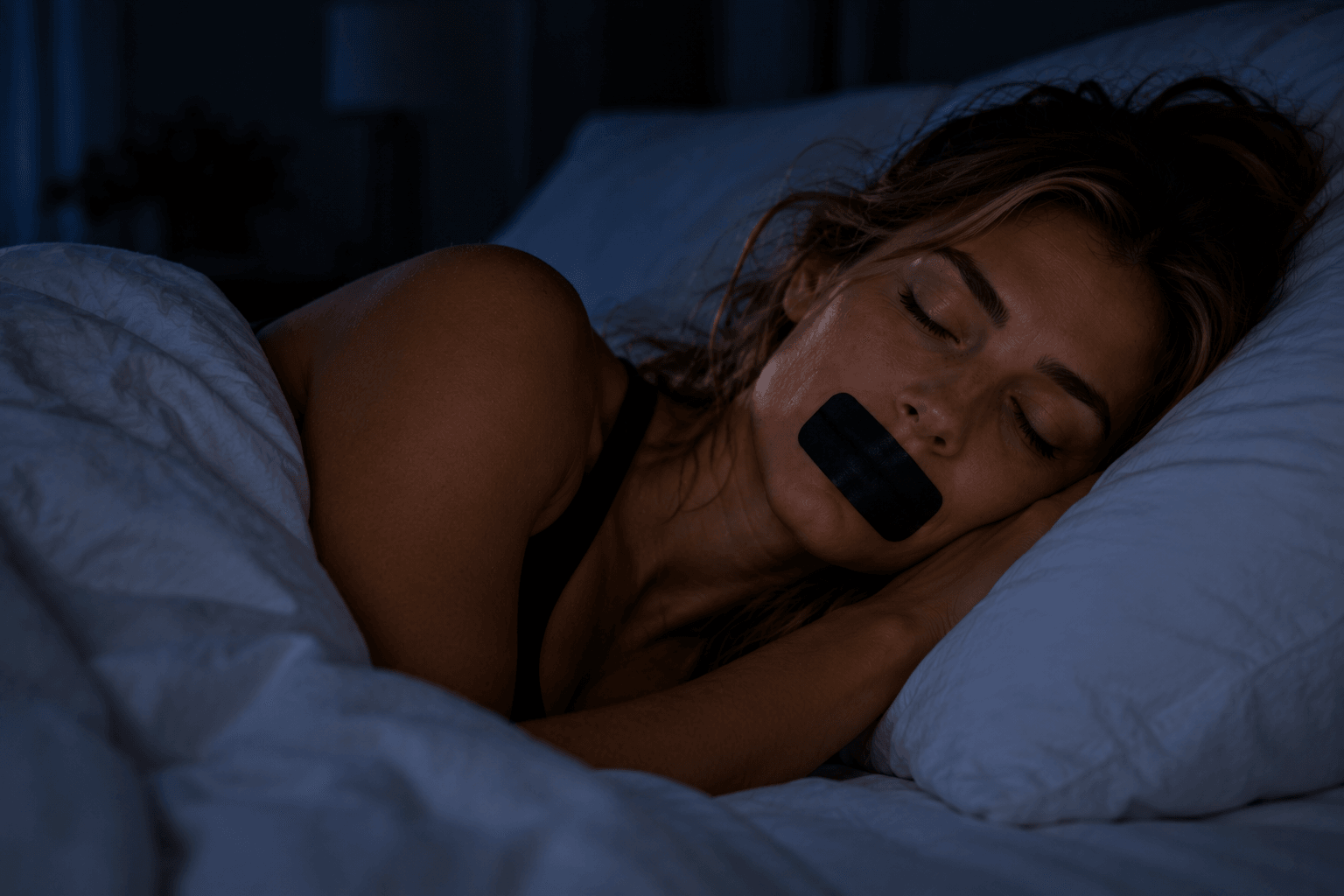
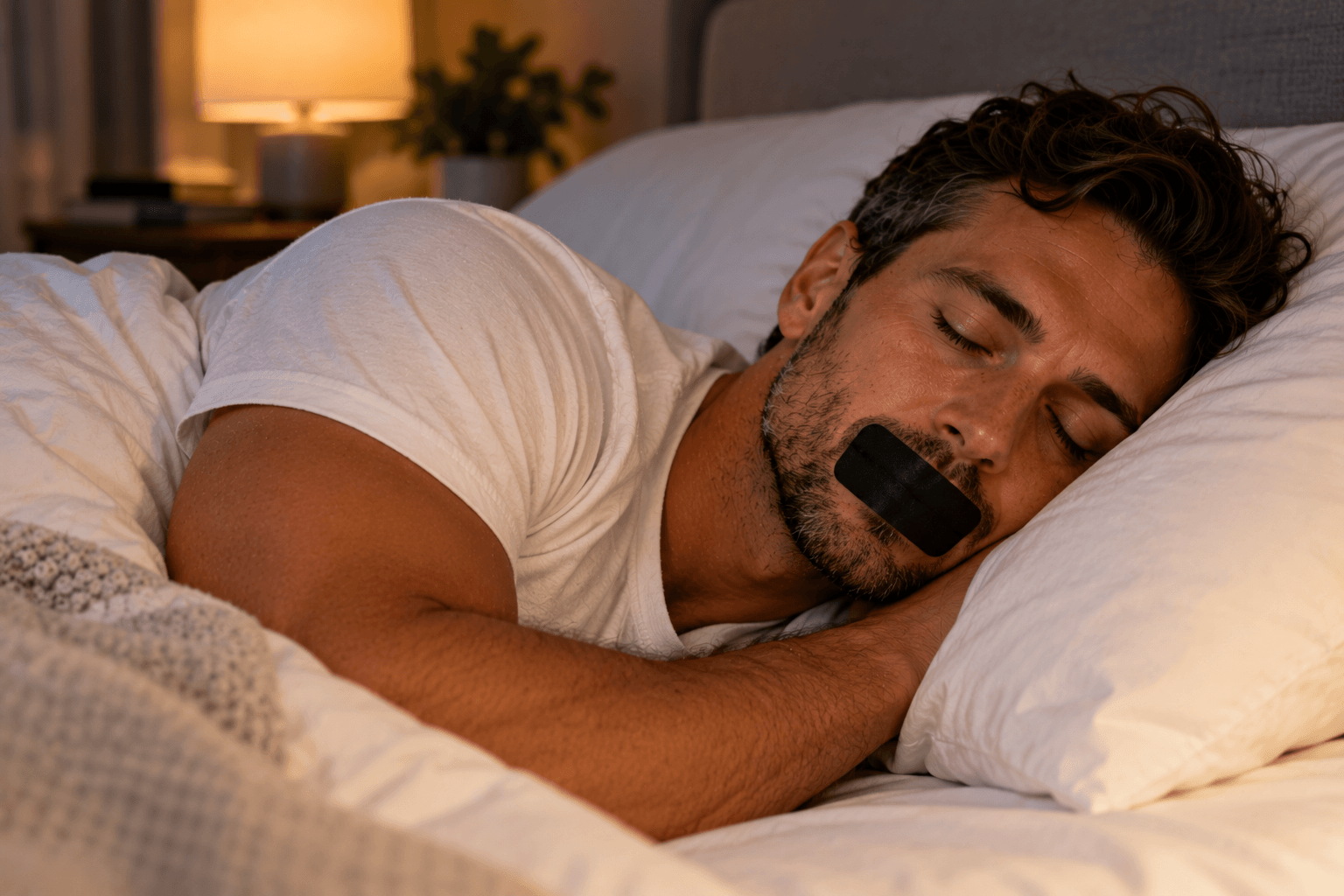
Mouth tape can help with snoring if your snoring comes from sleeping with your mouth open. In a small 2022 study of 20 mouth breathers with mild sleep apnea, 13 cut their snoring by at least half after a week of taping, and an earlier study using a porous mouth patch found a similar drop. The research is still early, but the results so far are encouraging.
Why does mouth breathing make you snore?
Snoring is the sound of soft tissue in your airway vibrating as air moves past it. Sleep Foundation explains that snoring often happens when someone breathes through their mouth, which can make the soft tissues in the throat vibrate.
The authors of the 2022 study in Healthcare describe what changes when your mouth drops open during sleep. The soft palate shifts backward and the lower jaw moves down, which narrows the space behind the palate and the tongue. They also note that during sleep, air moving through the nose meets less resistance than air moving through the mouth. Mouth tape keeps your lips together so you stay on the nasal route, and that's the reason it can make a difference for this kind of snoring.
How do you know if your snoring is the mouth-breathing kind?
For some people, snoring happens because the mouth falls open as they sink into deeper sleep and air rushes in through it. For others it starts further back, around the soft palate or the throat, whether the mouth is open or not. Mouth tape is aimed at the first kind.
A rough way to tell: ask whoever sleeps next to you whether your mouth hangs open when you snore. Or try snoring on purpose while awake, once with your mouth open and once with it closed. If you can only make the sound with your mouth open, mouth breathing is probably part of it.
The people in the 2022 study also had two things in common that you can check for yourself. Someone had seen them breathing through their mouth while asleep, and they woke up with a dry throat. If both sound familiar, you're closer to the group the research was done on. Our guide to why you breathe through your mouth at night covers the usual causes.
What did the studies find?
Research: limited (what this means)The most cited study is the 2022 one. Researchers in Taiwan sealed the lips of 20 adults with mild sleep apnea using a silicone, hypoallergenic tape, then ran a home sleep test after a week. They counted someone as a responder if their snoring rate dropped by at least half, and 13 of the 20 did. Across the group, the median snoring rate fell from about 304 to 121 snores an hour, a 47% drop. The median number of breathing interruptions per hour fell from 8.3 to 4.7, and dips in blood oxygen became less frequent too. People who snored most at the start tended to improve the most.
An earlier pilot study, published in 2015, gave 30 adults with mild sleep apnea and habitual mouth breathing a porous patch to keep their lips closed. All 30 slept with their mouths closed while wearing it. Their median snoring rate dropped from 146.7 to 40.0 snores an hour, snoring loudness fell from about 49 to 41 decibels, and their scores on a daytime sleepiness questionnaire improved. X-rays showed more space behind the soft palate and the tongue while they used the patch.
A 2025 review in PLOS One pulled together 10 studies of mouth taping and similar methods. All three that measured how often people snored reported a significant drop, though one of those used a chin strap rather than tape. The review rated every study it found as poor quality, and none of the snoring studies had a comparison group. So the fair summary is that mouth tape has helped mouth-breathing snorers in the studies done so far, and bigger studies are needed to confirm it.
Who is most likely to see a difference?
Based on who was in the studies, the people with the best chance are adults who:
- breathe through their mouth during sleep, by their own or a partner's account
- can breathe comfortably through their nose with their lips closed
- don't have the warning signs of sleep apnea covered below
There's also a hint about sleep position. In the 2022 study, 11 of the 15 people whose breathing problems were worse on their backs were responders, compared with 2 of the other 5. The group was too small for that difference to count as statistically meaningful, but the authors thought it was worth testing in a larger study.
One more detail matters. People in the 2022 study who had a blocked nose were given medication and nasal spray before taping. A clear nose comes first.
How do you try mouth tape for snoring?
- Check your nose. Sit quietly with your mouth closed and breathe only through your nose for two minutes. Our nose test times it for you.
- Use a tape made for skin. The 2022 study used a silicone tape trimmed to about 4 cm and placed vertically from just under the nose across both lips.
- Practice with it on while you're awake before you sleep in it. Our first-week guide lays out a gentle way to build up.
- Give it a week. That's how long the 2022 study ran before measuring results.
- Ask your bed partner what they notice, or record yourself with a snoring app on your phone before and during the week.
If you sleep on your back, it's worth pairing tape with side sleeping. Sleep Foundation says decades of research show that people with and without sleep apnea snore less on their side. Our guide to sleep position and snoring has more on that.
Where do nasal strips come in?
If your nose feels blocked at night, taping your mouth will make breathing harder. Nasal strips work on that end. In a small randomized trial of people with chronic rhinitis, snoring dropped from about 258 to 173 snores an hour with a nasal strip compared with a placebo strip.
Many people use a strip to open the nose and tape to keep the mouth closed. Read more in how nasal strips work and mouth tape vs. nasal strips.
When does snoring need a doctor, not tape?
The American Academy of Sleep Medicine calls snoring a warning sign of sleep apnea. It says snoring paired with choking, gasping or silent pauses in breathing is a reliable indicator, and so is daytime sleepiness after a full night's sleep. It also lists morning headaches, waking up at night to urinate and trouble concentrating among other common symptoms.
Mouth tape isn't a treatment for sleep apnea. The 2022 study only included people with mild sleep apnea, and its authors said taping isn't recommended for moderate or severe sleep apnea. If any of those signs sound familiar, get checked before you try tape. Our guide to snoring vs. sleep apnea explains the difference.
Check this first. Skip mouth tape and see a doctor if you snore loudly, wake up gasping, have been told you stop breathing in your sleep, or can't breathe comfortably through your nose. More on safety
If you want to try mouth tape and nasal strips together, our pick is the Titan Sleep System, which pairs TitanAir Nasal Strips with Titan Mouth Tape.
Is more research on the way?
Yes. A trial registered as NCT06587256 plans to enroll about 100 adults who snore and have either no sleep apnea or a mild case. Each person will wear a single strip of silicone tape placed vertically over the lips, and the researchers will ask both the person and their bed partner about snoring and sleep over 3 months. It's listed as recruiting and isn't expected to finish until 2030, so results are a few years away.
Read next
- Is mouth taping safe? Who should try it and who shouldn't
- How to stop snoring
- Why do I breathe through my mouth at night?
Common questions
Will mouth tape stop snoring?
It can reduce it if your snoring happens because your mouth falls open. In a 2022 study, 13 of 20 mouth breathers with mild sleep apnea halved their snoring after a week of taping. It won't help snoring that starts in your throat, and the research is still small.
How quickly does mouth tape work for snoring?
The 2022 study measured snoring after one week of taping, so a week of nightly use is a fair first trial. There's no research on whether results change over months.
Does mouth tape help if I snore but don't have sleep apnea?
The published studies so far only included people with mild sleep apnea. A trial that includes simple snorers is registered but hasn't reported results. If your snoring comes from mouth breathing, the same reasoning applies, but it hasn't been tested directly yet.
Are nasal strips better than mouth tape for snoring?
They do different jobs. A controlled study found nasal strips reduced snoring in people with chronic rhinitis by opening the front of the nose. Mouth tape keeps your lips closed. Some people use both.
Does sleeping on my side help as well?
Sleep Foundation says decades of research show that people with and without sleep apnea snore less on their side than on their back. Side sleeping and mouth tape work on different causes, so you can combine them.
When is snoring a sign of something serious?
The American Academy of Sleep Medicine says snoring paired with choking, gasping or silent pauses in breathing is a reliable indicator of sleep apnea. Daytime sleepiness after a full night in bed is another warning sign. See a doctor before trying tape.
How does mouth taping help with snoring?
Mouth taping keeps your lips together so you keep breathing through your nose. When the mouth drops open in sleep, the soft palate shifts back and the lower jaw moves down, which narrows the airway behind the palate and tongue, according to the authors of a 2022 study in Healthcare. Keeping the mouth closed avoids that, which is why tape can quiet snoring that comes from mouth breathing.
Do nasal strips help sleep apnea?
No. A 2016 meta-analysis found nasal dilators, including nasal strips, improve nasal breathing but haven't shown improvement in obstructive sleep apnea. Strips can make nose breathing easier, but anyone with gasping, breathing pauses or heavy daytime sleepiness needs to see a doctor.
Sources
- The impact of mouth-taping in mouth-breathers with mild obstructive sleep apnea: a preliminary study
- Novel porous oral patches for patients with mild obstructive sleep apnea and mouth breathing: a pilot study
- Breaking social media fads and uncovering the safety and efficacy of mouth taping in patients with mouth breathing, sleep disordered breathing, or obstructive sleep apnea: A systematic review
- External nasal dilation reduces snoring in chronic rhinitis patients: a randomized controlled trial
- Mouth taping for sleep: does it work?
- Study to Examine the Effect of Silicone Mouth Tape on Snoring and Mild Sleep Apnea (NCT06587256)
- Nasal dilators (Breathe Right Strips and NoZovent) for snoring and OSA: a systematic review and meta-analysis
- Is it more than a snore? Recognizing sleep apnea warning signs
About this article
- Research
- 8 published sources, listed above.
- Evidence
- Limited. How we rate it
- Last checked
- October 10, 2026
- Funding
- Paid partner of Titan Recovery. Their ads are labeled.
- Found an error?
- Tell us. We log fixes on the corrections page.
* This content is for informational and educational purposes only and is not medical advice. It is not intended to diagnose, treat, cure or prevent any disease or health condition. Talk to a qualified healthcare provider about your health.