In short
- Back sleepers are more likely to snore than side sleepers, according to Cleveland Clinic.
- Lying on your back can let your tongue fall toward the back of your throat and partly block your airway.
- In a 2003 sleep-lab study, most snorers without sleep apnea snored less, and less loudly, on their side.
- People with sleep apnea often kept snoring on their side, so a change of position isn't a fix for apnea.
- Position works well alongside other simple fixes. A nasal strip can help when the nose is blocked, and some adults with a clear nose use mouth tape when the mouth falls open.
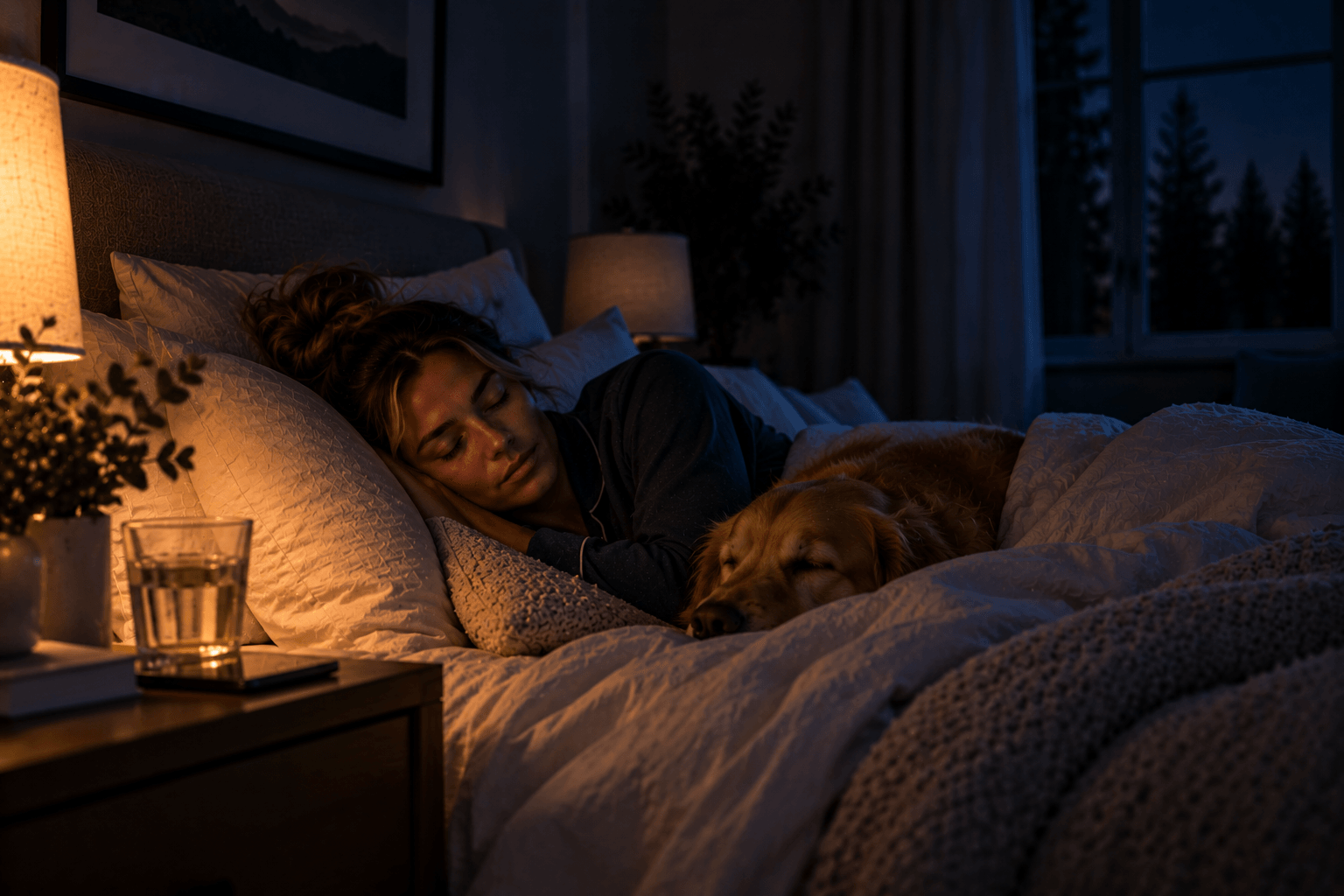
For most people who snore but don't have sleep apnea, sleeping on your side does reduce snoring. Lying on your back can let your tongue relax toward your throat and partly block your airway. Side sleeping helps less, and sometimes not at all, for people with sleep apnea.
Why does sleeping on your back make snoring worse?
Sleeping on your back makes snoring worse because your tongue can fall back and narrow the airway. Snoring is the sound of air moving through a partly blocked airway, and Cleveland Clinic explains that sleeping on your back can cause your tongue to relax toward the back of your throat, which partly blocks the airway.
Cleveland Clinic also says back sleepers are more likely to snore than side sleepers, and that sleeping on your back is more associated with snoring than sleeping on your side or stomach.
What does the research show?
Research: moderate (what this means)Research shows sleep position affects snoring, and the clearest data comes from a 2003 study at a sleep laboratory in Japan. Researchers looked back at the overnight sleep studies of 72 people who complained of habitual snoring. Some had obstructive sleep apnea and some didn't. The authors wrote that the effect of position on sleep apnea was well known, but that objective evidence of its effect on snoring itself had been lacking.
Among the snorers without sleep apnea, most snored less when they lay on their side than on their back. Their snoring dropped both in how much of the time they snored and in how loud it was. The authors concluded that most of these snorers snore less in the side position than on their back.
The people with sleep apnea were different. Their results varied, and many kept snoring even on their side. Those with more severe breathing problems while on their back actually tended to snore more on their side.
The same study found that snoring went up in deeper non-REM sleep and down in REM sleep, whatever position people were in. So position is one factor among several, not the whole story.
This was a single retrospective study, but its findings match what sleep clinics and health services advise, which is why we rate the evidence as moderate.
Position matters for a lot of snorers. Cleveland Clinic cites a 2009 study of 2,077 patients at a sleep disorders clinic that found sleep position was the cause of snoring in 54% of them.
How can you tell if your snoring is positional?
The simplest way to tell if your snoring is positional is to ask. A bed partner can usually tell you whether the snoring gets louder when you roll onto your back. If you sleep alone, Cleveland Clinic suggests an app or a noise-activated voice recorder that tracks snoring.
A rough home check is to record a few nights where you start on your back and a few where you stay on your side, then compare. It won't be as precise as a sleep study, but if the side nights are clearly quieter, position is a big part of your snoring and the tips below are worth the effort. If you snore just as loudly on your side, something else is probably narrowing your airway, such as a blocked nose.
Does sleeping on your stomach reduce snoring?
Sleeping on your stomach may reduce snoring. Cleveland Clinic says sleeping on your back is more associated with snoring than sleeping on your side or on your stomach, so both are better than lying flat on your back. Side sleeping is the position the research focuses on, though, and it's the one the NHS suggests.
How do you stay on your side all night?
Staying on your side all night takes a little help, because rolling onto your back is easy to do without noticing. The NHS suggests a few practical ways to stay on your side:
- Tape or stitch a tennis ball to the back of your sleepwear, so lying on your back is uncomfortable.
- Use a special pillow designed to keep you on your side.
- Use a bed wedge.
Cleveland Clinic also suggests raising your head while you sleep, or using a snore-reducing pillow that keeps your head in the proper position. Some people find that easier than staying on their side, and it can be combined with side sleeping too.
If you share a bed, your partner is usually the best judge of whether a change is working. Our guide to sleeping next to a snorer has more on that side of things.
What else can make side sleeping work better?
Side sleeping works better when you also deal with anything else narrowing your airway, because position alone doesn't help much then. Cleveland Clinic lists alcohol, sedatives and lack of sleep as things that relax the upper airway muscles, and nasal congestion from colds and allergies as something that can block airflow. Its sleep specialist Dr. Nancy Foldvary-Schaefer describes alcohol at night as a central nervous system depressant that can make the airway more floppy.
The nose matters more than people expect. Cleveland Clinic explains that when your nasal passages are partly blocked, you have to work harder to pull air through them, which can draw the soft tissue in the throat together and cause snoring. A deviated septum or nasal polyps can have the same effect.
If your nose feels blocked when you lie down, deal with that too. Cleveland Clinic lists nasal strips, the flexible bands that stick to the outside of the nose, as one way to help keep the nasal passages open. A strip pairs naturally with side sleeping, since one helps the nose and the other helps the throat. See how to apply nasal strips for tips, and there's more in how to unblock your nose before bed.
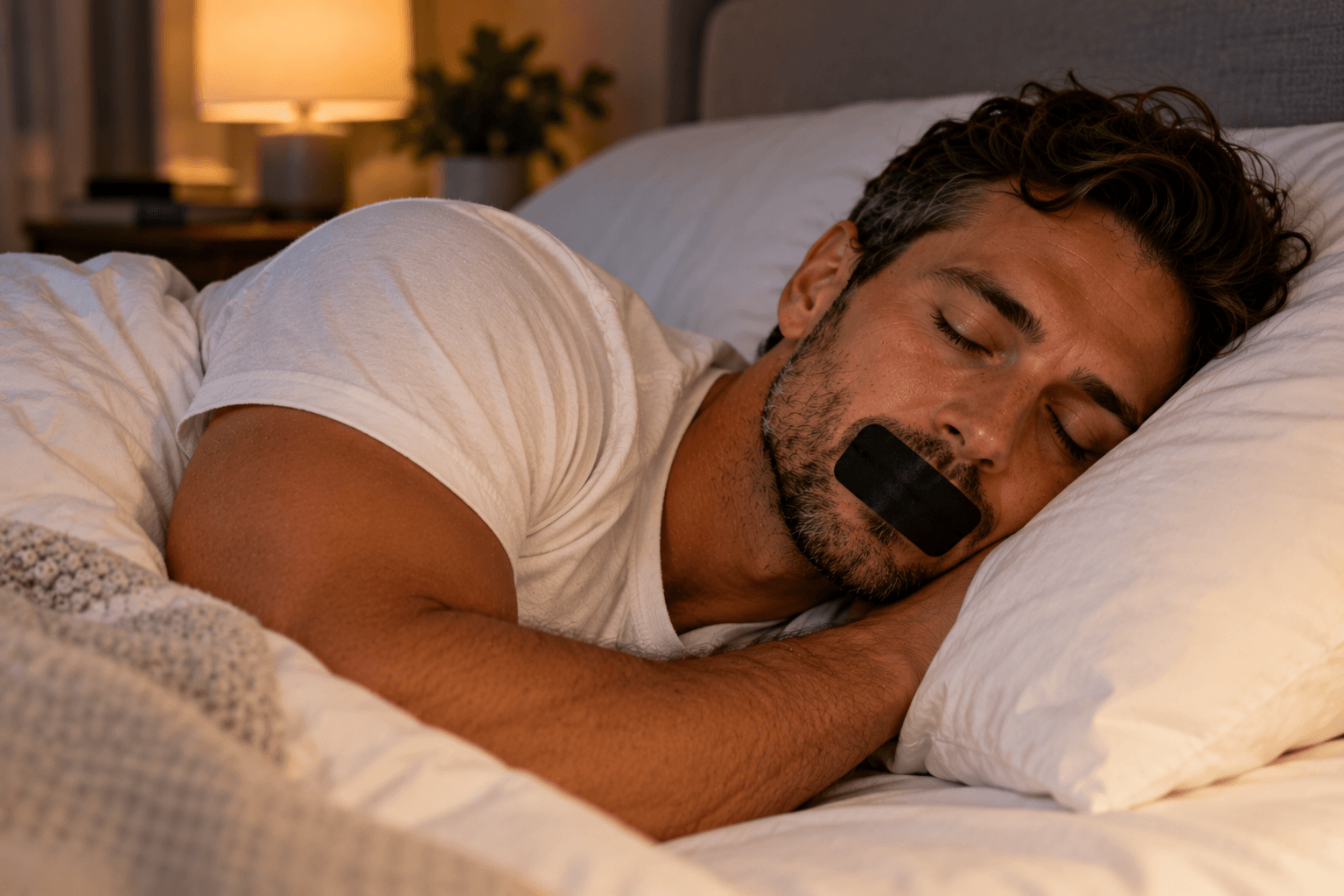
If your nose is clear but your mouth tends to fall open, mouth tape is the other piece some side sleepers add. The Sleep Foundation explains that snoring often happens when someone breathes through their mouth, and that gently encouraging nasal breathing may help keep the airway more stable. The research is limited, so try it as an experiment, use a porous tape made for skin, and check your nose with the nose test first. Mouth tape vs. nasal strips compares the two.
Check this first. Skip mouth tape and see a doctor if you snore loudly, wake up gasping, have been told you stop breathing in your sleep, or can't breathe comfortably through your nose. More on safety
If you want to try nasal strips, our pick is TitanAir Nasal Strips.
Why might you snore more than you used to?
You might snore more than you used to because of age, pregnancy or weight, changes that have nothing to do with how you lie. Cleveland Clinic says snoring becomes more common with age because muscle tone decreases and the airways narrow. It also says hormone changes during pregnancy can contribute, and that snoring and sleep-related breathing disorders are more common in people with overweight or obesity. If you're pregnant and congested, see nasal strips during pregnancy.
These are good reasons to look at the whole picture rather than position alone. Side sleeping is still worth doing, but it may not be enough on its own.
When is side sleeping not enough?
If you still snore on your side, or if your snoring comes with other symptoms, it's time to talk to a doctor. The NHS says to see a GP if you feel sleepy during the day, your breathing stops and starts while you sleep, or you make gasping or choking noises.
The American Academy of Sleep Medicine says snoring paired with choking, gasping or silent breathing pauses is a reliable indicator of sleep apnea. Cleveland Clinic also points out that not snoring doesn't rule sleep apnea out. A change of position can make snoring quieter, but it isn't a treatment for sleep apnea, and quieter snoring doesn't mean the problem has gone.
Read next
Common questions
What is the best sleeping position for snoring?
Side sleeping is usually best. Cleveland Clinic says sleeping on your back is more associated with snoring than sleeping on your side or stomach, and a 2003 study found most snorers without sleep apnea snored less on their side.
How do I stop rolling onto my back at night?
The NHS suggests taping or stitching a tennis ball to the back of your sleepwear, or using a special pillow or bed wedge to keep you on your side.
If I stop snoring on my side, does that mean I don't have sleep apnea?
No. In the 2003 study, people with sleep apnea had mixed results when they changed position. Gasping, choking, breathing pauses or daytime sleepiness are still reasons to see a doctor.
Is sleeping on your stomach good for snoring?
Cleveland Clinic says sleeping on your back is more associated with snoring than sleeping on your side or stomach. Side sleeping is the position with the research behind it, so it's the one to try first.
How can I tell if my snoring depends on my position?
Ask a bed partner, or record yourself. Cleveland Clinic suggests an app or a noise-activated voice recorder to track snoring. Comparing nights that start on your back with nights spent on your side gives you a rough answer.
Can I use nasal strips or mouth tape as well as side sleeping?
Yes, many people combine them. Cleveland Clinic lists nasal strips as a way to keep the nasal passages open, and the Sleep Foundation explains that mouth tape gently encourages nose breathing. Tape is only for adults who can breathe comfortably through their nose and who don't have signs of sleep apnea.
How can I reduce snoring?
Start by sleeping on your side, since most snorers without sleep apnea snore less there, according to a 2003 study. Cleveland Clinic also suggests raising your head and using nasal strips to keep the nasal passages open, and notes that alcohol relaxes the upper airway muscles. If you gasp, choke or stop breathing in your sleep, see a doctor first.
Sources
About this article
- Research
- 6 published sources, listed above.
- Evidence
- Moderate. How we rate it
- Last checked
- October 10, 2026
- Funding
- Paid partner of Titan Recovery. Their ads are labeled.
- Found an error?
- Tell us. We log fixes on the corrections page.
* This content is for informational and educational purposes only and is not medical advice. It is not intended to diagnose, treat, cure or prevent any disease or health condition. Talk to a qualified healthcare provider about your health.