In short
- A nasal strip widens the front of the nose. Mouth tape holds the lips closed. They work on different parts of the same goal: breathing through your nose all night.
- Both have encouraging snoring research. A placebo-controlled trial found strips lowered snoring frequency, and small studies found mouth taping cut snoring by about half in mouth breathers.
- If your nose feels tight, start with a strip. If your nose is clear but your mouth falls open, tape is the more direct fit.
- Many people use both: the strip opens the nose and the tape keeps the mouth closed. Only add tape once breathing through your nose feels easy.
- Neither treats sleep apnea. Snoring with gasping, choking or pauses in breathing needs a doctor.
Nasal strips and mouth tape both aim at nasal breathing during sleep, but from opposite ends. A strip makes it easier to breathe through your nose, and tape keeps your mouth from taking over once you fall asleep. Both have encouraging snoring research behind them. If your nose feels at all blocked, the strip is the one to try first, and plenty of people end up using the two together.
How do mouth tape and nasal strips compare?
This table compares mouth tape and nasal strips on what each does, how it works, what the research shows and who it suits best.
| Nasal strips | Mouth tape | |
|---|---|---|
| What it does | Makes breathing through the nose easier | Keeps the mouth closed so you breathe through the nose |
| How it works | A flexible band lifts the sides of the nose and widens the front | Skin-safe tape holds the lips together |
| What research shows | Placebo-controlled trial in 12 people with chronic rhinitis: 173 snores an hour against 258 | 2022 study of 20 mouth breathers with mild sleep apnea: 13 of 20 cut snoring by at least half |
| Evidence rating | Limited | Limited |
| Best for | A nose that feels tight or stuffy at night | A clear nose with a mouth that falls open |
What does each one actually do?
A nasal strip is a flexible band that sticks across the bridge of your nose. As it tries to straighten out, it lifts the sides of your nose and widens the passage at the front. Our guide to how nasal strips work goes into the details.
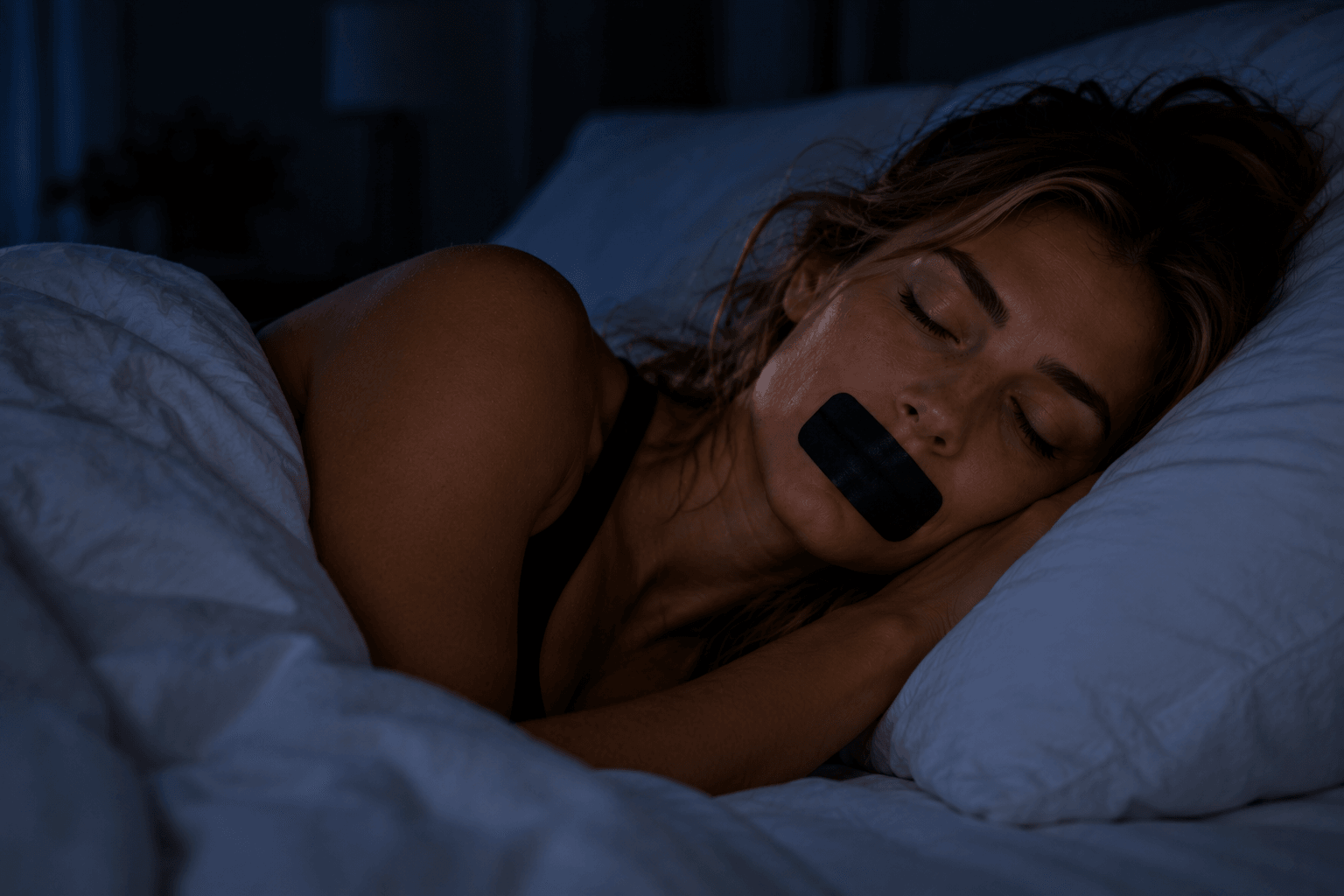
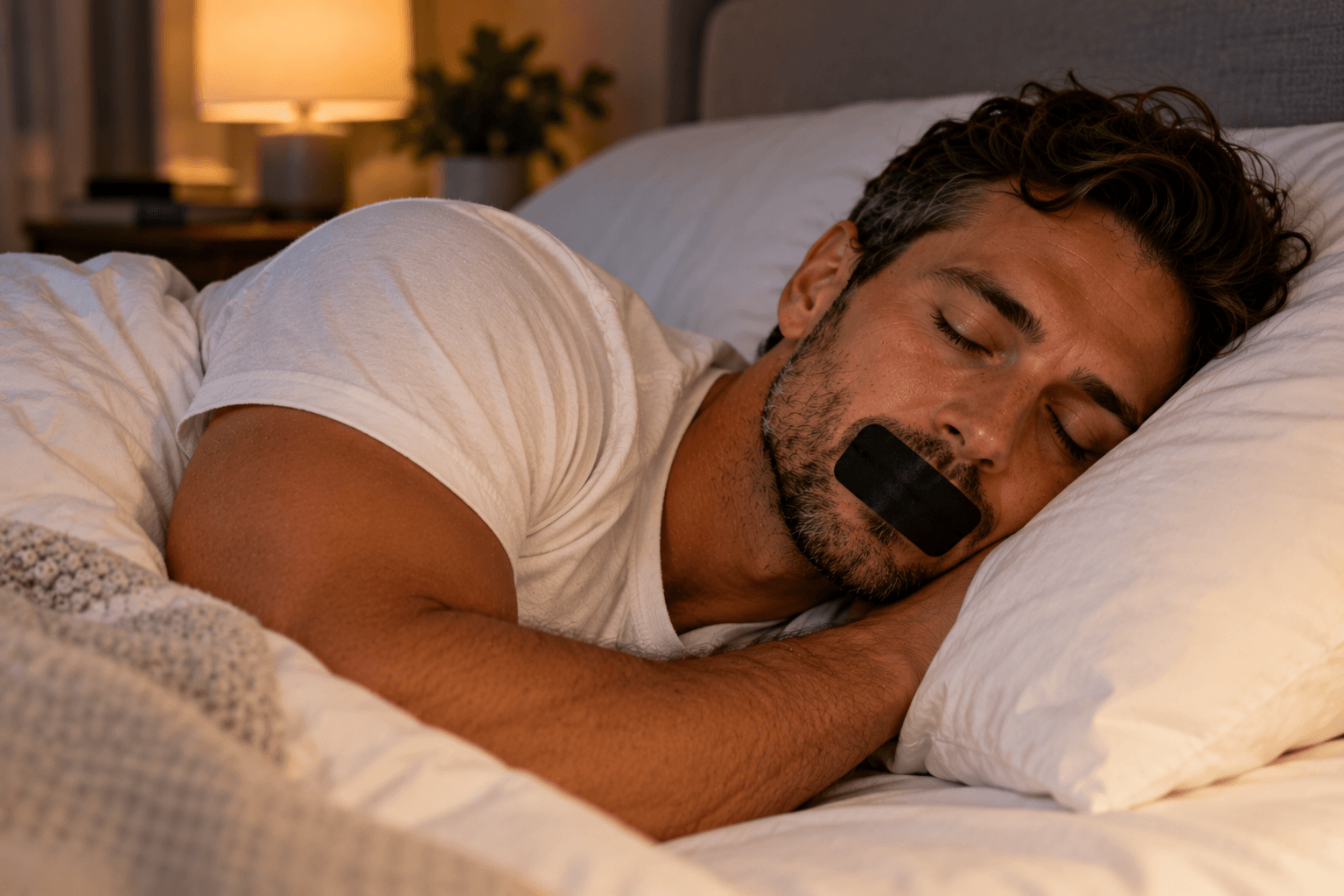
Mouth tape is a small piece of skin-safe tape over the lips. It doesn't open anything. It holds your lips closed so that, while you sleep, you breathe through your nose instead of your mouth. Sleep Foundation describes it as a gentle reminder that nudges the body into nasal breathing. That only works if your nose can carry the air.
So the two answer different questions. A strip helps when your nose is the bottleneck, and tape helps when your nose is fine but your mouth falls open at night.
Why does a small change in the nose matter?
A small change in the nose matters because airflow through the nose is very sensitive to the size of the passage. The 2016 meta-analysis of nasal dilators notes that when the cross-sectional area of the nasal cavity increases by 10%, nasal airflow rises by about 21%. A strip works on the front of the nose, so even a modest widening there can make breathing feel easier.
That's also why the two products fit together. Mouth tape asks your nose to do all the work overnight, and a strip makes that work easier.
What does the research say about each?
Research: limited (what this means)Mouth tape and nasal strips both have promising snoring results, from small studies.
For nasal strips, a randomized, placebo-controlled trial of 12 people with chronic rhinitis found snoring frequency was 173 snores an hour with a nasal strip compared with 258 with a placebo. The authors wrote that the results support the strip being effective at reducing the amount of snoring in people with chronic rhinitis. The strip didn't change sleep quality or snoring loudness in that trial.
For mouth tape, the study most often cited is a 2022 trial of 20 adults with mild sleep apnea who breathed through their mouths. After a week of taping, the median snoring index fell from 303.8 to 121.1 events an hour, and 13 of the 20 cut their snoring by at least half. A 2015 pilot study with a porous mouth patch found the median snoring index fell from 146.7 to 40 an hour in 30 people with a similar profile. Neither study had a comparison group.
On the limits, both sets of research are small. A 2016 systematic review and meta-analysis concluded that nasal dilators have demonstrated improved nasal breathing but have not shown improvement in obstructive sleep apnea outcomes. A 2025 systematic review in PLOS One found 10 mouth taping studies with 213 patients in total and concluded that the existing data does not support mouth taping as a sound clinical intervention for the general population with sleep-disordered breathing. The review also warned that sealing the mouth could pose a serious risk of asphyxiation when the nose is blocked.
No study has compared mouth tape and nasal strips directly, so there's no evidence that one works better than the other for snoring.
Which should you try first?
Which to try first depends on your nose. Sit quietly with your mouth closed and breathe only through your nose for a couple of minutes. Our nose test times it for you.
If that feels hard or stuffy, start with a nasal strip on its own. Taping your mouth when your nose can't carry enough air is the main risk the 2025 review flagged. If your nose is often blocked, a doctor can look for the cause.
If nasal breathing feels easy and your main issue is waking with a dry mouth or your mouth falling open, mouth tape is the more direct fit. Practice with it while you're awake first. Sleep Foundation recommends testing the tape during the day to make sure you can breathe easily through your nose.
Check this first. Skip mouth tape and see a doctor if you snore loudly, wake up gasping, have been told you stop breathing in your sleep, or can't breathe comfortably through your nose. More on safety
If you want to try mouth tape and nasal strips together, our pick is the Titan Sleep System, which pairs TitanAir Nasal Strips with Titan Mouth Tape.
Which one suits your situation?
Mouth tape and nasal strips suit different situations. Here are a few common patterns, and where each product fits:
- Your nose feels a bit tight at night but your mouth stays closed. A nasal strip on its own is the natural place to start.
- Your nose is clear, but you wake with a dry mouth or your partner says you sleep with your mouth open. Mouth tape is the direct fit.
- Your nose is a little tight and your mouth falls open. Try the strip first, then add tape once nasal breathing with the strip feels easy.
- You have facial hair or sensitive lips. A strip avoids the mouth entirely, and our guide to mouth taping with a beard covers how to make tape work if you want both.
- Your nose is fully blocked by a cold or allergies. Skip the tape until it clears. Our article on mouth taping with a cold explains why.
Can you use both together?
You can use mouth tape and nasal strips together, and many people do. The strip keeps the front of the nose open while the tape keeps the lips closed. That pairing echoes how the 2022 mouth taping study handled nasal blockage: researchers gave people with a blocked nose medicine or a nasal spray first, so that taping would be comfortable. A strip is a simpler, drug-free way to give the nose a bit more room.
There's no research on the combination as a pair, so treat it the same way you'd treat either one alone. Here's a sensible order:
- Put the strip on a clean, dry nose a few minutes before bed.
- Close your mouth and check that breathing through your nose feels easy with the strip on.
- Put a small strip of mouth tape over clean, dry lips. Fold over one corner, as Sleep Foundation suggests, so it's easy to peel off.
- Take the tape off and keep the strip on if you wake up short of breath or anxious.
What neither of them does
Neither a nasal strip nor mouth tape treats sleep apnea. The American Academy of Sleep Medicine says that snoring paired with choking, gasping or silent breathing pauses during sleep is a reliable indicator of sleep apnea, and that excessive daytime sleepiness is another warning sign. If that sounds like you, see a doctor before trying either product. Our page on snoring vs. sleep apnea explains the difference.
Read next
- How nasal strips work
- Does mouth tape help snoring?
- Is mouth taping safe?
- Is mouth taping safe for me?, our short checklist
Common questions
Is mouth tape or a nasal strip better for snoring?
There are no studies comparing them head to head, and they suit different snorers. Nasal strips have a placebo-controlled trial showing fewer snores, and mouth tape has small studies showing snoring roughly halved in people who sleep with their mouths open.
Which should I try first?
Do a two-minute nose test. If breathing through your nose feels hard or stuffy, start with a nasal strip. If it feels easy and your issue is a dry mouth or your mouth falling open, mouth tape is the more direct fit.
Can you use mouth tape and nasal strips together?
Many people do. The strip makes breathing through the nose easier and the tape keeps the mouth closed. Only add tape if your nose feels clear enough to breathe through comfortably.
Can a nasal strip make mouth taping easier?
It may help if your nose feels a little tight. In the 2022 mouth taping study, researchers treated nasal blockage first so participants could tape comfortably. A strip is one simple way to open the front of the nose, but if your nose is properly blocked, skip the tape.
Do nasal strips or mouth tape help sleep apnea?
No. A 2016 meta-analysis found nasal dilators improve nasal breathing but not sleep apnea, and a 2025 review found the evidence doesn't support mouth taping for sleep-disordered breathing. See a doctor if you think you have sleep apnea.
Sources
- Nasal Dilators (Breathe Right Strips and NoZovent) for Snoring and OSA: A Systematic Review and Meta-Analysis
- External nasal dilation reduces snoring in chronic rhinitis patients: a randomized controlled trial
- Breaking social media fads and uncovering the safety and efficacy of mouth taping in patients with mouth breathing, sleep disordered breathing, or obstructive sleep apnea: A systematic review
- The impact of mouth-taping in mouth-breathers with mild obstructive sleep apnea: a preliminary study
- Is it more than a snore? Recognizing sleep apnea warning signs
- Mouth taping for sleep: does it work?
- Novel porous oral patches for patients with mild obstructive sleep apnea and mouth breathing: a pilot study
About this article
- Research
- 7 published sources, listed above.
- Evidence
- Limited. How we rate it
- Last checked
- October 3, 2026
- Funding
- Paid partner of Titan Recovery. Their ads are labeled.
- Found an error?
- Tell us. We log fixes on the corrections page.
* This content is for informational and educational purposes only and is not medical advice. It is not intended to diagnose, treat, cure or prevent any disease or health condition. Talk to a qualified healthcare provider about your health.