In short
- A chin strap wraps under your chin and over your head to hold your jaw up, and the NHS lists it as an option when snoring comes from your mouth falling open.
- In a 2014 study of 26 adults with sleep apnea, a chin strap worn alone for the first two hours of the night didn't improve snoring or any measure of sleep apnea.
- In a 2004 study of 15 CPAP users, a chin strap cut air leaking from the mouth, but the time spent snoring went up.
- There's no research-based schedule for how long to wear a chin strap, and no study has compared chin straps with mouth tape directly.
- Mouth tape is a simpler way to keep the lips closed, and a small 2022 study found most mouth breathers with mild sleep apnea halved their snoring after a week of taping.
A chin strap is a band that runs under your chin and over your head to hold your jaw closed in sleep. The NHS lists it as an option when snoring comes from your mouth falling open, but the research is thin. The main study found a chin strap alone didn't reduce snoring. Mouth tape keeps the lips closed in a simpler way and has more encouraging early results.
What is a chin strap for snoring?
A chin strap holds your lower jaw up from underneath. The idea is that if your jaw can't drop open, your mouth stays closed and you breathe through your nose instead.
It's aimed at one kind of snoring. The NHS matches snoring treatments to the cause, and for a mouth that falls open during sleep it suggests a chin strap to hold the mouth closed, or a device worn in the mouth that makes you breathe through your nose. If your snoring comes from a blocked nose or from your tongue falling back, the NHS points to different fixes. Why your mouth falls open when you sleep covers the causes.
Chin straps are also used with CPAP machines, where air can leak out of an open mouth.
Do chin straps work for snoring?
Research: limited (what this means)The best-known study says no. In 2014, researchers in New Jersey studied 26 adults with obstructive sleep apnea. Each wore only a chin strap for the first two hours of an overnight sleep study, then switched to CPAP for the rest of the night. Compared with their earlier diagnostic sleep study, the chin strap made no significant difference to snoring, the number of breathing pauses or blood oxygen. Breathing pauses and oxygen didn't improve even in the 13 people with mild sleep apnea. CPAP improved all of these measures.
The authors concluded that a chin strap alone isn't an effective treatment for sleep apnea and doesn't improve snoring. They noted limits, too. The strap was only tested for about two hours, and they suggested future studies track snoring over several nights at home using a bed partner's reports.
A 2004 study points the same way for snoring. Fifteen CPAP users with mouth leaks spent one night with a chin strap and one without. With the strap, the time they spent snoring rose from about 7% of the night to 24%.
Do chin straps help with CPAP?
This is where chin straps show a benefit. In the same 2004 study, the chin strap cut mouth leak from about 43% of total sleep time to 24%, and arousals from sleep fell too. The authors said both still remained unacceptably high.
If you use CPAP and wake with a dry mouth or hear air escaping, ask your sleep doctor before adding a strap or anything else. Our guide to mouth tape and CPAP covers the options to discuss.
What are the side effects of a chin strap?
The research flags a few things to know.
More snoring is the first. The 2004 study found snoring time rose with the strap, and the authors wrote that a chin strap may also increase snoring and, in rare cases, worsen breathing problems in sleep. They said both should be considered before regular home use.
Less dreaming sleep may be another. A 2025 systematic review of devices that keep the mouth closed noted that the 2014 study found a lower share of REM sleep with the chin strap than in the diagnostic study. The strap was only worn for part of the night, so this is hard to interpret.
The biggest concern is safety. The 2025 review found that four of the ten studies it included warned that keeping the mouth closed, whether with tape, a seal or a chin strap, could pose a serious risk of suffocation if the nose is blocked or the person vomits. That's why any mouth-closing device is only for people who can breathe easily through their nose.
We didn't find studies that measured jaw comfort, skin irritation or long-term effects of chin straps.
How long should you wear a chin strap?
There's no research-based answer. The 2014 trial tested a strap for only the first two hours of the night, and the 2004 study for a single night, so neither tells you how long to wear one or how many weeks it takes to see a change.
If your doctor has suggested a chin strap with CPAP, follow their guidance. If you're trying one for snoring on your own, it makes sense to check whether it's helping. Ask a partner or record your snoring for a few nights with and without it, and stop if you feel short of breath or your sleep gets worse.
Is mouth tape a better alternative?
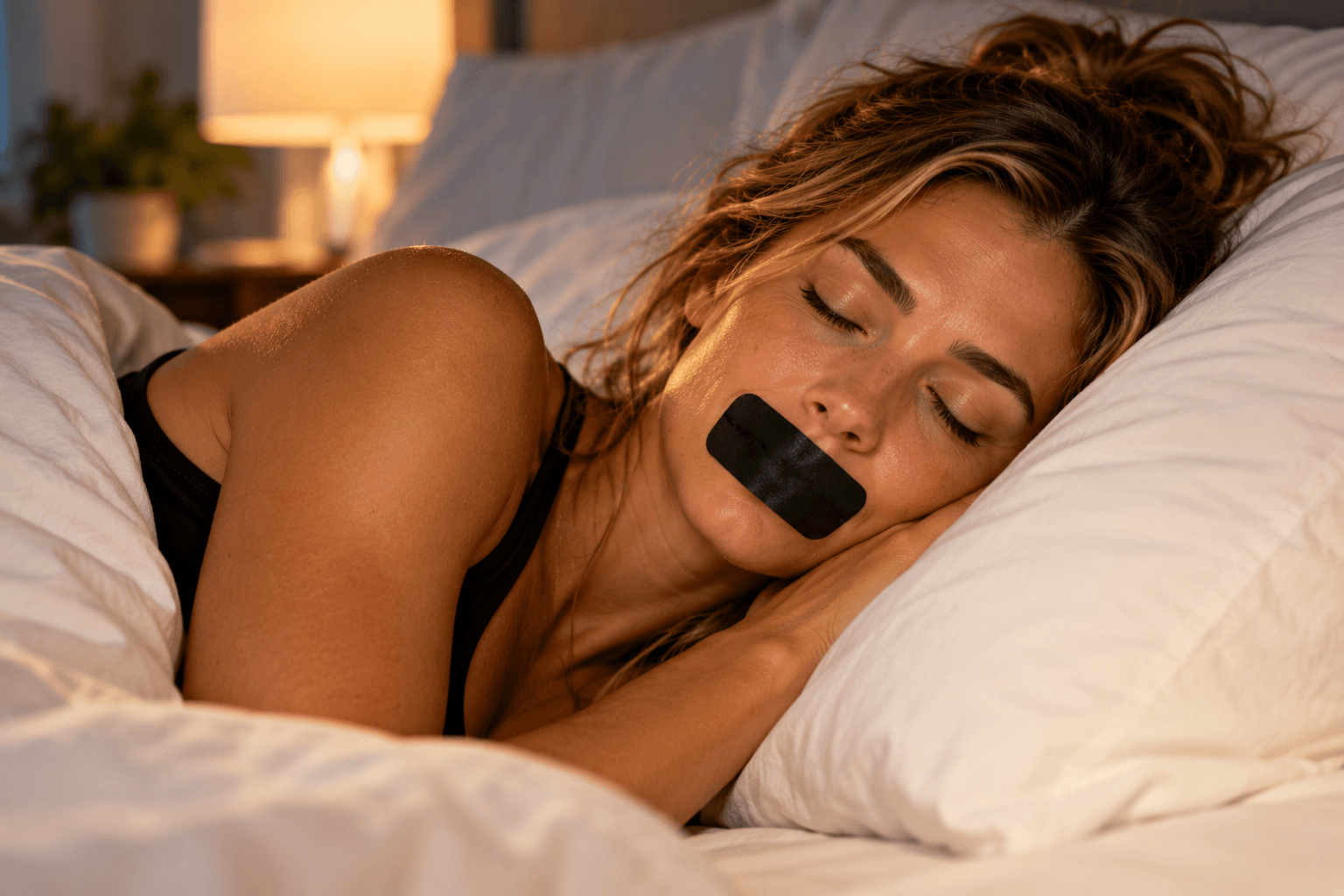
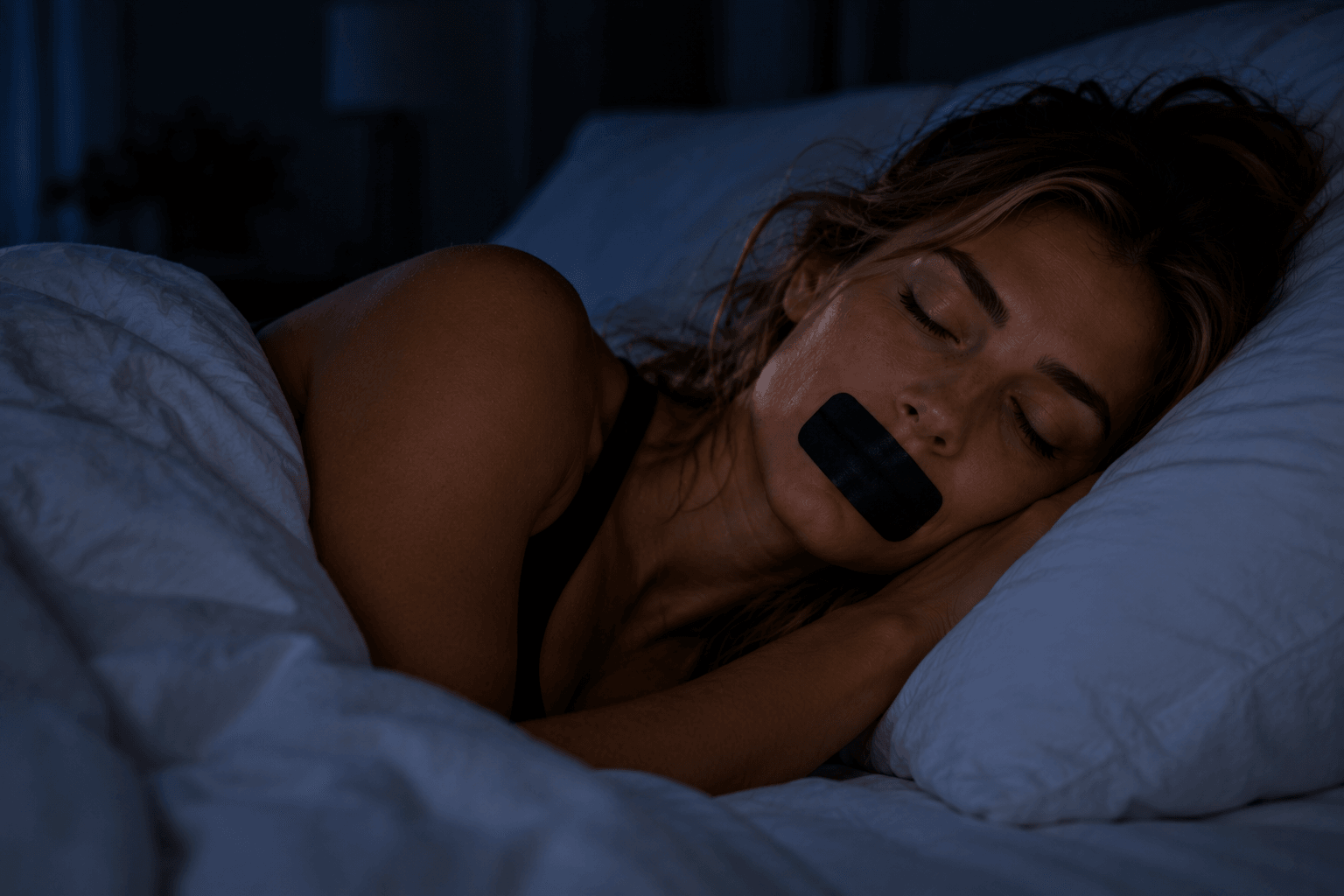
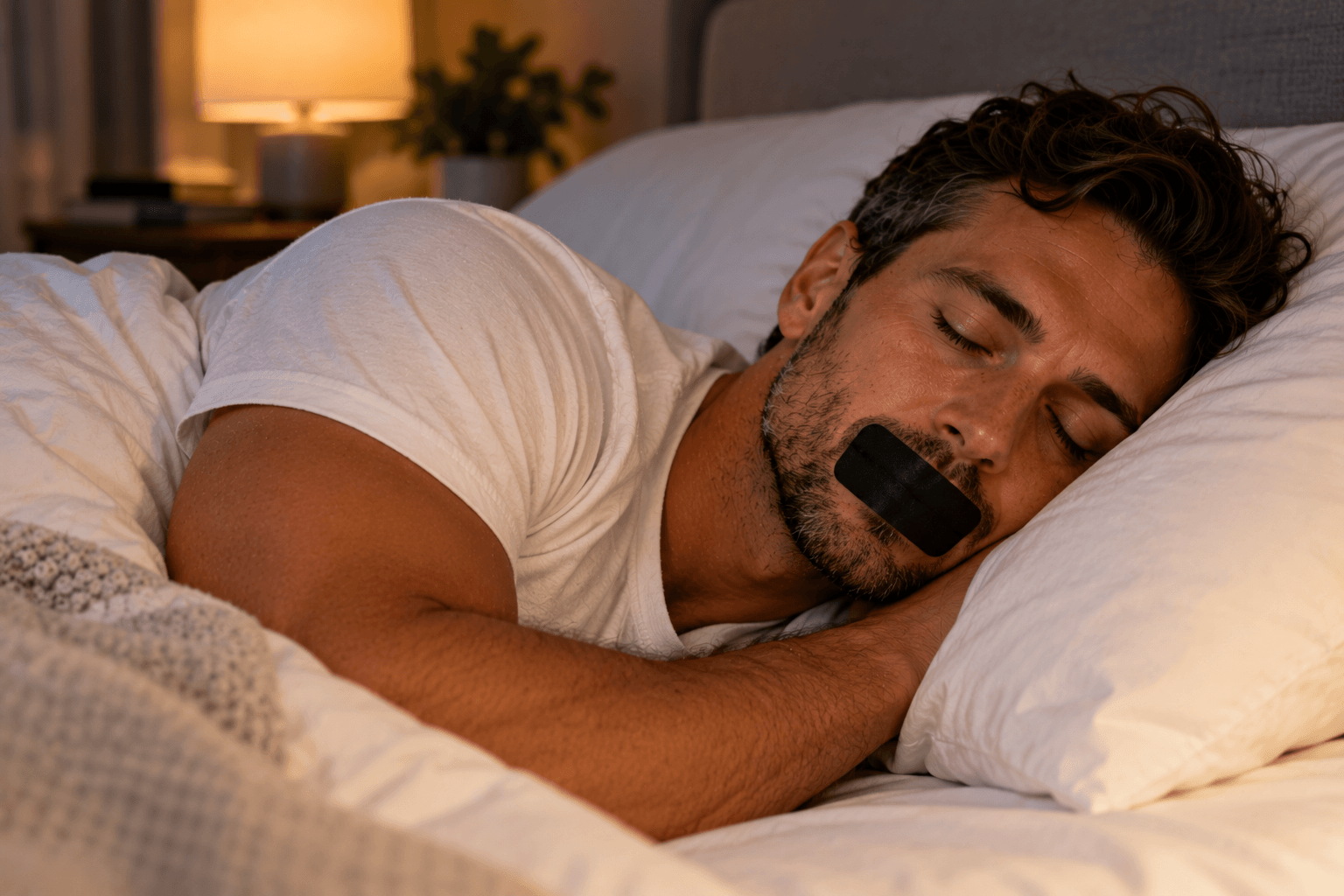
Mouth tape does the same basic job in a simpler way. Instead of holding your jaw, it keeps your lips together so air goes through your nose. There's nothing to strap around your head, and your jaw can still move.
The early snoring results are more encouraging. In a 2022 study, 20 mouth breathers who had mild sleep apnea wore tape over their lips for a week. Thirteen of them, or 65%, cut their snoring at least in half, and the group's median snoring index fell by 47%. That was a small study without a control group, and the people in it had mild sleep apnea. Tape isn't a treatment for sleep apnea, and nobody has compared tape and chin straps head to head. Our mouth tape vs. chin strap guide compares the two in detail.
Tape only makes sense if your nose is clear. Cleveland Clinic says most people breathe through their mouth because they can't get enough air through their nose. Take our nose test first, and read how to start mouth taping for the first few nights.
Check this first. Skip mouth tape and see a doctor if you snore loudly, wake up gasping, have been told you stop breathing in your sleep, or can't breathe comfortably through your nose. More on safety
If you'd like to try tape, our pick is Titan Bamboo Silk Mouth Tape. Titan says it's a soft, breathable bamboo silk strip with an adhesive made to grip through stubble and beards, and that every batch is third-party tested and certified PFAS-free. Titan suggests 20 to 30 minutes of daytime practice before the first night.
Who shouldn't use a chin strap or mouth tape?
Skip both if you can't breathe comfortably through your nose, and get checked before trying either if you have signs of sleep apnea. The American Academy of Sleep Medicine lists the warning signs as snoring, choking or gasping or silent pauses in breathing during sleep, daytime sleepiness, obesity and high blood pressure. Neither a chin strap nor tape treats sleep apnea. Our safety page and is mouth taping safe? list who should avoid tape.
Read next
Common questions
Do chin straps work for snoring?
The evidence is weak. In a 2014 study of 26 adults with sleep apnea, a chin strap alone didn't improve snoring, and a 2004 study of CPAP users found snoring time went up with a strap. The NHS still lists a chin strap as an option when snoring comes from the mouth falling open.
What are the side effects of a chin strap?
The studies point to two to know about. A 2004 study found snoring increased in some CPAP users wearing a strap and, in rare cases, breathing problems in sleep got worse. A 2025 review warned that any device that forces the mouth closed could pose a serious risk of suffocation if your nose is blocked or you vomit.
How long should you wear a chin strap?
No study sets a schedule. The 2014 trial tested a strap for only the first two hours of the night, and the 2004 study for a single night. If a doctor has suggested one alongside CPAP, follow their advice on when and how long to wear it.
Can a chin strap help with sleep apnea?
Not on its own. The 2014 study concluded a chin strap alone isn't an effective treatment for obstructive sleep apnea, even when it's mild. Sleep apnea needs a diagnosis and treatment from a doctor.
Is mouth tape better than a chin strap?
No study has compared them directly. Mouth tape has the more encouraging snoring results so far, from small studies, while the main chin strap study found no snoring benefit. Both only make sense if you breathe comfortably through your nose.
Do chin straps help with CPAP mouth leaks?
They can. In a 2004 study of 15 CPAP users with mouth leaks, a chin strap cut the share of the night spent leaking from about 43% to 24% and reduced arousals. The authors said leaks were still too high and that snoring rose, so check with your sleep doctor.
Sources
- Snoring
- The efficacy of a chinstrap in treating sleep disordered breathing and snoring
- Mouth closing device (chinstrap) reduces mouth leak during nasal CPAP
- Breaking social media fads and uncovering the safety and efficacy of mouth taping in patients with mouth breathing, sleep disordered breathing, or obstructive sleep apnea: A systematic review
- The impact of mouth-taping in mouth-breathers with mild obstructive sleep apnea: a preliminary study
- Mouth breathing
- Is it more than a snore? Recognizing sleep apnea warning signs
- Titan Bamboo Silk Mouth Tape
About this article
- Research
- 8 published sources, listed above.
- Evidence
- Limited. How we rate it
- Last checked
- October 10, 2026
- Funding
- Paid partner of Titan Recovery. Their ads are labeled.
- Found an error?
- Tell us. We log fixes on the corrections page.
* This content is for informational and educational purposes only and is not medical advice. It is not intended to diagnose, treat, cure or prevent any disease or health condition. Talk to a qualified healthcare provider about your health.