In short
- Mouth tape holds the lips together. A chin strap wraps around the head and holds the jaw up.
- Mouth tape has the more encouraging results so far. A 2022 study found 13 of 20 mouth breathers with mild sleep apnea halved their snoring after a week, and a 2015 study of a porous mouth patch found similar drops.
- In a 2014 study of 26 adults with sleep apnea, a chin strap on its own didn't improve any measure of sleep apnea or snoring.
- Nobody has compared the two directly, and the studies on both are small.
- Neither treats sleep apnea. Both only make sense if you can breathe comfortably through your nose.
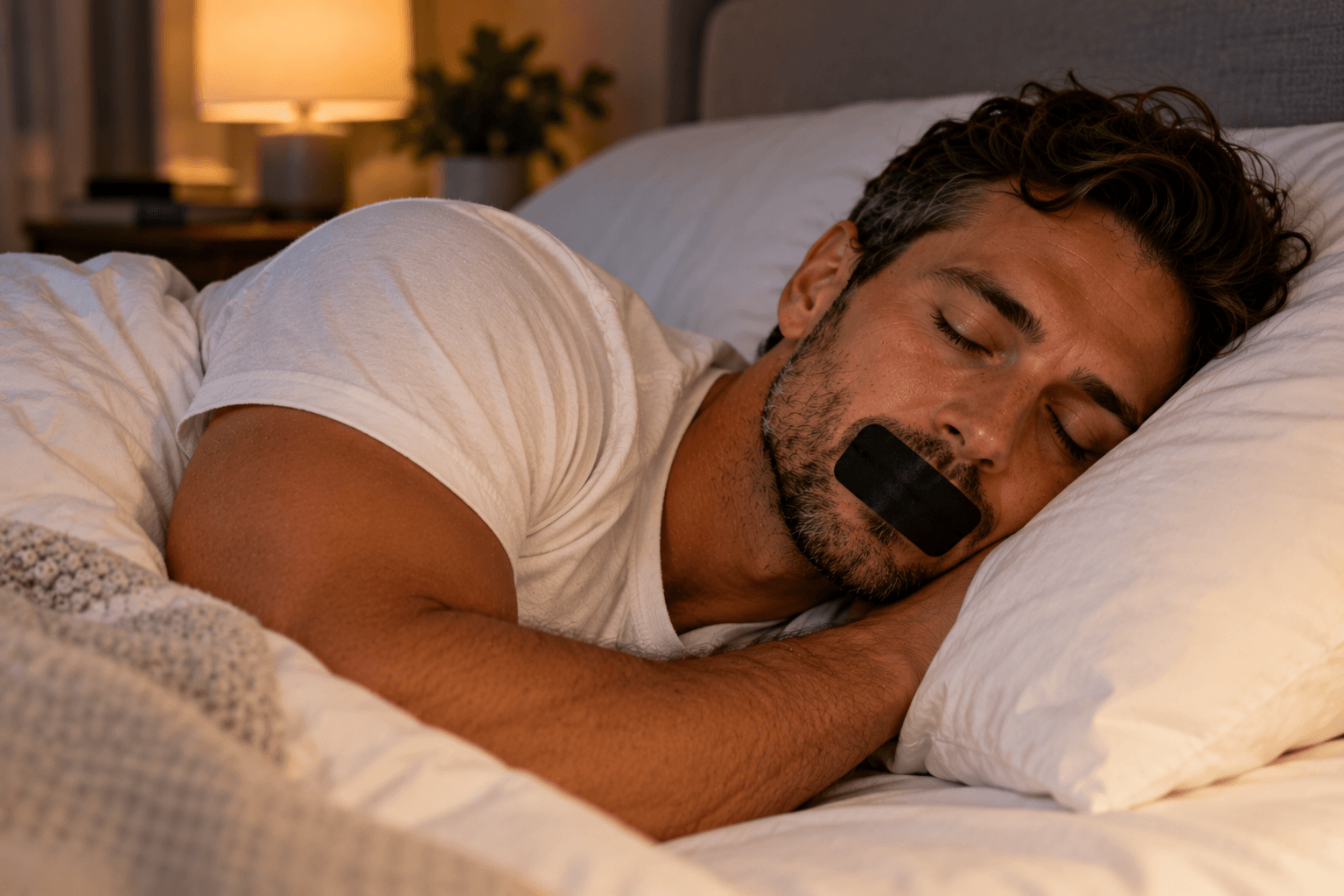
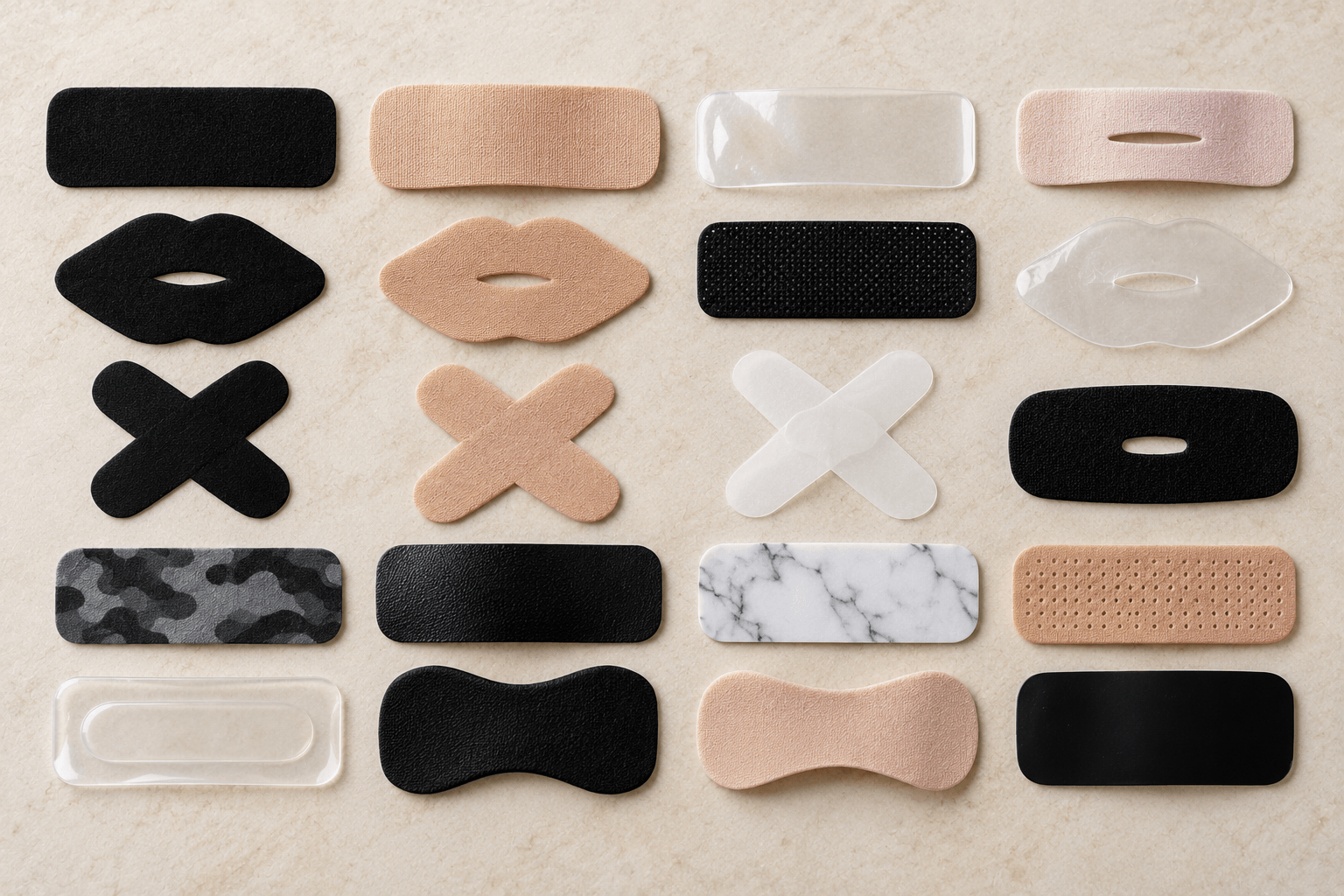
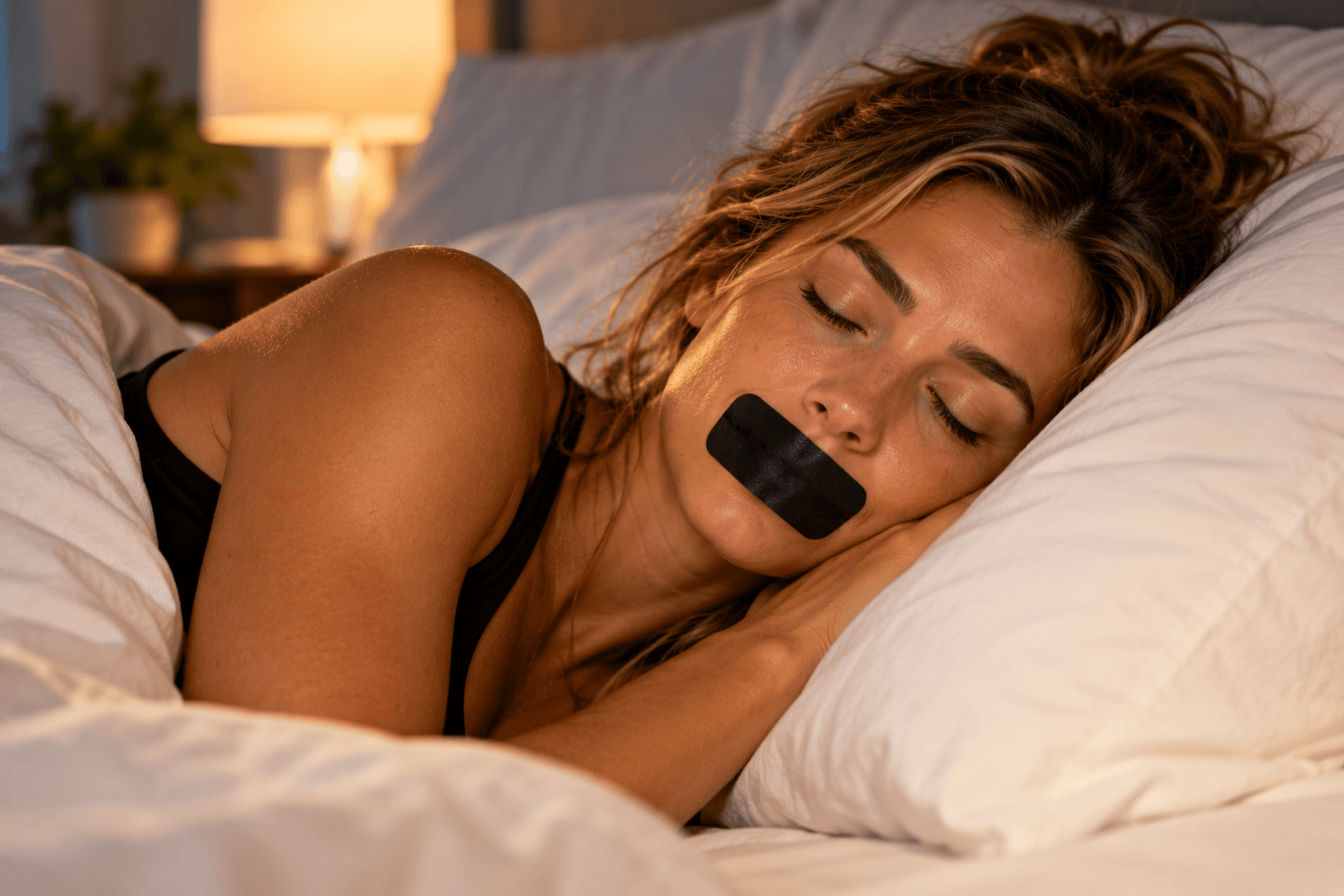
Mouth tape holds your lips together, while a chin strap is a fabric strap that runs under your chin and over your head to hold your jaw up. Mouth tape has the more encouraging research so far, with small studies showing clear drops in snoring, while the main chin strap study found no benefit. Neither has been studied much, so comfort often decides it.
How do mouth tape and a chin strap compare?
This table compares mouth tape and a chin strap on what each does, how it works, what the research shows and who it suits best.
| Mouth tape | Chin strap | |
|---|---|---|
| What it does | Keeps the lips closed | Keeps the jaw from dropping |
| How it works | Tape over the lips; the jaw can still move | A fabric strap under the chin and over the head |
| What research shows | 2022 study of 20 mouth breathers with mild sleep apnea: 13 of 20 cut snoring by at least half | 2014 study of 26 adults with sleep apnea: no improvement in snoring on its own |
| Evidence rating | Limited | Limited |
| Best for | Mouth breathers with a clear nose who want less snoring | People with beards or who can't stand anything on the lips |
How do mouth tape and chin straps work?
Mouth tape holds your lips together. Your jaw can still move, but your lips stay closed, so air has to come in through your nose.
A chin strap holds your lower jaw up from underneath. The idea is that if your jaw can't drop, your mouth stays closed. Chin straps are often sold for people using CPAP machines, whose air can leak out through an open mouth.
Both are aimed at the same problem. The authors of the 2022 study in Healthcare explain that when the mouth opens during sleep, the soft palate shifts backward and the lower jaw moves down, which narrows the airway behind the palate and the tongue. The 2014 chin strap paper cites research finding that mouth opening tends to increase as people move into deeper stages of sleep.
What did the studies find?
Research: limited (what this means)For mouth tape, a small 2022 study taped the mouths of 20 adults with mild sleep apnea who breathed through their mouths at night. After a week, 13 of them had cut their snoring by at least half, and the median number of breathing interruptions per hour fell from 8.3 to 4.7.
A 2015 pilot study used a porous patch over the lips in 30 adults with mild sleep apnea and habitual mouth breathing. All 30 slept with their mouths closed while wearing it. Their median snoring rate fell from 146.7 to 40.0 snores an hour, and breathing interruptions fell from 12.0 to 7.8 an hour.
For chin straps, the main study is from 2014. Researchers tested a chin strap on its own in 26 adults with sleep apnea and measured their breathing overnight. The chin strap didn't improve any measure of sleep apnea or snoring, including in the people with mild sleep apnea. One limit worth knowing is that most people only wore the strap for the first couple of hours of the night before switching to CPAP.
A 2025 review in PLOS One gathered 10 studies of mouth taping and similar methods, including two that used a chin strap. It rated all of them as poor quality, and none of the mouth tape studies had a comparison group. Nobody has compared tape and a chin strap head to head, so there's no proof that one beats the other. On the evidence we have, tape is the one with positive results.
Can a chin strap stop snoring?
A chin strap may help some people stop snoring, but the research is mixed. The NHS lists a chin strap that holds your mouth closed among the treatments for snoring caused by the mouth falling open during sleep. The 2014 study found no change in how often people snored with a chin strap on. But the 2025 review describes another chin strap study that reported fewer snores and less air leaking from the mouth. Both were small.
If you're shopping for a chin strap sold as a snoring solution, the 2014 authors made a useful point. They didn't test those products, but after looking at the brochures they said the marketed straps didn't seem fundamentally different from the standard strap used with CPAP, which is what they tested. They thought a strap would only be likely to work differently if it could push the jaw forward.
Which is better if you use CPAP?
Mouth tape and chin straps both have a role if you use CPAP. When you breathe through your mouth on a nasal CPAP mask, pressure escapes through your lips. The 2025 review defines this as mouth leak and says it can account for 10 to 15% of the pressure being lost. Three studies in the review found mouth leak dropped once the mouth was held closed.
Sleep Foundation says mouth taping may help reduce CPAP mask leaks caused by mouth breathing, and chin straps are commonly used with CPAP for the same reason. Either way, it's a decision to make with whoever manages your CPAP. Our guide to mouth tape and CPAP covers it in more depth.
Does either one treat sleep apnea?
Neither mouth tape nor a chin strap treats sleep apnea. If you snore loudly, gasp or choke in your sleep, or feel sleepy during the day after a full night in bed, see a doctor. Both can make sleep apnea easier to ignore. The 2022 study's authors said mouth taping isn't recommended for people with moderate or severe sleep apnea.
Check this first. Skip mouth tape and see a doctor if you snore loudly, wake up gasping, have been told you stop breathing in your sleep, or can't breathe comfortably through your nose. More on safety
If you want to try mouth tape, our pick is the Titan Bamboo Silk Mouth Tape.
How do you choose?
Comfort decides between mouth tape and a chin strap for most people. Some can't stand anything on their face; others find a strap around the head too warm or too tight. You'll probably know which bothers you less within a night or two.
Facial hair matters too. Tape doesn't stick well to a beard or mustache unless it's made for it, and Sleep Foundation notes it can pull on facial hair when you take it off. A chin strap doesn't care about hair. If you have sensitive skin, tape can irritate the skin around your lips, so use one made for skin and stop if you get sore. Our guide to mouth tape with a beard has tips if you'd still like to try tape.
If your goal is less snoring and you're a mouth breather, tape has the stronger case on current evidence. The 2022 study used a silicone, hypoallergenic tape in a single vertical strip, and our guide to which type of mouth tape is best compares the options.
Whichever you pick, it only makes sense if you can breathe comfortably through your nose. Try our two-minute nose test first.
If you go with tape, our first-week guide walks you through starting slowly.
What if neither works for you?
If your mouth falls open because your nose is blocked, the nose is the place to start. A nasal strip opens the front of the nose, and our guide to why you breathe through your mouth at night covers the common causes. If snoring is the main issue, Sleep Foundation says decades of research show people snore less on their side than on their back.
Read next
Common questions
Is a chin strap better than mouth tape?
There's no study comparing them directly. The main controlled study of chin straps alone found no improvement in sleep apnea or snoring, while small mouth tape and mouth patch studies found clear drops in snoring in people with mild sleep apnea. Comfort and personal preference matter a lot.
Do chin straps work for snoring?
The evidence is mixed. The NHS lists a chin strap among the treatments for snoring caused by the mouth falling open, and a study included in a 2025 review reported fewer snores with one. In a 2014 study of 26 adults with sleep apnea, though, a chin strap alone didn't improve snoring or sleep apnea.
How does a chin strap work?
A chin strap is a fabric strap that runs under your chin and over the top of your head, holding your lower jaw up so your mouth stays closed. The idea is that if the jaw can't drop, air has to come in through your nose. Chin straps are most often used with CPAP machines, to keep air from leaking out of an open mouth.
Can I use a chin strap and mouth tape together?
Some people do, but there's no research on combining them. Make sure you can breathe comfortably through your nose first, and that you can remove both quickly.
Which is better with a beard?
A chin strap doesn't rely on sticking to skin, so facial hair doesn't affect it. Tape can pull on facial hair, according to Sleep Foundation, though some tapes are made to grip it.
Which is better with CPAP?
Both are used to stop air leaking out of an open mouth during CPAP. Sleep Foundation says mouth taping may help reduce CPAP mask leaks, and chin straps are often sold for the same purpose. Check with your sleep doctor before adding either.
Do expensive anti-snoring chin straps work better?
The authors of the 2014 study didn't test them, but said marketed snoring chin straps didn't appear fundamentally different from the standard strap they used, unless a strap could push the jaw forward.
Sources
- The efficacy of a chinstrap in treating sleep disordered breathing and snoring
- The impact of mouth-taping in mouth-breathers with mild obstructive sleep apnea: a preliminary study
- Novel porous oral patches for patients with mild obstructive sleep apnea and mouth breathing: a pilot study
- Breaking social media fads and uncovering the safety and efficacy of mouth taping in patients with mouth breathing, sleep disordered breathing, or obstructive sleep apnea: A systematic review
- Mouth taping for sleep: does it work?
- Snoring
About this article
- Research
- 6 published sources, listed above.
- Evidence
- Limited. How we rate it
- Last checked
- October 10, 2026
- Funding
- Paid partner of Titan Recovery. Their ads are labeled.
- Found an error?
- Tell us. We log fixes on the corrections page.
* This content is for informational and educational purposes only and is not medical advice. It is not intended to diagnose, treat, cure or prevent any disease or health condition. Talk to a qualified healthcare provider about your health.