In short
- Mouth tape isn't for children. The Sleep Foundation says mouth taping in children has not been studied and should not be tried.
- Children often mouth breathe because something blocks the nose, such as allergies, congestion or enlarged tonsils or adenoids. A Cleveland Clinic sleep specialist says never to use mouth tape in those situations.
- Snoring, noisy breathing, pauses in breathing, daytime sleepiness or trouble focusing are reasons to see your child's pediatrician.
- Sleep apnea in children is most common between ages 2 and 8, and it's diagnosed with a sleep study.
- Mouth taping research has only been done in adults. The 2022 study most often cited only enrolled people aged 20 to 60.
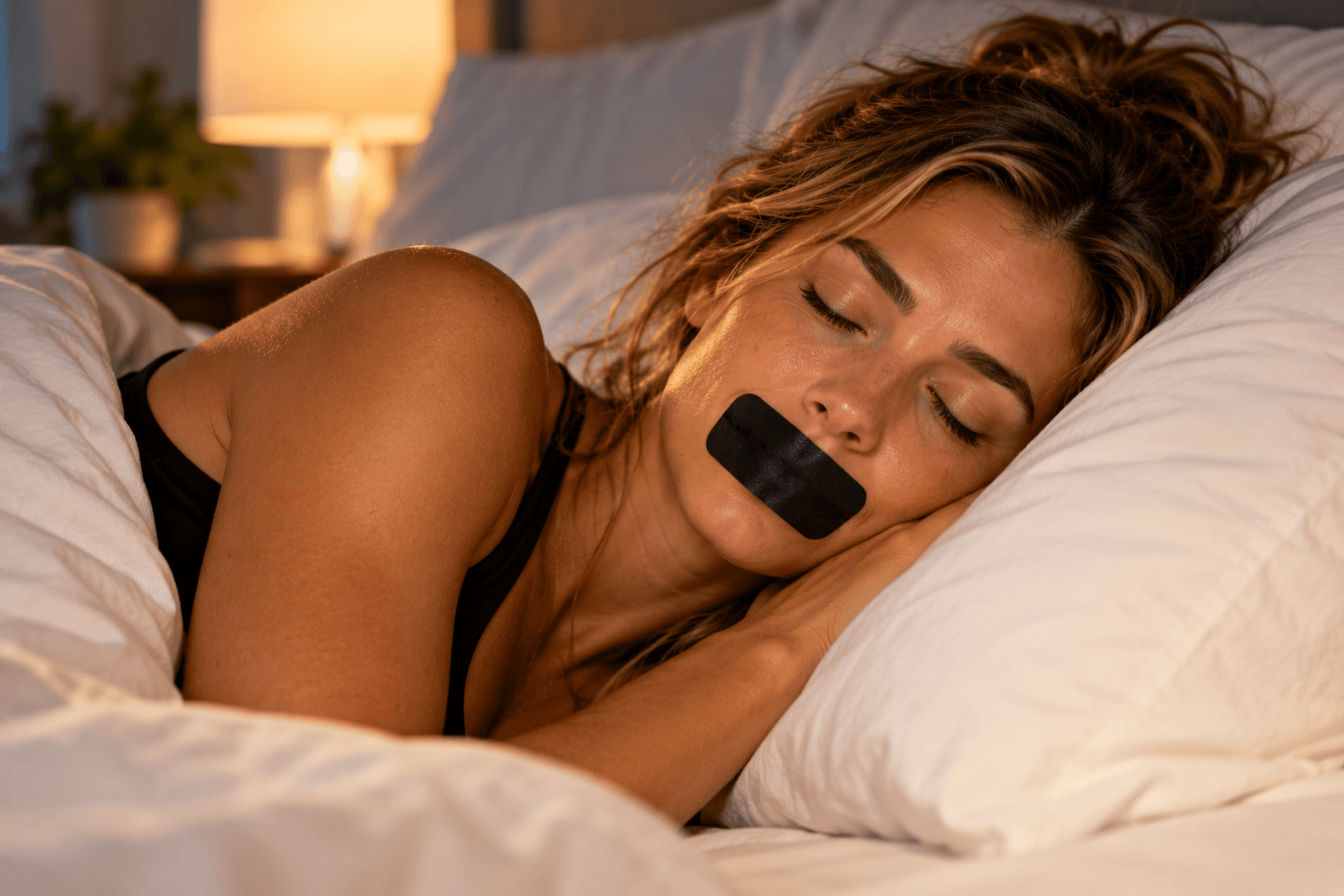
Mouth tape isn't for children. It hasn't been studied in kids, and the Sleep Foundation says it shouldn't be tried. If your child breathes through their mouth, especially at night, the useful step is finding out why, starting with their pediatrician.
What does the research say about mouth tape for kids?
Research: limited (what this means)There's almost no research on it, and that's the problem. The Sleep Foundation's guidance is plain: mouth taping in children has not been studied and should not be tried.
The research on adults is thin too. A 2025 systematic review in PLOS One found only 10 studies on mouth taping, with 213 patients in total. Some of those studies discussed possible risks, including asphyxiation when the nose is obstructed, and the authors concluded there may be a potentially serious risk of harm for people practicing the trend indiscriminately.
The studies that do exist were in adults. The PLOS One review reports that the average ages in its studies ranged from 38 to 64. The 2022 study in Healthcare that's most often shared online only enrolled people aged 20 to 60, and it left out anyone whose tape came loose by morning or who had very large tonsils. None of that tells us how a child's airway would respond.
The same review notes that sleep-disordered breathing in children is typically managed with surgery to remove the tonsils and adenoids. In other words, when a child's breathing at night is a problem, doctors look for the cause.
Why do children breathe through their mouths?
Children usually breathe through their mouths because something makes breathing through the nose harder. Pediatric ear, nose and throat doctors at Connecticut Children's list the common reasons:
- Nasal congestion from colds, allergies or sinus infections
- Enlarged tonsils or adenoids that block airflow through the nose
- A deviated septum or another structural issue in the nose
- Habit, especially in younger children
That list is the main reason tape is a bad idea for kids. Brian Chen, MD, a pediatric sleep medicine specialist at Cleveland Clinic, says mouth tape should never be used by people with nasal congestion, chronic allergies, sinus infections, enlarged tonsils or a deviated septum. Those are some of the most common reasons a child mouth breathes in the first place.
Our guide to mouth breathing in children goes into the causes in more detail.
Which signs mean it's time to see a pediatrician?
Connecticut Children's suggests seeing a doctor, and asking your pediatrician for an ENT referral, if your child has:
- Snoring or noisy breathing during sleep
- Sleepiness, crankiness or trouble focusing during the day
- Speech or swallowing difficulties
- Changes in facial growth or dental alignment, such as a long face or an open bite
Snoring on its own is worth a mention too. Mayo Clinic advises asking your pediatrician if your child snores, because children can have obstructive sleep apnea, and enlarged tonsils or obesity can narrow a child's airway.
The National Heart, Lung, and Blood Institute says sleep apnea in children is most common between ages 2 and 8. At night you may notice snoring, mouth breathing, breathing that starts and stops, frequent waking or bedwetting. During the day, signs can include being overactive or aggressive, trouble paying attention at school, a dry mouth or headache in the morning, and sleepiness.
The Sleep Foundation also notes that mouth breathing may slow growth in children, which is another reason to get it checked rather than work around it. If you've noticed changes in your child's bite or teeth, mention them to their dentist as well as their pediatrician.
Why is it worth getting checked?
Getting checked is worth it because the effects of untreated sleep apnea in children go beyond a noisy night. The NHLBI says it can lead to problems with learning and memory, and that daytime sleepiness and fatigue can affect a child's behavior and their wish to be active. It lists a higher risk of impaired growth, poor school performance and high blood pressure among the possible effects.
Connecticut Children's adds that ongoing mouth breathing may affect sleep quality, behavior and dental development. Its doctors also stress the hopeful side: with the right evaluation and care plan, many of these problems can be reversed or prevented.
What raises a child's risk of sleep apnea?
The NHLBI says obstructive sleep apnea in children is often caused by large tonsils or adenoids, and that obesity is another common cause. Other factors that raise the risk include Down syndrome, a cleft palate or other differences in the face or skull, neuromuscular disorders, tobacco smoke and being born prematurely.
If any of those apply to your child and you've noticed snoring or mouth breathing, mention both at their next appointment.
Is mouth breathing safe for children?
Occasional mouth breathing usually isn't a problem. Connecticut Children's says it's common, and that many of its causes, like a cold, come and go. Its doctors say mouth breathing at night that isn't linked to snoring or sleep problems is generally not a cause for worry.
What matters is the pattern. If it happens night after night, or shows up alongside any of the signs above, book the appointment.
Check this first. Mouth tape is for adults only. Don't use it on a child, and talk to your pediatrician if your child snores or breathes through their mouth most nights. More on safety
What should you note down before the appointment?
A few nights of notes can make the visit more useful, because many of the signs happen while you're asleep too. Based on the signs the NHLBI and Connecticut Children's describe, it helps to jot down:
- Whether your child snores, and on how many nights a week
- Any breathing that seems to stop and start, or gasping
- Whether their mouth is open most of the night
- Frequent waking or bedwetting
- A dry mouth or headache in the morning
- Daytime sleepiness, crankiness, trouble focusing or being unusually overactive
- Any allergies, and whether symptoms get worse at certain times of year
Connecticut Children's says its ENT doctors ask about sleep, snoring, behavior and allergies, so having those details ready saves time.
What happens at the doctor?
The NHLBI says a child with suspected sleep apnea will need a sleep study. Their provider will also look in the nose and mouth for large tonsils or anything else that could block the airway, and may check blood oxygen levels overnight with a pulse oximeter.
Treatment depends on the cause. Connecticut Children's lists nasal sprays or allergy management, and surgery when needed for enlarged tonsils or adenoids. The NHLBI adds options such as nasal steroid sprays, weight management, oral devices or orthodontic treatment, and mouth and facial muscle exercises for children who have sleep apnea.
Connecticut Children's describes what most families can expect at an ENT visit. The doctor will ask about sleep, snoring, behavior and allergies, examine the ears, nose, mouth and throat, and may use a small, flexible camera to look inside the nose and at the adenoids. You'll leave with a care plan and time to ask questions.
There are also things you can do at home. The NHLBI advises keeping a child with sleep apnea away from secondhand smoke, which can make it worse, and helping a child who is overweight build healthy habits with their provider's support.
None of those involve tape. The aim is to make breathing through the nose easier, not to hold the mouth shut.
What if you use mouth tape yourself?
Using mouth tape yourself is a separate question. Mouth tape is an adult product, and for adults who can breathe comfortably through their nose, it's a reasonable thing to try. Our beginner's guide covers how. Just keep it as something for grown-ups, and keep the focus for your child on finding out why they mouth breathe.
Read next
- Mouth breathing in children
- Is mouth taping safe? Who should try it and who shouldn't
- Nasal vs. mouth breathing
Common questions
Can I put mouth tape on my child to stop mouth breathing?
No. Mouth taping hasn't been studied in children, and the Sleep Foundation says it shouldn't be tried. If your child breathes through their mouth regularly, ask their pediatrician to find out why.
Is mouth tape OK for teenagers?
This site doesn't recommend mouth tape for anyone under 18. The research on mouth taping is small, so talk to your teen's doctor about any mouth breathing or snoring instead.
When should I worry about my child breathing through their mouth?
When it's regular and comes with snoring or noisy breathing, daytime sleepiness or crankiness, trouble focusing, speech or swallowing problems, or changes in their face or teeth. Those are signs to see a doctor.
Should I see a doctor if my child snores?
Yes. Mayo Clinic advises asking your pediatrician if your child snores, because children can have obstructive sleep apnea too.
Can mouth breathing affect my child's teeth or face?
It can. Pediatric ENT doctors at Connecticut Children's list changes in facial growth or dental alignment, such as a long face or an open bite, among the signs to see a doctor, and say ongoing mouth breathing may affect dental development.
What will an ENT do for a child who mouth breathes?
Usually a full ear, nose and throat exam, questions about sleep, snoring, behavior and allergies, and sometimes a look inside the nose with a small flexible camera. If sleep apnea is suspected, the doctor may order a sleep study.
Is mouth breathing bad for kids?
Occasional mouth breathing, such as during a cold, is common and generally not a worry, according to pediatric ENT doctors at Connecticut Children's. Mouth breathing that happens night after night, especially with snoring or sleep problems, is worth checking, because it may affect sleep quality, behavior and dental development.
Sources
- Mouth taping for sleep: does it work?
- Mouth breathing in kids: when to worry and what you can do
- Sleep apnea in children
- Snoring: symptoms and causes
- Is mouth tape safe to use while sleeping?
- The impact of mouth-taping in mouth-breathers with mild obstructive sleep apnea: a preliminary study
- Breaking social media fads and uncovering the safety and efficacy of mouth taping in patients with mouth breathing, sleep disordered breathing, or obstructive sleep apnea: A systematic review
About this article
- Research
- 7 published sources, listed above.
- Evidence
- Limited. How we rate it
- Last checked
- October 10, 2026
- Funding
- Paid partner of Titan Recovery. Their ads are labeled.
- Found an error?
- Tell us. We log fixes on the corrections page.
* This content is for informational and educational purposes only and is not medical advice. It is not intended to diagnose, treat, cure or prevent any disease or health condition. Talk to a qualified healthcare provider about your health.