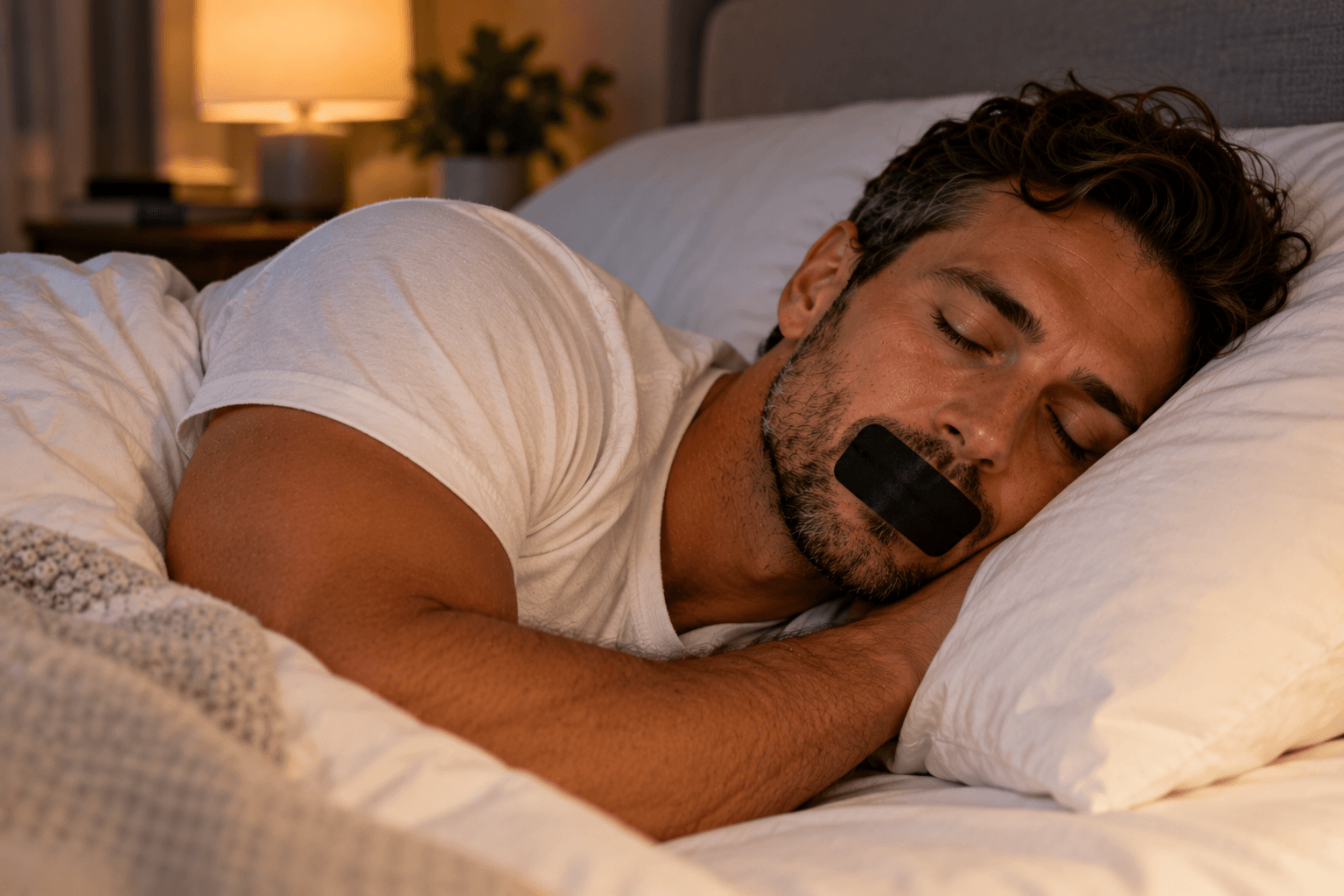
In short
- Skip mouth tape on nights you've been drinking. Sleep Foundation lists anyone at risk of vomiting during sleep among the people who shouldn't tape.
- Alcohol relaxes the muscles of the tongue and throat and can raise resistance in the nasal passages, so your nose has a harder job with tape on.
- People with alcohol in their system are harder to wake, which matters if you need to pull the tape off in the night.
- A 2020 meta-analysis found alcohol worsened snoring, breathing interruptions and the lowest oxygen levels in people prone to snoring and sleep apnea.
- On alcohol-free nights, healthy adults who breathe easily through their nose can use mouth tape as normal.
Leave the mouth tape off on nights you've been drinking. Alcohol relaxes the muscles that hold your airway open, can make your nose more congested and makes you harder to wake, and all three work against you with tape on. On your sober nights, nothing changes, and you can keep taping as usual.
This isn't a reason to give up mouth tape if you enjoy a drink. It just means treating drinking nights as tape-free nights, the same way you would with a cold.
Why is alcohol a problem with mouth tape?
Research: limited (what this means)Nobody has run a study of mouth tape after drinking, so this advice comes from what's known about each piece separately. Put together, they point the same way.
Mouth tape only makes sense when your nose can carry all your breathing. Sleep Foundation explains that alcohol causes the tongue and throat muscles to relax, and also causes changes to blood vessels in the nose that raise resistance in the nasal passages. So on a drinking night the airway behind your nose is floppier and the nose itself may be narrower.
There's a second problem. Sleep Foundation notes that people with alcohol in their system are generally harder to wake, which means they're less likely to have the brief arousals that help the body recover from pauses in breathing. With tape on, waking up enough to peel it off is part of your safety margin. Alcohol shrinks that margin.
What does the research show about alcohol and breathing at night?
Research consistently shows that alcohol makes breathing during sleep harder, and those studies are much stronger than the studies on mouth tape.
A small 1997 study in Alcoholism: Clinical and Experimental Research gave nine young men who were habitual snorers a bedtime drink of either vodka in orange juice or a placebo. On the placebo night, resistance to breathing in rose by 280% from waking to sleep in the snorers. On the vodka night, that rise more than doubled. The authors wrote that this combination of higher resistance and greater breathing effort could account for alcohol making obstructive sleep apnea worse.
A 2020 meta-analysis in Otolaryngology-Head and Neck Surgery pooled 13 studies with 279 patients who had overnight sleep tests. Alcohol was linked to about 4 more breathing interruptions per hour and a lowest oxygen level about 2.7 percentage points lower. The authors concluded that alcohol worsens snoring, sleep structure, breathing interruptions and lowest oxygen levels in people prone to snoring and sleep apnea.
A 2018 meta-analysis in Sleep Medicine looked at the bigger picture across 21 studies and found that drinking alcohol, or drinking more of it, was linked to a 25% higher risk of sleep apnea. The authors suggested that relaxed airway muscles and reduced sensitivity to breathing pauses are likely to be greatest when alcohol levels are rising, as they are after a drink at bedtime.
None of this research involved mouth tape. What it shows is that the night you've been drinking is the night your airway is under the most strain, which is the wrong night to remove your backup route for breathing.
What about being sick in the night?
Being sick in the night is the risk people tend not to think about. Sleep Foundation lists anyone at risk of vomiting during sleep among the people who shouldn't use mouth tape, because taping the mouth may prevent safe expulsion. A 2025 systematic review in PLOS One found that four of the ten mouth taping studies it covered discussed a serious risk of asphyxiation when the mouth is closed off and there's nasal obstruction or regurgitation.
Sleep Foundation's page on alcohol and sleep also warns that in rare cases, drinking large amounts can slow or stop breathing and lead to alcohol poisoning, which can be fatal, especially if someone becomes unconscious and vomits while lying on their back. Anyone showing signs of alcohol poisoning, such as vomiting, slow breathing, confusion or not being able to stay conscious, needs immediate medical help. Mouth tape has no place on that kind of night, and if you're looking after someone who has had a lot to drink, make sure nothing is covering their mouth.
Check this first.
Don't use mouth tape after drinking alcohol, taking sleeping pills or anything else that makes you sleep more heavily, or on any night you feel sick. If someone has had a lot to drink and is vomiting, breathing slowly or can't stay awake, get emergency help.
More on safetyIs a small drink with dinner different?
A small drink with dinner is probably different, but nobody can tell you exactly where the line is. There's no study of mouth tape after one or two drinks, so there's no tested safe amount.
What we do have is Sleep Foundation's general advice to avoid alcohol within three to four hours of bedtime, which it gives for better sleep overall. That's a sensible gap to aim for. A simple rule of thumb that errs on the safe side: if you can still feel the drink when you get into bed, it's a tape-free night.
The same goes for anything else that sedates you. If you take sleeping pills or another medicine that makes you drowsy, ask your doctor or pharmacist before combining it with mouth tape.
What can you do instead on drinking nights?
You don't need to replace the tape with anything. A few things can make the night easier on your airway:
- Leave a gap between your last drink and bedtime, and drink water in between.
- Sleep on your side if you can. Cleveland Clinic lists side sleeping among the safer ways to cut down on snoring, and our guide to mouth tape and side sleeping explains why position matters for snoring.
- If your nose feels blocked, a nasal strip on its own doesn't hold your mouth closed, so you can still breathe through your mouth if you need to.
- Pick the tape back up the next sober night.
Our article on alcohol and snoring goes into more detail on why drinking makes snoring louder.
When does drinking point to something bigger?
If you only snore after drinking, that's common. If you snore loudly most nights, or a partner has noticed you gasp, choke or stop breathing in your sleep, that's worth taking to a doctor whether or not you drink. Mouth tape doesn't treat sleep apnea, and the 2018 meta-analysis authors recommended advising against alcohol for people with or at risk of sleep apnea. Our guide to snoring vs sleep apnea covers the warning signs.
When can you start taping again?
You can start taping again the next night you go to bed without alcohol in your system. Before you put the tape on, do the two-minute nose test: sit quietly with your mouth closed and breathe only through your nose. If that feels easy, you're back where you started.
Keep using tape made for skin, fold over a corner so you can grab it, and make sure you can open your mouth or peel it off with one hand. Our guide on how to remove mouth tape covers getting it off quickly and gently.
Read next
- Is mouth taping safe? Who should try it and who shouldn't
- Mouth tape and acid reflux or nausea at night
- Is mouth taping safe for me?, our short checklist
Common questions
Is it dangerous to mouth tape after drinking?
It adds risk you don't need. Alcohol relaxes your airway muscles, can narrow your nasal passages and makes you harder to wake, and Sleep Foundation says people at risk of vomiting during sleep shouldn't tape. Leave the tape off on drinking nights.
Is mouth taping dangerous?
It can be in the wrong conditions. A 2025 systematic review in PLOS One found four of ten studies warned that closing the mouth could pose a serious risk of asphyxiation when the nose is blocked or there's regurgitation, and Sleep Foundation says people with nasal congestion, untreated sleep apnea or a risk of vomiting during sleep shouldn't tape. For sober adults who breathe comfortably through their nose, Sleep Foundation lists milder side effects such as skin irritation and disrupted sleep.
When is snoring dangerous?
When it comes with signs of sleep apnoea. The NHS says snoring is very common and not usually caused by anything serious, but breathing that stops and starts, gasping or choking noises, or feeling sleepy during the day can mean sleep apnoea. The NHS says sleep apnoea can be serious if it's not diagnosed and treated, and can lead to problems including high blood pressure and a higher chance of stroke.
What about one glass of wine with dinner?
No study has tested mouth tape after small amounts of alcohol, so there's no proven safe amount. Sleep Foundation suggests avoiding alcohol within three to four hours of bedtime for better sleep in general. If you can feel the drink at bedtime, skip the tape that night.
Does alcohol make snoring worse?
Yes. A 2020 meta-analysis of 13 studies found alcohol was linked to worse snoring, more breathing interruptions per hour and lower oxygen levels in people prone to snoring and sleep apnea.
Can mouth tape stop me snoring after a night out?
Don't use it for that. Alcohol is a reason to leave the tape off. If drinking makes you snore loudly, sleeping on your side and having fewer drinks near bedtime are safer places to start.
When can I use mouth tape again after drinking?
The next night you go to bed sober, as long as your nose feels clear and you can breathe comfortably through it with your mouth closed.
What about sleeping pills or other sedatives?
Treat them the same way and ask your doctor or pharmacist first. Anything that makes you sleep more heavily makes it harder to wake and remove the tape if you need to.
Sources
- Mouth taping for sleep: does it work?
- Alcohol and sleep
- Breaking social media fads and uncovering the safety and efficacy of mouth taping in patients with mouth breathing, sleep disordered breathing, or obstructive sleep apnea: A systematic review
- Impact of alcohol consumption on snoring and sleep apnea: a systematic review and meta-analysis
- Alcohol and the risk of sleep apnoea: a systematic review and meta-analysis
- Effect of bedtime alcohol on inspiratory resistance and respiratory drive in snoring and nonsnoring men
- Is mouth tape safe to use while sleeping?
- Snoring
- Sleep apnoea
About this article
- Research
- 9 published sources, listed above.
- Evidence
- Limited. How we rate it
- Last checked
- October 10, 2026
- Funding
- Paid partner of Titan Recovery. Their ads are labeled.
- Found an error?
- Tell us. We log fixes on the corrections page.
* This content is for informational and educational purposes only and is not medical advice. It is not intended to diagnose, treat, cure or prevent any disease or health condition. Talk to a qualified healthcare provider about your health.