In short
- Alcohol relaxes the muscles that keep your upper airway open, which makes the airway more likely to narrow and vibrate.
- In a small 1997 study of habitual snorers, a bedtime drink more than doubled the rise in airway resistance from waking to sleep.
- A 2018 meta-analysis of 21 studies found higher alcohol consumption was linked to a 25% higher risk of sleep apnea.
- A 2020 meta-analysis of sleep-lab studies linked alcohol to worse snoring and lower oxygen levels in people prone to snoring.
- Cleveland Clinic suggests avoiding alcohol for several hours before bed if you snore, and Sleep Foundation says at least three hours.
Alcohol makes snoring worse because it relaxes the muscles that hold your upper airway open while you sleep. A more relaxed airway narrows more easily, and air moving through a narrower space makes the surrounding tissue vibrate. Studies also show alcohol raises the resistance to airflow once you're asleep.
What does alcohol do to your airway?
Cleveland Clinic sleep specialist Nancy Foldvary-Schaefer explains snoring as the muscles that support the upper airway getting weak and floppy at night, and describes snoring as the sound an unstable airway makes.
Alcohol adds to that. Cleveland Clinic says that drinking too much before bed can relax the muscles that keep the upper airway open, and Dr. Foldvary-Schaefer describes alcohol at night as a central nervous system depressant that can make your airway more floppy.
What does the research show?
Research: moderate (what this means)A 1997 study measured this directly. Researchers gave nine young men who were habitual snorers a bedtime drink of either a placebo or vodka in orange juice, on two separate nights, and measured the resistance to airflow as they breathed in. They compared the results with 10 similar men who didn't snore.
Awake, the two groups had the same airway resistance, and alcohol didn't change it. Asleep on the placebo night, resistance rose by 70% in the non-snorers and by 280% in the snorers. On the alcohol night, the rise from waking to sleep was more than doubled in both groups. After alcohol, the men also worked harder to breathe in, and the authors suggested that combination would make an unstable airway more likely to collapse.
That was a small study, but it shows the mechanism clearly. Alcohol didn't change airway resistance while the men were awake. It made the airway much harder to breathe through once they were asleep.
A larger review backs this up. A 2020 systematic review and meta-analysis pooled 13 sleep-lab studies with 279 people. Compared with control nights, drinking raised the apnea-hypopnea index (a count of breathing interruptions per hour) by about 4 events an hour and lowered the lowest oxygen level reached in the night by about 2.7 percentage points. The authors concluded that alcohol is associated with worse snoring and changes in sleep structure in people who are prone to snoring or sleep apnea.
Does alcohol affect your nose as well as your throat?
Alcohol affects your nose as well as your throat. Sleep Foundation says alcohol relaxes the tongue and throat muscles and also changes the blood vessels in the nose, which raises resistance to airflow in the nasal passages. It adds that alcohol contains histamine, and some people who are sensitive to it get a runny or stuffy nose after drinking.
A stuffier nose matters because it pushes more of your breathing through your mouth. If your nose feels blocked after an evening drink, a nasal strip is a simple thing to keep by the bed. Cleveland Clinic describes strips as lifting the nostrils open to improve airflow, and notes they are inexpensive and easy to find. A strip helps with the nose, not the relaxed throat muscles, so it works best alongside drinking less in the evening. See how nasal strips work for the details.
Why does a nightcap leave you tired the next day?
Alcohol feels like it helps. Sleep Foundation says it is a sedative, and research confirms it can shorten the time it takes to fall asleep, at least at first. The trouble comes later. As your body processes the alcohol, sleep gets lighter and more broken, with more awakenings in the second half of the night as blood alcohol levels fall. Alcohol also cuts REM sleep.
Put that together with louder snoring and more airway resistance, and it explains why a few drinks can leave both you and your partner feeling worse the next morning. If you're waking in the early hours after drinking, why do I wake up at 3am? covers the other common reasons.
Is alcohol linked to sleep apnea?
Sleep apnea is a different problem from simple snoring, and it needs a doctor's diagnosis. A 2018 systematic review and meta-analysis looked at whether drinking is linked to it.
Across 21 studies, higher levels of alcohol consumption were associated with a 25% higher risk of sleep apnea. The authors suggested this is plausible because alcohol reduces the tone of the genioglossus, a muscle that helps keep the airway open, and raises upper airway resistance. They also noted that heavy drinking adds calories, which can raise body weight, itself a risk factor.
The evidence has limits. The studies were observational, the results varied a lot between them, and the authors found signs of publication bias. In studies from high-income countries the link was smaller and not statistically significant. So alcohol is linked to sleep apnea, but this review can't show how much it causes on its own.
Does the timing of your last drink matter?
The authors of the 2018 review wrote that timing is likely to matter, because airway muscle relaxation is probably greatest when alcohol levels are rising, for example after a drink at bedtime. Their data couldn't test that directly.
Cleveland Clinic's practical advice is to avoid alcohol for several hours before bedtime if you snore. The NHS lists not drinking too much alcohol as one of its main tips for snoring. If you notice you mostly snore after an evening out, that's a strong hint about your own trigger.
Sleep Foundation puts a number on it and recommends avoiding alcohol for at least three hours before bed. It notes that the liver typically processes alcohol at about one drink per hour, so a longer gap makes sense after more than one. In practice, finishing your last drink with dinner rather than on the sofa before bed gives your body more time to clear it.
What else can you do?
Cutting back on evening alcohol is the change most directly aimed at alcohol-related snoring. The other common snoring advice still applies, and the NHS suggests sleeping on your side, losing weight if you're overweight and not smoking.
Sleeping pills and alcohol are a combination to avoid. The NHS warns that sleeping pills can sometimes cause snoring, and Sleep Foundation says mixing alcohol with sleeping pills or sedatives can be extremely dangerous, because both slow the central nervous system and together can suppress breathing.
If you share a bed with someone, our guide to sleeping next to a snorer covers that side of the problem. For the full list of changes worth trying, see how to stop snoring.
Where does mouth tape fit in?
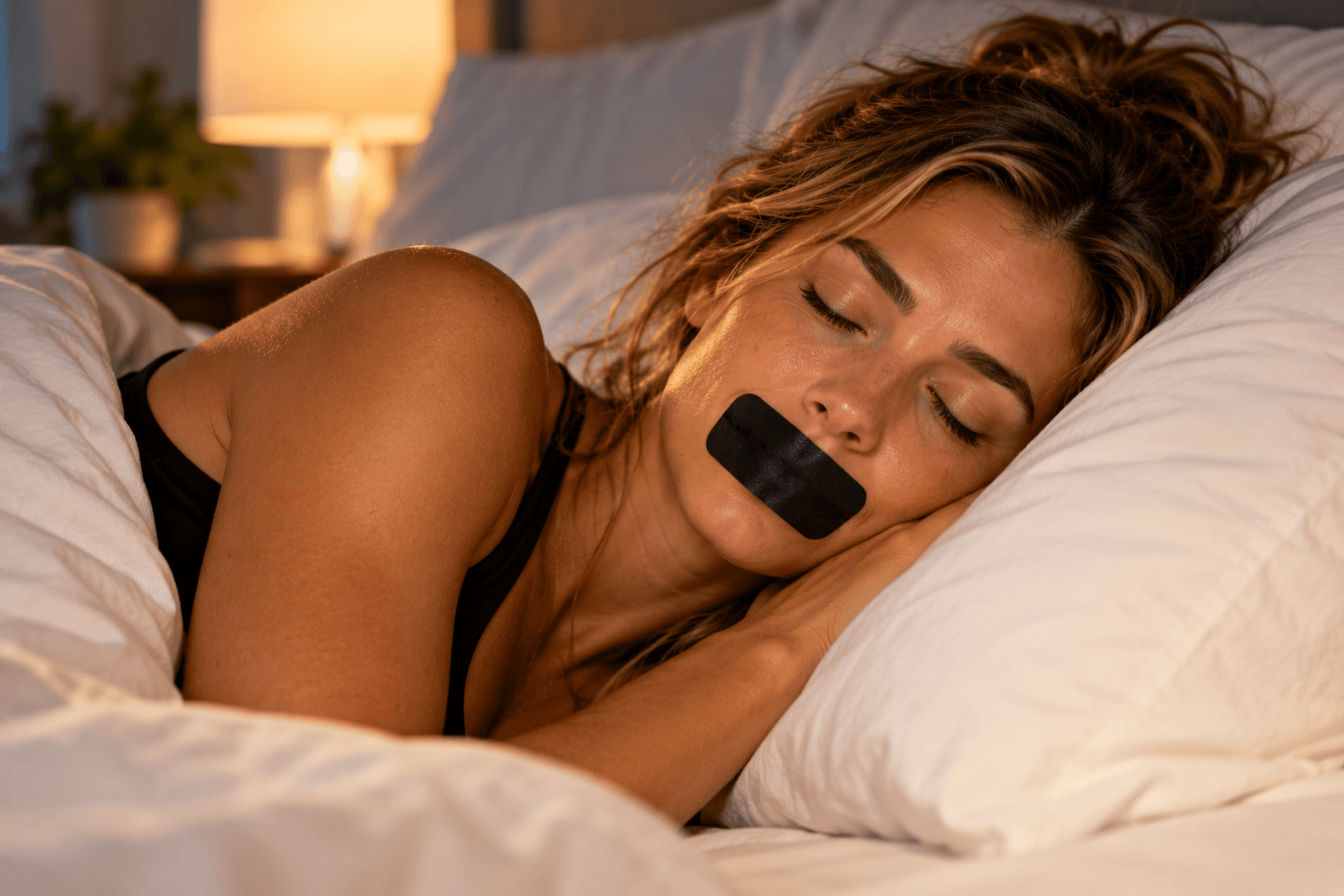
On sober nights, mouth tape can be a useful part of the picture for people whose mouth falls open as they sleep. Keeping your lips closed encourages you to breathe through your nose, and many people who snore with their mouth open like it for that reason. We cover the small studies in does mouth tape help with snoring?
We'd keep it for nights when you've had little or nothing to drink. Sleep Foundation notes that people with alcohol in their system are generally harder to wake, which is the opposite of what you want with anything on your mouth. Your nose also needs to be clear, which you can check with our two-minute nose test.
Check this first. Skip mouth tape and see a doctor if you snore loudly, wake up gasping, have been told you stop breathing in your sleep, or can't breathe comfortably through your nose. More on safety
If you want to try nasal strips, our pick is TitanAir Nasal Strips.
When should you see a doctor?
Snoring that comes with gasping, choking or pauses in breathing needs more than a change in drinking habits. The American Academy of Sleep Medicine says snoring paired with those signs is a reliable indicator of sleep apnea, and lists daytime sleepiness as another warning sign. The NHS says to see a GP if your breathing stops and starts in your sleep, if you make gasping or choking noises, or if you feel sleepy during the day.
Sleep Foundation adds that if alcohol regularly disrupts your sleep, or you have persistent snoring, frequent awakenings or unrefreshing sleep, it's worth talking to a doctor, who may suggest a sleep study.
If any of that sounds familiar, see a doctor rather than relying on changes at home.
Read next
Common questions
Why do I only snore after drinking?
Alcohol relaxes the muscles that keep your upper airway open, and a sleep-lab study found it sharply raised airway resistance during sleep in snorers. That can be enough to cause snoring on nights you drink.
How long before bed should I stop drinking to avoid snoring?
Cleveland Clinic suggests avoiding alcohol for several hours before bedtime. There isn't a precise cut-off that works for everyone, so cutting back in the evening is the safer approach.
Can alcohol cause sleep apnea?
A 2018 meta-analysis found higher alcohol consumption was associated with a 25% higher risk of sleep apnea. That shows a link rather than proof of cause, and the authors noted signs of publication bias. Anyone with gasping, choking or breathing pauses at night should see a doctor.
Why does a drink help me fall asleep but leave me tired?
Sleep Foundation says alcohol is a sedative that can help you fall asleep faster at first, but as your body processes it, sleep becomes lighter and more broken, especially in the second half of the night. It also reduces REM sleep.
Can nasal strips help with snoring after drinking?
They can help with the nose side of the problem. Sleep Foundation says alcohol changes blood vessels in the nose and raises resistance to airflow there, and nasal strips lift the nostrils open. They won't stop the throat muscles relaxing, so cutting back on evening drinks still matters most.
Should I use mouth tape after drinking?
We'd skip it on nights you've had more than a drink or two. Sleep Foundation notes that people with alcohol in their system are harder to wake, and a heavy night is not the time to try anything new on your airway. Mouth tape is best kept for sober nights with a clear nose.
What is the difference between snoring and sleep apnea?
The NHS says snoring is very common and not usually caused by anything serious, while sleep apnoea is when your breathing stops and starts as you sleep and needs to be treated. Signs that point to sleep apnea include gasping, snorting or choking noises, pauses in breathing and feeling very tired during the day. If you notice any of those, see a doctor.
Sources
- Wondering why you snore? 5 possible causes
- How to stop snoring
- Effect of bedtime alcohol on inspiratory resistance and respiratory drive in snoring and nonsnoring men
- Alcohol and the risk of sleep apnoea: a systematic review and meta-analysis
- Impact of alcohol consumption on snoring and sleep apnea: a systematic review and meta-analysis
- Alcohol and sleep
- Snoring
- Sleep apnoea
- Is it more than a snore? Recognizing sleep apnea warning signs
About this article
- Research
- 9 published sources, listed above.
- Evidence
- Moderate. How we rate it
- Last checked
- October 10, 2026
- Funding
- Paid partner of Titan Recovery. Their ads are labeled.
- Found an error?
- Tell us. We log fixes on the corrections page.
* This content is for informational and educational purposes only and is not medical advice. It is not intended to diagnose, treat, cure or prevent any disease or health condition. Talk to a qualified healthcare provider about your health.