In short
- The AASM says snoring paired with choking, gasping or silent pauses in breathing is a strong sign of sleep apnea.
- Other common warning signs include heavy daytime sleepiness, unrefreshing sleep, morning headaches, dry mouth and waking often to urinate.
- Sleep apnea doesn't always come with loud snoring, and Cleveland Clinic says women often have frequent night waking instead.
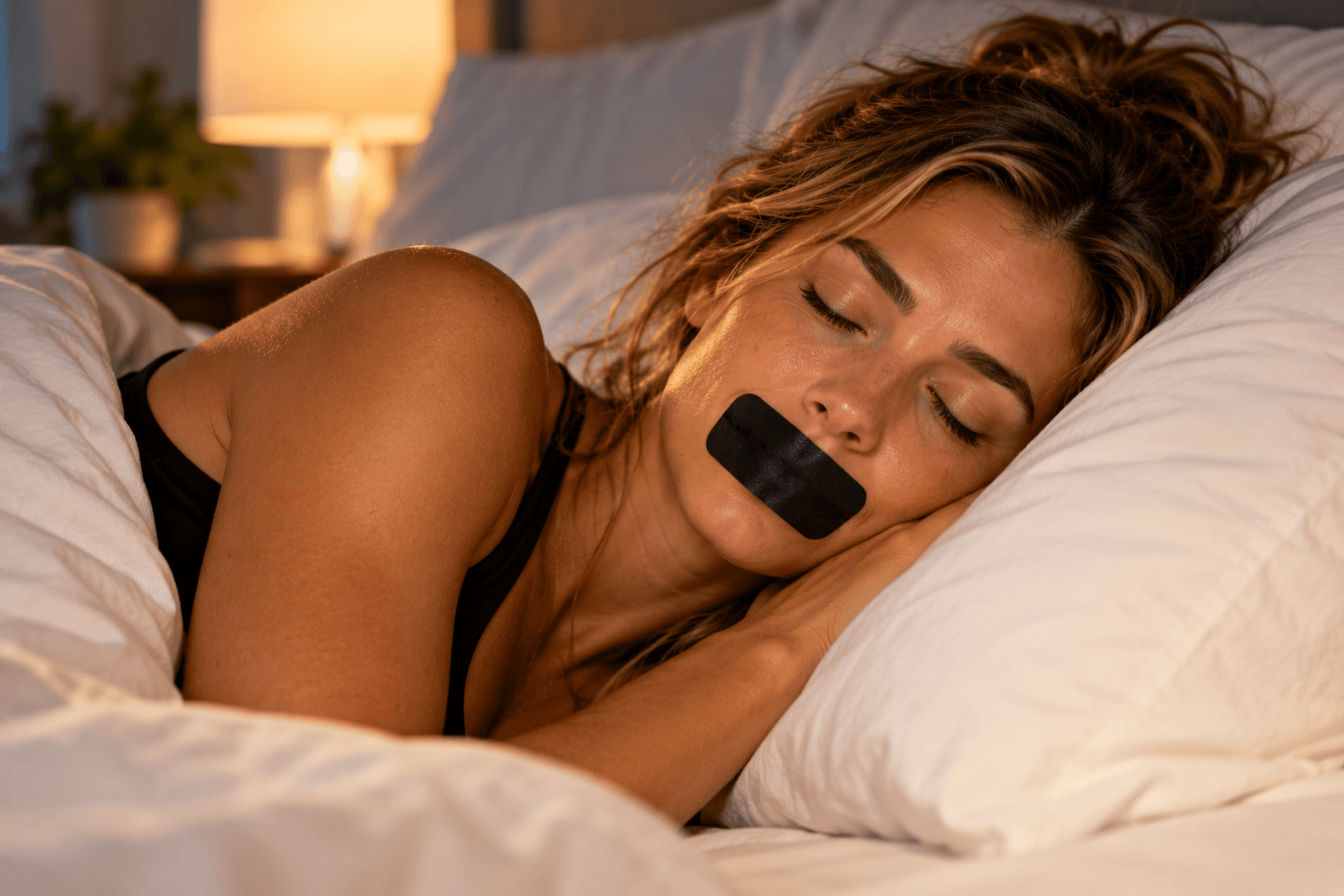
- Mouth tape and nasal strips do not treat sleep apnea, and a review found nasal dilators made no significant difference to sleep apnea measures.
- If you have these signs, see a doctor. A sleep study, at home or in a clinic, is how sleep apnea is diagnosed.
The clearest warning signs of sleep apnea are loud snoring, breathing that stops and starts during sleep, and gasping or choking noises, often noticed by a bed partner. During the day, heavy sleepiness, unrefreshing sleep and morning headaches are common. If several of these sound familiar, see a doctor: sleep apnea is diagnosed with a sleep study and treated medically, and mouth tape and nasal strips are not a treatment for it.
Why do these signs matter?
Research: moderate (what this means)These warning signs matter because sleep apnea needs treatment. Sleep apnea is when your breathing stops and starts while you sleep. The NHS says it needs to be treated because it can lead to more serious problems, including high blood pressure, a higher chance of stroke, type 2 diabetes, heart disease, depression and accidents caused by tiredness. The American Academy of Sleep Medicine (AASM) estimates that nearly 30 million US adults have obstructive sleep apnea and that most cases are undiagnosed.
Many people don't know they have it. The National Heart, Lung, and Blood Institute (NHLBI) says you may not know about the night-time symptoms until someone tells you, which is why a partner's observations count.
Signs someone else may notice at night
Loud, frequent snoring
The NHLBI lists frequent loud snoring as a symptom of sleep apnea and says it's more common in men. A Cleveland Clinic sleep specialist says people who describe loud, disruptive snoring are more likely to have sleep apnea and should talk to a provider about a sleep study. Not everyone who snores has sleep apnea, so snoring on its own isn't proof, but loud snoring alongside any other sign on this list is worth checking. Our guide to snoring vs. sleep apnea explains the difference.
Pauses in breathing
The NHS lists breathing that stops and starts as one of the main symptoms. The AASM describes silent breathing pauses during sleep, together with snoring, as a strong sign of sleep apnea. A partner may notice the snoring stop, a stretch of silence, and then a snort or gasp as breathing starts again.
Gasping, choking or snorting
Gasping for air is on the NHLBI's list, and the NHS mentions gasping, snorting or choking noises. Cleveland Clinic says many people with sleep apnea aren't aware they stop breathing, or that they make snoring or snorting sounds as the airway reopens. Some people do wake up gasping, which is a reason to see a doctor in its own right.
Signs you may notice yourself
Heavy sleepiness during the day
The AASM says excessive daytime sleepiness often happens because sleep apnea causes many arousals through the night. It lists difficulty staying awake while watching TV or driving among the warning signs. The NHS advises seeing a GP if you always feel very tired during the day, and says that once sleep apnea with excessive sleepiness is confirmed in the UK, you must not drive until it's under control.
Waking up unrefreshed
The AASM includes unrefreshing sleep in its list, and a Cleveland Clinic sleep specialist names feeling unrested on waking as a sign of sleep apnea even in people who don't snore. If a full night in bed still leaves you tired, see our guide to waking up tired.
Morning headaches
The NHS, the AASM and the NHLBI all list headaches on waking as a symptom, and the NHLBI says headaches are more common in women with sleep apnea. Headaches have many causes, so this sign counts most when it shows up alongside others on this list.
Waking often, including to pee
The NHS lists waking up a lot as a night-time symptom, and the NHLBI and the AASM both include waking during the night to urinate. Cleveland Clinic says sleep apnea in women commonly shows up as frequent night waking with no history of loud snoring. More in sleep apnea in women.
A dry mouth when you wake
The NHLBI lists dry mouth as a symptom you may notice yourself. It has plenty of other causes, so treat it as one piece of the picture rather than a sign on its own.
Trouble concentrating, memory problems or mood changes
The NHS lists finding it hard to concentrate and mood swings among daytime symptoms. The AASM adds memory loss, irritability and lower sex drive, and the NHLBI says daytime sleepiness can lead to problems with learning, focusing and reacting.
A risk factor to take seriously
High blood pressure or extra weight
The AASM says between 30 and 40% of adults with high blood pressure also have sleep apnea, and that the risk rises with excess body weight. The NHS lists obesity, a large neck, getting older, family history, alcohol, smoking and sleeping on your back among the things linked to it, and the NHLBI says sleep apnea is more common in men. If you have high blood pressure and any of the signs above, mention both to your doctor. See sleep apnea and high blood pressure.
What are the signs of sleep apnea in children?
The NHLBI says sleep apnea in children is most common between ages 2 and 8. At night, look for snoring, mouth breathing, breathing that starts and stops, waking often and bedwetting. During the day, a child may be overactive or aggressive, have trouble paying attention at school, wake with a dry mouth or headache, or seem sleepy. A pediatrician can arrange a sleep study. Read more in snoring in children.
Mouth tape and nasal strips don't treat sleep apnea
Mouth tape and nasal strips are not treatments for sleep apnea, and neither should be used to put off seeing a doctor. A 2025 systematic review of mouth taping studies concluded there's a potentially serious risk of harm for people trying the trend indiscriminately, including asphyxiation when the nose is blocked, and said further studies are needed to show any clinical benefit. The Sleep Foundation says people with obstructive sleep apnea who aren't using CPAP shouldn't use mouth tape. A 2016 meta-analysis of 14 studies found nasal dilators made no significant difference to sleep apnea severity, oxygen levels or snoring in people with sleep apnea. Our safety page covers who should avoid these products.
What should you do next?
If you notice these signs, book an appointment with your doctor and, if you can, bring the person who has seen your symptoms. The NHS says this can help, and the AASM says anyone who has been told they snore should talk to a medical provider about screening or testing for sleep apnea. Your doctor may refer you for a sleep study, which the NHS says can usually be done at home, though sometimes you'll stay overnight in a clinic. The results give an AHI score, based on how often your breathing stops while you sleep. The NHS grades 5 to 14 as mild, 15 to 30 as moderate and over 30 as severe. The AASM notes that a negative home test can't rule out sleep apnea if your symptoms still fit, so a lab study may follow. Our guide to home sleep apnea tests explains the process.
Sleep apnea is treatable. The NHS explains that a CPAP machine gently pumps air into a mask you wear over your nose, or nose and mouth, to stop your airways getting too narrow, and that it can improve sleep quality and reduce the risk of problems like high blood pressure. The NHLBI lists lifestyle changes, positive airway pressure machines such as CPAP, custom-fitted oral devices, mouth and face exercises and several kinds of surgery. You'll find more in our sleep topic hub.
Read next
- Sleep apnea treatments explained
- What is a home sleep apnea test, and what should you expect?
- 12 questions to ask your doctor about snoring
Common questions
What are the first signs of sleep apnea?
The night-time signs are usually noticed by a bed partner: loud snoring, breathing that stops and starts, and gasping or choking sounds. During the day, the NHS lists feeling very tired, finding it hard to concentrate, mood swings and waking with a headache.
Can you have sleep apnea if you don't snore?
Yes. A Cleveland Clinic sleep specialist says obstructive sleep apnea without snoring is possible and relatively common, with signs like daytime sleepiness, unrefreshing sleep, morning headaches and waking many times a night.
Can mouth tape or nasal strips treat sleep apnea?
No. A 2025 systematic review found no support for mouth taping as a treatment for sleep-disordered breathing and warned of a serious risk when the nose is blocked. A 2016 meta-analysis found nasal dilators did not significantly change sleep apnea measures. See a doctor instead.
How is sleep apnea diagnosed?
With a sleep study. The NHS says you may be given devices that check your breathing and heartbeat overnight, usually at home but sometimes in a clinic. The results give an AHI score showing how severe it is.
Is sleep apnea dangerous?
It can be if it isn't treated. The NHS lists high blood pressure, a higher chance of stroke, type 2 diabetes, heart disease, depression and accidents caused by tiredness among the possible problems.
What are the signs of sleep apnea in children?
The NHLBI lists snoring, mouth breathing, breathing that starts and stops, waking often and bedwetting at night, and behavior problems, trouble paying attention, morning headaches and sleepiness during the day.
Sources
- Is it more than a snore? Recognizing sleep apnea warning signs
- Sleep apnoea
- Sleep apnea: symptoms
- Sleep apnea: causes and risk factors
- Sleep apnea in children
- Sleep apnea: treatment
- Yes, you can have sleep apnea even if you don't snore
- Why do I snore? 5 possible causes
- Home sleep apnea test
- Breaking social media fads and uncovering the safety and efficacy of mouth taping in patients with mouth breathing, sleep disordered breathing, or obstructive sleep apnea: A systematic review
- Nasal dilators (Breathe Right Strips and NoZovent) for snoring and OSA: a systematic review and meta-analysis
- Mouth taping for sleep: does it work?
About this article
- Research
- 12 published sources, listed above.
- Evidence
- Moderate. How we rate it
- Last checked
- October 5, 2026
- Funding
- Paid partner of Titan Recovery. Their ads are labeled.
- Found an error?
- Tell us. We log fixes on the corrections page.
* This content is for informational and educational purposes only and is not medical advice. It is not intended to diagnose, treat, cure or prevent any disease or health condition. Talk to a qualified healthcare provider about your health.