In short
- Sleep experts in a 2019 study rated the idea that loud snoring is mostly harmless as a myth, because snoring is a primary symptom of obstructive sleep apnea.
- Not everyone who snores has sleep apnea, and some people with sleep apnea barely snore, so the sound alone can't tell you which you have.
- The AASM says about 40% of adult men and 24% of adult women snore habitually.
- Alcohol and back sleeping both make snoring worse in studies, and side sleeping cut snoring for most snorers without sleep apnea in a 2003 study.
- Nasal strips and mouth tape have small studies showing less snoring, but neither treats sleep apnea, and snoring with gasping or pauses needs a doctor.
Most snoring is common and not dangerous, but the idea that it's always harmless is one of several myths worth dropping. Snoring isn't only a male problem, a nightcap makes it worse rather than better, and your sleep position matters more than many people think. Here's what medical sources and studies say about ten common beliefs, with the sleep apnea warning signs up front.
Myths about what snoring means
Research: limited (what this means)Snoring is just a harmless noise
Snoring is often just a harmless noise, but not always. In a 2019 study, ten sleep experts reviewed popular beliefs about sleep and rated "although annoying for bed partners, loud snoring is mostly harmless" as a myth. They cited one large survey of US adults in which 52.8% reported snoring, with snoring linked to health problems in its own right. They also pointed out that snoring is a primary symptom of obstructive sleep apnea, which raises the risk of heart and blood vessel problems when it goes untreated.
Cleveland Clinic takes a balanced view: occasional snoring is usually harmless, but loud, disruptive or frequent snoring may be a symptom of sleep apnea. The American Academy of Sleep Medicine (AASM) says snoring paired with choking, gasping or silent pauses in breathing is a strong sign of sleep apnea. If that sounds like you, read snoring vs. sleep apnea and talk to a doctor before trying anything at home.
Everyone who snores has sleep apnea
Not everyone who snores has sleep apnea, so this myth runs the other way. The AASM says snoring can be a symptom of sleep apnea but that not everyone who snores has a sleep disorder. Cleveland Clinic calls snoring the most common sleep apnea symptom while noting that there are many other reasons people snore, such as a cold, allergies or sleeping on your back. Plenty of snorers have nothing more going on than a narrow airway at night.
If you don't snore, you can't have sleep apnea
A Cleveland Clinic sleep specialist says it's possible and relatively common to have obstructive sleep apnea with little or no snoring. Signs to watch for include daytime sleepiness, waking up unrefreshed, morning headaches and waking many times in the night. She adds that in women, sleep apnea commonly shows up as frequent night waking with no history of loud snoring.
You'd know if you snored
Many people don't know they snore. The AASM says that in many cases people do not realize they snore, and the National Heart, Lung, and Blood Institute (NHLBI) says you may not know about night-time symptoms like gasping until someone tells you. A bed partner is often the first to notice. Cleveland Clinic puts it simply: most of us don't know how we sound when we sleep. If you sleep alone, it suggests an app or a noise-activated voice recorder to track your snoring.
Only men snore
Men do snore more often, but many women snore too. The AASM puts the figures at about 40% of adult men and 24% of adult women who snore habitually, and says snoring tends to run in families and become more common with age. It also notes that men become less likely to snore after age 70. Cleveland Clinic adds that hormone changes during pregnancy can contribute.
Myths about causes and fixes
A nightcap helps you sleep through it
Alcohol relaxes the muscles that hold your airway open, which makes snoring worse. A 2020 meta-analysis pooled 13 studies with 279 people who had overnight sleep studies and found alcohol was associated with worse snoring, more breathing interruptions and lower oxygen levels in people prone to snoring. The 2019 expert study also listed "alcohol before bed will improve your sleep" as a myth, since alcohol disturbs sleep in the second half of the night. The Sleep Foundation says experts recommend avoiding alcohol within three to four hours of bedtime. More in why alcohol makes snoring worse.
Your sleep position makes no difference
Your sleep position can make a real difference to snoring. In a 2003 study of 72 habitual snorers, most of those without sleep apnea snored less, in both time and loudness, when lying on their side. Cleveland Clinic explains that lying on your back lets your tongue relax toward the back of your throat, and cites a 2009 study of 2,077 sleep disorder patients that found sleep position was behind the snoring in 54%. See sleep position and snoring for ways to stay off your back.
Only overweight people snore
Not only overweight people snore, because weight is one factor among many. Cleveland Clinic lists age, anatomy such as large tonsils or a deviated septum, family history, nasal congestion, alcohol, sedatives, lack of sleep, sex and sleep position alongside weight. That said, weight can matter a lot for some people. In a small 1995 study of men who snored heavily, those who lost at least 3 kg went from about 320 to 176 snores an hour.
Snoring in children is always nothing to worry about
Snoring in children is usually minor, but not always. Cleveland Clinic says snoring in babies is common and rarely serious, and is most often caused by a stuffy nose. The NHLBI says sleep apnea in children is most common between ages 2 and 8, and lists snoring, mouth breathing, breathing that starts and stops, bedwetting and daytime behavior problems as signs to mention to a pediatrician. Our page on snoring in children explains when to get it checked.
Nothing helps except surgery
Most snoring can be improved without an operation, and the NHS says surgery isn't always successful and snoring can come back afterwards. The NHS matches treatments to the cause: a mouthpiece that brings the tongue forward when the tongue blocks the throat, something to keep the mouth closed when it falls open, and nasal dilators or strips when the nose is blocked or narrow. Simple changes like side sleeping and less alcohol come first.
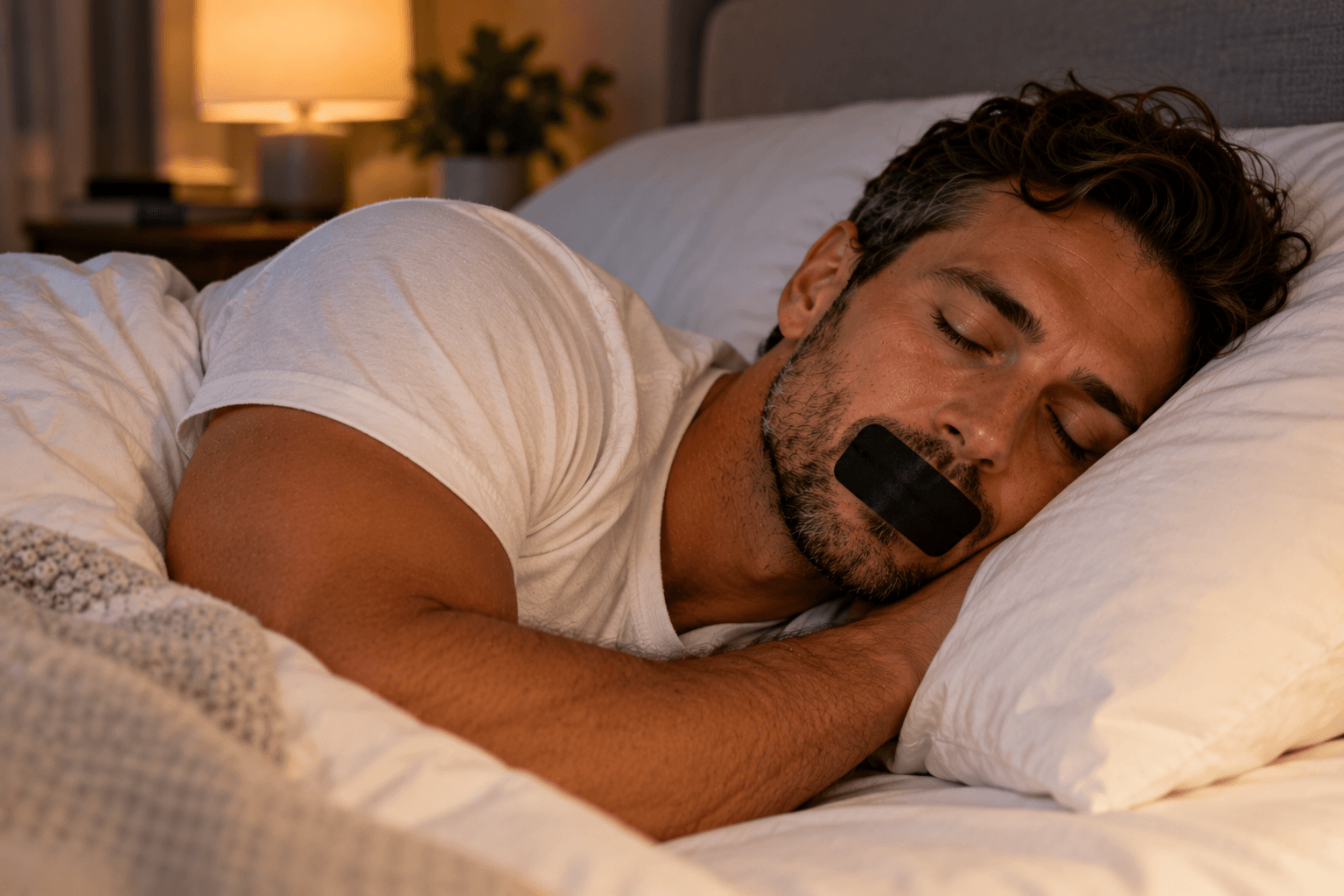
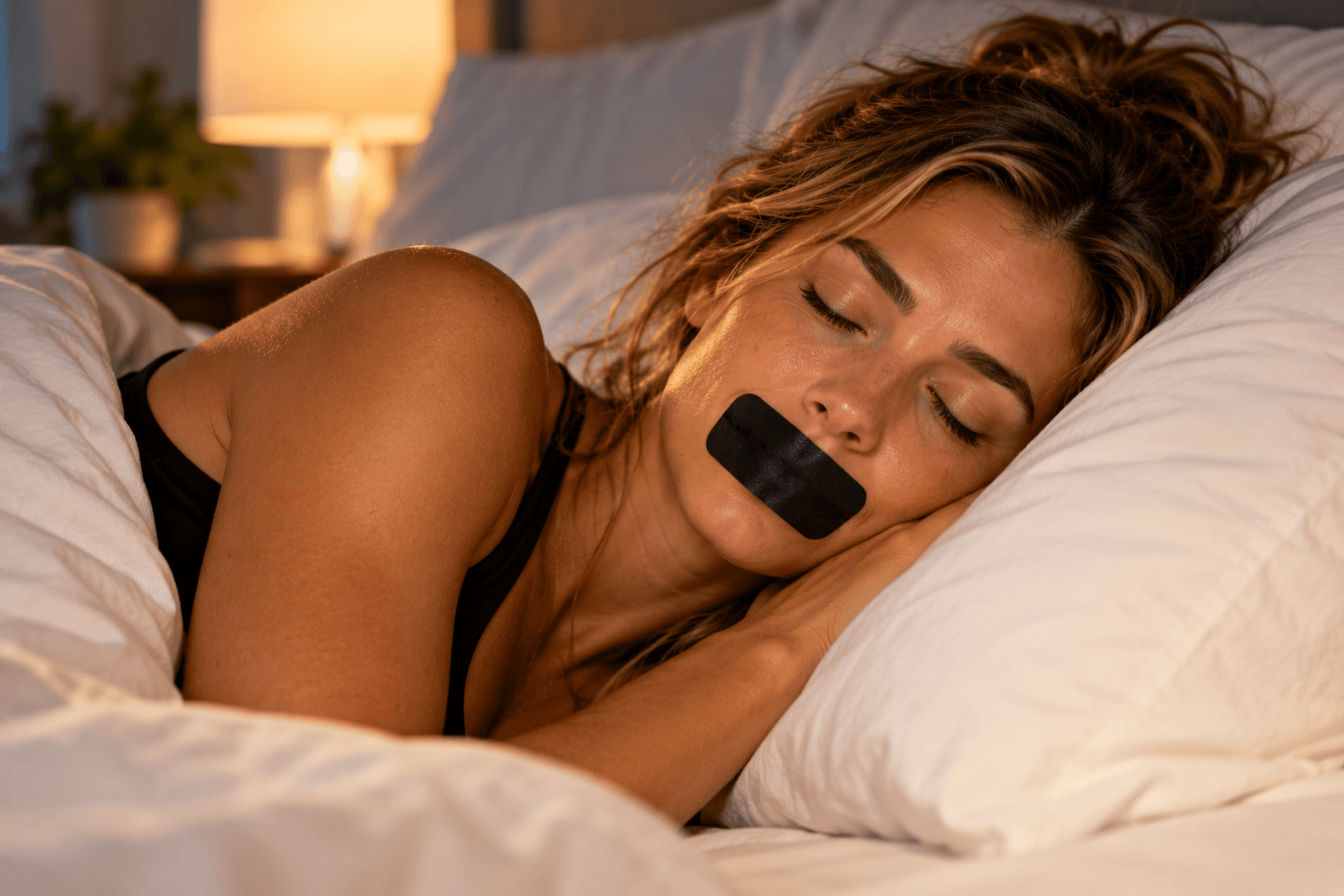
This is where nasal strips and mouth tape earn their place. In a small randomized trial of 12 people with chronic rhinitis, snoring dropped from about 258 to 173 snores an hour with a real nasal strip compared with a placebo strip. For mouth tape, a small 2022 study of mouth breathers with mild sleep apnea found snoring roughly halved after a week of taping (the research). A 2025 systematic review noted these studies are small and flagged a serious risk for anyone taping with a blocked nose, so take the nose test first. Neither strips nor tape treat sleep apnea.
Our pick for trying both is the Titan Sleep System, which pairs TitanAir nasal strips with Titan's bamboo silk mouth tape. Titan says the strips use flexible spring-loaded bands and are designed to pair with the tape, and that every batch is third-party tested and certified PFAS-free. Titan also offers a 30-night guarantee.
Check this first. Skip mouth tape and see a doctor if you snore loudly, wake up gasping, have been told you stop breathing in your sleep, or can't breathe comfortably through your nose. More on safety
When does snoring need a doctor?
Snoring needs a doctor when it comes with signs of sleep apnea or simple changes don't help. The NHS says to see a GP if lifestyle changes aren't helping, if your snoring has a big impact on you or your partner, or if you're sleepy during the day, stop and start breathing in your sleep, or make gasping or choking noises. The NHLBI adds dry mouth, morning headaches and waking often to urinate to the list of possible sleep apnea symptoms. A sleep study is the way to find out, and our safety page explains who should skip mouth tape. For a wider look at options, see our sleep topic hub.
Read next
- 13 snoring remedies, ordered by the evidence
- How to stop snoring: what you can try at home
- Does mouth tape help snoring?
Common questions
Is snoring always a sign of sleep apnea?
No. Cleveland Clinic says snoring is the most common sleep apnea symptom but that there are many other reasons people snore. Snoring with choking, gasping or pauses in breathing is the pattern the AASM describes as a strong sign of sleep apnea.
Do women snore as much as men?
Less often, but many do. The American Academy of Sleep Medicine says about 40% of adult men and 24% of adult women are habitual snorers, and Cleveland Clinic notes that hormone changes during pregnancy can contribute.
Can you snore without knowing it?
Yes, and it's common. The AASM says in many cases people do not realize they snore, and the NHLBI says you may not know about sleep apnea symptoms like gasping until someone tells you.
Does alcohol make snoring worse?
Yes. A 2020 meta-analysis of 13 studies with 279 people found alcohol was associated with worse snoring, more breathing interruptions and lower oxygen levels in people prone to snoring and sleep apnea.
Do nasal strips and mouth tape stop snoring?
They can reduce it for some people. In a small randomized trial, nasal strips lowered snoring frequency in people with chronic rhinitis, and a small 2022 study of mouth breathers with mild sleep apnea found snoring roughly halved after a week of taping. Neither treats sleep apnea.
When should I see a doctor about snoring?
The NHS says to see a GP if lifestyle changes aren't helping, if snoring has a big impact on you or your partner, or if you're sleepy during the day, stop and start breathing in your sleep, or gasp or choke.
Can you have sleep apnea without snoring?
Yes. A Cleveland Clinic sleep specialist says it's possible and relatively common to have obstructive sleep apnea with little or no snoring. Daytime sleepiness, waking up unrefreshed, morning headaches and waking many times in the night are signs to raise with a doctor.
Can mouth tape fix snoring?
It can cut snoring for people whose mouth falls open during sleep. A small 2022 study of mouth breathers with mild sleep apnea found snoring roughly halved after a week of taping. It doesn't treat sleep apnea, and it's only for adults who can breathe comfortably through their nose.
Sources
- Sleep myths: an expert-led study to identify false beliefs about sleep that impinge upon population sleep health practices
- Snoring
- Snoring: causes, treatment and prevention
- Yes, you can have sleep apnea even if you don't snore
- Why do I snore? 5 possible causes
- Sleep apnea: symptoms
- Sleep apnea in children
- Is it more than a snore? Recognizing sleep apnea warning signs
- Snoring
- Impact of alcohol consumption on snoring and sleep apnea: a systematic review and meta-analysis
- Alcohol and sleep
- Effects of body position on snoring in apneic and nonapneic snorers
- Treatment for snoring: combined weight loss, sleeping on side, and nasal spray
- External nasal dilation reduces snoring in chronic rhinitis patients: a randomized controlled trial
- The impact of mouth-taping in mouth-breathers with mild obstructive sleep apnea: a preliminary study
- Breaking social media fads and uncovering the safety and efficacy of mouth taping in patients with mouth breathing, sleep disordered breathing, or obstructive sleep apnea: A systematic review
- Titan Sleep System (Nasal Strips + Mouth Tape)
About this article
- Research
- 17 published sources, listed above.
- Evidence
- Limited. How we rate it
- Last checked
- October 10, 2026
- Funding
- Paid partner of Titan Recovery. Their ads are labeled.
- Found an error?
- Tell us. We log fixes on the corrections page.
* This content is for informational and educational purposes only and is not medical advice. It is not intended to diagnose, treat, cure or prevent any disease or health condition. Talk to a qualified healthcare provider about your health.