In short
- A German medical guideline on snoring in adults describes the overall evidence for snoring treatments as low, because most studies are small and short.
- Oral appliances fitted by a dentist have the firmest backing: the American Academy of Sleep Medicine recommends them over no treatment for adults with primary snoring.
- A 2020 meta-analysis of 13 studies linked alcohol with worse snoring, and a 2003 study found most snorers without sleep apnea snored less on their side.
- Nasal strips cut snoring frequency in a small randomized trial of people with chronic rhinitis, and three small studies of mouth taping or chin straps all reported less snoring.
- Snoring with gasping, choking, pauses in breathing or daytime sleepiness is a reason to see a doctor before trying any home remedy.
The snoring remedies with the most research behind them are a mouthpiece fitted by a dentist, skipping alcohol in the evening and staying off your back. Nasal strips and mouth tape sit in the middle of the list, with small but encouraging studies. Before you try any of them, check the warning signs of sleep apnea below, because snoring with gasping or pauses in breathing needs a doctor first.
What should you check before you start?
Before you try a snoring remedy, check for signs of sleep apnea. The American Academy of Sleep Medicine (AASM) says snoring paired with choking, gasping or silent pauses in breathing is a reliable indicator of sleep apnea. Its other warning signs include daytime sleepiness, obesity and high blood pressure. The NHS adds that you should see a GP if you stop and start breathing in your sleep or make gasping or choking noises. No home remedy on this list treats sleep apnea, so if any of that sounds familiar, read snoring vs. sleep apnea and book an appointment.
A quick word on how we ordered this list. A 2019 German medical guideline on snoring in adults says the overall evidence for snoring treatments is low, because most studies involve small groups and short follow-up. So "most evidence" here means relatively more, not proof. We ranked each remedy by the quality of the research we could find, not by how well it might work for you.
The best starting point is usually your likely cause. The NHS matches treatments to causes: a mouthpiece that brings the tongue forward when the tongue blocks the throat, something to keep the mouth closed when it falls open, and nasal strips, dilators or sprays when the nose is blocked or narrow. If you snore mostly after drinking, on your back or during allergy season, that points you to the right part of this list. Most of these remedies can be combined.
How do the 13 snoring remedies compare?
This table shows all 13 snoring remedies in the order below, with how much evidence backs each one and the key finding.
| Remedy | Evidence level | Key finding |
|---|---|---|
| Dentist-fitted mouthpiece | Most evidence | AASM recommends oral appliances over no treatment for primary snoring |
| No alcohol in the evening | Most evidence | 2020 meta-analysis of 13 studies linked alcohol with worse snoring |
| Staying off your back | Most evidence | 2003 study of 72 snorers: most without sleep apnea snored less on their side |
| Losing weight if you carry extra | Most evidence | 1995 study: about 320 to 176 snores an hour after losing at least 3 kg |
| Mouth and throat exercises | Smaller studies | 2015 trial of 39 people: snore index roughly halved over 3 months |
| Nasal strips | Smaller studies | Chronic rhinitis trial of 12: about 258 to 173 snores an hour vs placebo |
| Raising the head of the bed | Smaller studies | 2024 review found it reduced snoring |
| Mouth tape | Smaller studies | 2025 review: all 3 studies measuring snoring found a significant decrease |
| Treating a stuffy nose | Smaller studies | Sprays can help chronic congestion, per Cleveland Clinic |
| Quitting smoking | Little direct testing | NHS says smokers are more likely to snore |
| Skipping sleeping pills and sedatives | Little direct testing | NHS says sleeping pills can sometimes cause snoring |
| Running a humidifier in dry weather | Little direct testing | Dry airways make snoring more likely, per Cleveland Clinic |
| Getting enough sleep | Little direct testing | Lack of sleep can relax upper airway muscles, per Cleveland Clinic |
Remedies with the most evidence
A mouthpiece fitted by a dentist
Oral appliances hold your lower jaw forward while you sleep. In their 2015 guideline, the AASM and the American Academy of Dental Sleep Medicine recommend that sleep physicians prescribe oral appliances, rather than no therapy, for adults with primary snoring. The German guideline also recommends them in suitable cases, citing randomized trials in which they beat placebo splints. Cleveland Clinic suggests getting one customized by a dentist, because a badly fitting appliance can strain the jaw. Our guide to oral appliances for snoring covers the options.
No alcohol in the evening
A 2020 meta-analysis pooled 13 studies with 279 people who had overnight sleep studies. It found alcohol was associated with worse snoring, as well as more breathing interruptions and lower oxygen levels in people prone to snoring. A small 1997 study shows why. During sleep, resistance to breathing in rose by 280% in habitual snorers compared with 70% in non-snorers, and a bedtime dose of vodka more than doubled that rise in both groups. Cleveland Clinic suggests avoiding alcohol for several hours before bed. There's more in why alcohol makes snoring worse.
Staying off your back
In a 2003 study of 72 habitual snorers, most of those without sleep apnea snored less, in both time and loudness, when lying on their side. A small 2017 randomized trial found that a pillow that shifts the head position when it detects snoring reduced measured snoring, and a 2024 systematic review concluded that positional devices reduce snoring. The NHS suggests stitching a tennis ball to the back of your sleepwear or using a special pillow. See sleep position and snoring.
Losing weight if you carry extra
The German guideline recommends weight loss for all overweight snorers while noting that direct studies in snorers are scarce. In a small 1995 study, men who snored heavily and lost at least 3 kg went from about 320 to 176 snores an hour, and three who lost an average of 7.6 kg almost stopped snoring. Men who gained weight saw no improvement. Cleveland Clinic explains that fatty tissue in the neck can press on the throat when its muscles relax.
Promising remedies with smaller studies
Research: limited (what this means)Mouth and throat exercises
In a 2015 randomized trial of 39 people, three months of daily oropharyngeal exercises roughly halved the snore index, while the control group saw no significant change. The German guideline still judged the evidence for this kind of muscle training too thin to recommend. They cost nothing, which makes them an easy add-on.
Nasal strips
Nasal strips are where a blocked or narrow nose meets an easy fix. In a randomized trial of 12 people with chronic rhinitis, snoring dropped from about 258 to 173 snores an hour with a real strip compared with a placebo strip, though loudness didn't change. A 2016 meta-analysis found nasal dilators improve nasal breathing, and the German guideline says dilators should be offered when nasal breathing is impaired at the nasal valve. How nasal strips work explains the mechanics.
Raising the head of the bed
Cleveland Clinic suggests propping up the head of your bed to help keep your airway open, and the NHS mentions a bed wedge. The 2024 review found that raising the head and trunk reduced snoring by increasing the airway's cross-section, though some people find prolonged elevation uncomfortable.
Mouth tape
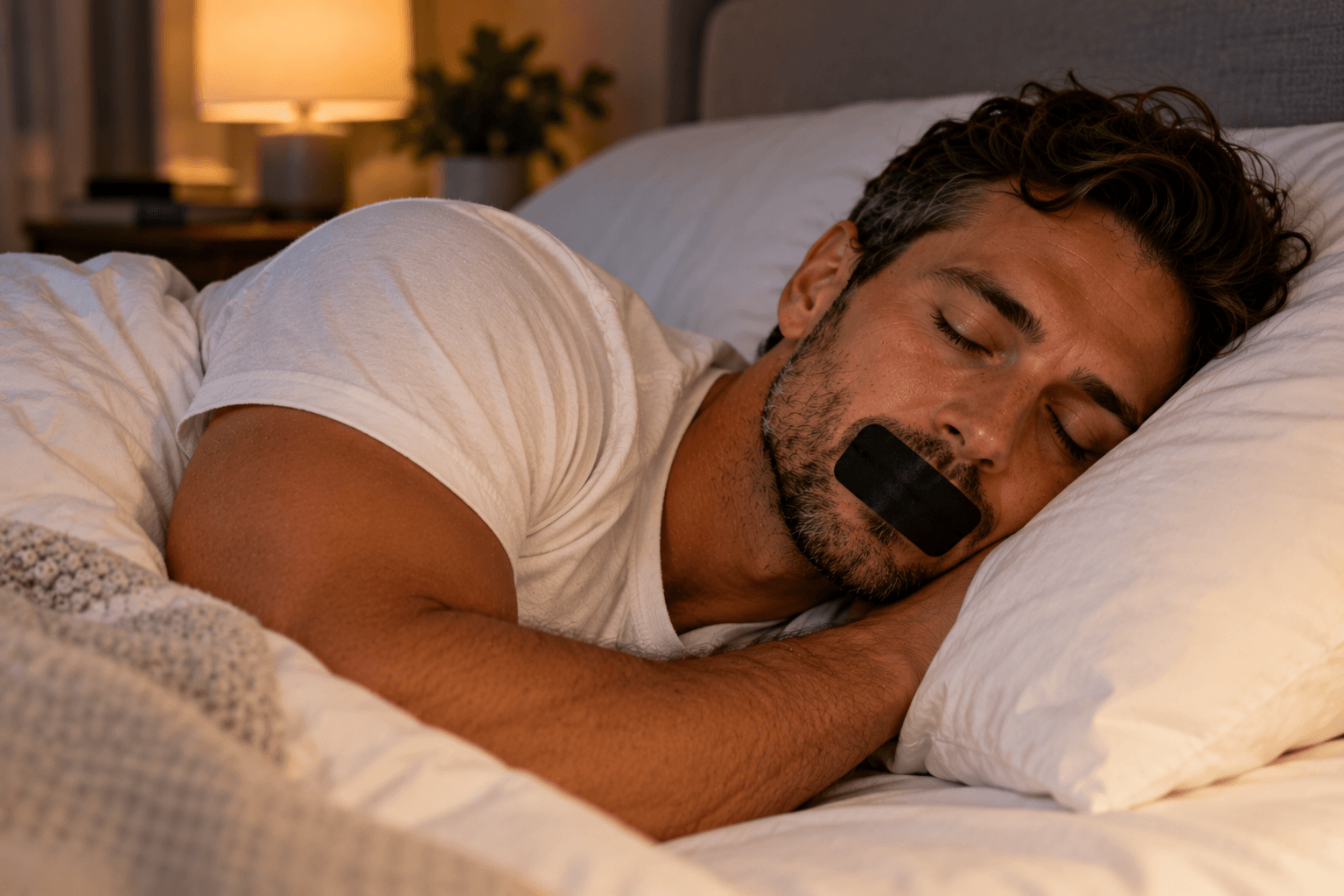
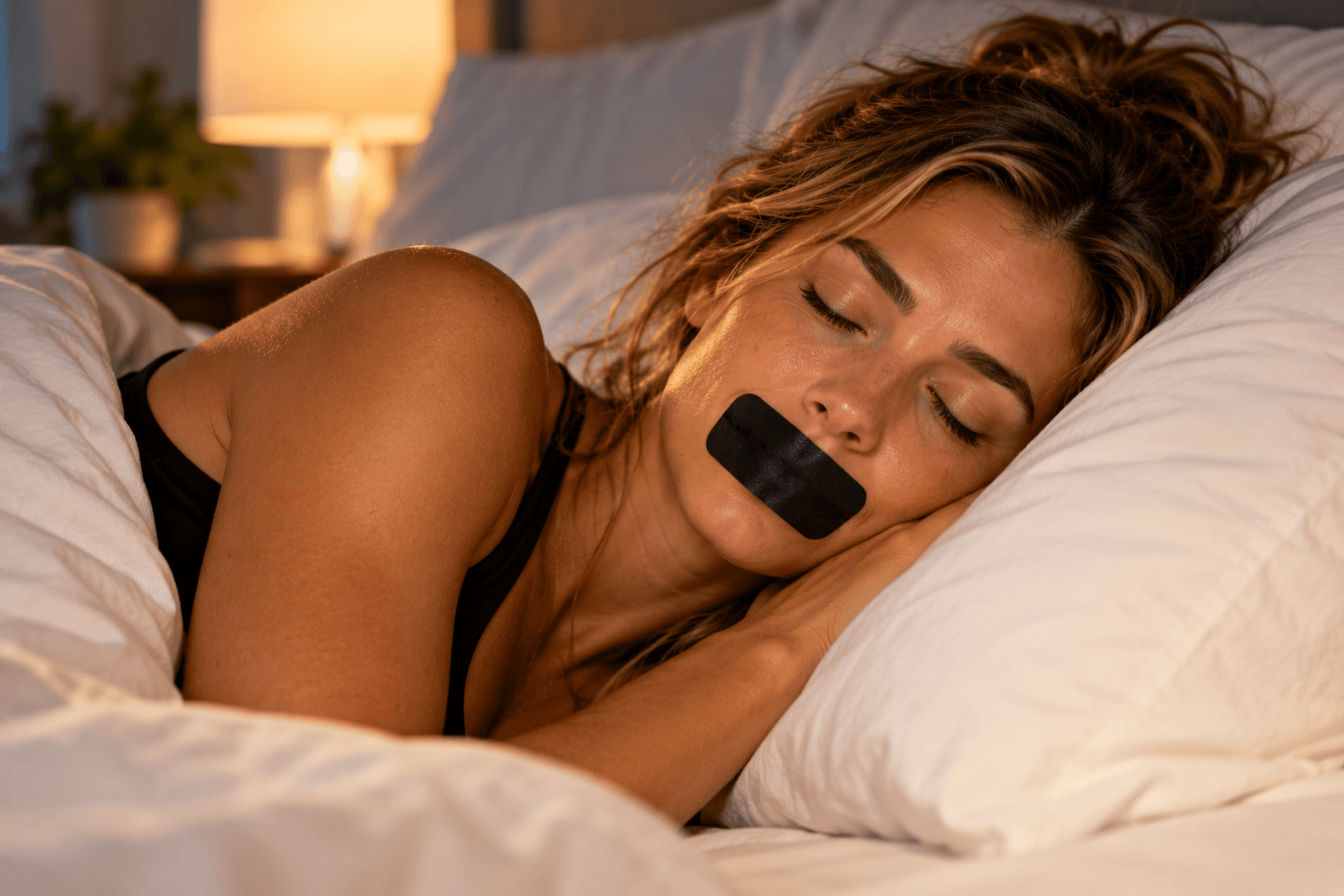
If your mouth falls open at night and your nose is clear, tape keeps your lips together so you breathe through your nose. A 2025 systematic review found three studies that measured snoring, and all three reported a significant decrease after mouth taping or a chin strap. The reviewers rated the studies as poor quality and flagged a serious risk for anyone with a blocked nose. Take the nose test first, and read does mouth tape help snoring? for the details.
Our pick for this step is the Titan Sleep System, which pairs TitanAir nasal strips with Titan's bamboo silk mouth tape. Titan says the strips use flexible spring-loaded bands and are designed to pair with the tape, and that every batch is third-party tested and certified PFAS-free.
Check this first. Skip mouth tape and see a doctor if you snore loudly, wake up gasping, have been told you stop breathing in your sleep, or can't breathe comfortably through your nose. More on safety
Treating a stuffy nose
Cleveland Clinic says people with allergies are more likely to sleep with their mouth open and snore, and that antihistamines or steroid nasal sprays can help with chronic congestion. The German guideline says short-term decongestant use can be considered. Ask a pharmacist which suits you.
Sensible advice with little direct testing
Quitting smoking
The NHS says you're more likely to snore if you smoke. Cleveland Clinic explains the link through the nose: quitting improves nasal congestion, which has a knock-on effect on snoring.
Skipping sleeping pills and sedatives
The NHS says sleeping pills can sometimes cause snoring. Cleveland Clinic warns that too much melatonin or other sleep medication can over-relax the muscles of the nose and throat. If you rely on them, talk to a doctor rather than stopping on your own.
Running a humidifier in dry weather
A Cleveland Clinic pulmonologist says you're more likely to snore when your airways are dried out, and that a humidifier at night can help. Keep it clean, and keep indoor humidity below 50%.
Getting enough sleep
Cleveland Clinic lists lack of sleep alongside alcohol and sedatives as things that can relax the muscles in your upper airway once you drift off. Aiming for a regular schedule with enough hours in bed is good advice for many reasons, and quieter nights may be one of them.
Read next
Common questions
What is the most effective home remedy for snoring?
It depends on the cause, but the remedies with the most research behind them are a dentist-fitted oral appliance, avoiding alcohol in the evening and staying off your back. The American Academy of Sleep Medicine recommends oral appliances over no treatment for adults with primary snoring.
Do nasal strips or mouth tape work better for snoring?
They target different causes. Strips help when a blocked or narrow nose is part of the problem, and a small randomized trial found they lowered snoring frequency in people with chronic rhinitis. Tape is for people whose mouth falls open but who can breathe easily through their nose, and the studies so far are small and of poor quality.
Can I use more than one snoring remedy at once?
Yes, and many people do. In a 1995 study of heavy snorers, side sleeping and a nasal spray were combined with weight loss, and the men who lost at least 3 kg snored noticeably less. Pairing a nasal strip with mouth tape is another common combination.
How long should I try a snoring remedy before deciding it doesn't work?
There's no set rule. Many of the studies in this list measured results after one night to a few weeks, and the oropharyngeal exercise trial ran for 3 months. Asking a partner or using a recording app before and after gives you something to compare.
When are home remedies not enough?
The NHS says to see a GP if lifestyle changes aren't helping, if snoring has a big impact on you or your partner, or if you're sleepy during the day, stop and start breathing in your sleep, or gasp or choke.
How effective are nasal strips for snoring?
They help most when a blocked or narrow nose is part of the problem. In a randomized trial of 12 people with chronic rhinitis, snoring dropped from about 258 to 173 snores an hour with a real strip compared with a placebo strip, though loudness didn't change. A 2016 meta-analysis found nasal dilators improve nasal breathing but don't improve sleep apnea.
Is mouth tape effective for snoring?
Early studies are encouraging for people whose mouth falls open and whose nose is clear. A 2025 systematic review found three studies that measured snoring, and all three reported a significant decrease after mouth taping or a chin strap. The reviewers rated the studies as poor quality and flagged a serious risk for anyone taping with a blocked nose.
Can losing weight stop snoring?
It can help if you carry extra weight. In a small 1995 study, men who snored heavily and lost at least 3 kg went from about 320 to 176 snores an hour, and three who lost an average of 7.6 kg almost stopped snoring. Cleveland Clinic explains that fatty tissue in the neck can press on the throat when its muscles relax.
Sources
- The diagnosis and treatment of snoring in adults
- Clinical practice guideline for the treatment of obstructive sleep apnea and snoring with oral appliance therapy: an update for 2015
- Impact of alcohol consumption on snoring and sleep apnea: a systematic review and meta-analysis
- Effect of bedtime alcohol on inspiratory resistance and respiratory drive in snoring and nonsnoring men
- Effects of body position on snoring in apneic and nonapneic snorers
- The effect on snoring of using a pillow to change the head position
- The potential effect of changing patient position on snoring: a systematic review
- Treatment for snoring: combined weight loss, sleeping on side, and nasal spray
- Effects of oropharyngeal exercises on snoring: a randomized trial
- External nasal dilation reduces snoring in chronic rhinitis patients: a randomized controlled trial
- Nasal Dilators (Breathe Right Strips and NoZovent) for Snoring and OSA: A Systematic Review and Meta-Analysis
- Breaking social media fads and uncovering the safety and efficacy of mouth taping in patients with mouth breathing, sleep disordered breathing, or obstructive sleep apnea: A systematic review
- Snoring
- Snoring: causes, treatment and prevention
- How to stop snoring
- 4 reasons to run a humidifier
- Is it more than a snore? Recognizing sleep apnea warning signs
- Titan Sleep System (Nasal Strips + Mouth Tape)
About this article
- Research
- 18 published sources, listed above.
- Evidence
- Limited. How we rate it
- Last checked
- October 10, 2026
- Funding
- Paid partner of Titan Recovery. Their ads are labeled.
- Found an error?
- Tell us. We log fixes on the corrections page.
* This content is for informational and educational purposes only and is not medical advice. It is not intended to diagnose, treat, cure or prevent any disease or health condition. Talk to a qualified healthcare provider about your health.