In short
- Snoring happens when your airway is partly blocked during sleep and the tissue around it vibrates.
- The NHS suggests sleeping on your side, losing weight if you're overweight, not smoking, not drinking too much alcohol and avoiding sleeping pills.
- In a 2003 study, most snorers without sleep apnea snored less when lying on their side than on their back.
- The NHS matches treatment to the cause: nasal strips or dilators for a blocked nose, and a device to keep the mouth closed when it falls open in sleep.
- Snoring with gasping, choking or pauses in breathing, or daytime sleepiness, is a reason to see a doctor rather than try home fixes.
Most people can make their snoring quieter with a few changes at home: sleeping on their side, cutting back on alcohol in the evening, dealing with a blocked nose and losing weight if they need to. If your snoring comes with gasping, choking or pauses in your breathing, or you're tired during the day, see a doctor before you try anything else.
Why do people snore?
Cleveland Clinic describes snoring as the rumbling, snorting or rattling sound some people make in their sleep, caused by a partly blocked airway. As air squeezes past the narrowed spot, the soft tissue around it vibrates.
A few things make that narrowing more likely. Cleveland Clinic lists alcohol, sedatives and even lack of sleep, which can relax the muscles in your upper airway once you fall asleep. Nasal congestion from colds and allergies can block airflow. Back sleepers are more likely to snore than side sleepers, and snoring is more common in people who are overweight.
Some causes are harder to change. Cleveland Clinic says snoring gets more common with age as muscle tone drops and the airway narrows, that it runs in families, and that enlarged tonsils or adenoids, a large tongue or a deviated septum can all restrict airflow. Hormone changes in pregnancy can contribute too.
You're far from alone if you snore. In a 2021 survey by the American Academy of Sleep Medicine, nearly 70% of Americans who share a bed said their partner snores.
How do you work out why you snore?
Working out which cause applies to you is the most useful first step, because each one has a different fix. The NHS sets this out plainly. If your tongue is partly blocking the back of your throat, the answer is a device worn in the mouth that brings the tongue forward. If your mouth falls open while you sleep, it suggests something that holds the mouth closed. If the airways in your nose are blocked or narrow, it suggests nasal dilators or strips, or decongestants and sprays to reduce swelling.
A few questions can point you in the right direction:
- Do you mostly snore after drinking? Alcohol is the likely trigger.
- Do you snore on your back but not on your side? Position is a big part of it.
- Is it worse with a cold, in allergy season or when your nose feels blocked? Start with your nose.
- Does your partner see your mouth hanging open, or do you wake with a dry mouth? Mouth breathing may be involved.
You don't need to rely on memory. Cleveland Clinic suggests asking your partner or using an app or a noise-activated recorder to track your snoring, which also gives a doctor something useful to listen to later.
What can you try at home?
Research: limited (what this means)The NHS advice on what to try at home is short. It suggests sleeping on your side, losing weight if you're overweight, not smoking, not drinking too much alcohol and not taking sleeping pills, which it says can sometimes cause snoring. Cleveland Clinic adds raising the head of your bed and trying a pillow designed to keep your head in position.
Most of this advice is sensible and low risk, but the research behind each change is fairly small. Here is what's known about the main ones.
Does sleeping on your side help?
Sleeping on your side helps many people snore less. A 2003 study looked at 72 habitual snorers who had overnight sleep studies. Most of those without sleep apnea snored less, both in time and in loudness, when they were on their side than when they were on their back. People with sleep apnea had mixed results, and many kept snoring on their side.
Staying on your side all night is the hard part. The NHS suggests taping or stitching a tennis ball to the back of your sleepwear, or using a special pillow or bed wedge, so you don't roll onto your back. Cleveland Clinic says propping up the head of your bed or sleeping on your side can help keep your airway open and stop your tongue from blocking the back of your throat. Our guide to sleep position and snoring goes into the options.
Should you cut back on alcohol and sleeping pills?
Alcohol relaxes the muscles that hold your airway open, which is why snoring often gets worse after a few drinks. Cleveland Clinic suggests avoiding alcohol for several hours before bed. The NHS also lists not drinking too much alcohol among its main snoring tips. There's more on the research in why alcohol makes snoring worse.
Sedatives work in a similar way. Cleveland Clinic warns that too much melatonin or other sleep medication can leave the muscles of your nose and throat too relaxed, so you snore more often. If you find you rely on them and your sleep still isn't improving, it suggests talking to a healthcare provider, because something like insomnia may be the real problem.
What if your nose is blocked?
Cleveland Clinic notes that nasal congestion from allergies and colds can block airflow. This is where nasal strips earn their place. A strip sits across the bridge of your nose and lifts the nostrils open, and Cleveland Clinic points out that strips and internal nasal dilators are inexpensive and easy to find at the drugstore. A 2016 meta-analysis found nasal dilators improve nasal breathing.
The snoring results are encouraging, though small. In a randomized trial of 12 people with chronic rhinitis, snoring dropped from about 258 snores an hour with a placebo strip to 173 with a real strip. The strip didn't change how loud the snoring was. Across all the studies in the 2016 meta-analysis, the effect on snoring was mixed, partly because each study measured snoring in a different way. There's more on the mechanics in how nasal strips work, and how to apply nasal strips covers getting the fit right.
Allergies deserve a closer look. Cleveland Clinic says people with allergies are more likely to sleep with their mouth open and snore more often, and that antihistamines or steroid nasal sprays can help people with chronic congestion breathe more easily. If your nose is blocked most nights, ask a doctor or pharmacist about treating the cause, and see nasal strips for allergies for how strips fit alongside that.
Does mouth tape help?
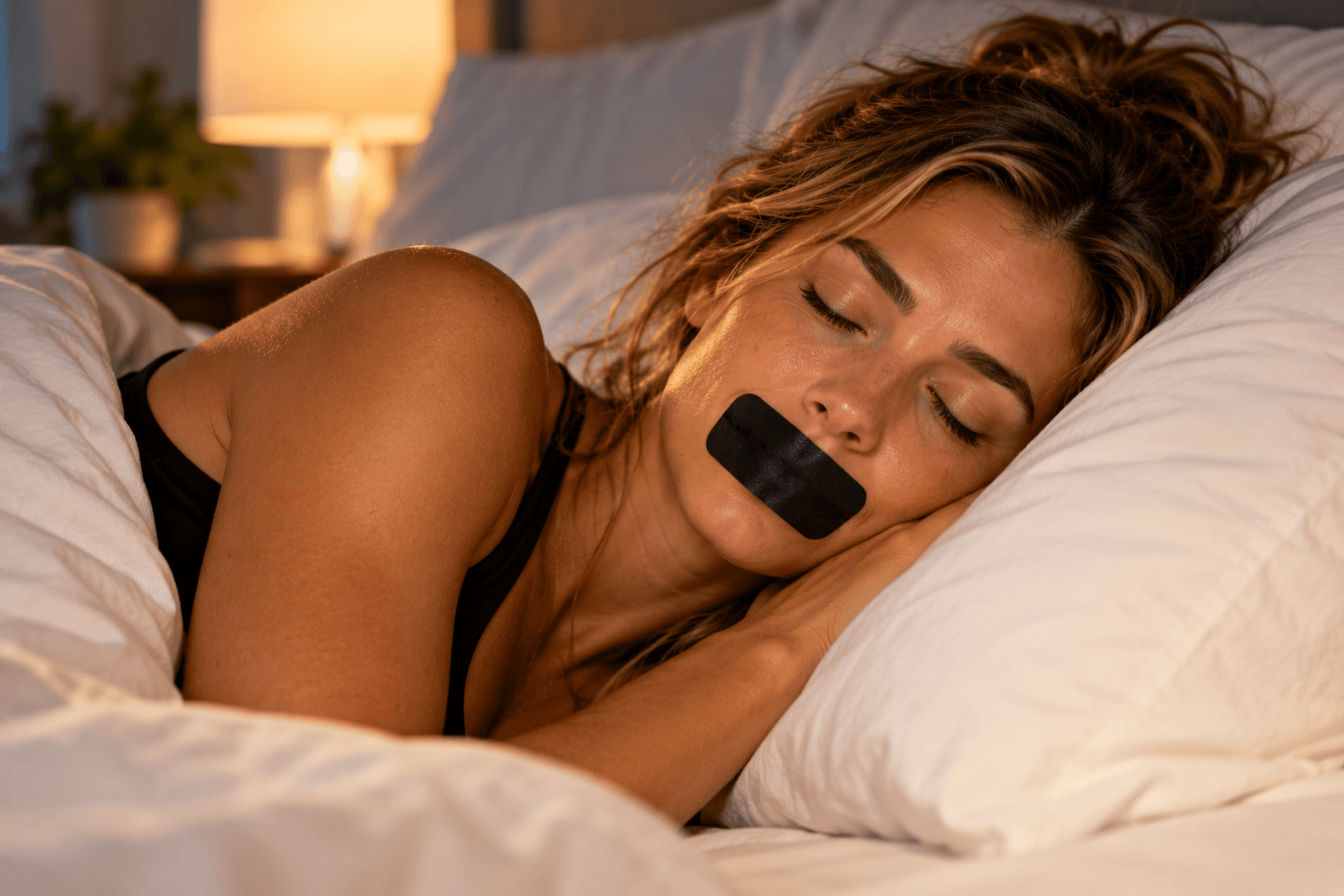
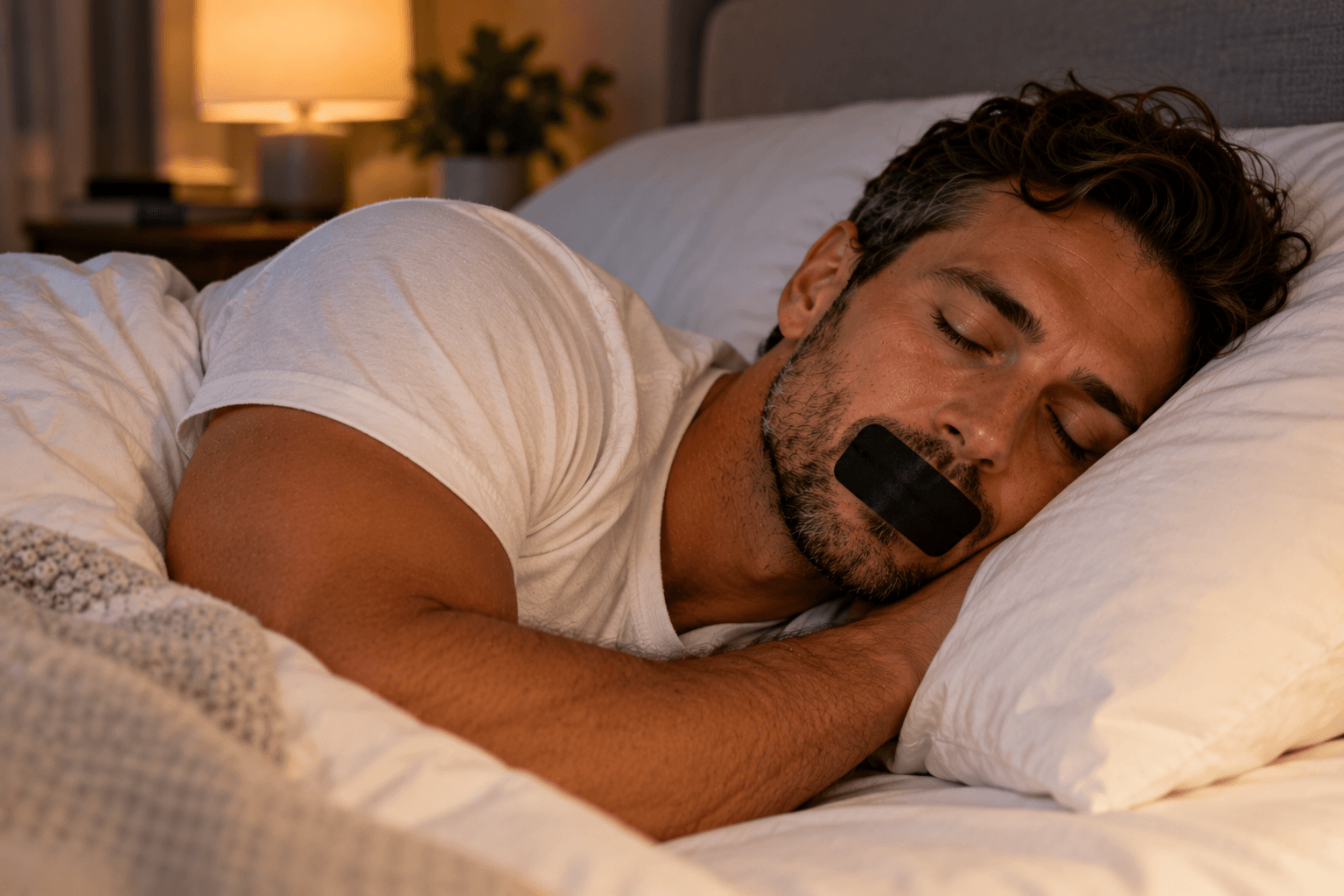
Mouth tape can be a practical option if your mouth falls open at night and your nose is clear. The NHS lists a mouth that falls open during sleep as one cause of snoring, and its suggested fixes are a chin strap or a mouth device that makes you breathe through your nose. Mouth tape does a similar job in a simpler way, by keeping your lips together so the air goes through your nose instead.
The research is early but points the right way. A 2025 systematic review of mouth taping found three studies that measured snoring, and all three reported a significant drop after the mouth was kept closed with tape, a patch or a chin strap. The reviewers rated the studies as poor quality and small, and they flagged a serious risk for anyone taping with a blocked nose. So tape is for people who can breathe comfortably through their nose and have no signs of sleep apnea.
If that sounds like you, take our two-minute nose test first, then read how to start mouth taping. Some people pair tape with a nasal strip, and mouth tape vs. nasal strips explains how the two differ. We cover the snoring studies in more detail in does mouth tape help with snoring?, and our safety page lists who should skip it.
Check this first. Skip mouth tape and see a doctor if you snore loudly, wake up gasping, have been told you stop breathing in your sleep, or can't breathe comfortably through your nose. More on safety
If you want to try mouth tape and nasal strips together, our pick is the Titan Sleep System, which pairs TitanAir Nasal Strips with Titan Mouth Tape.
Does losing weight help?
Cleveland Clinic says snoring and sleep-related breathing problems are more common in people who are overweight, and that fatty tissue in the neck can press on the throat when its muscles relax. Both the NHS and Cleveland Clinic list losing weight, if you need to, as a way to reduce snoring.
Does quitting smoking make a difference?
The NHS says you're more likely to snore if you smoke, and lists not smoking among its main tips. Cleveland Clinic explains the link through your nose: quitting improves nasal congestion, which has a knock-on effect on snoring.
What medical treatments are there for snoring?
If home changes aren't enough, a doctor can help you choose based on the cause. The NHS lists a mandibular advancement device, worn in the mouth to bring the tongue and jaw forward, for snoring caused by the tongue blocking the throat. Cleveland Clinic suggests having an oral appliance customized by a dentist or oral surgeon, because a badly fitting one can strain the jaw.
Surgery is an option for some structural problems, such as a deviated septum or enlarged tonsils. The NHS is cautious about it for snoring. It says surgery isn't widely available on the NHS, doesn't always work, and snoring can come back afterwards.
What if it's your partner who snores?
The NHS suggests that a partner whose sleep is affected could try earplugs. Cleveland Clinic encourages bed partners to treat loud snoring as a possible sign of a sleep disorder rather than just an annoyance, and points out that most people don't know how they sound when they're asleep. Telling them, and suggesting a doctor if home changes don't help, may matter for their health. Our guide to sleeping next to a snorer covers your side of the bed.
When should you see a doctor about snoring?
The NHS says to see a GP if lifestyle changes aren't helping, if your snoring has a big impact on your life or your partner's, or if you feel sleepy during the day, your breathing stops and starts while you sleep, or you make gasping or choking noises.
The American Academy of Sleep Medicine says snoring paired with choking, gasping or silent breathing pauses is a reliable indicator of sleep apnea. It also lists daytime sleepiness as a warning sign. Sleep apnea needs a proper diagnosis, and none of the home changes above, including tape or strips, treat it.
At the appointment, the NHS says the GP will look inside your mouth and nose, and it can help to bring someone who has heard you snore. Cleveland Clinic says you may need a sleep study, either overnight in a sleep lab or at home with special equipment. Our guide to the home sleep apnea test explains what that involves.
Read next
- Snoring vs. sleep apnea: how to tell the difference
- Is mouth taping safe?
- Mouth tape vs. nasal strips
Common questions
What is the fastest way to stop snoring tonight?
Sleeping on your side and skipping alcohol in the evening are the simplest changes to try first. Cleveland Clinic suggests avoiding alcohol for several hours before bed because it can relax your airway muscles.
Do nasal strips stop snoring?
They may reduce it if a blocked nose is part of the problem. In a small randomized trial of people with chronic rhinitis, a nasal strip lowered how often they snored compared with a placebo strip, but it didn't change how loud the snoring was.
Can mouth tape help with snoring?
It can help some people whose snoring comes from their mouth falling open, as long as they can breathe easily through their nose. A 2025 systematic review found three small studies that measured snoring, and all three reported less of it after the mouth was kept closed. The reviewers rated the research as poor quality, and tape isn't for anyone with signs of sleep apnea.
Does snoring mean I have sleep apnea?
Not necessarily. Cleveland Clinic says snoring is the most common symptom of sleep apnea but that there are many other reasons people snore. The American Academy of Sleep Medicine says snoring paired with choking, gasping or silent pauses in breathing is a reliable indicator of sleep apnea.
Why do I snore more as I get older?
Cleveland Clinic says snoring becomes more common with age because muscle tone decreases, which makes the airway narrower.
What will a doctor do about my snoring?
The NHS says a GP will look inside your mouth and nose for anything that might be causing it, and may do a blood test or refer you to a specialist. Bringing a partner who has heard you snore can help.
When should I see a doctor about snoring?
The NHS says to see a GP if lifestyle changes aren't helping, if snoring has a big impact on you or your partner, or if you're sleepy during the day, stop and start breathing in your sleep, or make gasping or choking noises.
Do anti-snoring mouth guards work?
They can when your snoring comes from the tongue or jaw dropping back and narrowing the throat. The NHS lists a mandibular advancement device, worn in the mouth to bring the tongue forward, as a treatment for that cause, and Cleveland Clinic says these mouthguard-style devices hold the lower jaw forward to keep the airway open. Cleveland Clinic suggests getting one customized by a dentist or oral surgeon, because a badly fitting appliance can strain the jaw.
Sources
- Snoring
- Snoring: causes, treatment and prevention
- How to stop snoring
- Effects of body position on snoring in apneic and nonapneic snorers
- External nasal dilation reduces snoring in chronic rhinitis patients: a randomized controlled trial
- Nasal Dilators (Breathe Right Strips and NoZovent) for Snoring and OSA: A Systematic Review and Meta-Analysis
- Breaking social media fads and uncovering the safety and efficacy of mouth taping in patients with mouth breathing, sleep disordered breathing, or obstructive sleep apnea: A systematic review
- Is it more than a snore? Recognizing sleep apnea warning signs
About this article
- Research
- 8 published sources, listed above.
- Evidence
- Limited. How we rate it
- Last checked
- October 10, 2026
- Funding
- Paid partner of Titan Recovery. Their ads are labeled.
- Found an error?
- Tell us. We log fixes on the corrections page.
* This content is for informational and educational purposes only and is not medical advice. It is not intended to diagnose, treat, cure or prevent any disease or health condition. Talk to a qualified healthcare provider about your health.