In short
- Before anything else, check you can breathe through your nose with your mouth closed for two minutes.
- Use tape made for skin. The 2022 study that found a benefit used a silicone, hypoallergenic tape placed vertically across the lips.
- Spend the first few days wearing it while you're awake, then move to sleeping with it.
- Put tape on clean, dry skin without stretching it, and peel it off low and slow in the morning.
- Stop if you wake up short of breath or anxious, or if your skin gets sore.
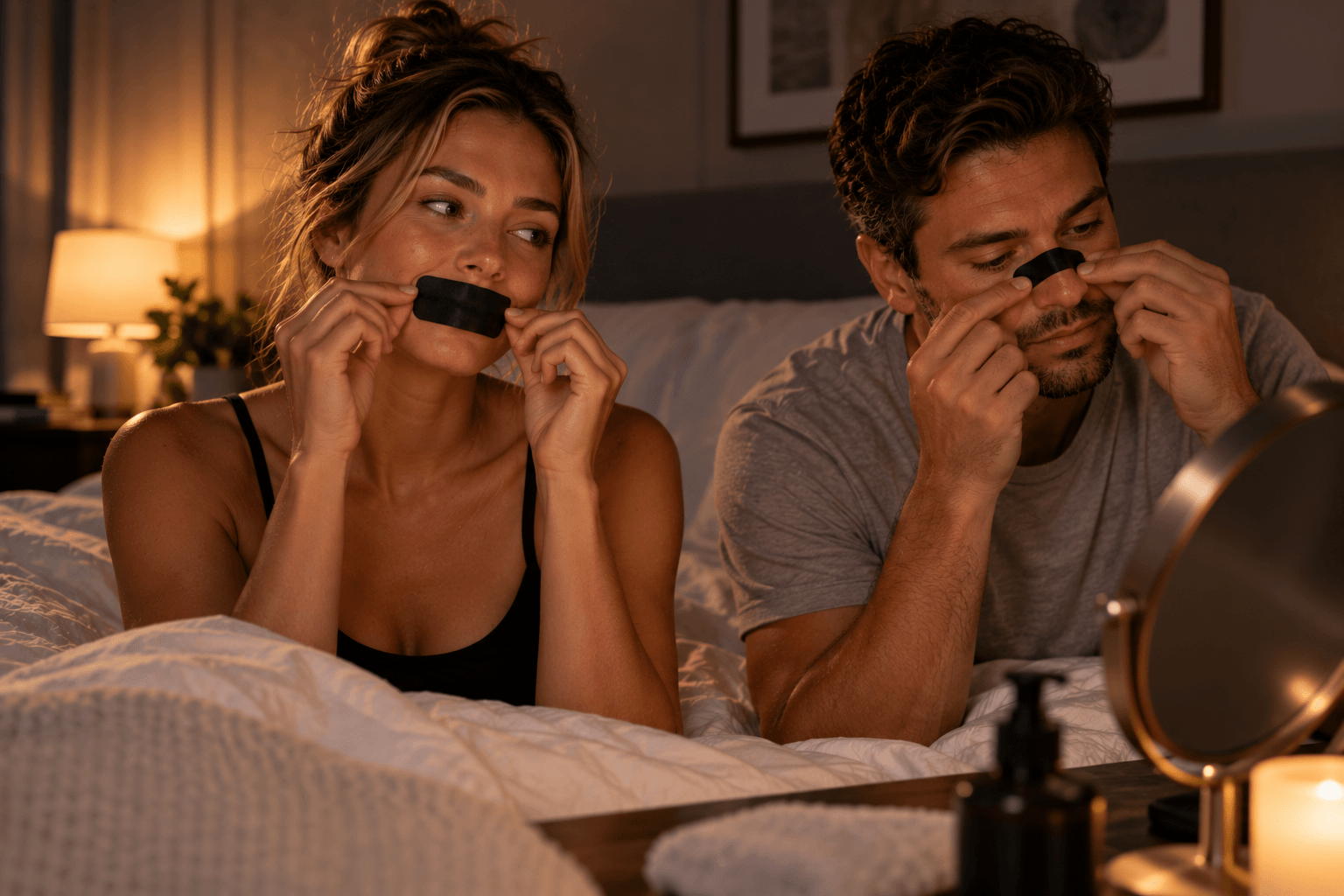
The easiest way to start mouth taping is slowly: a few short sessions while you're awake, then the start of the night, then a full night. Going straight from never having tried it to eight hours with your lips taped is a lot to ask of yourself, and a gentler first week gives you time to get used to the feeling.
What should you check before you start?
Research: limited (what this means)Sit quietly, close your mouth and breathe only through your nose for two minutes (our nose test times it for you). If that feels easy, carry on. If you feel short of breath, your nose is the first thing to fix, so start with a nasal strip or see a doctor about what's blocking it.
Researchers use a similar check. A clinical trial of silicone mouth tape, registered as NCT06587256, only accepts people who can breathe through their nose with the tape in place for at least 3 minutes. In the 2022 study in Healthcare, people with a blocked nose were treated with medication and nasal spray before they started taping.
Also read is mouth taping safe?. If you snore loudly, gasp in your sleep or feel exhausted during the day, see a doctor before you tape.
Check this first. Skip mouth tape and see a doctor if you snore loudly, wake up gasping, have been told you stop breathing in your sleep, or can't breathe comfortably through your nose. More on safety
If you want to try mouth tape, our pick is the Titan Bamboo Silk Mouth Tape.
Which tape should you choose?
Use tape made for skin. In the 2022 study, which found that most participants snored much less after a week, researchers used a silicone, hypoallergenic tape. Sleep Foundation recommends a porous tape intended for skin, and says pharmacies sell hypoallergenic, surgical and athletic tapes that fit that description. Products made for mouth taping are usually soft, slightly stretchy and designed to peel off without pulling at your lips.
If you have a beard or mustache, look for a tape that's made to hold on facial hair, or trim the hair around your lips. Our guide to mouth tape with a beard has more on that, and which type of mouth tape is best compares the common shapes.
What does the first week look like?
Days 1 to 3: practice awake
Put the tape on while you read or watch TV, for 15 to 20 minutes. The goal is just to get used to the feeling of breathing through your nose with your lips held closed. Sleep Foundation also suggests testing the tape during the day to make sure you can breathe easily through your nose.
Days 4 to 5: try a nap or the start of the night
If daytime practice feels normal, wear it as you fall asleep. It's fine if it comes off during the night.
Days 6 to 7: try a full night
Put it on just before you turn out the light. In the morning, notice whether your mouth feels less dry, and whether anyone mentions your snoring.
How do you put it on?
- Wash and dry your lips. Lip balm stops tape sticking, so skip it at night or wipe it off first.
- Close your lips gently, without clenching.
- Press a single strip vertically over the center of your lips. This is the most common way, and it leaves the corners open. In the 2022 study, the strip was about 4 cm long and ran from the groove under the nose across both lips.
- Smooth it down with gentle pressure, without stretching it.
- Fold one corner over on itself, as Sleep Foundation suggests, so you have a tab to pull in the morning.
- Check you can open your mouth or pull the tape off easily with one hand.
The smoothing step comes from 3M's guidance on medical tape, which says tape should go on clean, dry skin without tension and be smoothed in place with gentle pressure. Stretching tape as you apply it can lift the skin at the ends of the strip and cause small blisters.
How do you take it off in the morning?
Slowly. 3M's guidance is to loosen the edges first, hold the skin next to the tape with one finger, and peel the tape back over itself, low and close to the skin. It warns that pulling tape off at an angle tugs at the outer layer of skin and makes damage more likely.
If your lips feel dry once the tape is off, this is a good time for lip balm. Our guide to lip balm and mouth tape explains how to fit the two together.
What should you notice after a week?
Mouth tape is mostly used for snoring and for waking up with a dry mouth. The people in the 2022 study had both of those in common: someone had seen them breathing through their mouth while asleep, and they woke with a dry throat. After a week of taping, 13 of the 20 had cut their snoring by at least half.
So the most useful things to track are simple ones. Ask your partner about your snoring, or record yourself with a snoring app before and during the week. Notice how your mouth and throat feel when you wake up. Write it down, because it's easy to forget how the first night felt by day seven.
It's also worth knowing what most people manage. In a 2009 study in Respiratory Medicine, 50 adults taped their mouths at night for 4 weeks and reported doing so on a median of 26 out of 28 nights, and 36 of them said it was very or fairly acceptable.
How do you fix the common first-week problems?
If the tape comes off in the night, check that your lips were completely dry and free of balm, press it on more firmly, and try a slightly longer strip. Facial hair can also stop tape holding.
If you feel claustrophobic, go back to awake practice for a few more days. Sleep Foundation notes that feeling restricted can cause anxious awakenings, especially in people prone to claustrophobia. Our guide to mouth taping anxiety has more ideas.
If your nose blocks during the night, take the tape off and skip it until your nose is clear. A nasal strip or the tips in how to unblock your nose before bed may help.
If your skin gets red, give it a few nights off and see mouth tape skin irritation. For a longer list, see common mouth taping mistakes.
If something feels wrong
Take it off. Stop if you wake up short of breath or panicky, or if your lips or skin get sore. Some people never get comfortable with mouth tape, and that's fine. A nasal strip on its own helps some people more.
Read next
- Does mouth tape help with snoring?
- How long does it take to get used to mouth tape?
- What is mouth taping? A beginner's guide
Common questions
How do you put on mouth tape?
Close your lips gently, make sure they're clean and dry, and press the tape on without stretching it. A single vertical strip over the center of the lips is the most common way, and it leaves the corners of your mouth open.
Should you practice mouth taping while awake?
Yes, it's the easiest way to start. Wear the tape for 15 to 20 minutes while you read or watch TV for the first few days, until breathing through your nose with your lips closed feels normal. Sleep Foundation also suggests testing the tape during the day to make sure you can breathe easily through your nose.
What if I panic with mouth tape on?
Take it off. Practice for short periods while you're awake until it feels normal, and don't move on to sleeping with it until it does.
What kind of tape is safe for your mouth?
Tape made for skin, ideally one designed for mouth taping. Sleep Foundation recommends a porous tape intended for skin. Avoid office tape, duct tape and anything that's hard to peel off.
How do I take mouth tape off without hurting my lips?
Loosen an edge first, hold the skin next to it with a finger, and peel the tape back over itself slowly and close to the skin. Pulling it straight up or at a sharp angle tugs on the skin.
What if the tape is gone by morning?
It happens to some people. The 2022 study left out anyone whose tape came off by morning. Make sure your lips are dry and free of balm, press the tape on firmly, and fold a corner so you're not picking at it. If it keeps coming off, you can still keep practicing.
How long should I try it before deciding?
The 2022 study measured results after one week of taping, so a week is a reasonable first trial. Some people take longer to feel comfortable, and some never do, which is fine.
Sources
- The impact of mouth-taping in mouth-breathers with mild obstructive sleep apnea: a preliminary study
- Breaking social media fads and uncovering the safety and efficacy of mouth taping in patients with mouth breathing, sleep disordered breathing, or obstructive sleep apnea: A systematic review
- Mouth taping for sleep: does it work?
- Medical Adhesive Related Skin Injuries (MARSI): taping techniques
- Effect of mouth taping at night on asthma control: a randomised single-blind crossover study
- Study to Examine the Effect of Silicone Mouth Tape on Snoring and Mild Sleep Apnea (NCT06587256)
About this article
- Research
- 6 published sources, listed above.
- Evidence
- Limited. How we rate it
- Last checked
- October 10, 2026
- Funding
- Paid partner of Titan Recovery. Their ads are labeled.
- Found an error?
- Tell us. We log fixes on the corrections page.
* This content is for informational and educational purposes only and is not medical advice. It is not intended to diagnose, treat, cure or prevent any disease or health condition. Talk to a qualified healthcare provider about your health.