In short
- In a 2009 study, people taped their mouths for a median of 26 out of 28 nights, and 36 of the 50 who finished said it was very or fairly acceptable.
- In a 2015 study of 30 adults using a porous mouth patch, all of them slept with their mouths closed while wearing it.
- No study has measured how many nights it takes to adjust, so any exact timeline you see online isn't based on research.
- Practicing while awake, starting with a clear nose and using gentle tape made for skin are the practical ways to make the first week easier.
- A clinical trial is now measuring how well people tolerate silicone mouth tape over 3 months, but results aren't out yet.
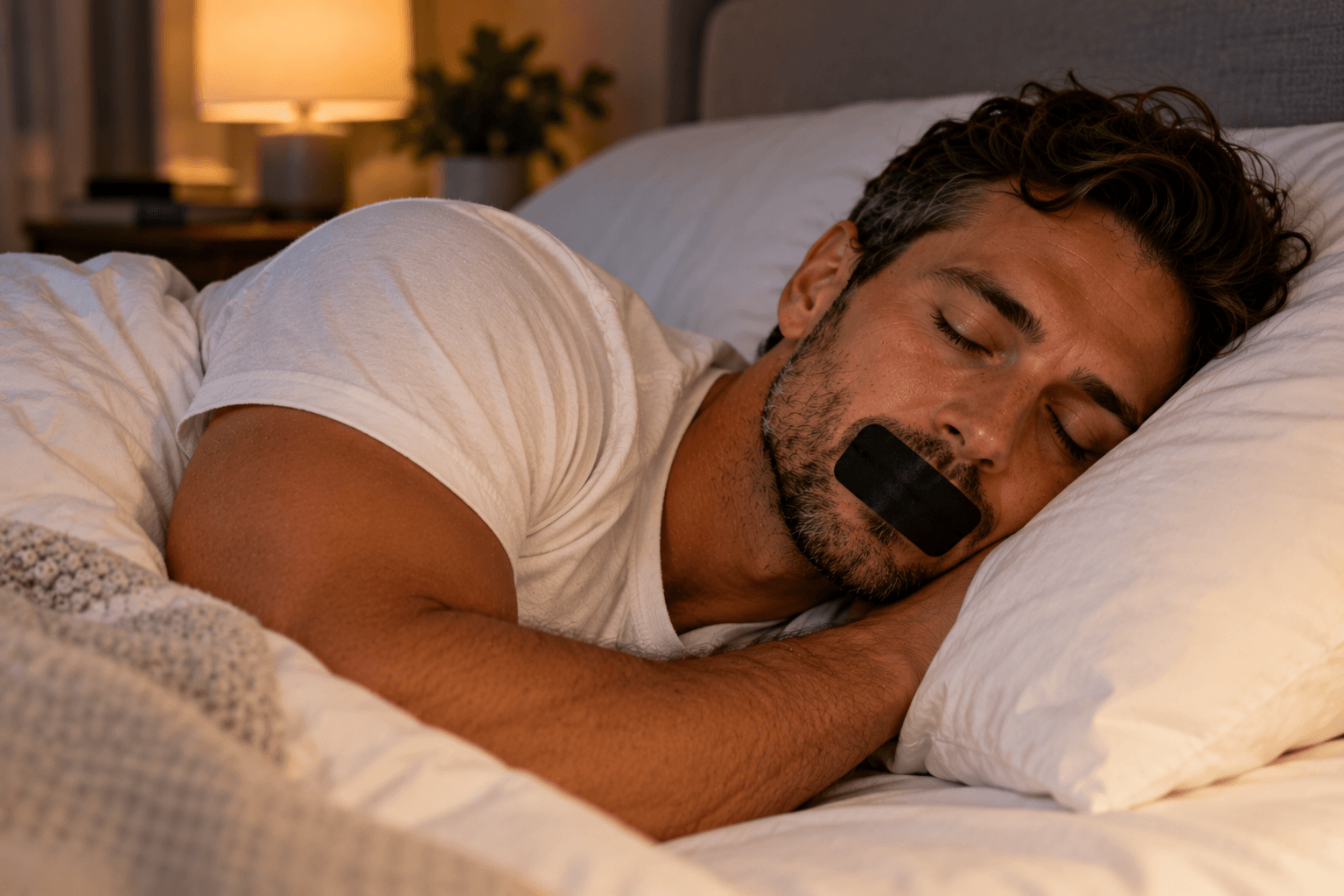
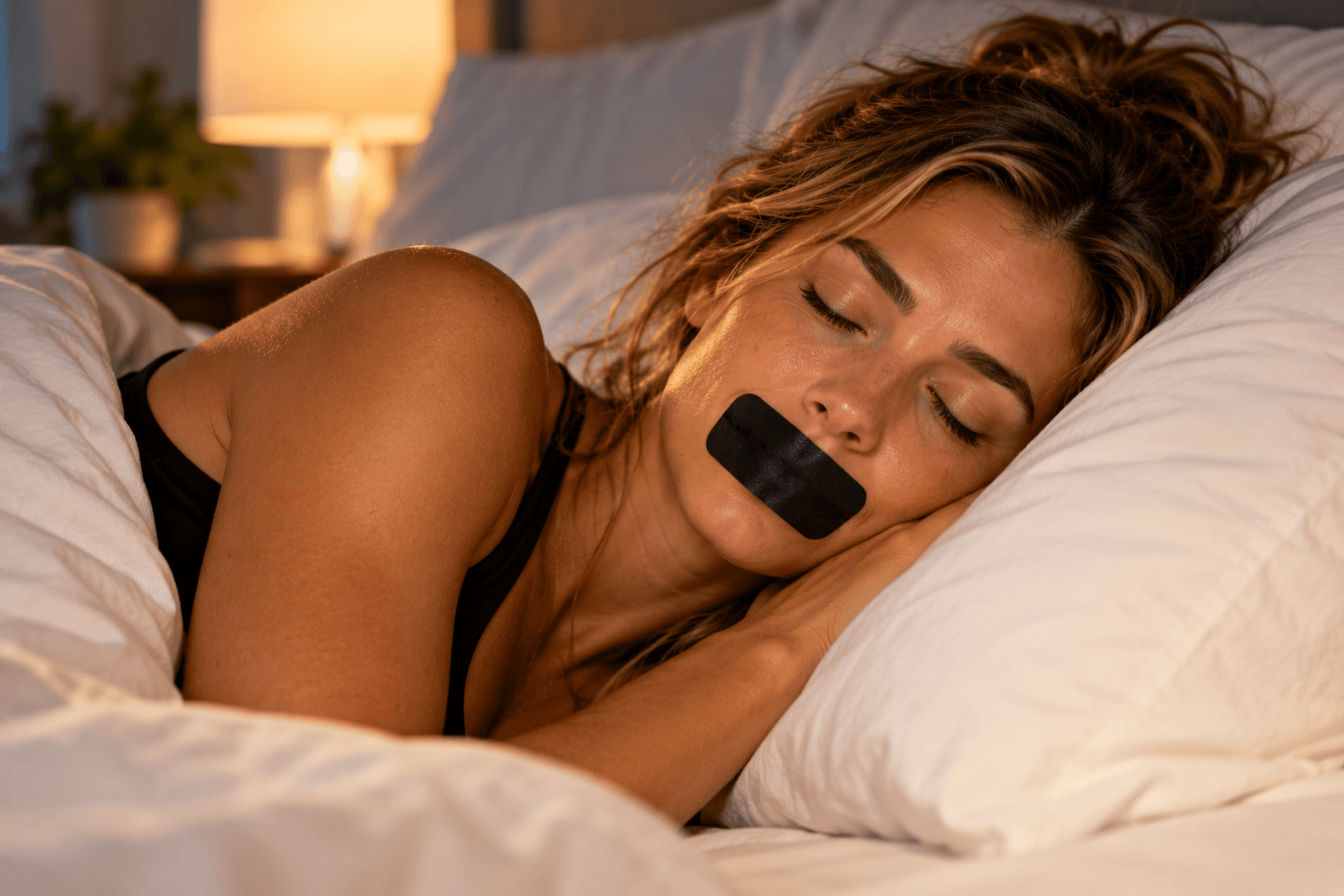
No study has measured exactly how long it takes to get used to mouth tape, but most people who try it in studies stick with it. In a month-long 2009 study, participants taped their mouths on a median of 26 out of 28 nights, and most rated it as acceptable. It varies from person to person, and a gradual first week makes it easier.
What does the research say about getting used to mouth tape?
Research: limited (what this means)The research on mouth tape is small and mostly short. A 2025 systematic review in PLOS One found 10 studies on mouth taping, with 213 patients in total. None of them were designed to answer how long it takes to adjust.
Some websites give a set number of nights or weeks. We couldn't find any research behind those figures, so we're not repeating them here. What the studies do give us is a good sense of how many people tolerate tape once they start.
How many people tolerate it?
The most useful data comes from a 2009 study in Respiratory Medicine. Researchers asked 51 adults with asthma to tape their mouths at night with microporous tape for 4 weeks, and compared that with 4 weeks of normal breathing. Fifty people finished the study. They reported taping for a median of 26 of the 28 nights, and 36 of them said mouth taping was very or fairly acceptable.
That suggests most people in that group could stick with it for a month, while 14 of the 50 didn't describe it as very or fairly acceptable. The study didn't report whether people found it easier in week four than in week one. It also found that taping had no effect on asthma control, which was the point of the trial.
A 2015 pilot study gives a similar picture. Thirty adults with mild sleep apnea and habitual mouth breathing wore a porous patch over their lips, and all 30 slept with their mouths closed while using it. Their snoring and daytime sleepiness scores improved too.
The 2022 study people cite most often, a trial of 20 adults with mild sleep apnea, used silicone tape for one week before a follow-up sleep study. It excluded anyone who couldn't tolerate the tape, defined as the tape having come off by morning. So it shows that some people's tape doesn't stay on, but not how many, and not whether they'd have adapted with more time.
Why can the first nights feel strange?
If you've breathed through your mouth at night for years, having your lips held closed is a new sensation, and it's reasonable that it takes some getting used to. Cleveland Clinic notes that the side effects of mouth taping can be harder for people who have always been mouth breathers and have trouble adjusting to the tape.
The Sleep Foundation lists the side effects most likely to show up early. These include skin irritation from the adhesive, discomfort for people with facial hair, disrupted sleep and anxiety. It says feeling restricted while sleeping may lead to anxious awakenings, especially for people prone to claustrophobia, and that people with anxiety or panic disorders should avoid it.
It's reasonable to expect some of this to ease with familiarity, but that's an assumption, not a research finding. Some people never get comfortable with tape, and that's a fine outcome.
What helps you get used to it faster?
None of these have been tested as ways to speed up adjustment. They're the practical steps health sources recommend for taping safely, and they also take a lot of the strangeness out of the first week.
Start with your nose. Taping only works if air moves easily through your nose. The Sleep Foundation warns that if your nose becomes blocked during the night, mouth tape can make breathing difficult. In the 2022 study, people with nasal congestion were given medication and nasal spray before taping. Our nose test is a quick way to check, and how to unblock your nose before bed has ideas if it's stuffy.
Practice while you're awake. The Sleep Foundation suggests testing the tape during the day to make sure you can breathe easily through your nose. Wearing it for 15 to 20 minutes while you read or watch TV lets you get used to the feeling without the pressure of trying to sleep.
Use gentle tape. The 2022 study used a silicone, hypoallergenic tape, and the Sleep Foundation recommends a porous tape intended for skin. A tape that pulls or itches gives you another reason to wake up.
Make it easy to remove. The Sleep Foundation suggests folding over one corner of the tape so it's easier to take off. Knowing you can peel it away in a second can make it easier to relax.
Should you tape every night while you're adjusting?
You can tape every night while you're adjusting if it's going well. In the 2009 study, people taped on a median of 26 out of 28 nights, so nightly use was manageable for most of that group.
The exception is your skin. The Sleep Foundation lists redness, rashes and dryness around the lips among the side effects of tape adhesive. If your lips start to look red or feel sore, take a night or two off and let them settle. Going back to tape once your skin has calmed down is gentler than taping over sore skin. Our guide to mouth tape skin irritation has tips for gentler taping.
How can you judge your own progress?
Since there's no standard timeline, it helps to set your own checkpoints. Our first-week guide suggests practicing for short periods while you're awake before trying it at night, then wearing it as you fall asleep, then for a full night. That approach isn't from a study either. It's a way to stop if something feels wrong before you're asleep.
Signs it's going well:
- You can fall asleep with the tape on without feeling restricted.
- The tape is still on in the morning, or mostly on.
- Your lips and the skin around them feel normal.
- You wake up with a less dry mouth, or your partner mentions less snoring.
Signs to stop:
- You wake up short of breath or panicky.
- Your nose is blocked from a cold or allergies.
- Your skin gets red, sore or broken.
If tape keeps coming off, look at the basics in our guide to common mouth taping mistakes before deciding it isn't for you. If anxiety is the sticking point, mouth taping and anxiety covers that in more detail.
Check this first. Skip mouth tape and see a doctor if you snore loudly, wake up gasping, have been told you stop breathing in your sleep, or can't breathe comfortably through your nose. More on safety
If you want to try mouth tape, our pick is the Titan Bamboo Silk Mouth Tape.
Is anyone studying this?
Researchers are now studying how easy mouth tape is to use. A clinical trial registered as NCT06587256 plans to test a single strip of silicone tape placed vertically over the lips in about 100 adults with snoring or mild sleep apnea. The researchers will ask participants how easy the tape is to use and whether they had any problems with it, and they'll measure snoring and sleep as reported by both the participant and their bed partner, after 3 months. As of October 2026 the trial is listed as recruiting, so there are no results yet.
What if you never get comfortable with it?
If you never get comfortable with mouth tape, it probably isn't the right tool for you, and that's fine. The same goals can be approached in other ways. A nasal strip opens the front of the nose without anything on your lips. If snoring is the main issue, the Sleep Foundation points out that decades of research show people snore less on their side than on their back. Some people prefer a chin strap, which we compare in mouth tape vs. chin strap.
When should you see a doctor instead?
If you snore loudly, or someone has seen you gasp, choke or stop breathing in your sleep, see a doctor before taping. The 2025 review concluded that the evidence doesn't support mouth taping for sleep-disordered breathing. The Sleep Foundation says people with obstructive sleep apnea who aren't using CPAP shouldn't use mouth tape, because it can worsen breathing disruptions. Our guide to snoring vs. sleep apnea explains the warning signs.
Read next
Common questions
Is it normal to feel anxious with mouth tape at first?
The Sleep Foundation says feeling restricted while sleeping may lead to anxious awakenings, especially for people prone to claustrophobia, and that people with anxiety or panic disorders should avoid mouth taping. If you feel anxious, take the tape off and go back to short practice sessions while awake.
What if the tape keeps coming off at night?
It happens often enough that one study excluded people whose tape was dislodged by morning. Check that your skin is clean and dry, that the tape is made for skin, and that facial hair isn't stopping it from sticking.
How many nights should I try mouth tape before giving up?
There's no evidence-based number. The 2022 snoring study measured results after a week, which makes a week a reasonable first trial. Stop straight away if you wake short of breath, feel panicky or your skin gets sore.
Is it harder to adjust if I've always breathed through my mouth?
It can be. Cleveland Clinic notes that the side effects of mouth taping can be harder for people who have always breathed through their mouth and have trouble adjusting to the tape.
Do most people get used to it?
In the studies so far, most did. In a 2009 asthma study, 50 adults taped on a median of 26 of 28 nights, and in a 2015 patch study all 30 participants slept with their mouths closed. Some people never get comfortable, and that's a fine outcome too.
Why is mouth tape used?
Mouth tape keeps your lips closed during sleep so you breathe through your nose. Sleep Foundation says people most often try it to reduce snoring, prevent bad breath or get deeper rest. Research is still limited, and the best-studied use so far is snoring in people who sleep with their mouth open.
Sources
- Effect of mouth taping at night on asthma control: a randomised single-blind crossover study
- The impact of mouth-taping in mouth-breathers with mild obstructive sleep apnea: a preliminary study
- Novel porous oral patches for patients with mild obstructive sleep apnea and mouth breathing: a pilot study
- Breaking social media fads and uncovering the safety and efficacy of mouth taping in patients with mouth breathing, sleep disordered breathing, or obstructive sleep apnea: A systematic review
- Study to Examine the Effect of Silicone Mouth Tape on Snoring and Mild Sleep Apnea (NCT06587256)
- Mouth Taping for Sleep: Does It Work?
- Mouth taping: is it safe to use?
About this article
- Research
- 7 published sources, listed above.
- Evidence
- Limited. How we rate it
- Last checked
- October 10, 2026
- Funding
- Paid partner of Titan Recovery. Their ads are labeled.
- Found an error?
- Tell us. We log fixes on the corrections page.
* This content is for informational and educational purposes only and is not medical advice. It is not intended to diagnose, treat, cure or prevent any disease or health condition. Talk to a qualified healthcare provider about your health.