In short
- Expect the tape to feel noticeable at first. Practicing with it on while you're awake makes the first night much easier.
- Waking up more aware of your mouth, or finding the tape on the pillow, is common on night one and doesn't mean it won't work for you.
- A single night tells you very little. The best-known study measured its results after a week of taping.
- Take the tape off low and slow in the morning, and keep lip balm for after it's off.
- Stop if you wake short of breath or panicky, and see a doctor first if you have signs of sleep apnea.
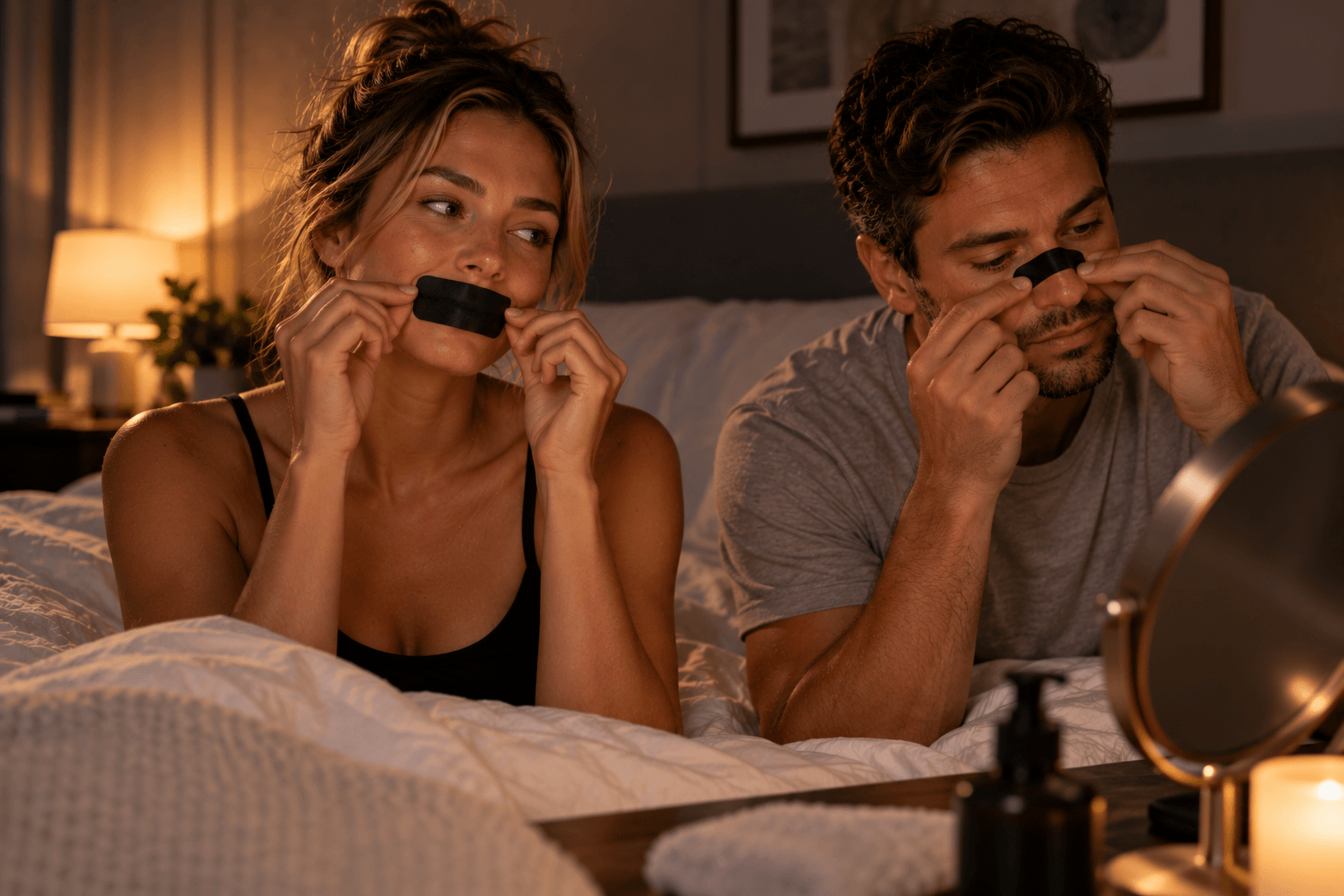
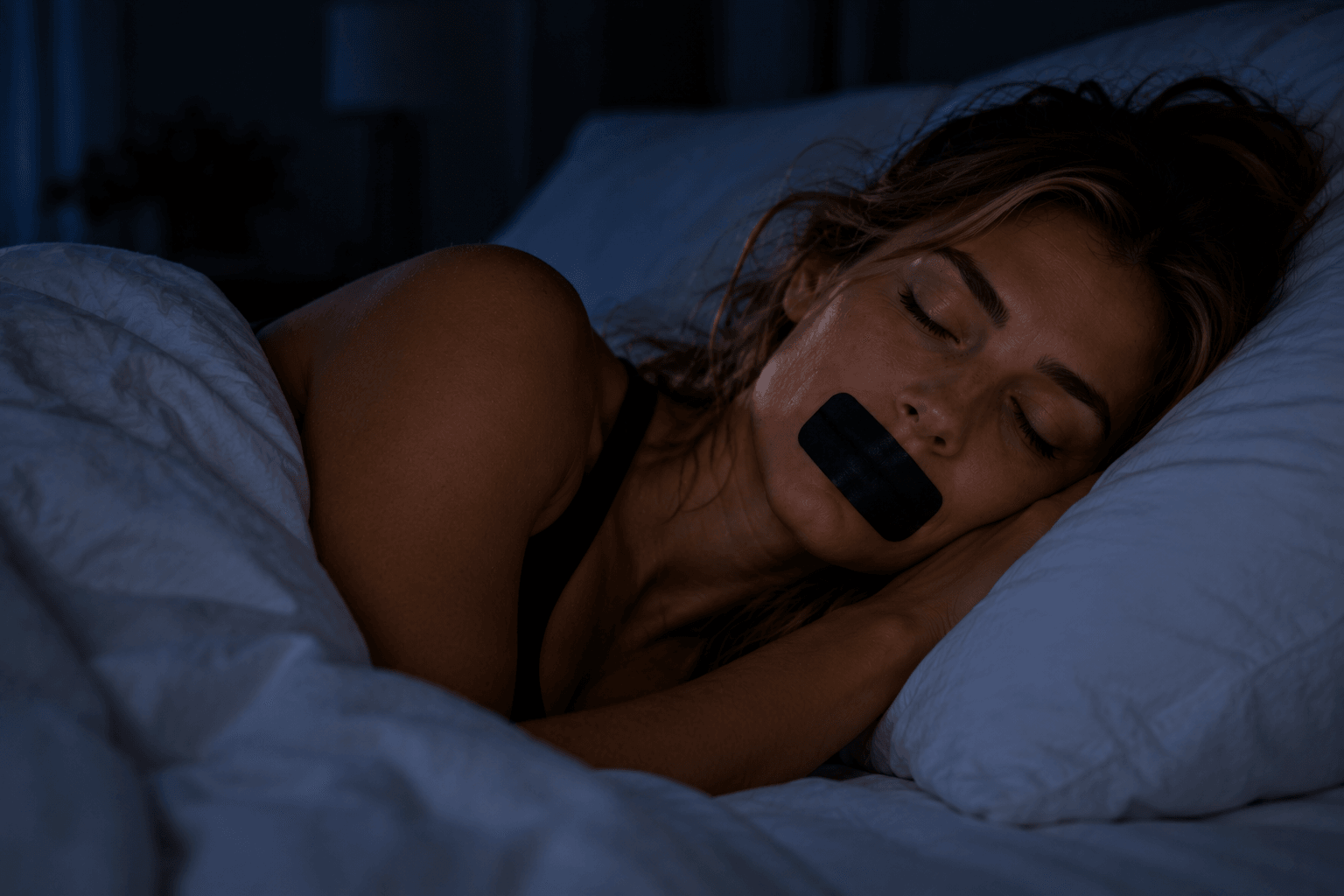
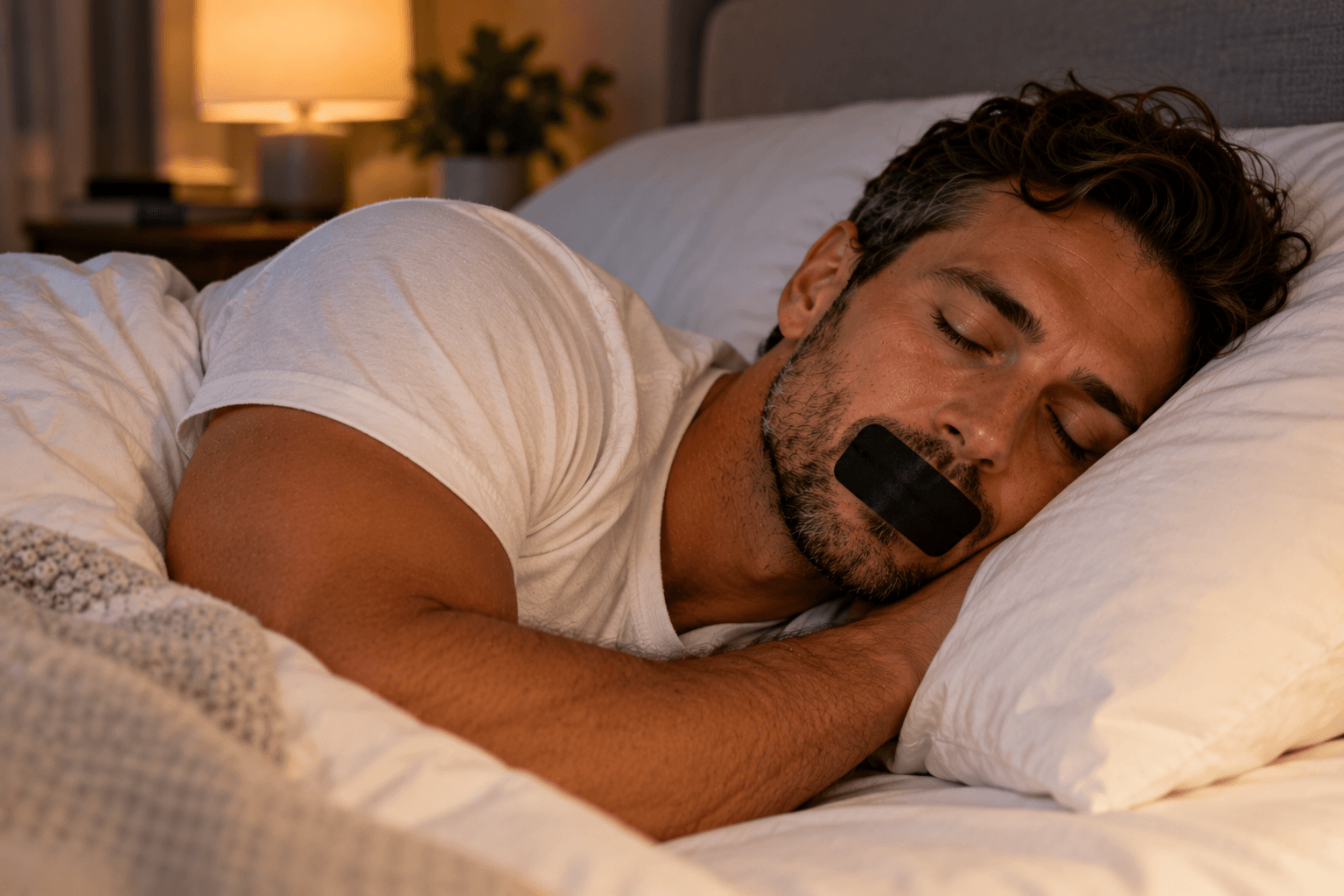
Your first night with mouth tape will probably feel a little strange, and that's normal. You'll notice the tape as you fall asleep, you may wake more aware of your mouth, and the strip may even be on the pillow by morning. None of that means mouth taping won't work for you. It's what the first night usually looks like.
What does the research say about getting started?
Research: limited (what this means)The most encouraging study so far, published in Healthcare in 2022, followed 20 adults who breathed through their mouths at night and had mild sleep apnea. After a week of taping, 13 of them had cut their snoring by at least half. A 2025 review in PLOS One found only 10 studies on mouth taping with 213 patients between them, so the research is still early.
There's also good news about sticking with it. In a 2009 study in Respiratory Medicine, 50 adults with asthma taped their mouths at night for four weeks. They reported taping on a median of 26 out of 28 nights, and 36 of them said it was very or fairly acceptable. The taping didn't change their asthma control, which is worth knowing, but most of them clearly got used to the tape.
What should you do before the first night?
Before the first night, check your nose. Sit with your mouth closed and breathe only through your nose for a few minutes, or use our nose test. A clinical trial of silicone mouth tape (NCT06587256) only accepts people who can breathe through their nose with the tape on for at least 3 minutes, which is a sensible bar to clear yourself.
Then practice while you're awake. Sleep Foundation suggests testing the tape during the day to make sure you can breathe easily through your nose. If you've done a few short sessions while reading or watching TV, the first night feels far less new. Our first-week plan lays out the days before it.
Check this first. Skip mouth tape and see a doctor if you snore loudly, wake up gasping, have been told you stop breathing in your sleep, or can't breathe comfortably through your nose. More on safety
If you're still choosing a tape, our pick is the Titan Bamboo Silk Mouth Tape. Titan suggests 20 to 30 minutes of daytime practice before the first night.
When is a good night to start?
A good night to start is an easy one. A night when your nose is clear, you feel well, and you don't have to be up at dawn for something important takes the pressure off. If you wake a few times or pull the tape off, it won't matter much.
Set things up before you get into bed. Keep the tape on the nightstand, wash and dry your face, and leave lip balm for the morning, since balm gets between the tape and your lips. In the 2022 study, the tape was trimmed to about 4 cm and placed on the groove under the nose, spanning both lips. A strip around that size is plenty for a first night.
What will the tape feel like when you put it on?
Mouth tape feels noticeable at first. Put it on clean, dry lips just before you turn the light out. 3M's guidance on medical tape says tape should go on clean, dry skin without tension and be smoothed in place with gentle pressure, so lay it flat rather than pulling it tight.
You may be very aware of breathing through your nose for the first few minutes, and of swallowing with your lips held together. Daytime practice is the best way to make those feelings familiar before you try them in bed. Before you settle down, check that you can pull the tape away with one hand. Sleep Foundation suggests folding over one corner to make it easier to remove, and that tab is easy to find in the dark.
Will you be able to fall asleep?
Falling asleep may take a little longer than usual on night one. Sleep Foundation lists sleep disruption and anxious awakenings among the possible side effects, and says feeling restricted can be harder for people prone to claustrophobia.
If you lie there feeling tense, it's fine to take the tape off and try again tomorrow. Going back to daytime practice for a few more days often helps. Our guide to mouth taping anxiety has more ways to ease in.
What happens if you wake up in the night?
You might wake once or twice and notice the tape. If you're comfortable, go back to sleep. The 2009 study suggests most people do settle in, since its participants kept taping on nearly every night for a month.
The tape doesn't need to seal your mouth like a lid. The trial design for NCT06587256 describes a single piece of silicone tape placed vertically over the lips, positioned so the wearer can still breathe and cough around it if needed. A small strip like that is a gentle reminder to keep your lips together, not a seal.
If your nose blocks in the night, take the tape off. Sleep Foundation warns that a nose that becomes blocked during the night can make breathing difficult with tape on. A stuffy nose is a reason to skip taping until it clears.
Will the tape still be on in the morning?
The tape may not still be on in the morning, and that's fine. The 2022 Healthcare study left out anyone whose tape came off by morning, which tells you it's a known, ordinary problem. If yours goes missing, check that your lips were completely dry and free of balm, and that you didn't stretch the tape as you put it on. Facial hair can also get in the way. 3M's taping guidance mentions using a clipper where hair needs removing, so a quick trim around the lips can help, or you can choose a tape made to hold on facial hair.
How should you take it off?
Take mouth tape off slowly. 3M recommends loosening an edge, holding the skin next to the tape with one finger, and peeling the tape back over itself, low and close to the skin. It warns that removing tape at an angle pulls on the outer layer of skin and makes damage more likely. Once the tape is off, that's the time for lip balm. Our guide to removing mouth tape goes into more detail.
How will you feel the next morning?
How you feel the next morning varies. Some people notice their mouth feels less dry on the first morning, and some don't notice much at all yet. The people in the 2022 study had been seen breathing through their mouths in their sleep and woke with a dry throat, so morning dryness and snoring are the two changes most worth tracking.
One night is too short to judge. That study measured results after a week, so give yourself about seven nights. Jot down how your mouth feels each morning and ask a partner about your snoring. Our guide to telling whether mouth tape is working explains how to compare.
What isn't normal on the first night?
Take the tape off and stop if you wake short of breath or panicky, or if your lips or skin get sore. Cleveland Clinic lists difficulty breathing, skin redness or irritation, and increased anxiety among the risks of mouth taping.
Also think about why you want to tape. The National Heart, Lung, and Blood Institute lists breathing that starts and stops, frequent loud snoring and gasping for air as symptoms of sleep apnea while asleep. If a partner has noticed any of those, see a doctor before taping, because mouth tape isn't a treatment for sleep apnea. Our safety page and the mouth tape guide have more.
Our pick (paid partner)
If you want a tape made for this, our pick is the Titan Bamboo Silk Mouth Tape.
Read next
Common questions
Is it normal to feel weird the first night with mouth tape?
Yes. Most people notice the tape at first, and feeling restricted can cause anxious awakenings in people prone to claustrophobia, according to Sleep Foundation. Daytime practice before the first night helps, and if it still feels wrong, take it off and try again another day.
What if the mouth tape falls off during the first night?
It happens. The 2022 study in Healthcare left out anyone whose tape came off by morning, which shows it's a known issue. Make sure your lips are clean and dry, press the tape on without stretching it, and keep practicing.
Can you breathe if your nose blocks with mouth tape on?
You should take the tape off. Sleep Foundation warns that a nose that blocks during the night can make breathing difficult with tape on. Keep the tape small enough that one hand can pull it away, and skip taping when your nose is congested.
Will I notice a difference after one night of mouth taping?
Maybe, but don't judge it on one night. The 2022 study that found less snoring measured results after a week of taping, so give it about seven nights before you decide.
How should I take mouth tape off in the morning?
Loosen an edge, hold the skin next to it with one finger, and peel the tape back over itself, low and close to the skin. 3M's guidance on medical tape warns that pulling it off at an angle tugs on the outer layer of skin.
Sources
- Mouth taping for sleep: does it work?
- The impact of mouth-taping in mouth-breathers with mild obstructive sleep apnea: a preliminary study
- Effect of mouth taping at night on asthma control: a randomised single-blind crossover study
- Study to Examine the Effect of Silicone Mouth Tape on Snoring and Mild Sleep Apnea (NCT06587256)
- Medical Adhesive Related Skin Injuries (MARSI): taping techniques
- Sleep apnea: symptoms
- Is mouth tape safe to use while sleeping?
- Breaking social media fads and uncovering the safety and efficacy of mouth taping in patients with mouth breathing, sleep disordered breathing, or obstructive sleep apnea: A systematic review
- Titan Recovery Bamboo Silk Mouth Tape
About this article
- Research
- 9 published sources, listed above.
- Evidence
- Limited. How we rate it
- Last checked
- October 6, 2026
- Funding
- Paid partner of Titan Recovery. Their ads are labeled.
- Found an error?
- Tell us. We log fixes on the corrections page.
* This content is for informational and educational purposes only and is not medical advice. It is not intended to diagnose, treat, cure or prevent any disease or health condition. Talk to a qualified healthcare provider about your health.