In short
- Mouth taping means placing porous tape over the lips at night to encourage breathing through the nose.
- A 2025 systematic review found three small studies that measured snoring, and all three reported less of it with the mouth kept closed, though the studies were poor quality.
- The Sleep Foundation says people with untreated sleep apnea, chronic nasal congestion or trouble breathing through the nose should not use mouth tape.
- Use a porous tape made for skin, test it during the day first, and skip it when your nose is blocked.
- Mouth tape does not treat sleep apnea, and snoring with gasping or pauses in breathing needs a doctor.
Mouth tape is a strip of porous tape worn over the lips at night so you breathe through your nose. The research is early but encouraging for snoring, and it suits adults with a clear nose whose mouth falls open in sleep, not anyone with a blocked nose or signs of sleep apnea. Below are short, sourced answers to the questions people ask most.
The basics
What is mouth taping?
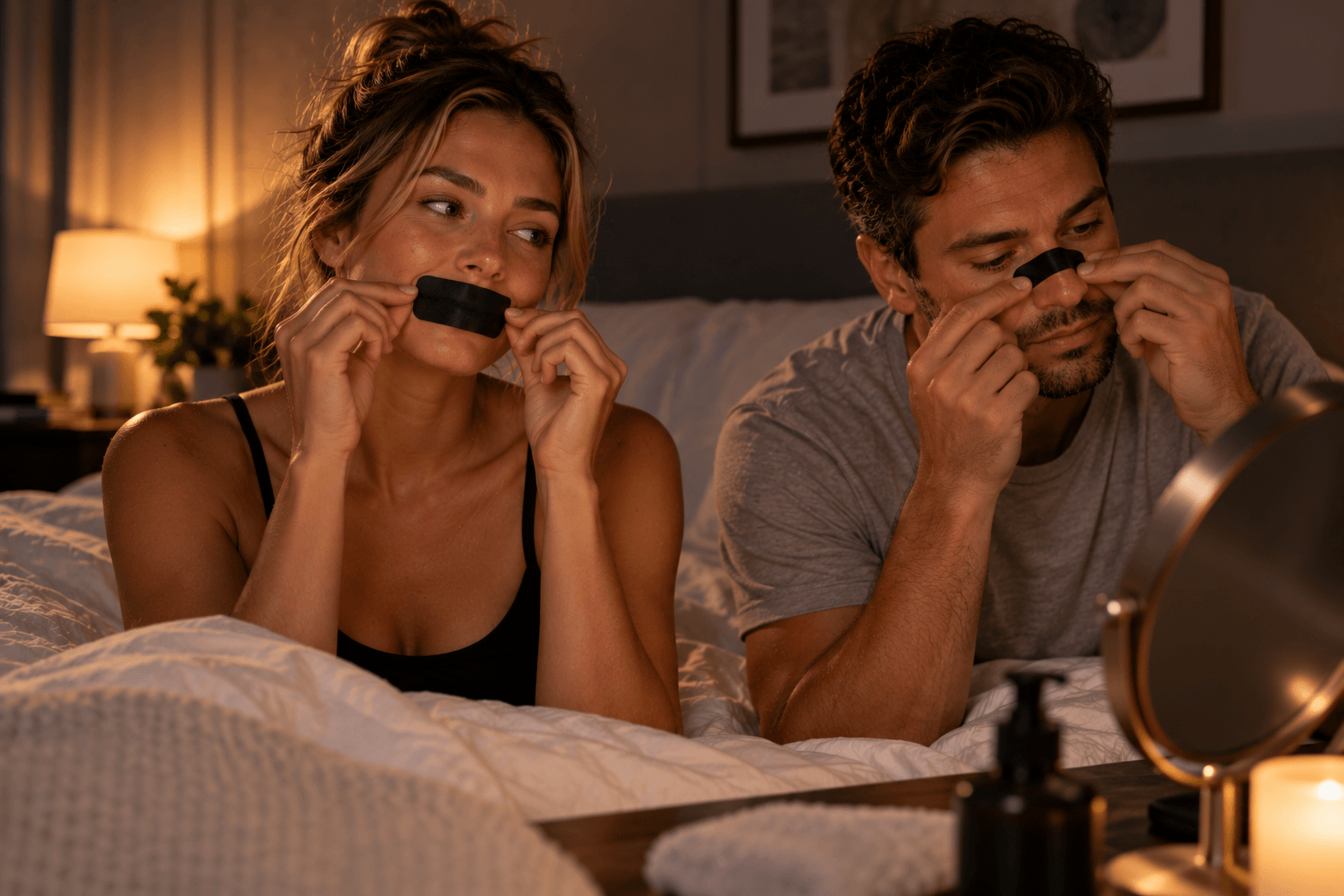
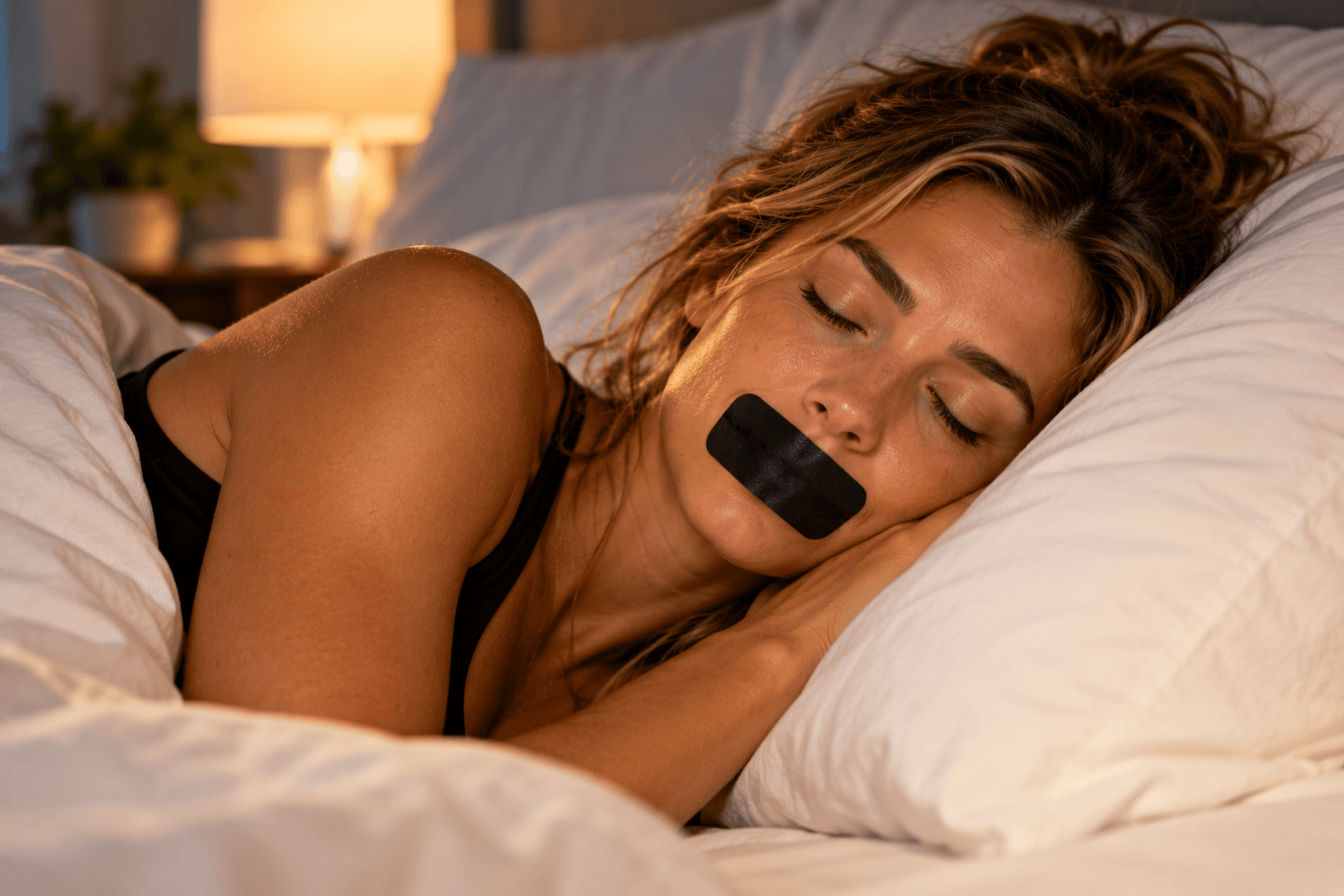
The Sleep Foundation describes mouth taping as placing a piece of porous tape over the lips before bed to gently encourage nasal breathing during sleep. The idea is simple: with your lips together, air goes through your nose instead.
Why do people tape their mouths at night?
People mostly tape their mouths to snore less, sleep better and avoid waking with a dry mouth. The Sleep Foundation notes that nasal breathing helps filter allergens, humidifies incoming air and supports oxygen exchange, which is why many people prefer it. It also says most of the reported benefits of taping are still anecdotal.
Does mouth tape help with snoring?
For some people, mouth tape does seem to help with snoring. A 2025 systematic review found three studies that measured snoring, and all three reported a significant decrease after mouth taping or a chin strap. The reviewers rated all the included studies as poor quality, so think of it as promising rather than proven. A 2024 scoping review also found a study of people without sleep apnea that reported less snoring when taping was combined with other measures. See does mouth tape help snoring? for the details.
Does it help with dry mouth?
The Sleep Foundation lists dry mouth among the problems people hope tape will ease, but says most of these claims haven't been scientifically studied. If your mouth falls open at night, keeping it closed is a logical thing to try.
Will mouth taping change my jawline?
There's no good evidence that mouth taping changes your jawline. The Sleep Foundation calls jawline claims anecdotal, and a 2024 scoping review found few of the claims made about mouth taping on TikTok had been studied.
Safety
Is mouth taping safe?
For many healthy adults with a clear nose, mouth taping is a low-key experiment. The Sleep Foundation lists possible side effects including skin irritation, discomfort, disrupted sleep and anxious awakenings. The 2025 review found that four of its ten studies discussed a serious risk of asphyxiation when the nose is blocked. Our full guide is is mouth taping safe?
Who should not use mouth tape?
The Sleep Foundation says to avoid it if you have untreated obstructive sleep apnea, nasal congestion or blockage, asthma or COPD (unless a doctor advises otherwise), anxiety or panic disorders, or a risk of vomiting in your sleep. It also says children should only use it under medical supervision. We don't recommend mouth tape for children.
Can mouth tape help sleep apnea?
Mouth tape can't help sleep apnea. The Sleep Foundation says mouth taping is not a treatment for sleep apnea, and the 2025 review found the evidence for it as a sleep apnea treatment minimal. The American Academy of Sleep Medicine says snoring paired with choking, gasping or silent breathing pauses is a reliable indicator of sleep apnea. If that's you, see a doctor.
Why are some doctors cautious about it?
A Cleveland Clinic sleep medicine specialist says mouth taping isn't recommended and points to side sleeping, nasal strips and decongestants as safer ways to tackle snoring. His main worries are people with nasal obstruction or chronic allergies, who would be relying only on their nose for air, and snoring that may be a sign of sleep apnea. He also notes that the studies so far are few and small.
Can I use it with a cold or allergies?
You shouldn't use mouth tape while your nose is blocked. The Sleep Foundation says to avoid taping when your nose is blocked by allergies, a cold or structural issues, and Cleveland Clinic lists nasal obstruction, congestion, chronic allergies, sinus infections, enlarged tonsils, a deviated septum and heart issues as reasons not to tape.
Can children use mouth tape?
The Sleep Foundation says children shouldn't use it unless under medical supervision, because restricting mouth breathing in young sleepers can be risky. We don't recommend mouth tape for children.
Does mouth tape help asthma?
The research says mouth tape doesn't help asthma. In a 2009 randomized crossover study of 50 adults with asthma, four weeks of nightly mouth taping made no difference to peak flow or symptom scores, although most participants found it acceptable. The Sleep Foundation agrees that studies in people with asthma haven't shown meaningful benefits.
Can mouth tape irritate my skin?
Mouth tape can irritate your skin. The Sleep Foundation says adhesive can cause redness, rashes or dryness around the lips, and Cleveland Clinic mentions possible allergic reactions. Tape made for skin is less likely to cause problems than household tape.
Using it
Research: limited (what this means)How do I know if my nose is clear enough?
The Sleep Foundation suggests testing the tape during the day to make sure you can breathe easily through your nose. Our two-minute nose test walks you through a simple check.
What kind of tape should I use?
The Sleep Foundation recommends a porous tape intended for human skin, and warns that masking tape and other non-skin tapes are more likely to cause irritation. It mentions pharmacy hypoallergenic, surgical and athletic tape as well as strips made for mouth taping. What type of mouth tape is best? compares the options.
Our pick is Titan Bamboo Silk Mouth Tape. Titan says it's a bamboo silk strip rather than kinesiology tape, with no printed logo or ink on the side that touches your skin, and that every batch is third-party tested and certified PFAS-free.
How do I put it on and take it off?
Apply it to clean, dry skin. Titan says its oval strip is worn horizontally across the lips. The Sleep Foundation suggests folding over one corner of the tape so it's easier to remove in the morning.
What if taping makes me anxious?
The Sleep Foundation notes that feeling restricted can lead to anxious awakenings, especially in people prone to claustrophobia. Titan suggests 20 to 30 minutes of daytime practice, such as while reading, before the first night. See mouth taping anxiety for more ways to ease in.
Does it work with a beard?
Mouth tape can work with a beard, though the Sleep Foundation says tape can pull on facial hair and make removal uncomfortable. Titan says its adhesive is made to grip through stubble and full beards without tugging hair. Mouth tape with a beard has fitting tips.
Can I use mouth tape with CPAP?
Use mouth tape with CPAP only with your sleep doctor's advice. The Sleep Foundation says tape may help minimize mask leaks caused by mouth breathing, and a 2024 scoping review found one study in which taping reduced mouth leak during bilevel ventilation.
Should I pair it with nasal strips?
Many people pair mouth tape with nasal strips, and it makes sense if your nose feels a little narrow. Strips lift the sides of the nose, and in a small randomized trial of people with chronic rhinitis they lowered snoring frequency compared with placebo strips. Titan says its TitanAir strips are designed to pair with its mouth tape.
Check this first. Skip mouth tape and see a doctor if you snore loudly, wake up gasping, have been told you stop breathing in your sleep, or can't breathe comfortably through your nose. More on safety
Read next
Common questions
How many studies are there on mouth taping?
Not many. A 2025 systematic review found 10 studies with 213 patients in total, and a 2024 scoping review found nine that met its criteria. Both described the research as limited and called for higher-quality studies.
Is mouth tape the same as a chin strap?
No, but they aim at the same problem. The NHS lists a chin strap as one option when the mouth falls open during sleep. Tape keeps the lips together, while a chin strap supports the jaw. The 2025 review grouped studies of both.
How do I know if I breathe through my mouth at night?
Cleveland Clinic says snoring can leave you waking with a dry or sore throat, and suggests asking a partner or using an app or a noise-activated recorder to track your snoring. A partner noticing your mouth hanging open is another clue.
When should I see a doctor instead of trying tape?
The NHS says to see a GP if lifestyle changes aren't helping your snoring, or if you're sleepy during the day, stop and start breathing in your sleep, or make gasping or choking noises.
What happens at a doctor's appointment for snoring?
The NHS says the GP will look inside your mouth and nose for anything causing it, and may do a blood test or refer you to a specialist. Cleveland Clinic says you may need a sleep study if a sleep disorder is suspected.
Are nasal strips safe?
For most people, yes. Breathe Right says its strips are safe for adults and children over 5, can be used daily for up to 12 hours with a fresh strip each time, and shouldn't go over sores or irritated skin. It also says people with a latex allergy shouldn't use its strips, and that anyone who gets a rash, itching or swelling should stop.
Sources
- Mouth taping for sleep: does it work?
- Breaking social media fads and uncovering the safety and efficacy of mouth taping in patients with mouth breathing, sleep disordered breathing, or obstructive sleep apnea: A systematic review
- Nocturnal mouth-taping and social media: a scoping review of the evidence
- Mouth taping: is it safe to use?
- Effect of mouth taping at night on asthma control: a randomised single-blind crossover study
- External nasal dilation reduces snoring in chronic rhinitis patients: a randomized controlled trial
- Snoring
- Snoring: causes, treatment and prevention
- Is it more than a snore? Recognizing sleep apnea warning signs
- Bamboo Silk Mouth Tape
- TitanAir Nasal Strips
- Breathe Right FAQs
About this article
- Research
- 12 published sources, listed above.
- Evidence
- Limited. How we rate it
- Last checked
- October 10, 2026
- Funding
- Paid partner of Titan Recovery. Their ads are labeled.
- Found an error?
- Tell us. We log fixes on the corrections page.
* This content is for informational and educational purposes only and is not medical advice. It is not intended to diagnose, treat, cure or prevent any disease or health condition. Talk to a qualified healthcare provider about your health.