In short
- Mouth tape keeps your lips closed so you breathe through your nose, which healthy sleepers with a clear nose already do for about 96% of the air they breathe in.
- The strongest early evidence is for snoring: in a 2022 study of 20 mouth breathers with mild sleep apnea, 13 cut their snoring by at least half after a week of taping.
- Less dry mouth, fresher morning breath and kinder conditions for your teeth all follow from keeping saliva in your mouth, though tape hasn't been tested directly for them.
- The research is still small. A 2025 review found only 10 studies with 213 patients in total.
- Tape is for adults who can breathe comfortably through the nose. Skip it with a blocked nose, and see a doctor first if you might have sleep apnea.
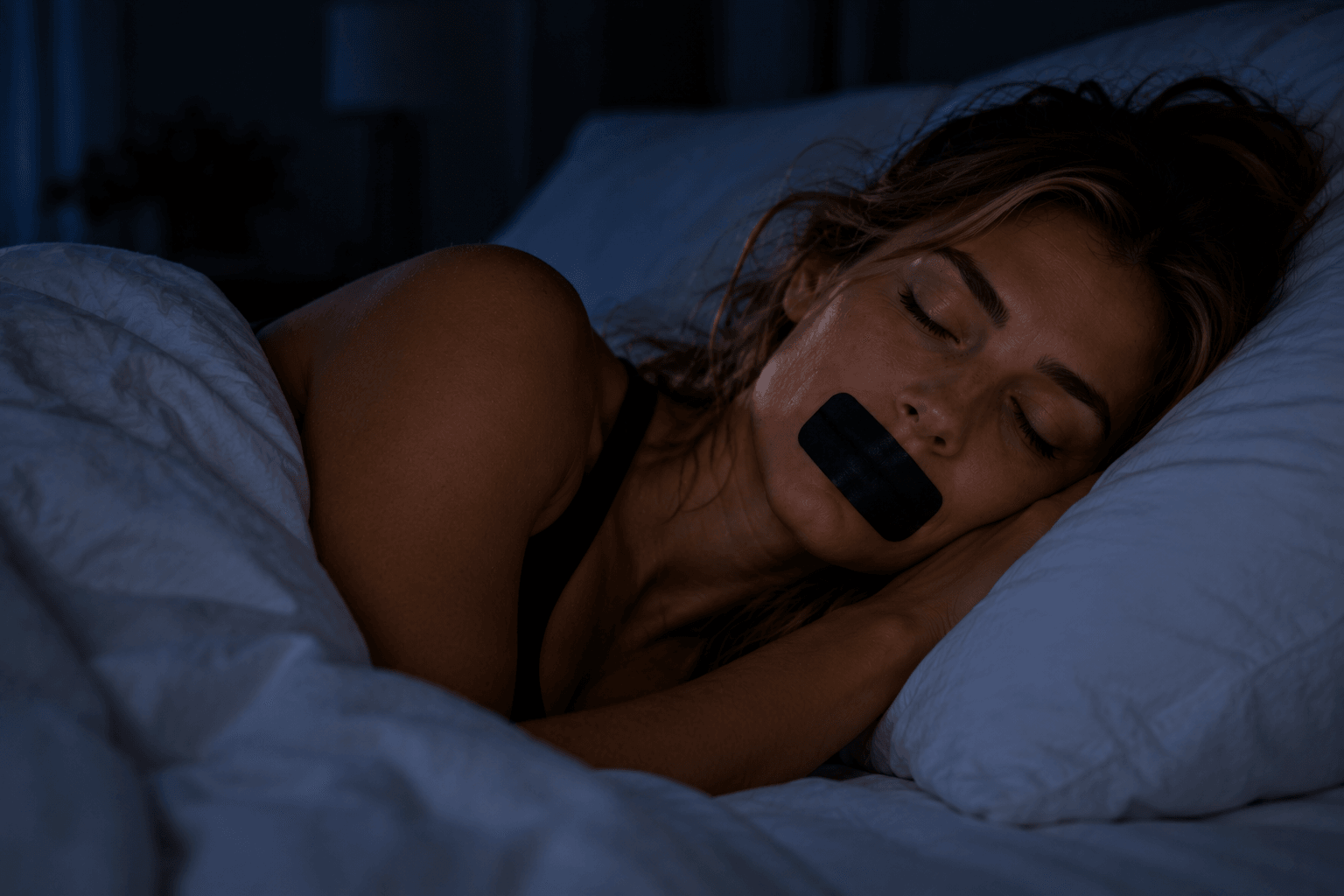
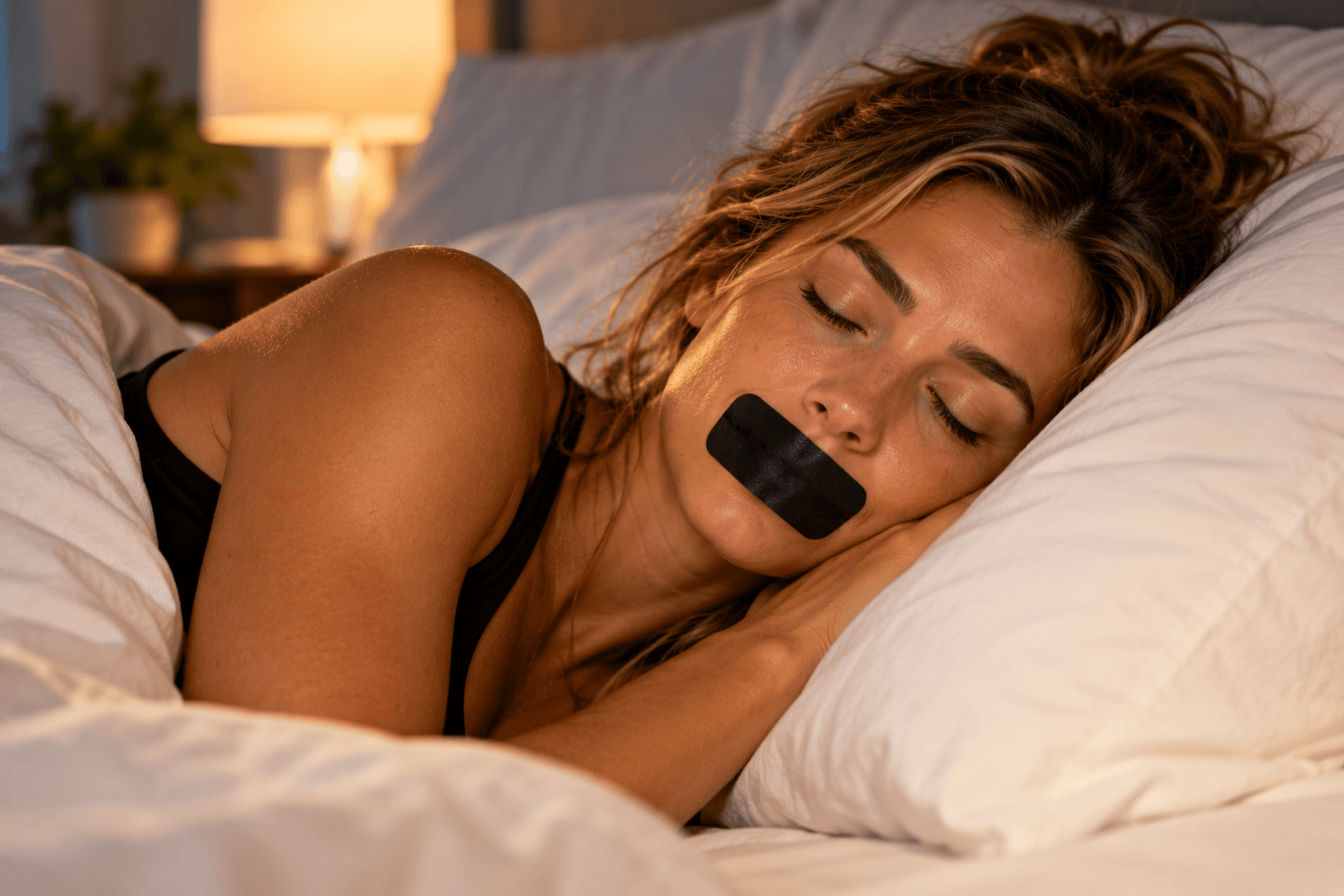
People try mouth tape for a handful of overlapping reasons: to stay a nose breather all night, to snore less, and to wake up without a parched mouth or stale breath. Small studies back the snoring benefit in people who sleep with their mouth open, and the other reasons follow from what nasal breathing does. The research is still early, so here's what each reason rests on.
What are the breathing benefits of mouth tape?
Staying a nose breather all night
Staying a nose breather all night is the reason behind all the others. Your nose is the body's default route during sleep. In a 2003 study in the Journal of Applied Physiology, 10 healthy adults with clear noses breathed only about 4% of their air through the mouth while asleep, and that share stayed low in every sleep stage.
A second 2003 study showed why that default matters. When 12 healthy adults slept in a lab breathing through the mouth, resistance in their upper airway was more than twice as high as when they breathed through the nose. Nasal breathing also filters, warms and humidifies the air on its way in, which an open mouth skips. If your mouth tends to fall open at night, tape is a simple way to keep you on the easier route. Nasal vs. mouth breathing goes into more detail.
Snoring less
Research: limited (what this means)Snoring less is where the research on mouth tape looks most encouraging. In a 2022 study, 20 adults who breathed through their mouths at night and had mild sleep apnea wore tape for a week. Thirteen of them cut their snoring by at least half, and the group's median snoring rate dropped by 47%. People who snored more at the start tended to see bigger improvements. A 2015 study using a porous mouth patch in 30 adults found snoring fell from about 147 to 40 snores an hour, and every participant slept with their mouth closed while wearing it. Their average daytime sleepiness score also dropped, from 8.1 to 5.2.
Both studies included people with mild sleep apnea, and the Sleep Foundation is clear that mouth taping is not a treatment for sleep apnea on its own. What the results do suggest is that snoring caused by an open mouth can quiet down when the lips stay closed. Does mouth tape help with snoring? walks through both studies.
A habit that's easy to keep up
Tape is cheap, takes seconds and most people get used to it. In a 2009 trial in adults with asthma, using the microporous tape of the Buteyko breathing technique, 50 people completed four weeks of taping and taped on a median of 26 of 28 nights, and 36 said it was very or fairly acceptable. Tape didn't change their asthma control, so it isn't an asthma treatment. But the study does show that nightly taping is something most adults can stick with. Our first-week guide helps with the adjustment.
What are the mouth and morning benefits of mouth tape?
Waking up without a dry mouth
The NHS lists breathing through your mouth at night as one of the main causes of a dry mouth, whether from a blocked nose or simply sleeping with your mouth open. Keeping your lips closed tackles the second cause directly.
The Sleep Foundation says less dry mouth is one of the benefits supporters of taping describe, though it hasn't been studied scientifically yet.
Looking after your teeth and gums
Saliva protects your teeth. The National Institute of Dental and Craniofacial Research explains that it washes food off the teeth and gums and carries calcium and phosphate that help keep teeth strong, and that a persistently dry mouth raises the risk of decay.
A small 2016 study adds a clue. When 10 healthy adults wore a nose clip at night to force mouth breathing, the average pH in their mouths fell to 6.6, compared with 7.0 on normal nights. The authors noted that a more acidic mouth has been proposed as a cause of erosion and decay. Nobody has yet tested whether tape protects teeth, but keeping your mouth closed is the opposite of the setup in that study.
Fresher morning breath
Cleveland Clinic explains that morning breath happens when your mouth dries out overnight and bacteria multiply, and it names mouth breathing as one of the things that makes it worse. Less drying should mean less of that. Tape won't replace brushing, flossing and cleaning your tongue, which Cleveland Clinic also recommends, but it's a reasonable add-on if you wake up with a sour mouth. Does mouth breathing cause bad breath? has more.
Feeling better rested
Feeling better rested is the reason you'll hear most often online, and the one with the least direct evidence. The Sleep Foundation says claims that taping improves sleep quality are mostly anecdotal. Still, the reasoning is sound for people whose sleep is disturbed by snoring or a dry mouth: fix those and nights tend to feel calmer. It's worth trying for yourself and paying attention to how you feel after a week or two.
What doesn't the research show yet?
A 2025 systematic review in PLOS One found only 10 studies with 213 patients between them. Two showed improvements, others showed no difference, and many excluded people with nasal blockage. A 2025 scoping review also called the evidence mixed but noted that some research points to benefits for snoring. The reviewers warned of serious risk for people who tape without checking their nose first, which is why the checks below matter.
So the fair summary is this. Tape does one simple thing well, which is keeping your lips together. For an adult with a clear nose whose snoring, dry mouth or stale breath comes from an open mouth, that's a sensible, low-cost thing to try. It isn't a treatment for any condition, and it won't fix a nose that can't carry enough air.
How do you try mouth tape?
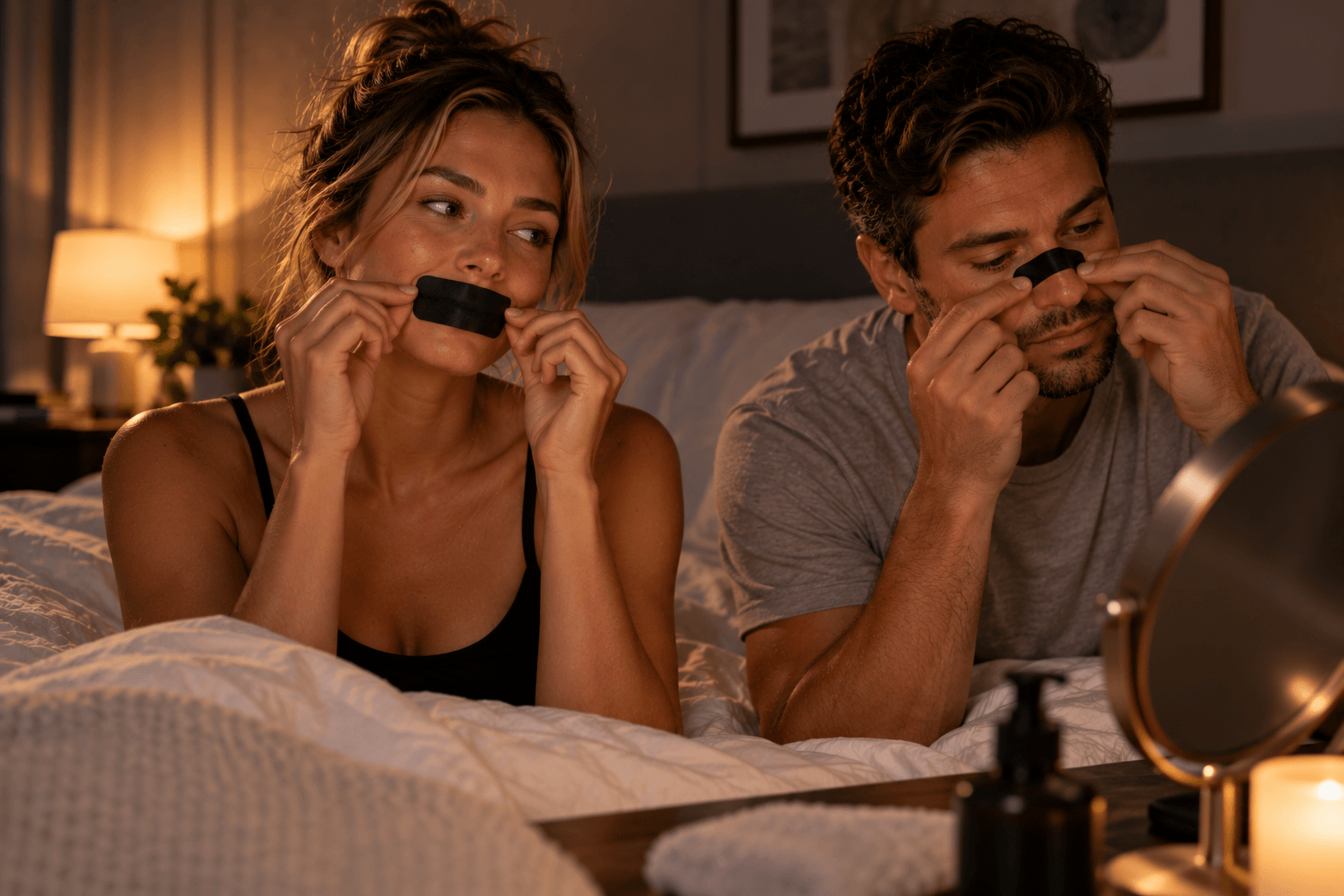
Do our two-minute nose test first. If you can breathe comfortably through your nose with your mouth closed, use a tape made for skin, try it for a few minutes while awake, and then wear it overnight. Leave it off when you have a cold or a blocked nose, and don't use it on children. If you snore loudly, gasp or choke in your sleep, or feel sleepy during the day, the American Academy of Sleep Medicine lists those as warning signs of sleep apnea, so see a doctor before taping. Is mouth taping safe? has the full checklist.
Check this first. Skip mouth tape and see a doctor if you snore loudly, wake up gasping, have been told you stop breathing in your sleep, or can't breathe comfortably through your nose. More on safety
Our pick: Titan Bamboo Silk Mouth Tape (paid partner)
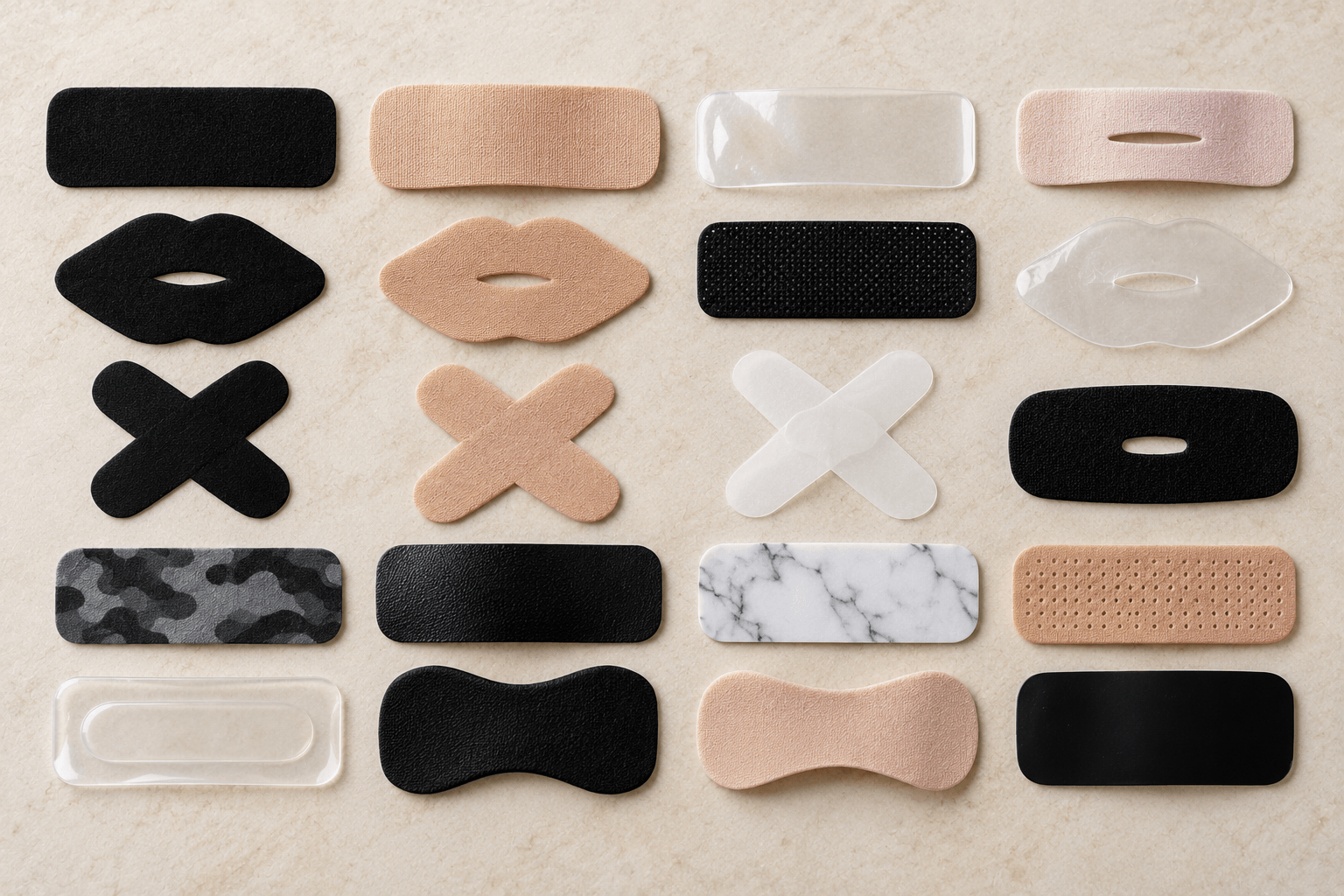
If you're ready to try it, the tape we recommend is Titan Bamboo Silk Mouth Tape. Titan says the strip is bamboo silk rather than kinesiology tape, with an adhesive made to grip through stubble and beards without leaving residue, and no ink on the side that touches your skin. Titan suggests 20 to 30 minutes of daytime practice before your first night, says every batch is third-party tested and certified PFAS-free, and offers a 30-night guarantee.
For more guides like this, browse our mouth tape articles.
Read next
Common questions
What are the benefits of mouth taping?
People mainly use it to stay a nose breather overnight, snore less, wake up with a less dry mouth and fresher breath. Small studies support the snoring benefit in mouth breathers. The other benefits follow from nasal breathing but haven't been studied directly with tape.
Does mouth tape actually work?
For keeping the lips closed, yes, that's what it does. In a 2022 study, 13 of 20 mouth breathers with mild sleep apnea halved their snoring after a week of taping. The evidence base is small, so think of it as a promising habit tool rather than a proven treatment.
Does mouth taping help you sleep better?
Many people say it does, but that hasn't been measured well yet. The Sleep Foundation notes that claims of better sleep quality are mostly anecdotal. What is well established is that the airway meets less resistance during sleep when you breathe through your nose.
What are the benefits of nasal breathing during sleep?
Nose breathing keeps your airway on its easiest route. In a 2003 study, upper airway resistance during sleep was more than twice as high when 12 healthy adults breathed through the mouth as through the nose, and a 2016 study found that forced mouth breathing at night made the mouth more acidic. Healthy sleepers with clear noses already take in about 96% of their air through the nose.
Can mouth tape help with bad breath?
It may help morning breath. Cleveland Clinic explains that morning breath happens when your mouth dries out overnight and bacteria multiply, and lists mouth breathing as one thing that makes it worse. Keeping your lips closed keeps more moisture in your mouth.
Who shouldn't use mouth tape?
Anyone with a blocked nose, a cold or chronic congestion, children, and people with untreated sleep apnea. The Sleep Foundation also lists people with asthma or COPD unless a doctor advises it, and anyone prone to anxiety or vomiting at night.
How long does it take to see benefits from mouth tape?
The 2022 snoring study measured results after one week of nightly taping, so a week or two is a fair first trial. Many people need a few nights just to get used to the feeling.
Sources
- The impact of mouth-taping in mouth-breathers with mild obstructive sleep apnea: a preliminary study
- Novel porous oral patches for patients with mild obstructive sleep apnea and mouth breathing: a pilot study
- Partitioning of inhaled ventilation between the nasal and oral routes during sleep in normal subjects
- Effect of nasal or oral breathing route on upper airway resistance during sleep
- Intraoral pH and temperature during sleep with and without mouth breathing
- Effect of mouth taping at night on asthma control: a randomised single-blind crossover study
- Breaking social media fads and uncovering the safety and efficacy of mouth taping in patients with mouth breathing, sleep disordered breathing, or obstructive sleep apnea: A systematic review
- Nocturnal mouth-taping and social media: a scoping review of the evidence
- Dry mouth
- Dry mouth
- Wake up fresh: how to stop morning breath
- Mouth taping for sleep: does it work?
- Is it more than a snore? Recognizing sleep apnea warning signs
- Titan Bamboo Silk Mouth Tape
About this article
- Research
- 14 published sources, listed above.
- Evidence
- Limited. How we rate it
- Last checked
- October 10, 2026
- Funding
- Paid partner of Titan Recovery. Their ads are labeled.
- Found an error?
- Tell us. We log fixes on the corrections page.
* This content is for informational and educational purposes only and is not medical advice. It is not intended to diagnose, treat, cure or prevent any disease or health condition. Talk to a qualified healthcare provider about your health.