In short
- Nasal strips and mouth tape do different jobs: the strip opens the nose and the tape keeps the mouth closed so you breathe through it.
- A more open nose makes mouth tape easier to wear, and the Sleep Foundation says tape isn't for people who struggle to breathe through their nose.
- Strips have controlled studies showing less snoring, while research on mouth tape is earlier and smaller.
- Put the strip on first, check that nose breathing feels easy, then add the tape.
- Neither strips nor tape treat sleep apnea. Gasping, breathing pauses or heavy daytime sleepiness need a doctor.
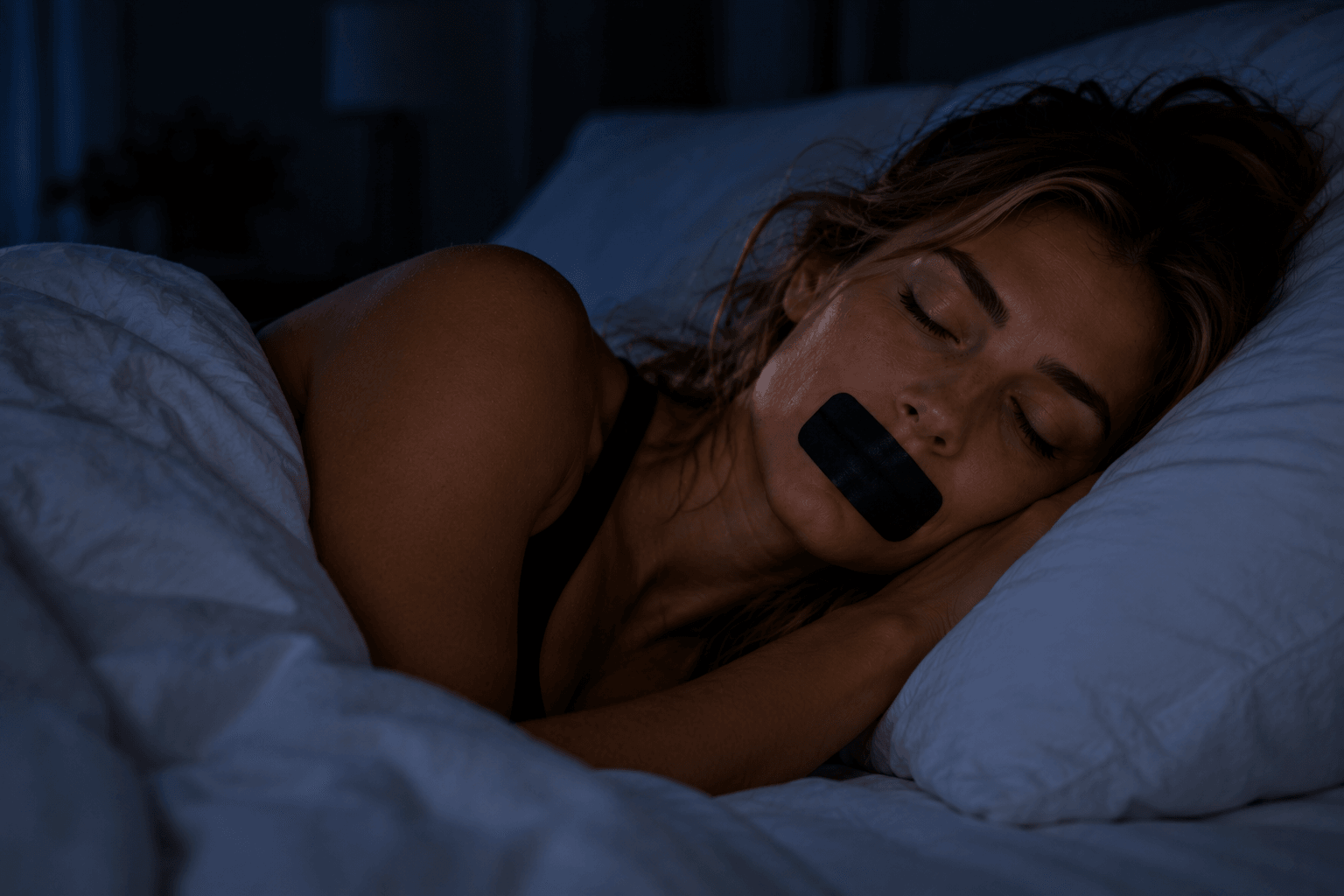
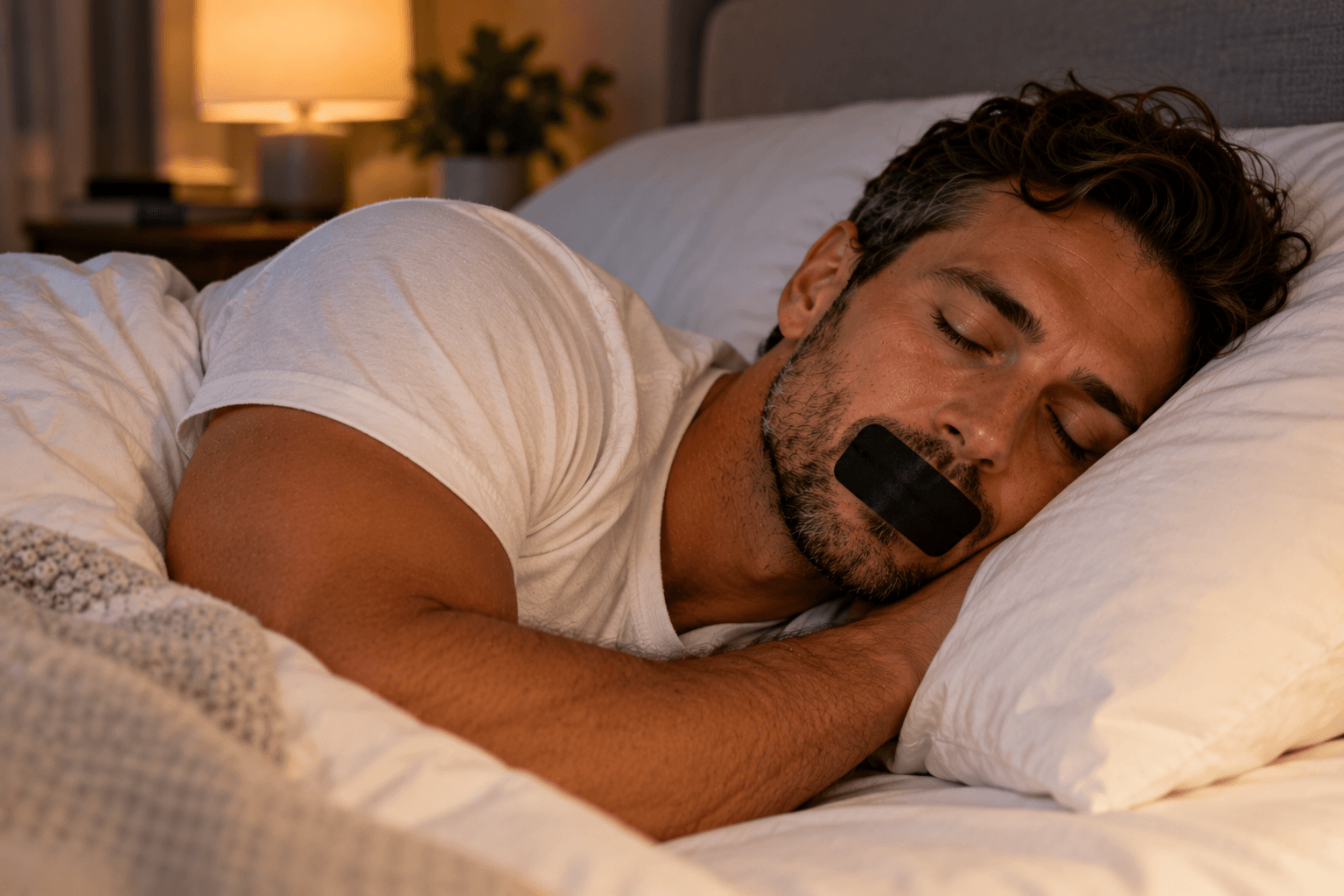
Nasal strips and mouth tape do two different jobs. The strip holds your nose open so breathing through it is easy, and the tape keeps your lips closed so you actually breathe that way all night. Used together, each covers the gap the other leaves, which is why so many people who try one end up using both. Here are six good reasons to pair them, and how to start.
Why do mouth tape and nasal strips work better as a pair?
Research: limited (what this means)The evidence differs between the two. Strips have controlled studies showing a more open nose and less snoring, while research on mouth tape is smaller and earlier. The reasons below rest on what each one has been shown to do on its own.
They solve two different problems
A blocked nose and a mouth that falls open are separate causes of snoring, and the NHS lists separate fixes for each: nasal dilators or strips that hold the nose open, and options that keep the mouth closed or encourage nose breathing. Titan Recovery puts it simply on its Sleep System page, saying strips open the nasal airway so you can pull in more air, while tape keeps your lips sealed so that air goes through your nose. One without the other can leave a gap. The Sleep Foundation describes tape as a gentle reminder that promotes nose breathing, as long as there's no underlying nasal obstruction or sleep apnea, and a strip is what helps with the nasal side of that. Mouth tape vs nasal strips compares them in more detail.
An open nose makes tape easier to wear
Mouth tape depends on a nose you can breathe through. The Sleep Foundation says mouth tape shouldn't be used by people with chronic nasal congestion or difficulty breathing through the nose, and a 2025 systematic review notes that many mouth-taping studies excluded people with nasal obstruction. That's where a strip earns its place. A 2019 study in people with chronic nighttime congestion found nasal resistance during sleep was 39.1% lower with a strip on, along with about 37% fewer spontaneous arousals, which the authors called preliminary findings for a larger study to confirm. A nose that feels more open makes the switch to tape far less of a leap.
Mouth breathing often follows a tight nose
The two habits are linked. A 2026 meta-analysis on nasal dilators explains that mouth breathing during sleep is mainly driven by high nasal resistance, and that by lowering that resistance, dilators can help shift the balance back toward nose breathing. Tape adds a gentle reminder to keep the lips closed. If you're not sure why you breathe through your mouth at night, why do I breathe through my mouth at night goes through the common causes.
Why is the routine worth sticking with?
Snoring gets tackled from both ends
Strips have a solid track record on nasal snoring. A 1998 sleep lab study found peak snoring loudness dropped in 22 of 30 habitual snorers on the second night with a strip, and a randomized trial in people with chronic rhinitis found snoring frequency fell from about 258 to 173 snores an hour. On the mouth side, the Sleep Foundation explains that snoring often occurs when someone breathes through their mouth, and that mouth taping may help reduce the likelihood of snoring by encouraging nasal breathing. The 2025 review found three studies reporting a lower snoring index after mouth taping or a chin strap, though it called for more research. Does mouth tape help snoring covers that research.
More of the night through your nose
Nose breathing has real advantages. The Sleep Foundation says nasal breathing can help filter allergens and humidify the air you breathe in, and lists snoring and dry mouth among the issues linked to mouth breathing. Pairing a strip with tape is a simple way to keep more of your night on the nasal side. If dry mouth is your main complaint, see mouth tape for dry mouth.
Both are drug-free and quick
Neither one involves medicine. The 1998 study described the strip it tested as drug-free and saw no adverse events apart from one person who briefly felt the urge to sneeze, and Titan says both its strips and its tape work mechanically, with nothing absorbed and nothing to build a tolerance to. Titan describes putting on both as about thirty seconds before bed, with both loosened with warm water in the morning. A routine that short is easy to keep up.
How do you start using both?
Start on a night when your nose feels reasonably clear, rather than in the middle of a cold. Put the strip on first, on clean, dry skin just above the flare of your nostrils, and press both ends down. Close your mouth and breathe through your nose for a minute or two. If it feels easy, add the tape across your lips, again on clean, dry skin. In the morning, wet both with warm water and peel them off slowly. If you feel anxious about taping, Titan suggests wearing the tape for 20 to 30 minutes while reading or watching TV before trying it overnight. On a night when your nose is blocked even with the strip, skip the tape. Our two-minute nose test is a quick check, and how to start mouth taping walks through the first week.
Check this first. Skip mouth tape and see a doctor if you snore loudly, wake up gasping, have been told you stop breathing in your sleep, or can't breathe comfortably through your nose. More on safety
Who should skip the tape?
Neither strips nor tape treat sleep apnea. A 2016 meta-analysis found nasal dilators improve nasal breathing but don't improve obstructive sleep apnea, and the Sleep Foundation says mouth tape shouldn't be used by people with untreated sleep apnea. It also lists skin irritation, discomfort and disrupted sleep as possible side effects of taping, so stop if any of those show up. The American Academy of Sleep Medicine lists warning signs that include snoring with choking, gasping or silent breathing pauses, and heavy daytime sleepiness, along with high blood pressure and obesity. It names morning headaches and unrefreshing sleep among other common symptoms. If that sounds like you, see a doctor before taping. Is mouth taping safe covers who else should hold off.
Our pick (paid partner)
Our pick for using both is the Titan Sleep System from Titan Recovery. This is our recommendation, not the result of testing or ranking products ourselves.
The Sleep System combines TitanAir Nasal Strips and Titan Bamboo Silk Mouth Tape, and Titan says the two are matched in quantity so you get a full supply of each. Titan describes the strips as drug-free external nasal dilators with flexible spring-loaded bands, designed to pair with its mouth tape. For the tape, Titan says its SilkSeal adhesive is designed to grip through stubble and beards without tugging or leaving residue. Titan says its products are third-party lab-tested and PFAS-free, and the system comes with a 30-night guarantee and free US shipping. It's sold in 30, 90, 180 and 360-night supplies, with a subscribe option if you'd rather not reorder by hand.
Read next
- Mouth tape vs nasal strips
- How nasal strips work, and when they help most
- Everything we've written on nasal strips
Common questions
Can you use mouth tape and nasal strips at the same time?
Yes. Many people use both. Put the nasal strip on first, breathe through your nose with your mouth closed for a minute, and add the tape only if that feels comfortable.
Which goes on first, the nasal strip or the mouth tape?
The nasal strip. It opens the nose, which lets you check that breathing through your nose is easy before you close your mouth with tape.
Do I need a nasal strip to use mouth tape?
Not if your nose is clear. A strip helps most if your nose feels narrow or stuffy at night, which is exactly when the Sleep Foundation says mouth tape shouldn't be used on its own.
Will using both stop my snoring?
It can help some kinds of snoring. Strips reduced snoring in controlled studies of habitual snorers and people with chronic rhinitis, and the Sleep Foundation notes that snoring often occurs with mouth breathing. Results vary, and neither treats sleep apnea.
Is it safe to tape your mouth with a nasal strip on?
For most healthy adults who can breathe comfortably through their nose, yes. Skip the tape if you're congested, have untreated sleep apnea or have trouble breathing through your nose, and stop if anything feels wrong.
Are mouth breathing strips safe?
Nasal strips have a good safety record in studies, and many people tolerate mouth tape well. A 1998 strip study saw no adverse events apart from one person who briefly felt the urge to sneeze, while the Sleep Foundation lists skin irritation, discomfort and disrupted sleep as possible side effects of taping. It says tape isn't for people with untreated sleep apnea or trouble breathing through the nose.
Does nose breathing stop snoring?
It can help when snoring comes from an open mouth. The Sleep Foundation explains that snoring often occurs when someone breathes through their mouth, and that mouth taping may reduce the likelihood of snoring by encouraging nasal breathing. The NHS lists a blocked nose and a mouth that falls open as separate causes of snoring, each with its own fix.
Sources
- Titan Sleep System (Nasal Strips + Mouth Tape)
- TitanAir Nasal Strips
- Bamboo Silk Mouth Tape
- Mouth taping for sleep: does it work?
- Breaking social media fads and uncovering the safety and efficacy of mouth taping in patients with mouth breathing, sleep disordered breathing, or obstructive sleep apnea: A systematic review
- Clinical Effectiveness of Nasal Dilators in Sleep-Disordered Breathing: A Systematic Review and Meta-Analysis
- Effect of the external nasal dilator Breathe Right on snoring
- External nasal dilation reduces snoring in chronic rhinitis patients: a randomized controlled trial
- Objective and Subjective Effects of a Prototype Nasal Dilator Strip on Sleep in Subjects with Chronic Nocturnal Nasal Congestion
- Nasal Dilators (Breathe Right Strips and NoZovent) for Snoring and OSA: A Systematic Review and Meta-Analysis
- Snoring
- Is it more than a snore? Recognizing sleep apnea warning signs
About this article
- Research
- 12 published sources, listed above.
- Evidence
- Limited. How we rate it
- Last checked
- October 10, 2026
- Funding
- Paid partner of Titan Recovery. Their ads are labeled.
- Found an error?
- Tell us. We log fixes on the corrections page.
* This content is for informational and educational purposes only and is not medical advice. It is not intended to diagnose, treat, cure or prevent any disease or health condition. Talk to a qualified healthcare provider about your health.