In short
- A beginner's tape should be made for skin, gentle to remove and easy to peel off with one hand.
- Before buying, check that you can breathe comfortably through your nose with your mouth closed for a few minutes.
- Practicing with the tape while you're awake is the simplest way to get used to it, and Sleep Foundation suggests testing it during the day.
- Give it about a week. The 2022 study that found less snoring measured results after seven nights.
- Our pick for beginners is Titan Bamboo Silk Mouth Tape.
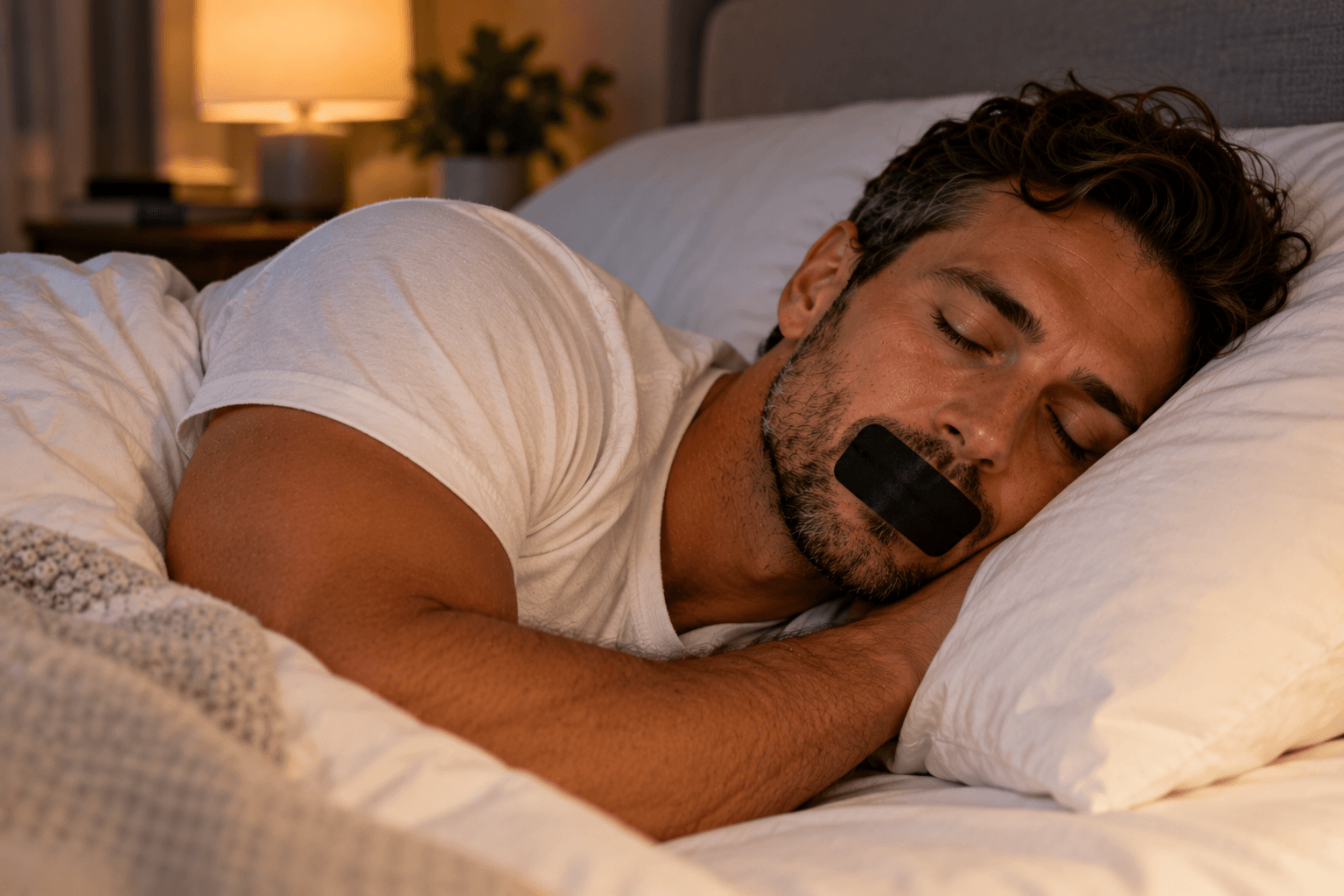
The best mouth tape for beginners is one that's gentle on skin, easy to peel off with one hand and comfortable enough that you forget it's there. Your first tape doesn't need special features so much as the basics done well, because the goal of week one is getting used to the feeling. Below are the seven features that make that easier, and the tape we recommend.
What should beginners know first?
Research: limited (what this means)Mouth tape is mostly used to keep the lips closed at night so you breathe through your nose, usually for snoring or a dry mouth in the morning. In a 2022 study in Healthcare, 20 adults who breathed through their mouths at night taped for a week, and 13 of them cut their snoring by at least half. Everyone in that study had mild sleep apnea, and tape isn't a treatment for sleep apnea. A 2025 review in PLOS One rated the available studies as poor quality, so the evidence is early.
The good news for beginners is that most people seem to manage it. In a 2009 study in Respiratory Medicine, 50 adults taped their mouths for four weeks and did so on a median of 26 of 28 nights, and 36 of them found it very or fairly acceptable.
Before you buy, sit with your mouth closed and breathe only through your nose for a few minutes. A clinical trial of silicone mouth tape (NCT06587256) only accepts people who can breathe through their nose with the tape on for at least 3 minutes, and our nose test uses the same idea. If you snore loudly and also choke, gasp or feel very sleepy in the day, the American Academy of Sleep Medicine lists those as sleep apnea warning signs, so see a doctor first.
Check this first. Skip mouth tape and see a doctor if you snore loudly, wake up gasping, have been told you stop breathing in your sleep, or can't breathe comfortably through your nose. More on safety
Seven features that make a first tape easier
Made for skin, not the toolbox
Sleep Foundation recommends porous tape intended for use on human skin, and warns that masking tape or tape not meant for the body is more likely to cause irritation or an allergic reaction. Sleep Foundation adds that pharmacies sell hypoallergenic, surgical and athletic tapes, which are porous and commonly used on skin. A purpose-made mouth tape is still the easiest choice for a first try, because it's already cut to size for the lips.
A gentle adhesive
A 2017 report in the Indian Journal of Anaesthesia says silicone adhesives have significantly lower peel adhesion than acrylate ones, with much less skin trauma on removal. You'll be taking the tape off every morning, so gentle matters more than grip strength. 3M's guidance on medical tape makes the same point from another angle: how much skin comes away with tape depends partly on the adhesive and how often the area is taped, so it recommends matching adhesive strength to what you actually need. If your skin does get red, see mouth tape skin irritation.
A material that breathes
3M's guidance on medical tape recommends breathable tape in moist areas, because trapped moisture softens skin and makes it easier to damage. The skin around your mouth stays damp overnight, so a soft, breathable strip is kinder than a plastic film.
An edge you can find half asleep
Sleep Foundation suggests folding over one corner so the tape is easier to remove. Whatever you buy, check that you can open your mouth or pull the tape off with one hand. Knowing you can is what makes the first night feel safe.
A simple, modest shape
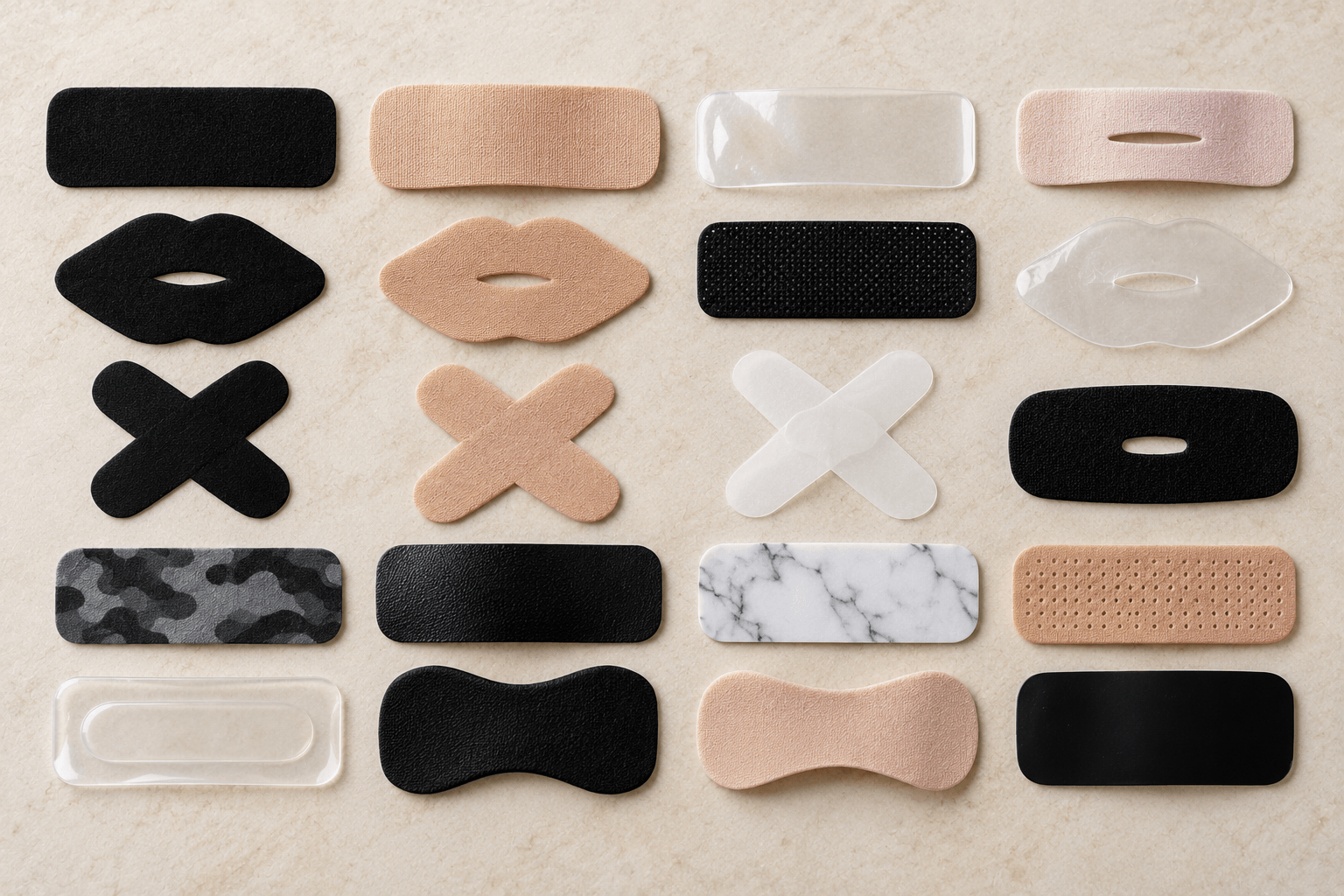
Beginners don't need anything elaborate. The 2022 study used a strip about 4 cm long, and a newer clinical trial places a small piece of silicone tape vertically over the lips without fully closing off the mouth. No study has shown one shape works better than another, so a single, modest piece that you can put on the same way every night is plenty. Our guide to which type of mouth tape is best compares vertical strips, horizontal strips and full seals.
A hold that's secure without feeling tight
3M advises applying tape to clean, dry skin without tension and smoothing it down with gentle pressure. Stretching tape as you apply it can cause tension blisters at the ends of the strip. A tape that sits flat and comfortable on its own is easier to wear well.
Clear instructions, including daytime practice
Sleep Foundation suggests testing the tape during the day to make sure you can breathe easily through your nose. A product that tells you how to practice, apply and remove it saves a lot of guesswork. Our first-week plan lays out the steps day by day.
What should you expect from your first week?
Most of week one is about getting used to the feeling. Sleep Foundation notes that feeling restricted can cause anxious awakenings, especially in people prone to claustrophobia, which is why daytime practice comes first. Once the tape feels unremarkable while you're reading or watching TV, try it as you fall asleep, then for a full night.
Don't be put off if the tape is gone by morning on the first few nights. The 2022 study left out anyone whose tape had come off by morning, so even research participants were screened for it. Check that your lips were completely dry, press the tape on with gentle pressure and give it another go.
To see whether it's helping, keep things simple. The people in the 2022 study had been seen breathing through their mouths during sleep and woke with a dry throat, and the study measured snoring after a week. Ask a partner about your snoring or record yourself, and note how your mouth feels when you wake. Our guide to telling if mouth tape is working has more ideas.
Our pick for beginners: Titan Bamboo Silk Mouth Tape (paid partner)
Our pick for beginners is Titan Bamboo Silk Mouth Tape. We haven't tested or ranked products ourselves, so this is our recommendation based on how Titan's tape matches the features above, using Titan's own description of it.
Titan says the strip is bamboo silk rather than kinesiology tape, and describes it as soft, breathable and moisture-wicking. It comes in one oval size, 76 by 38 mm, and goes horizontally across the lips, so there's no shape or size to choose on day one. Titan says there's no printed logo or ink on the side that touches skin.
What makes it a good fit for a first-timer is the guidance. Titan suggests wearing it for 20 to 30 minutes of daytime practice, such as while reading or watching TV, before the first night, which matches the awake practice we recommend. Titan also says every batch is third-party tested and certified PFAS-free, and its 30-night guarantee refunds you if your sleep isn't better after 30 nights, which gives you time to settle in.
If it doesn't feel right after a few tries, that's fine. Take it off, go back to daytime practice, and read mouth taping anxiety for more ideas.
Read next
Common questions
What's the best mouth tape for a first-timer?
One that's made for skin, breathable, gentle to remove and easy to peel off with one hand. Clear instructions and enough tape for a proper trial help too. Our pick is Titan Bamboo Silk Mouth Tape.
Is mouth taping hard to get used to?
It takes some people a few nights. In a 2009 study, 50 adults taped on a median of 26 of 28 nights and 36 called it very or fairly acceptable. Practicing while awake makes the first night easier.
Should beginners use a vertical or horizontal strip?
There's no research comparing them. The 2022 study used a small vertical strip and many purpose-made tapes sit horizontally. Choose whichever feels comfortable and comes off easily.
How long should a beginner try mouth tape?
About a week is a fair first trial. The 2022 study in Healthcare measured snoring after one week of taping.
When should a beginner not try mouth tape?
Skip it if your nose is blocked, and see a doctor first if you snore loudly and gasp or feel very sleepy in the day. Sleep Foundation also advises against it for people with untreated sleep apnea, panic disorders or a risk of vomiting during sleep, and for children.
What does mouth taping do?
Mouth taping keeps your lips closed at night so you breathe through your nose, and people mostly use it for snoring or a dry mouth in the morning. In a 2022 study of 20 mouth breathers with mild sleep apnea, 13 cut their snoring by at least half after a week of taping. A 2025 review rated the studies so far as poor quality, so the evidence is encouraging but early.
Can you mouth tape while congested?
No. Sleep Foundation says anyone with nasal congestion or blockage, such as from allergies, a deviated septum or a cold, shouldn't use mouth tape, because nasal breathing may not be possible. Skip the tape on those nights and start again once you can breathe comfortably through your nose with your mouth closed.
Is mouth taping dangerous?
For adults who breathe easily through their nose, the main side effects Sleep Foundation lists are skin irritation, discomfort and disrupted sleep. The serious risk is taping with a blocked nose: a 2025 review in PLOS One found four of ten studies warned that closing the mouth could pose a serious risk of asphyxiation when the nose is obstructed or there's regurgitation. Check your nose first, and see a doctor before taping if you might have sleep apnea.
Sources
- Mouth taping for sleep: does it work?
- The impact of mouth-taping in mouth-breathers with mild obstructive sleep apnea: a preliminary study
- Breaking social media fads and uncovering the safety and efficacy of mouth taping in patients with mouth breathing, sleep disordered breathing, or obstructive sleep apnea: A systematic review
- Effect of mouth taping at night on asthma control: a randomised single-blind crossover study
- Study to Examine the Effect of Silicone Mouth Tape on Snoring and Mild Sleep Apnea (NCT06587256)
- Medical Adhesive Related Skin Injuries (MARSI): taping techniques
- Facial skin injury caused by acrylate-based adhesive tapes in a post-menopausal patient: a preventable cause
- Is it more than a snore? Recognizing sleep apnea warning signs
- Titan Recovery Bamboo Silk Mouth Tape
About this article
- Research
- 9 published sources, listed above.
- Evidence
- Limited. How we rate it
- Last checked
- October 10, 2026
- Funding
- Paid partner of Titan Recovery. Their ads are labeled.
- Found an error?
- Tell us. We log fixes on the corrections page.
* This content is for informational and educational purposes only and is not medical advice. It is not intended to diagnose, treat, cure or prevent any disease or health condition. Talk to a qualified healthcare provider about your health.