In short
- The American Academy of Sleep Medicine recommends a consistent sleep schedule, a relaxing bedtime routine and no alcohol before bed.
- Cleveland Clinic suggests avoiding alcohol for several hours before bedtime because it can relax your airway muscles.
- In a small study, people with insomnia who did 20 minutes of slow, paced breathing before bed fell asleep faster and woke less often.
- Nasal strips lowered snoring frequency in a small randomized trial of people with chronic rhinitis, and mouth tape suits people with a clear nose whose mouth falls open.
- Most snorers without sleep apnea snore less on their side, according to a 2003 study, but snoring with gasping or pauses in breathing needs a doctor.
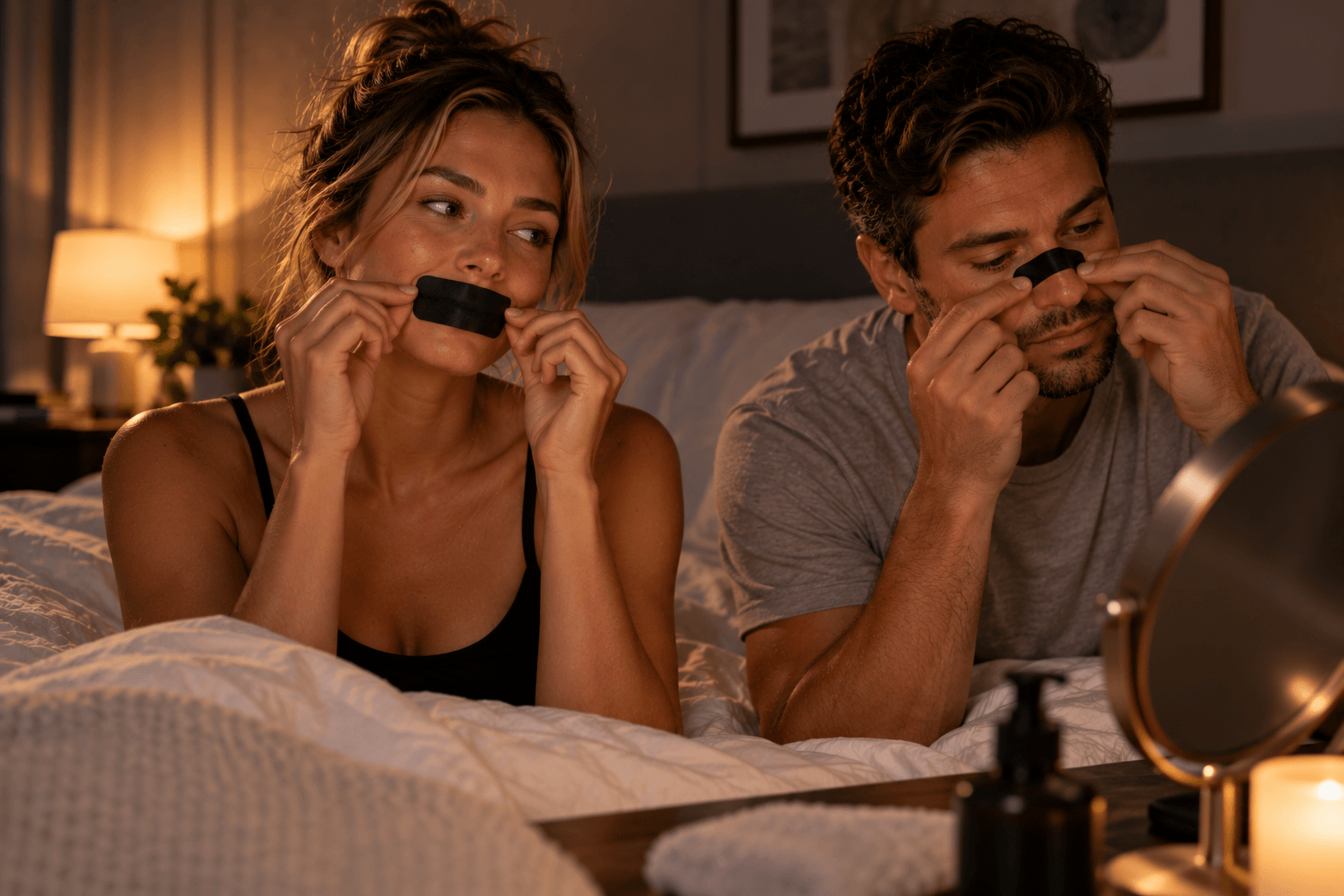
A good bedtime routine for breathing avoids the things that relax or dry out your airway and clears the way for your nose to do the work. That means stopping alcohol early, getting your nose and bedroom air ready, then finishing with a nasal strip, mouth tape if it suits you, and a side-sleeping position. Each step is quick, and the research is noted as we go.
Why does an evening routine matter for breathing? Cleveland Clinic explains that snoring happens when the airway is partly blocked and the tissue around it vibrates. It lists alcohol, sedatives and lack of sleep as things that relax the upper airway muscles, congestion from colds and allergies as something that blocks airflow, and back sleeping as a position that makes snoring more likely. Most of those are things you can change in the hour or two before bed.
Earlier in the evening
Keep the same bedtime and wake-up time
The American Academy of Sleep Medicine (AASM) puts a consistent schedule at the top of its healthy sleep habits. It suggests getting up at the same time every day, even on weekends, and setting a bedtime early enough for at least 7 to 8 hours of sleep. It also recommends a relaxing bedtime routine, which is what the rest of this list builds. Cleveland Clinic notes that even lack of sleep can relax the muscles in your upper airway once you drift off, so a steady schedule helps your breathing too.
Finish your last drink a few hours before bed
Alcohol relaxes the muscles that hold your airway open. Cleveland Clinic suggests avoiding it for several hours before bedtime, and the AASM lists avoiding alcohol before bed among its sleep habits. If you notice you snore more after a few drinks, alcohol and snoring explains why. The same logic applies to sleeping pills. The NHS says they can sometimes cause snoring, and Cleveland Clinic warns that too much melatonin or other sleep medication can over-relax the nose and throat. If you take them regularly, talk to a doctor rather than stopping on your own.
Put screens away 30 minutes before bed
The AASM recommends turning off electronic devices at least 30 minutes before bedtime and limiting bright light in the evening. That half hour is a natural window for the breathing steps that follow. If you then lie awake, the AASM suggests getting out of bed after 20 minutes and doing something quiet in low light, without electronics, until you feel sleepy.
Getting your nose and room ready
Rinse your nose if it feels stuffy
A saline rinse can clear mucus and allergens before you lie down. The FDA says nasal irrigation devices are usually safe and effective when used and cleaned properly, and that they're used for congestion, colds, allergies and noses dried out by indoor air. Its key rule is to use only distilled, sterile or previously boiled water, never straight from the tap. If you boil tap water, the FDA says to boil it for 3 to 5 minutes and let it cool until lukewarm, and to use stored boiled water within 24 hours. Rinse and dry the device after each use. See how to use a saline rinse for the steps.
Set up a cool, quiet room with comfortable air
The AASM suggests a quiet, relaxing bedroom at a comfortable, cool temperature. If your air is dry, a humidifier is worth a look. A Cleveland Clinic pulmonologist says you're more likely to snore when your airways are dried out, and Cleveland Clinic cites the EPA's recommendation to keep home humidity between 30% and 50%. The EPA advises emptying, drying and refilling portable humidifiers daily and using low-mineral water such as distilled water. There's more in our humidifier guide.
Take a few minutes of slow breathing
Slow, steady breathing through your nose is a calm way to wind down. In a small 2015 study, 14 people with self-reported insomnia practiced slow, paced breathing at about six breaths a minute for 20 minutes before sleep. On those nights they fell asleep faster, woke less often and slept more efficiently. It's one small study, but the practice is free and easy to try.
Right before lights out
Research: limited (what this means)Put on a nasal strip
A strip gently lifts the sides of your nose to make breathing through it easier. Cleveland Clinic lists nasal strips among its snoring treatments, saying they can help keep your nasal passages open. In a small randomized trial of people with chronic rhinitis, a real strip cut snoring from about 258 to 173 snores an hour compared with a placebo strip, though loudness didn't change. For TitanAir strips, Titan says to place the strip just above the flare of the nostrils, on the soft part of the nose, on clean, dry skin with no moisturizer. How to apply nasal strips has more fitting tips.
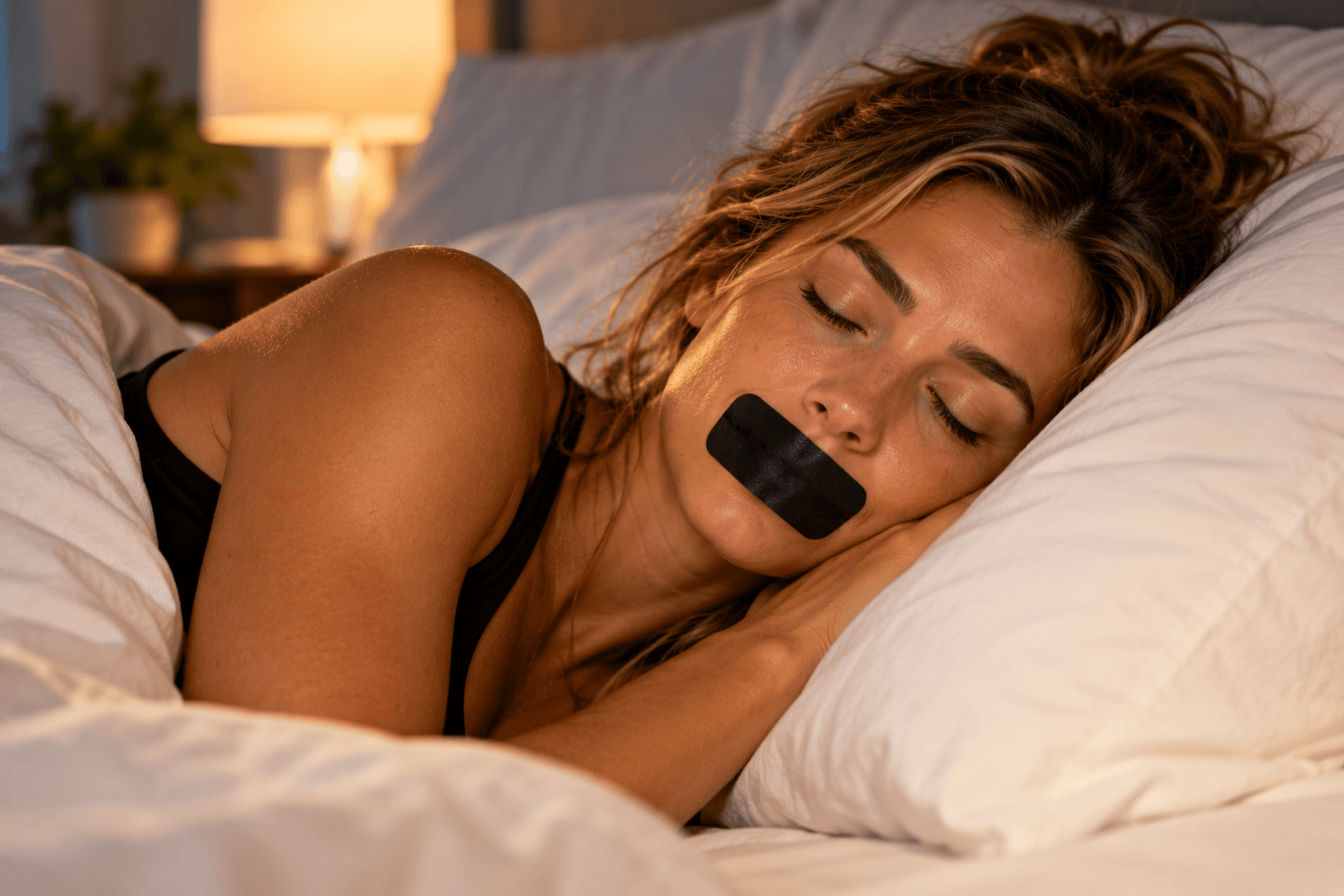
Add mouth tape if your nose is clear
If your mouth tends to fall open, tape keeps your lips together so the air goes through your nose. The Sleep Foundation suggests testing the tape during the day first, using a porous tape made for skin, and skipping it when your nose is blocked. The research is small but encouraging: a 2025 systematic review found three studies that measured snoring, and all three reported less of it with the mouth kept closed. The reviewers rated the studies as poor quality and warned of a serious risk for anyone with nasal obstruction. Try the nose test before your first night.
Our pick for these two steps is the Titan Sleep System, which combines TitanAir nasal strips with Titan's bamboo silk mouth tape. Titan says the tape uses an adhesive made to grip through stubble and beards, that both products are third-party tested and certified PFAS-free, and that it refunds you if your sleep isn't better after 30 nights.
Check this first. Skip mouth tape and see a doctor if you snore loudly, wake up gasping, have been told you stop breathing in your sleep, or can't breathe comfortably through your nose. More on safety
Settle on your side
Settling on your side is the last step. In a 2003 study of 72 habitual snorers, most of those without sleep apnea snored less, both in time and loudness, when lying on their side. Cleveland Clinic also suggests propping up the head of your bed to help keep your airway open. The NHS suggests a tennis ball stitched to the back of your sleepwear, a special pillow or a bed wedge to stop you rolling onto your back. Best sleep position for breathing compares the options.
When is a routine not enough?
The AASM says snoring paired with choking, gasping or silent pauses in breathing is a reliable indicator of sleep apnea, and lists daytime sleepiness as another warning sign. The NHS says to see a GP if lifestyle changes aren't helping, if your snoring has a big impact on you or your partner, or if you stop and start breathing in your sleep or make gasping or choking noises. A bedtime routine, strips and tape included, won't treat sleep apnea. If that sounds like you, read snoring vs. sleep apnea and talk to a doctor.
Read next
- Sleep hygiene: the habits with the best evidence
- How to unblock your nose before bed
- How to start mouth taping
Common questions
How long before bed should I start a breathing-friendly routine?
Start the alcohol cut-off several hours before bed, as Cleveland Clinic suggests, and put screens away at least 30 minutes before bed, as the American Academy of Sleep Medicine recommends. The nose and tape steps take only a few minutes at the end.
Should I rinse my nose every night?
Only if it helps. The FDA says nasal irrigation devices are usually safe and effective when used and cleaned properly, and are used for congestion, colds, allergies and dry indoor air. Use only distilled, sterile or previously boiled water.
Can I use a nasal strip and mouth tape together?
Yes. Many people put on a strip first to open the nose, then add tape if their mouth tends to fall open. Only use tape if you can breathe comfortably through your nose.
What humidity should my bedroom be?
Cleveland Clinic cites the EPA's recommendation to keep home humidity between 30% and 50%. Running a humidifier when the air is drier than that can help your airways, as long as you clean it often.
What if I follow the routine and still snore loudly?
The NHS says to see a GP if lifestyle changes aren't helping, or if you're sleepy during the day, stop and start breathing in your sleep, or gasp or choke. Those can be signs of sleep apnea.
Why do people wear mouth tape to sleep?
Mouth tape keeps the lips together so you breathe through your nose, and people mostly use it to cut down on snoring or a dry mouth. The Sleep Foundation describes it as a gentle reminder to breathe through the nose for people whose mouth falls open at night, as long as the nose is clear and there are no signs of sleep apnea.
How do you use mouth tape for sleep?
Test the tape during the day first to make sure you can breathe easily through your nose, then put a porous tape made for skin across your closed lips just before lights out. The Sleep Foundation suggests folding over one corner so it's easy to peel off, and skipping the tape on any night your nose is blocked.
Does mouth tape help with snoring?
The early research is encouraging. A 2025 systematic review found three studies that measured snoring, and all three reported less snoring with the mouth kept closed, though the reviewers rated the studies as poor quality. Tape isn't a fix for sleep apnea, so loud snoring with gasping or pauses in breathing needs a doctor.
Sources
- Healthy sleep habits
- How to stop snoring
- Snoring: causes, treatment and prevention
- Snoring
- Is rinsing your sinuses with neti pots safe?
- 4 reasons to run a humidifier
- Use and care of home humidifiers
- Efficacy of paced breathing for insomnia: enhances vagal activity and improves sleep quality
- External nasal dilation reduces snoring in chronic rhinitis patients: a randomized controlled trial
- Mouth taping for sleep: does it work?
- Breaking social media fads and uncovering the safety and efficacy of mouth taping in patients with mouth breathing, sleep disordered breathing, or obstructive sleep apnea: A systematic review
- Effects of body position on snoring in apneic and nonapneic snorers
- Is it more than a snore? Recognizing sleep apnea warning signs
- Titan Sleep System (Nasal Strips + Mouth Tape)
- TitanAir Nasal Strips
About this article
- Research
- 15 published sources, listed above.
- Evidence
- Limited. How we rate it
- Last checked
- October 10, 2026
- Funding
- Paid partner of Titan Recovery. Their ads are labeled.
- Found an error?
- Tell us. We log fixes on the corrections page.
* This content is for informational and educational purposes only and is not medical advice. It is not intended to diagnose, treat, cure or prevent any disease or health condition. Talk to a qualified healthcare provider about your health.