In short
- The best snoring gifts match the likely cause: a clearer nose, a closed mouth, or a position off the back.
- Nearly 70% of Americans who share a bed say their partner snores, according to a 2021 American Academy of Sleep Medicine survey.
- A small randomized trial found a pillow that shifts head position reduced measured snoring, and the NHS suggests a special pillow or bed wedge to keep a snorer on their side.
- The NHS suggests earplugs for a partner whose sleep is affected by snoring.
- Snoring with gasping, choking or pauses in breathing is a sign to see a doctor, and no gift replaces that.
The most useful gift for someone who snores matches why they snore: something to open the nose, keep the mouth closed or keep them off their back. Our top idea is a nasal strip and mouth tape kit, followed by simple options for the snorer and the person sleeping beside them. If their snoring comes with gasping or pauses in breathing, the kindest gift is a nudge toward a doctor.
You'd be giving it to a big club. In a 2021 survey by the American Academy of Sleep Medicine (AASM), nearly 70% of Americans who share a bed said their partner snores.
How do you choose a gift for a snorer?
The best way to choose a gift for a snorer is to think about when the snoring happens. Cleveland Clinic says back sleepers are more likely to snore than side sleepers, that congestion from colds and allergies can block airflow, and that people with allergies are more likely to sleep with their mouth open. If the snoring is worst on their back, a pillow is a good bet. If it's worse in allergy season or with a cold, think nose first. If their mouth hangs open, a strip and tape kit fits. And if it's mostly after a drink or two, no gadget will help as much as an earlier last round.
Our top gift idea
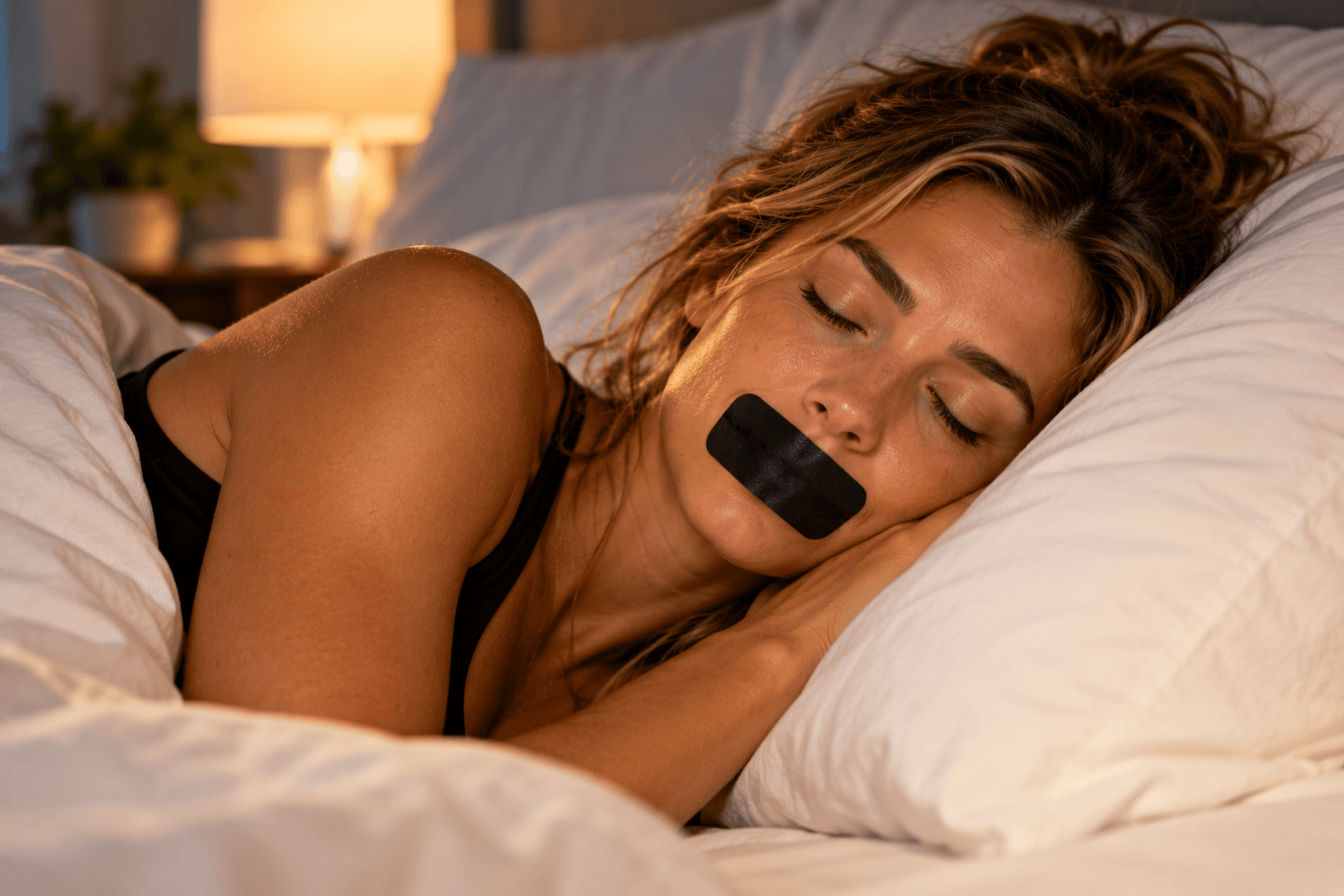
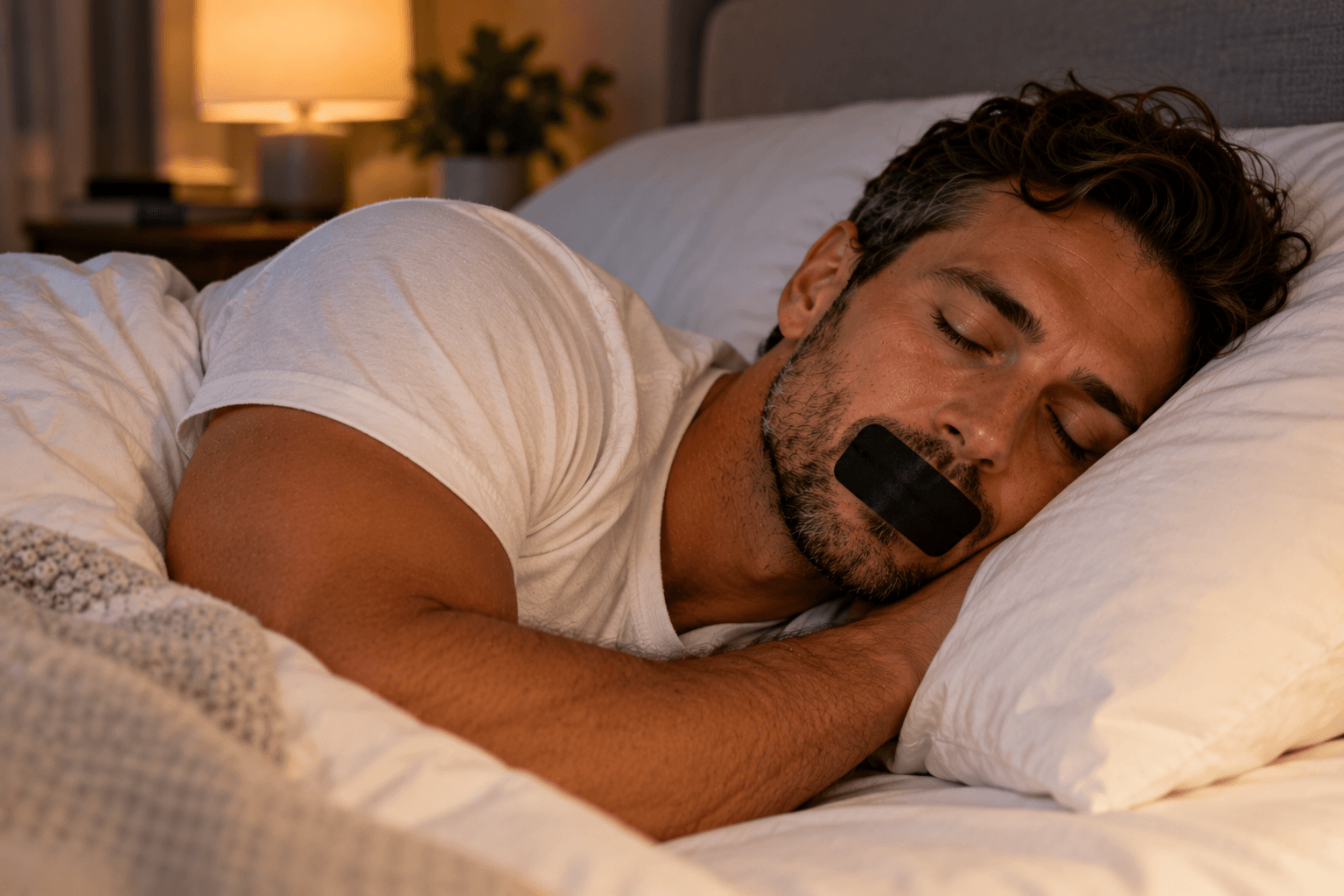
A nasal strip and mouth tape kit
The NHS matches snoring fixes to their cause. For blocked or narrow airways in the nose it suggests nasal dilators or strips, and for a mouth that falls open during sleep it suggests something that keeps the mouth closed. A kit with both covers those two causes in one box. The research is small but encouraging. Strips cut snoring frequency in a randomized trial of people with chronic rhinitis, and a 2025 systematic review found three studies in which keeping the mouth closed was followed by less snoring, though the reviewers rated them as poor quality.
Our pick here is the Titan Sleep System, which pairs TitanAir nasal strips with Titan's bamboo silk mouth tape. Titan says the tape is designed to grip through stubble and full beards without tugging, that both products are third-party tested and certified PFAS-free, and that it offers a 30-night guarantee, refunding you if sleep isn't better after 30 nights. Titan sells the kit in 30, 90, 180 or 360-night supplies with free US shipping, so you can choose a small trial or a longer supply. That makes it a low-pressure present.
Research: limited (what this means)Tape isn't right for everyone. The Sleep Foundation says it shouldn't be used by people with untreated sleep apnea, chronic nasal congestion or trouble breathing through the nose. If you're unsure, suggest they try our nose test and read is mouth taping safe? together.
Check this first. Skip mouth tape and see a doctor if you snore loudly, wake up gasping, have been told you stop breathing in your sleep, or can't breathe comfortably through your nose. More on safety
Gifts that help the snorer
A side-sleeping pillow
Many snorers are quieter on their side. In a 2003 study of 72 habitual snorers, most of those without sleep apnea snored less in both time and loudness when lying on their side. In a 2017 randomized trial of 22 snorers, a pillow designed to shift the head position when it detected snoring reduced snoring on overnight sleep studies, and every participant found the pillow acceptable. The NHS suggests a special pillow to help keep someone on their side. Our guide to anti-snoring pillows explains the main types.
A wedge pillow
A wedge raises the head and upper body. Cleveland Clinic says propping up the head of the bed can help keep the airway open, and the NHS mentions a bed wedge. A 2024 systematic review found that raising the head and trunk reduced snoring, while noting that some people find long periods of elevation uncomfortable. It's a good fit for someone who keeps rolling onto their back.
A tennis ball sleep shirt
A tennis ball sleep shirt costs almost nothing and makes people smile. The NHS suggests taping or stitching a tennis ball to the back of your sleepwear so you don't roll onto your back. Sew a pocket onto an old shirt, add the ball and wrap it with a note explaining the idea. It's an easy way to test whether side sleeping helps before anyone spends money on a pillow.
A humidifier
Dry winter air is hard on the nose. A Cleveland Clinic pulmonologist says you're more likely to snore when your airways are dried out, and that running a humidifier at night can help. If you give one, add a note about care: the EPA advises emptying and refilling portable humidifiers daily, cleaning them every third day and using low-mineral water such as distilled water. It explains that ultrasonic and cool-mist models can release minerals and microorganisms from the tank into the air if they aren't looked after. Cleveland Clinic cites the EPA's advice to keep home humidity between 30% and 50%, and suggests a hygrometer to monitor moisture, which makes a thoughtful extra.
A saline rinse kit
For someone whose snoring gets worse with allergies or colds, a rinse bottle can clear the nose before bed. The FDA says nasal irrigation devices are usually safe and effective when used and cleaned properly. Tuck in a bottle of distilled water, because the FDA says tap water isn't safe for nasal rinsing unless it has been boiled first. See how to use a saline rinse.
Gifts for the person beside them
Good earplugs
The NHS suggests that a partner whose sleep is affected could use earplugs. Soft, comfortable ones are an inexpensive gift that helps whatever the snorer decides to try. Our guide to sleeping next to a snorer has more ideas for that side of the bed.
A white noise machine
Some light sleepers like a steady sound to mask background noise. The Sleep Foundation says the research on white noise and sleep is mixed, and more is needed before it can be widely recommended. It also notes that white noise can sometimes disturb sleep and may affect hearing, so a machine with a low volume setting is the kinder choice.
The gift that matters most
An offer to help them find out why
Cleveland Clinic encourages partners to see loud snoring as a possible sign of a sleep disorder, and points out that most people don't know how they sound asleep. It suggests recording snoring with an app or a noise-activated recorder. The NHS says it helps to bring someone who has heard the snoring to a GP appointment. Offering to be that person is a kind thing to do. Cleveland Clinic says a provider will ask how often the snoring happens, what it sounds like, whether breathing stops or the person snorts or gasps, and whether they feel rested during the day. You're often the one who knows those answers.
The AASM says snoring paired with choking, gasping or silent pauses in breathing is a reliable indicator of sleep apnea, and lists daytime sleepiness as another warning sign. None of the gifts above treat sleep apnea. If that sounds like the person you're shopping for, read snoring vs. sleep apnea and encourage a doctor's visit first.
Read next
- How to stop snoring: what you can try at home
- Mouth tape vs. nasal strips
- Best sleep position for breathing
Common questions
Is it rude to give someone a snoring gift?
It doesn't have to be. Cleveland Clinic points out that most people don't know how they sound when they sleep, and encourages partners to treat loud snoring as a possible health issue rather than an annoyance. A gift framed around better sleep for both of you tends to land more kindly than a joke.
What is a good gift for someone who snores with their mouth open?
Mouth tape, ideally paired with nasal strips, is a natural fit if they can breathe comfortably through their nose. The NHS lists a mouth that falls open in sleep as one cause of snoring.
What can I buy for the partner of a snorer?
Earplugs are the simplest option, and the NHS suggests them for a partner whose sleep is affected. Some people also like a white noise machine, although the Sleep Foundation says the research on white noise for sleep is mixed.
Do anti-snoring pillows actually work?
Some have been studied. In a 2017 randomized trial of 22 snorers, a pillow that changes head position when it detects snoring reduced snoring on overnight sleep studies. A 2024 review found positional devices and head-of-bed elevation reduce snoring, though comfort can be an issue.
Should I give a snoring gift to someone who might have sleep apnea?
Encourage a doctor's visit first. The American Academy of Sleep Medicine says snoring paired with choking, gasping or silent breathing pauses is a reliable indicator of sleep apnea, and home products don't treat it.
Sources
- Titan Sleep System (Nasal Strips + Mouth Tape)
- Snoring
- Snoring: causes, treatment and prevention
- How to stop snoring
- Is it more than a snore? Recognizing sleep apnea warning signs
- External nasal dilation reduces snoring in chronic rhinitis patients: a randomized controlled trial
- Breaking social media fads and uncovering the safety and efficacy of mouth taping in patients with mouth breathing, sleep disordered breathing, or obstructive sleep apnea: A systematic review
- Effects of body position on snoring in apneic and nonapneic snorers
- The effect on snoring of using a pillow to change the head position
- The potential effect of changing patient position on snoring: a systematic review
- 4 reasons to run a humidifier
- Use and care of home humidifiers
- Is rinsing your sinuses with neti pots safe?
- What is white noise?
- Mouth taping for sleep: does it work?
About this article
- Research
- 15 published sources, listed above.
- Evidence
- Limited. How we rate it
- Last checked
- October 10, 2026
- Funding
- Paid partner of Titan Recovery. Their ads are labeled.
- Found an error?
- Tell us. We log fixes on the corrections page.
* This content is for informational and educational purposes only and is not medical advice. It is not intended to diagnose, treat, cure or prevent any disease or health condition. Talk to a qualified healthcare provider about your health.