In short
- The NHLBI, the NHS and the American Academy of Sleep Medicine all say to keep the bedroom quiet, cool and dark.
- A Cleveland Clinic sleep psychologist suggests a bedroom temperature of 60 to 67 F.
- In a 2022 lab study, sleeping one night with the room lights on raised heart rate and next-morning insulin resistance compared with a dim room.
- Keep humidity at or below 50%, clear your nose before bed and keep your mouth closed overnight if you breathe easily through your nose.
- If you or your partner snore with gasping, choking or pauses in breathing, see a doctor rather than fixing the room.
A bedroom that helps you sleep is cool, dark and quiet, with a bed you use for sleep and not much else. Get the temperature to around 60 to 67 F, block light and noise, keep screens out and humidity at or below 50%. Then look after your breathing: a clear nose and a closed mouth make the most of a good room.
The NHLBI, the NHS and the American Academy of Sleep Medicine (AASM) all give a version of the same advice about the bedroom, and it's some of the easiest sleep advice to act on. This checklist is about the whole room and your breathing in it. If allergies are your main problem, our bedroom allergy checklist goes deeper on dust mites, pets and pollen.
The room
Keep it cool
The AASM says to keep the room at a comfortable, cool temperature. A Cleveland Clinic sleep psychologist gets more specific, suggesting 60 to 67 F for adults and describing anything above 70 F as too hot and below 60 F as too cold. She explains that your core temperature drops as part of falling asleep, and a hot or humid room makes you more restless and makes it harder to fall and stay asleep. She says sleeping too cold may not affect sleep cycles as much as sleeping too hot, but the body has to work to warm itself back up. The NHS suggests adjusting the temperature or opening a window, if it's safe to do so, to cool the room. Our guide to the best bedroom temperature for sleep has more.
Make it dark
The NHS suggests fully closing your curtains and wearing an eye mask if light still gets in. The NHLBI says a dim night light is fine if you need one. There's some evidence that light during sleep matters beyond how sleepy you feel. In a 2022 lab study of 20 healthy adults, sleeping one night with the room lights on raised nighttime heart rate and next-morning insulin resistance compared with sleeping in a dim room. People in the lit room also spent less time in deep sleep and REM sleep.
Make it quiet
The NHLBI and the AASM both say to keep the bedroom quiet. The NHS suggests earplugs if noise is a problem, putting your phone on silent, and trying background sounds like rainfall, gentle music or white noise.
Hide the clock
The NHS suggests keeping clocks out of view and placing your phone face down to reduce light. It also says that if you're still awake after about 20 minutes, get up, do something relaxing somewhere comfortable and go back to bed when you feel sleepy.
Get the humidity right
The right bedroom humidity is between too dry and too damp, since both cause trouble. Cleveland Clinic suggests a humidifier to ease dryness that can make congestion worse. The EPA advises against humidifying above 50% relative humidity, because higher levels can encourage the growth of mold and other organisms, and says a hygrometer from a hardware store will tell you where you are. If you use a portable humidifier, the EPA recommends emptying, drying and refilling the tank daily, cleaning it every third day and using low-mineral water such as distilled water. Our humidifier guide explains the types.
The bed
Keep the bed for sleep
The AASM says to use your bed only for sleep and sex, and not to go to bed unless you're sleepy. If you haven't fallen asleep after 20 minutes, it suggests getting out of bed for a quiet activity without much light, and especially not picking up a phone or other device.
Keep screens out of bed
The NHS suggests not using phones, tablets or computers for an hour before bed, saying the blue light from screens can make it harder to fall asleep. The AASM suggests turning devices off at least 30 minutes before bedtime, and the NHLBI advises avoiding bright artificial light from a TV or computer screen in the hour before bed.
Raise your head if your nose blocks up
Raising your head helps if your nose blocks up, because lying down narrows the nose a little. A 2022 meta-analysis found lying flat increases nasal resistance and reduces airflow, and said this matters most for snorers and people with sleep apnea. Cleveland Clinic suggests sleeping with your head and shoulders raised if you get stuffy at night.
Your breathing
Clear your nose before bed
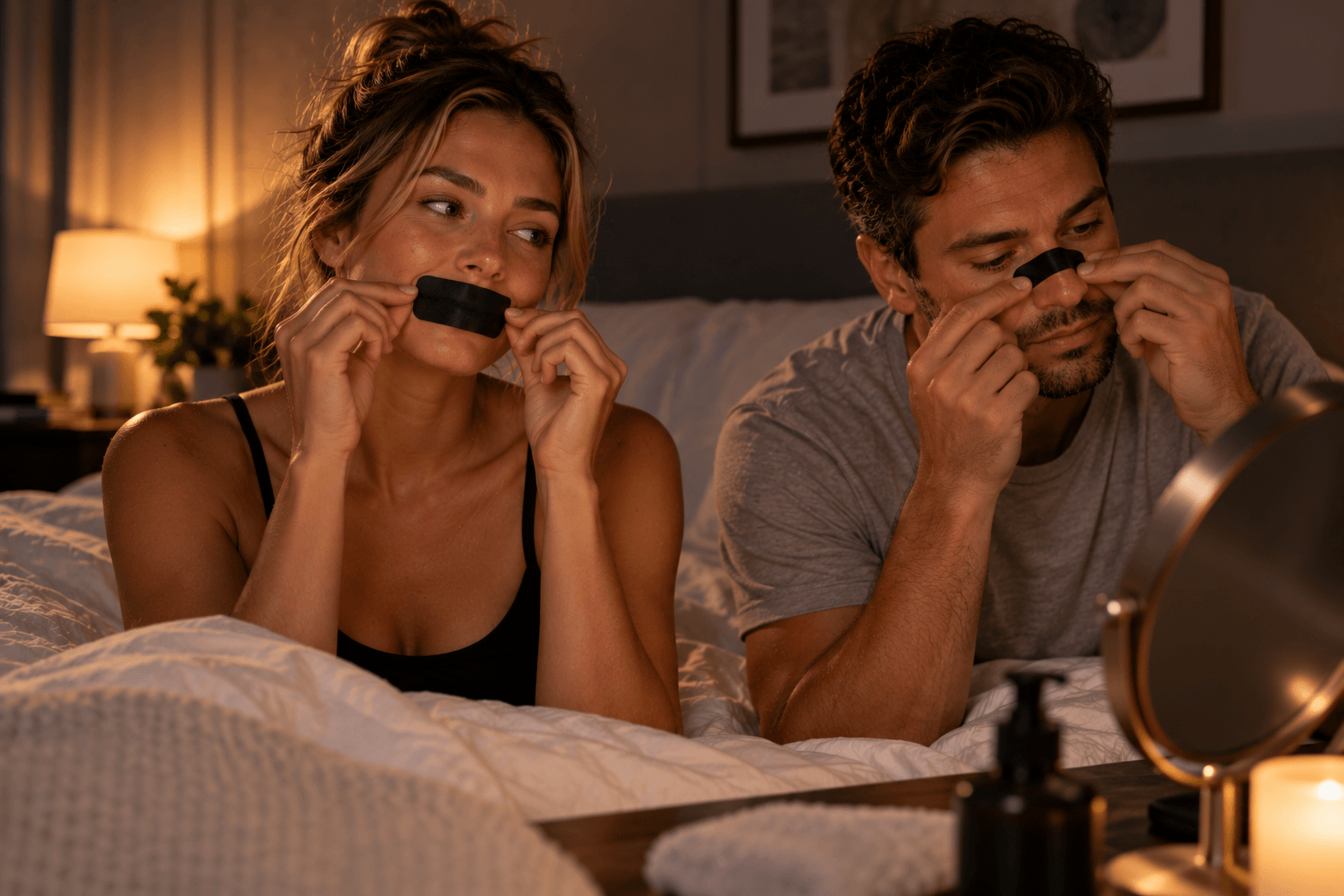
Cleveland Clinic's tips for nighttime congestion include a saline spray or neti pot to loosen mucus, showering before bed to wash off allergens, changing your sheets weekly and keeping pets out of the bedroom. A nasal strip can help from the outside by gently lifting the sides of the nose open. In a 2018 trial of 59 people with chronic nighttime congestion, strips improved some measures of sleep satisfaction and congestion on waking compared with placebo strips. See how to unblock your nose before bed for more.
Keep your mouth closed
Once your nose is clear, mouth tape helps keep you breathing through it all night. Mouth breathing changes the mouth overnight: in a small 2016 study, simulated mouth breathing during sleep made the mouth more acidic than normal sleep. A 2025 review in PLOS One found the three studies that measured snoring all reported less of it when the mouth was kept closed, though it rated the studies as poor quality and warned against taping with a blocked nose. Take our two-minute nose test first, then read how to start mouth taping.
Research: moderate (what this means)Check this first. Skip mouth tape and see a doctor if you snore loudly, wake up gasping, have been told you stop breathing in your sleep, or can't breathe comfortably through your nose. More on safety
Set up a bedside routine
The AASM suggests reducing your fluid intake before bedtime, avoiding alcohol before bed and avoiding caffeine in the afternoon or evening. A short, relaxing routine at the same time each night helps too, and the NHS suggests reading, breathing exercises or calming music. The NHLBI adds a hot bath or relaxation techniques before bed, and suggests using the hour before bed as quiet time. Our bedtime routine for better breathing puts it together.
If you want one kit for the nose and mouth steps, our pick is the Titan Sleep System. Titan says it combines TitanAir Nasal Strips and Titan Mouth Tape as one nightly system, and that every batch is third-party tested and certified PFAS-free.
Plan for snoring in the room
Plan for snoring in the room, because a perfect room won't help much if someone in it snores loudly. The NHS suggests a partner whose sleep is affected could try earplugs. It also says to see a GP if your breathing stops and starts while you sleep, you make gasping or choking noises, or you always feel very tired during the day, since these can be signs of sleep apnoea, which can be serious if it isn't treated. No bedroom change treats sleep apnea. Sleeping next to a snorer covers the partner's side, and our safety page lists who should skip tape. For more, browse our sleep articles.
Our pick (paid partner)
Read next
- Sleep hygiene: the habits with the best evidence
- Does breathing through your nose improve sleep quality?
- A 10-point bedroom checklist for allergy season
Common questions
What is the best bedroom temperature for sleep?
A Cleveland Clinic sleep psychologist suggests 60 to 67 F for adults, and says above 70 F is too hot and below 60 F is too cold. Adjust within that range to what feels comfortable.
Is it bad to sleep with a light on?
It may be. In a 2022 study of 20 healthy adults, one night of sleeping with room lighting raised nighttime heart rate and next-morning insulin resistance compared with sleeping in a dim room. The NHLBI says a dim night light is fine if you need one.
Should I keep my phone out of the bedroom?
The NHS suggests avoiding phones, tablets and computers for an hour before bed and putting your phone on silent. The American Academy of Sleep Medicine suggests turning devices off at least 30 minutes before bedtime.
What humidity is best for sleeping?
The EPA advises not humidifying above 50% relative humidity, because higher levels can encourage mold and other growth. A cheap hygrometer will tell you where your room sits.
Does white noise help you sleep?
The NHS lists background sounds like rainfall, gentle music or white noise as something to try, along with earplugs if noise is a problem.
Is mouth breathing while sleeping bad?
It's not ideal. In a small 2016 study, the mouth became more acidic during sleep when people were made to breathe through it, and the authors noted that a more acidic mouth has been proposed as a cause of tooth erosion and decay. The NHS also lists the mouth falling open during sleep as one cause of snoring.
What's the point of mouth tape for sleeping, and is it bad?
The point is to keep your lips closed so you breathe through your nose all night. A 2025 review in PLOS One found the three studies that measured snoring all reported less of it with the mouth kept closed, though it rated the studies as poor quality. For adults who breathe easily through their nose it's a simple habit tool, but the same review warned of a serious risk for anyone who tapes with a blocked nose.
Should I drink water before bed?
A little is fine, but the American Academy of Sleep Medicine suggests reducing fluids before bedtime so you're not woken up needing the bathroom.
Sources
- Healthy sleep habits
- Healthy sleep habits
- How to fall asleep faster and sleep better
- What's the best temperature for sleep?
- Light exposure during sleep impairs cardiometabolic function
- Use and care of home humidifiers
- Why does my nose get stuffy at night?
- The Recumbent Position Affects Nasal Resistance: A Systematic Review and Meta-Analysis
- Effects of nasal dilator strips on subjective measures of sleep in subjects with chronic nocturnal nasal congestion: a randomized, placebo-controlled trial
- Intraoral pH and temperature during sleep with and without mouth breathing
- Breaking social media fads and uncovering the safety and efficacy of mouth taping in patients with mouth breathing, sleep disordered breathing, or obstructive sleep apnea: A systematic review
- Snoring
- Sleep apnoea
- Titan Sleep System
About this article
- Research
- 14 published sources, listed above.
- Evidence
- Moderate. How we rate it
- Last checked
- October 10, 2026
- Funding
- Paid partner of Titan Recovery. Their ads are labeled.
- Found an error?
- Tell us. We log fixes on the corrections page.
* This content is for informational and educational purposes only and is not medical advice. It is not intended to diagnose, treat, cure or prevent any disease or health condition. Talk to a qualified healthcare provider about your health.