In short
- Sleep Foundation puts the best bedroom temperature at about 65 F (18.3 C). Cleveland Clinic suggests a range of 60 to 67 F (15 to 19 C).
- Your core body temperature drops as you fall asleep, and a cool room makes that easier.
- A review in the Journal of Physiological Anthropology found that, with normal bedding and clothing, heat exposure increases wakefulness and reduces deep and REM sleep.
- A warm bath or shower 1 to 2 hours before bed was linked to falling asleep faster in a 2019 meta-analysis.
- Babies and toddlers do better a little warmer. Cleveland Clinic suggests 65 to 70 F for them, with breathable clothing and few blankets.
Most people sleep best in a cool room. Sleep Foundation puts the ideal at about 65 F (18.3 C), and Cleveland Clinic suggests keeping the bedroom between 60 and 67 F (15 and 19 C). The exact number matters less than avoiding a room that's too warm.
Why does a cool room help you sleep?
Research: moderate (what this means)Your body temperature isn't fixed overnight. According to Sleep Foundation, core temperature sits around 98.6 F and shifts by about 2 degrees through the night, with the drop starting roughly two hours before you fall asleep, around the time your body releases melatonin.
Cleveland Clinic describes that drop as part of how sleep starts. If the room is too warm, your body has a harder time shedding heat, and the process that's meant to ease you into sleep gets pushed back.
A cool bedroom works with that natural dip instead of against it. It doesn't need to be cold. It just needs to let your body lose a little heat without effort.
What does a hot bedroom do to your sleep?
The clearest research is on heat. In a 2012 review in the Journal of Physiological Anthropology, researchers found that when people sleep with normal bedding and clothing, heat exposure increases wakefulness and reduces both slow wave sleep (deep sleep) and REM sleep. Humid heat adds to the load, making it harder still for the body to regulate its temperature.
Cleveland Clinic goes further and says a bedroom above 70 F is too hot for sleep. Sleep Foundation notes that a warm room is linked to less restorative deep sleep and worse sleep quality as people rate it themselves.
Is a cold bedroom a problem too?
A cold bedroom can disrupt sleep too, but bedding changes the picture. The same review found that in semi-nude volunteers, cold disrupted sleep stages more than heat did. Once people had blankets and clothing, the main problem became heat, because bedding does a good job of protecting you from a cool room.
Sleep Foundation says a cold bedroom is less of a problem than an overheated one but can still cause discomfort. So the goal is a cool room with enough covers to feel comfortable, not a cold room you have to fight.
How do you find your own best temperature?
Treat the published ranges as a starting point. Your bedding, what you wear to bed, humidity and whether you share the bed with someone all change how warm you feel under the covers.
A practical approach is to start around 65 F and adjust a degree or two at a time over a few nights. If you wake up sweaty or kick the covers off, go cooler or use lighter bedding. If you wake up cold and curled up, add a layer before you turn the heat up.
If you share a bed and run warmer or cooler than your partner, separate blankets are often easier than arguing over the thermostat.
What's going on under the covers?
The room temperature is only half the picture. The 2012 review describes a "bed climate", the pocket of air between your skin and your bedding. When people sleep normally, it tends to sit around 32 to 34 C (about 90 to 93 F) and 40% to 60% relative humidity.
That explains why a cool room isn't a problem for most people. In one study the review describes, older adults showed no significant difference in measured sleep quality between a 9 C and a 20 C room. The review links this to bedding, which kept the bed climate fairly steady even when the room temperature changed a lot. The practical lesson is to adjust your bedding first and the thermostat second.
Why does humidity make a hot night worse?
Humidity is the other half of heat stress. The review explains that in dry air your sweat evaporates and carries heat away, but in humid air it stays on your skin and the body can't cool itself as well. In one experiment, humid heat in the first part of the night reduced deep sleep in that part of the night and increased wakefulness throughout.
In a humid summer, a fan or air conditioning can help on two fronts. Cleveland Clinic suggests keeping a fan in the room so it's easy to cool down if you get too warm. On the other side, very dry air from heating can leave your nose and mouth parched by morning, which is where a humidifier comes in. Our guide to using a humidifier for sleep covers how to keep humidity in a sensible range.
Do older adults need a different temperature?
Older adults may need to pay closer attention to heat. Cleveland Clinic notes that as we age, body temperature and levels of melatonin tend to drop, and suggests talking to your doctor before making big changes to your sleeping temperature. The 2012 review found that even mild heat increased wakefulness and reduced REM sleep in older people, and that mild heat doubled overnight sweat loss in older people, which may add to dehydration.
So if you're older and sleeping poorly in summer, keeping the bedroom cool and having water by the bed are both worth doing.
What temperature is best for babies and toddlers?
Children need a slightly warmer room. Cleveland Clinic suggests 65 to 70 F for babies and toddlers, because smaller bodies can't regulate their temperature as well as adults. Sleep Foundation gives up to 69 F (20.5 C) for infants.
Overheating is the risk to avoid. Sleep Foundation says a room that's too warm may increase the risk of sudden infant death syndrome, and recommends approved sleepwear, a sensible thermostat setting and no blankets. Cleveland Clinic suggests breathable clothing and limiting blankets in the crib or bed. To check, touch the back of your baby's neck or their stomach. If the skin is sweaty, remove a layer or lower the room temperature a little.
What if your feet are always cold?
Cold feet can keep you awake. Sleep Foundation explains that the body cools its core for sleep by sending more blood to the hands and feet, which is why they can feel warm at night. It says people with chronically cold feet may be at higher risk of trouble falling asleep, possibly because that process is disrupted. It suggests a hot water bottle on cold nights.
Can a warm bath before bed help?
A warm bath before bed can help, even though it sounds backwards. A 2019 systematic review and meta-analysis in Sleep Medicine Reviews pooled the research on warm baths and showers before bed. Water at 40 to 42.5 C (about 104 to 109 F) was linked to better self-rated sleep quality and sleep efficiency, and when taken 1 to 2 hours before bed for as little as 10 minutes, it was linked to falling asleep faster.
The authors explain it through the same temperature drop. Warm water sends more blood to the hands and feet, which helps the body release heat afterwards and lowers core temperature. They also note that the research is limited, especially on the best timing and length.
Sleep Foundation suggests the same thing: a warm bath an hour or two before bed to encourage a natural cool-down.
How else can you keep cool at night?
Sleep Foundation's suggestions for a cooler bedroom are mostly simple:
- Close the blinds during the day to stop heat building up.
- Turn the thermostat down at night.
- Use a fan or air conditioning in hot weather.
- Open the windows for ventilation.
- Keep bedroom humidity under control, since humid heat adds to the load on your body.
- Choose bedding and pajamas that help you avoid sweating.
Cleveland Clinic also suggests avoiding caffeine and foods high in sugar, which it says can raise body temperature, and dressing for the season in breathable pajamas and bedding. Our guide to caffeine and sleep covers how late is too late.
What if you wake up with a dry mouth?
If the air in your room is dry and you wake up with a parched mouth, that's usually a separate problem from temperature. The American Dental Association notes that saliva flow reaches its lowest level during sleep, and that mouth breathing makes dry mouth worse at night. Our guide to why you wake up with a dry mouth covers the usual causes, and using a humidifier for sleep looks at whether adding moisture helps.
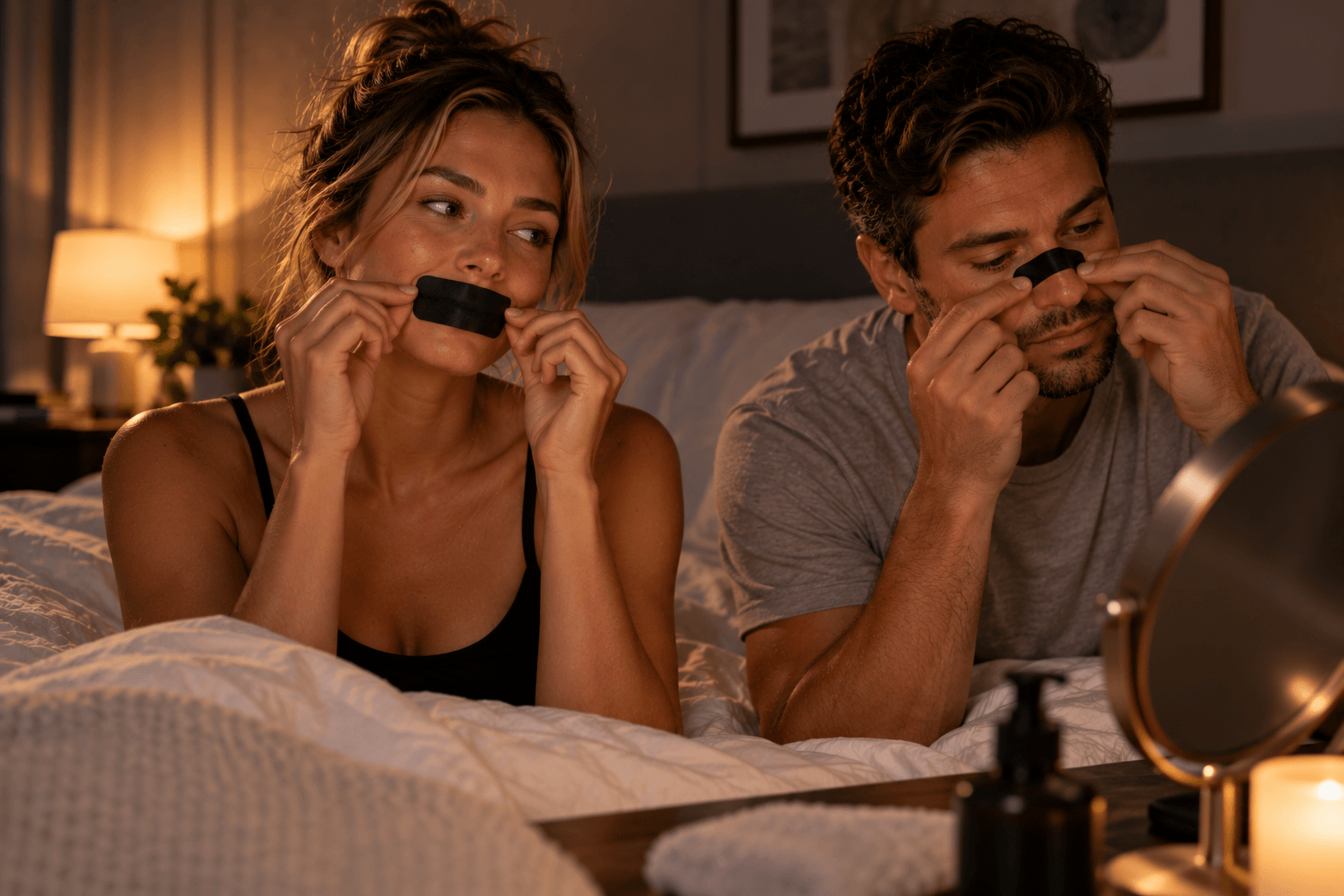
If your nose is clear but your mouth still falls open, mouth tape is a simple option many people like for keeping their lips closed and their breathing going through the nose. Check your nose first with our two-minute nose test, and read what is mouth taping? to see whether it suits you.
Check this first. Skip mouth tape and see a doctor if you snore loudly, wake up gasping, have been told you stop breathing in your sleep, or can't breathe comfortably through your nose. More on safety
If you want to try mouth tape and nasal strips together, our pick is the Titan Sleep System, which pairs TitanAir Nasal Strips with Titan Mouth Tape.
Read next
Common questions
Is 70 degrees too hot for sleeping?
Cleveland Clinic says a bedroom above 70 F is too hot for sleep. Most guidance points to somewhere in the low to mid 60s Fahrenheit, adjusted for your bedding and what you wear to bed.
Is it better to sleep hot or cold?
For most people a slightly cool room works better. A research review found that in real-life conditions with bedding, heat disrupts sleep stages more noticeably, while blankets and clothing help the body cope with cold.
Does a hot shower before bed help you sleep?
It can. A 2019 meta-analysis found that a warm bath or shower of 40 to 42.5 C (about 104 to 109 F), taken 1 to 2 hours before bed for as little as 10 minutes, was linked to falling asleep faster. The warmth draws blood to the hands and feet, which helps the body shed heat afterwards.
What temperature should a baby's room be?
Cleveland Clinic suggests 65 to 70 F for babies and toddlers, and Sleep Foundation says infants may benefit from up to 69 F. Both warn against overheating. Dress your baby in something breathable, limit blankets, and check the back of the neck or the stomach to see whether they feel sweaty.
Why do cold feet make it hard to fall asleep?
Sleep Foundation explains that your body cools down for sleep by sending blood to your hands and feet, and that people with chronically cold feet may be at higher risk of trouble falling asleep. It suggests a hot water bottle on cold nights.
Does humidity matter as much as temperature?
It adds to the problem in hot weather. A research review found humid heat makes it harder for sweat to evaporate, so the body struggles more to lose heat, and humid heat early in the night increased wakefulness.
Sources
About this article
- Research
- 5 published sources, listed above.
- Evidence
- Moderate. How we rate it
- Last checked
- October 3, 2026
- Funding
- Paid partner of Titan Recovery. Their ads are labeled.
- Found an error?
- Tell us. We log fixes on the corrections page.
* This content is for informational and educational purposes only and is not medical advice. It is not intended to diagnose, treat, cure or prevent any disease or health condition. Talk to a qualified healthcare provider about your health.