In short
- Healthy adults with a clear nose breathe almost entirely through it while asleep. In one study, the mouth carried only about 4% of the air they breathed in.
- In a sleep lab study of 12 healthy adults, upper airway resistance during sleep was more than twice as high when they breathed through the mouth.
- In a population study of nearly 5,000 adults, people with frequent nighttime nasal symptoms were more likely to report habitual snoring, daytime sleepiness and unrefreshing sleep.
- Clearing a congested nose has improved self-reported sleep in small trials, though nasal strip trials are mixed against placebo.
- No large trial has yet shown that switching healthy sleepers to nose breathing improves sleep quality, but the evidence points the same way, and strips and mouth tape are easy ways to try it.
Probably, for most people, though no one has run the definitive trial yet. Sleep lab studies show that nose breathing is the body's default at night and gives the airway an easier time, and a blocked nose is linked to snoring, daytime sleepiness and unrefreshing sleep. What's still missing is a large study showing that switching a healthy mouth breather to nose breathing makes them sleep better.
What do sleep studies actually measure?
Research: limited (what this means)Sleep studies measure "sleep quality" in several ways, because it isn't one number.
Some studies ask people how they slept, using questionnaires and sleep diaries. These capture how rested and satisfied people feel, which is what most of us care about. Others record sleep in a lab, measuring things like airway resistance, breathing pauses and how much air goes through the nose versus the mouth. Those are more objective, but they describe the body's mechanics rather than how refreshed you feel in the morning.
The nasal breathing research has good lab data on the mechanics and smaller, mixed data on how people feel. Keep that split in mind as you read the rest. The study that would settle the question, taking healthy people who mouth breathe at night, switching half of them to nose breathing, and tracking both lab measures and how rested they feel, hasn't been done yet.
Is nose breathing the body's default during sleep?
Yes, nose breathing is the body's default during sleep when the nose is clear. In a 2003 study in the Journal of Applied Physiology, researchers fitted 10 healthy adults with a mask that measured the nose and mouth separately. During sleep, the mouth carried only about 4% of the air they breathed in on average. That share stayed small in light sleep, deep sleep and REM sleep.
So a healthy sleeper is a nose breather almost all night. When someone breathes through their mouth for long stretches, it usually means something is getting in the way, such as congestion or a habit the mouth has fallen into. Why do I breathe through my mouth at night? covers the common reasons.
Does nose breathing make sleep easier on your airway?
Nose breathing does make sleep easier on your airway, according to the lab evidence. A second 2003 study, in the European Respiratory Journal, had 12 healthy adults sleep in a lab twice, once breathing through the nose and once through the mouth, in random order. Awake, airway resistance was about the same either way. Asleep, it was much higher through the mouth, with a median of 12.4 units compared with 5.2 through the nose. Breathing pauses and shallow breaths were also far more frequent with mouth breathing. The authors concluded that nose breathing gives the airway a mechanical advantage during sleep.
That's a measure of how hard the airway is working, not of how rested people felt. But a calmer, more open airway is a reasonable foundation for better sleep. We go through more of the differences in nasal vs. mouth breathing.
Is a blocked nose linked to worse sleep?
Yes, population data links a blocked nose to worse sleep. In the Wisconsin Sleep Cohort, published in 1997, nearly 5,000 adults answered questions about nasal symptoms and sleep, and 911 had lab sleep measurements. People who often or almost always had nighttime nasal symptoms, five or more nights a month, were significantly more likely to report habitual snoring, chronic daytime sleepiness and chronic unrefreshing sleep than people who rarely or never did.
That's a link, not proof of cause. But treatment studies point the same way. In a small 1998 trial, 20 people with allergic rhinitis used a steroid nasal spray or a placebo. Nasal congestion and sleep, recorded in daily diaries, improved significantly with the steroid spray and not with placebo. Daytime sleepiness also improved, though not by enough to be statistically significant. The authors suggested that people with year-round allergies may blame their tiredness on other things when it comes from congestion breaking up their sleep.
They also described one proposed way this happens. When the nose is congested, breathing in creates more suction inside the nasal airway. That may lead to partial collapse and obstruction, and to more micro-arousals, brief arousals that fragment sleep. It's a plausible explanation for why a blocked nose leaves people tired, though this small study tracked diaries rather than measuring arousals directly.
Do nasal strips improve sleep quality?
Nasal strips can improve sleep quality for some people, and the trials are honest about the variation. In a 2018 placebo-controlled trial, 59 adults with chronic nighttime congestion and trouble sleeping used a nasal strip or a placebo strip each night. After a week, both real strips improved satisfaction with sleep compared with placebo, along with symptoms on waking.
Two larger trials published in 2019, with 140 and 130 people, found no significant difference between real strips and placebo strips on sleep problems or feeling tired on waking. Both groups improved from where they started, and the authors suggested a strong placebo effect could explain it.
So strips aren't a guaranteed fix, but they're drug-free and were well tolerated in these trials. If your nose feels narrow at night, they're worth a try. Do nasal strips improve sleep? goes into the full research.
Where does mouth tape fit?
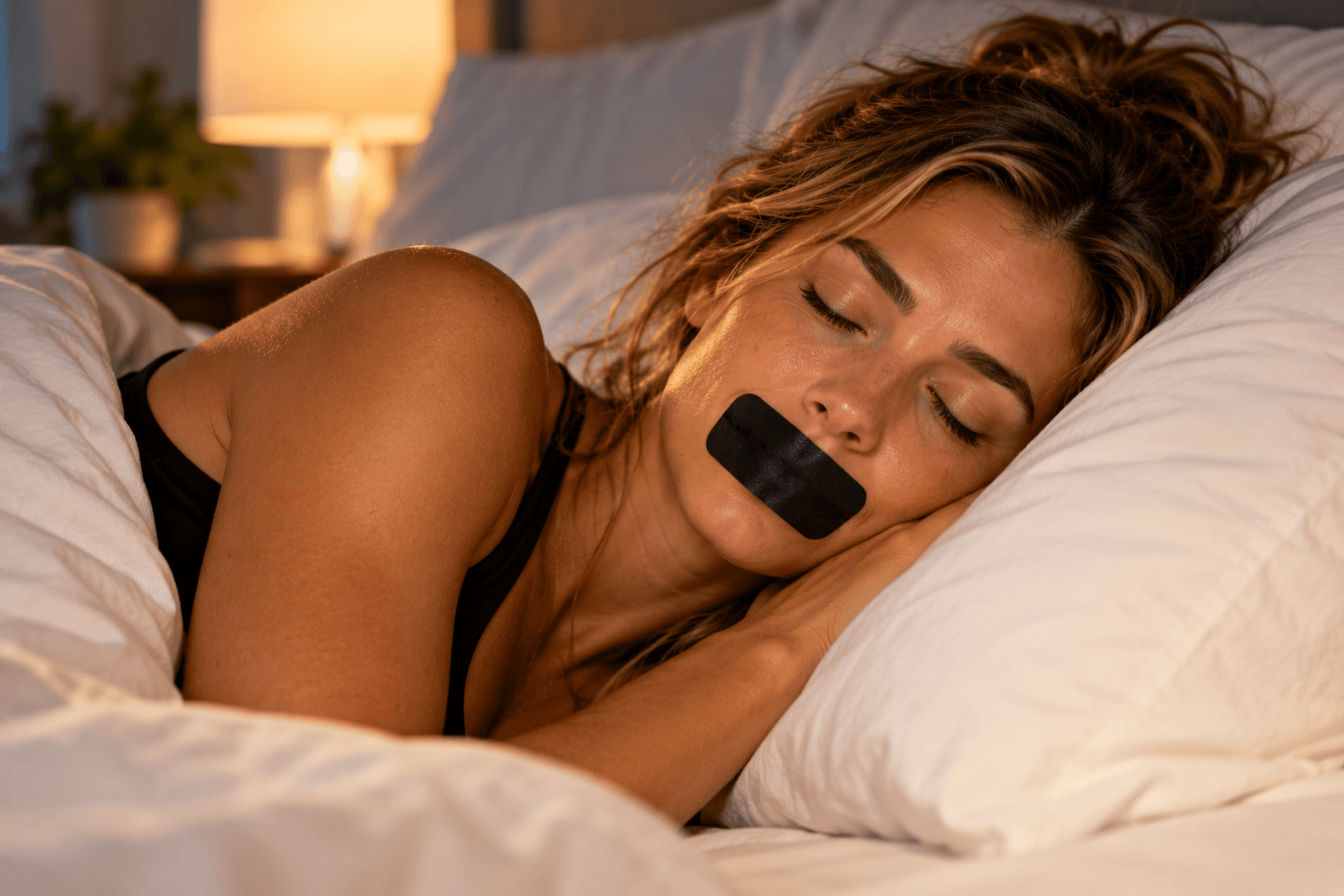
Mouth tape doesn't open the nose. It keeps your lips closed so that, if your nose is clear, you stay a nose breather through the night. For people whose mouth falls open out of habit, that's often the missing piece, and it can be worn alongside a nasal strip.
The direct research on tape and sleep is still thin. A 2025 systematic review in PLOS One found 10 studies with 213 patients in total. Two showed improvements on some measures, others showed no difference, and the reviewers warned of a potentially serious risk for people who tape with a blocked nose. Many of the studies excluded anyone with nasal obstruction.
That makes the order clear. Check your nose first with our two-minute nose test, clear what you can, then try tape. How to start mouth taping walks through the first week, and how to tell if mouth tape is working covers what to look for.
How can you tell if nose breathing is helping you?
You can tell if nose breathing is helping you with a simple two-week check, since the research can't answer this for you personally. Note how you feel each morning, whether you wake with a dry mouth or sore throat, and whether a partner hears less snoring. Try a week with your usual routine and a week with a strip, tape or both. A sleep tracker can add data, though snoring apps and sleep trackers explains their limits.
If you snore loudly, gasp or stop breathing in your sleep, or feel exhausted however long you sleep, see a doctor. Those can be signs of sleep apnea, which needs proper testing, and mouth tape or strips aren't a treatment for it. For more on this topic, browse our nasal breathing articles.
Check this first. Skip mouth tape and see a doctor if you snore loudly, wake up gasping, have been told you stop breathing in your sleep, or can't breathe comfortably through your nose. More on safety
If you want to try mouth tape and nasal strips together, our pick is the Titan Sleep System, which pairs TitanAir Nasal Strips with Titan Mouth Tape.
Read next
Common questions
Is it better to sleep breathing through your nose or mouth?
Through your nose, for most people. Healthy adults breathe almost entirely through the nose while asleep, and a sleep lab study found the airway meets much less resistance during sleep with nasal breathing than with mouth breathing.
Does mouth breathing ruin sleep quality?
It may. Studies link a blocked nose at night with snoring, daytime sleepiness and unrefreshing sleep. Whether mouth breathing itself lowers sleep quality in otherwise healthy people hasn't been tested directly.
Do nasal strips improve sleep quality?
Results are mixed. A 2018 trial in people with chronic nighttime congestion found strips improved sleep satisfaction compared with placebo after a week. Two larger 2019 trials found no clear difference from placebo strips, possibly because of a strong placebo effect.
Does mouth taping improve sleep?
The research is limited. A 2025 systematic review found 10 studies with 213 patients and mixed results. Many people use tape as a simple way to stay a nose breather at night, but only tape when your nose is clear.
How can you breathe through your nose while sleeping?
Clear your nose first, then help your lips stay closed. In a 1998 trial of people with allergic rhinitis, a steroid nasal spray improved congestion and self-reported sleep compared with placebo, and in a 2018 trial nasal strips improved sleep satisfaction against placebo strips in people with chronic nighttime congestion. Once you can breathe comfortably through your nose with your mouth closed, mouth tape can keep you a nose breather through the night.
How do sleep researchers measure sleep quality?
Some studies use questionnaires and sleep diaries, which capture how rested people feel. Others use sleep lab recordings that track sleep stages, breathing and airway resistance. The nasal breathing research uses both, and they don't always agree.
Can a stuffy nose make you tired during the day?
It can. In a small 1998 trial of people with allergic rhinitis, a steroid nasal spray improved congestion and self-reported sleep compared with placebo, and the authors suggested daytime fatigue may come from congestion breaking up sleep.
Sources
- Partitioning of inhaled ventilation between the nasal and oral routes during sleep in normal subjects
- Effect of nasal or oral breathing route on upper airway resistance during sleep
- Nasal obstruction as a risk factor for sleep-disordered breathing
- Nasal congestion secondary to allergic rhinitis as a cause of sleep disturbance and daytime fatigue and the response to topical nasal corticosteroids
- Effects of nasal dilator strips on subjective measures of sleep in subjects with chronic nocturnal nasal congestion: a randomized, placebo-controlled trial
- Sleep Quality and Congestion with Breathe Right Nasal Strips: Two Randomized Controlled Trials
- Breaking social media fads and uncovering the safety and efficacy of mouth taping in patients with mouth breathing, sleep disordered breathing, or obstructive sleep apnea: A systematic review
About this article
- Research
- 7 published sources, listed above.
- Evidence
- Limited. How we rate it
- Last checked
- October 10, 2026
- Funding
- Paid partner of Titan Recovery. Their ads are labeled.
- Found an error?
- Tell us. We log fixes on the corrections page.
* This content is for informational and educational purposes only and is not medical advice. It is not intended to diagnose, treat, cure or prevent any disease or health condition. Talk to a qualified healthcare provider about your health.