In short
- Nasal strips widen the nasal valve from the outside, which makes a congested nose easier to breathe through. They don't reduce the allergic swelling itself.
- In a 2018 trial of 59 people with chronic nighttime congestion, strips beat a placebo strip on satisfaction with sleep and on symptoms when waking.
- Two larger 2019 trials found real and placebo strips performed about the same on sleep quality, possibly because of a strong placebo effect.
- Strips work best alongside treatments for the swelling. Steroid nasal sprays take several days to reach full effect, and saline rinses may reduce allergy symptoms.
- Strips are drug-free, so they can sit alongside your allergy routine without adding another medicine.
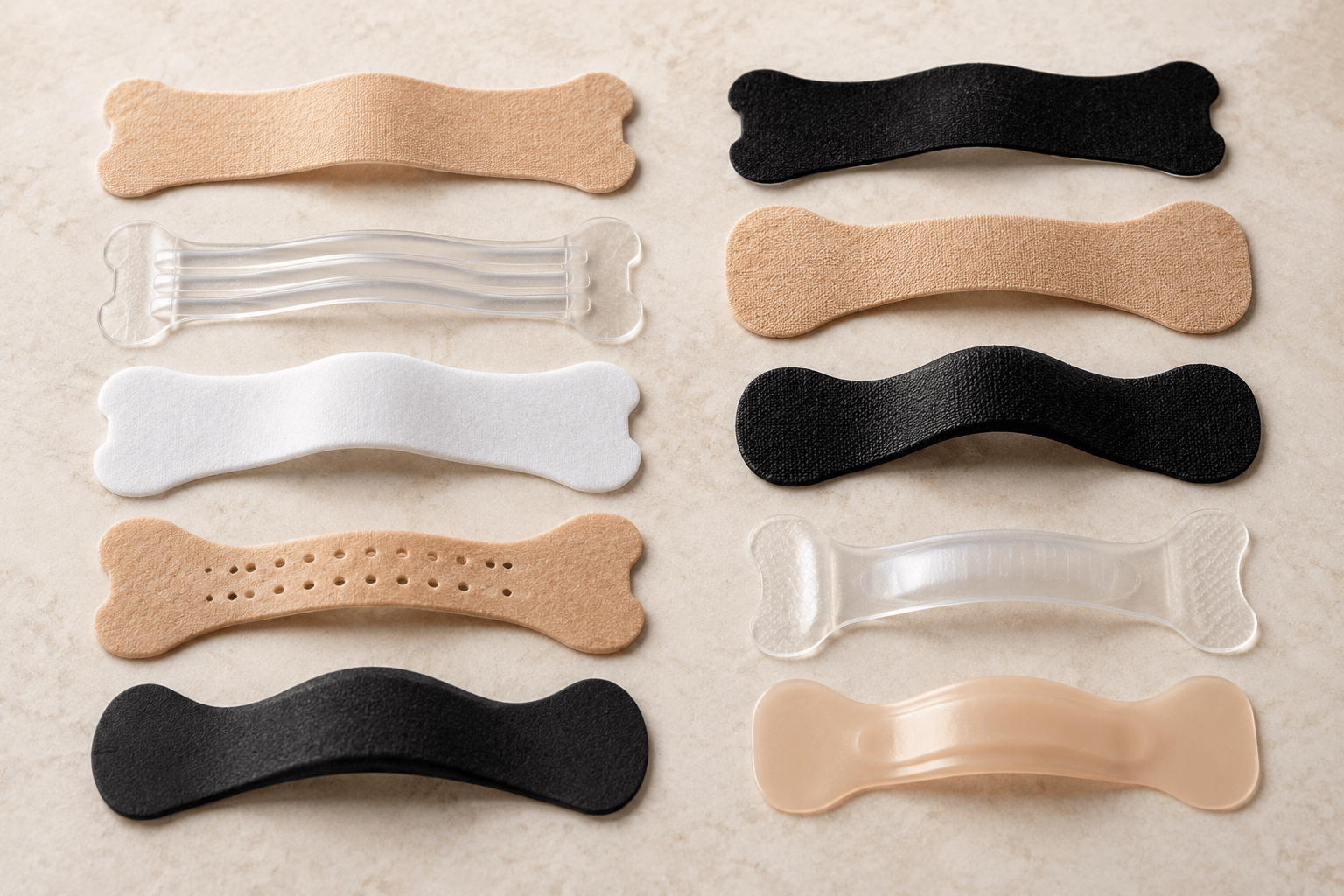
Nasal strips can make an allergy-congested nose easier to breathe through at night. A strip widens the front of the nose from the outside, and in a 2018 placebo-controlled trial of people with chronic nighttime congestion, real strips beat a placebo strip on satisfaction with sleep. They work best as one part of an allergy routine, because the swelling that causes allergy congestion sits deeper inside the nose, where sprays and rinses do their work. Two larger trials found no difference from a placebo strip, so expect a helpful extra rather than a fix.
Why do allergies block your nose at night?
Allergic rhinitis inflames the lining of the nose, and the swollen lining narrows the airway. A 1998 study in the Journal of Allergy and Clinical Immunology described allergic rhinitis as affecting up to 20% of the population. The authors proposed that the extra suction needed to breathe through a congested nose may make the nasal airway collapse inward, which could add brief arousals from sleep.
In that study of 20 people with year-round allergies, a steroid nasal spray improved congestion and self-reported sleep compared with a placebo. Daytime sleepiness also improved, but the change was not statistically significant. The authors noted that people with year-round allergies may blame their daytime tiredness on things like medication side effects, when broken sleep from a congested nose may be part of the cause. That's a good reason to take nighttime congestion seriously.
If your symptoms seem to peak in the evening, why allergies get worse at night covers the usual reasons.
What can a nasal strip do for allergy congestion?
Research: limited (what this means)A strip lifts the sides of the nose and widens the nasal valve, the narrow section just inside the nostrils. A 2016 meta-analysis found that nasal dilators improve nasal breathing. That is a purely mechanical effect. The strip doesn't shrink swollen tissue or clear mucus, so how much it helps depends on how much of your blockage is at the front of the nose.
The most relevant research comes from three trials in people with chronic nasal congestion at night and trouble sleeping. None of them was limited to allergy sufferers, but in the first trial the congestion was attributed to rhinitis or an upper respiratory infection in 93.4% of participants.
That 2018 trial randomized 59 people to a Breathe Right clear strip, a prototype strip or a placebo strip without springs for two weeks. Both real strips improved satisfaction with sleep at day 7 compared with placebo, and both did better than placebo on a questionnaire about symptoms on waking. There was no difference between the strips on a separate congestion scale.
Two larger trials published in 2019, with 140 and 130 participants, used a questionnaire designed for people whose allergic nose and eye symptoms happen mainly at night. Real strips were no better than placebo strips on sleep problems or on feeling tired and unrefreshed in the morning. Both groups improved from where they started, and the authors suggested a strong placebo effect.
All three trials were sponsored by GlaxoSmithKline Consumer Healthcare, which the papers list as the maker of Breathe Right strips. Taken together, they suggest a strip may make some nights feel a bit easier, but the evidence that it improves allergy-related sleep is mixed.
Why might a strip feel less helpful when you're very congested?
A 1998 study in Laryngoscope helps explain how strips behave with congestion. Researchers tested an external nasal dilator in 33 people whose nasal blockage came from congested lining, 28 people with a deviated septum and 51 people with healthy noses. The dilator widened the narrowest part of the nose and lowered nasal resistance significantly in all three groups. The people with congested lining had a measurable improvement too, but they didn't report feeling more open.
The practical takeaway is that a strip still does its job on a swollen nose, but the swelling further in can mask the benefit. Bringing the swelling down with a rinse or a spray, then adding a strip, gives you both effects at once. Breathe Right makes the same point in its own way: congestion from a cold or allergies narrows the nasal breathing space, and the strip widens the nostrils so air comes in more easily.
What works on the congestion itself?
Steroid nasal sprays act on the inflammation behind allergic congestion. The American Academy of Allergy, Asthma & Immunology says they take several days to become fully effective, so daily use is recommended. For seasonal allergies, it suggests starting one to two weeks before pollen season, and for year-round allergies, using them year-round. It advises spraying them pointed away from the septum, the middle wall of the nose, and lists dryness, burning, stinging and nosebleeds as possible side effects. Talk to a pharmacist or doctor before starting one.
Saline rinses are a drug-free option. A 2018 Cochrane review of 14 studies with 747 participants found that saline irrigation may reduce allergy symptoms compared with no saline for up to three months, in both adults and children. The reviewers rated the evidence low quality. Our guide on how to use a saline rinse explains the water safety steps.
A strip works on a different part of the problem from either of these, so it isn't an either-or choice. If you're curious about how the strip itself works, see how nasal strips work. If you're weighing a strip against a spray, nasal strips vs nasal spray compares them, and decongestant spray rebound explains why decongestant sprays are only for short-term use.
What's a simple bedtime routine for allergy season?
A bedtime routine for allergy season doesn't need to be complicated. A routine that puts each piece where it works best looks like this:
- If you use a saline rinse, do it first, following the water safety steps in how to use a saline rinse.
- Use your steroid spray, if you have one, as directed.
- Wash and dry the outside of your nose, since Breathe Right says the strip's adhesive won't stick properly to wet, oily or moisturized skin.
- Put the strip on right above where your nose flares out and rub it gently into place.
- Breathe through your nose for a minute with your mouth closed before deciding about mouth tape.
Breathe Right says strips can be used daily for up to 12 hours, with a fresh strip each night. It also makes menthol-scented strips that it suggests for cold and allergy season, if you like a scent at bedtime. If your skin gets sore with nightly use, nasal strip skin irritation covers gentle removal.
Should you use mouth tape during allergy season?
Use mouth tape during allergy season only on nights when your nose isn't blocked. Mouth tape only makes sense when you can breathe comfortably through your nose with your mouth closed. On bad allergy nights, leave it off and try again once your nose clears. Our two-minute nose test is a simple way to check.
Check this first. Skip mouth tape and see a doctor if you snore loudly, wake up gasping, have been told you stop breathing in your sleep, or can't breathe comfortably through your nose. More on safety
If you want to try nasal strips, our pick is TitanAir Nasal Strips.
When should you see a doctor?
See a doctor if your nose is blocked most nights for weeks, if over-the-counter options aren't helping, or if the blockage is always on one side. If you snore loudly, gasp or choke in your sleep, or someone has noticed pauses in your breathing, get checked for a sleep disorder. A nasal strip is not a treatment for any of these. For more on strips through the seasons, browse our nasal strips topic.
Common questions
Can nasal strips replace allergy medicine?
No. A strip only holds the front of the nose open. It doesn't calm the inflammation that causes allergic congestion, so it can't do the job of an allergy treatment.
Do nasal strips work for hay fever at night?
They may make breathing feel a little easier for some people. Trials in people with chronic nighttime congestion, most of it from rhinitis, had mixed results, with one positive trial and two that found no difference from a placebo strip.
Why does my nose still feel blocked with a strip on?
A strip widens the front of the nose, but allergic swelling sits further inside. In a 1998 study, a dilator widened the nose in people with congested lining, yet they didn't feel more open. Treating the swelling as well, with a rinse or a spray, gives the strip a better chance.
What's a good order for an allergy-season bedtime routine?
Do a saline rinse or your nasal spray first, following the product's directions, then put on a strip once your nose is dry on the outside. If you use mouth tape, add it last, and only if you can breathe comfortably through your nose.
Can I use a nasal strip with a steroid nasal spray?
The two work on different parts of the problem, so using one doesn't rule out the other. Ask a pharmacist or doctor about the spray itself, especially if you take other medicines.
Should I use mouth tape when my allergies are bad?
Not while your nose is blocked. Wait until you can breathe comfortably through your nose with your mouth closed.
Sources
- Nasal congestion secondary to allergic rhinitis as a cause of sleep disturbance and daytime fatigue and the response to topical nasal corticosteroids
- Effects of nasal dilator strips on subjective measures of sleep in subjects with chronic nocturnal nasal congestion: a randomized, placebo-controlled trial
- Sleep Quality and Congestion with Breathe Right Nasal Strips: Two Randomized Controlled Trials
- Nasal Dilators (Breathe Right Strips and NoZovent) for Snoring and OSA: A Systematic Review and Meta-Analysis
- Nasal steroids defined
- Saline irrigation for allergic rhinitis
- Role of the external nasal dilator in the management of nasal obstruction
- Breathe Right FAQs
About this article
- Research
- 8 published sources, listed above.
- Evidence
- Limited. How we rate it
- Last checked
- October 3, 2026
- Funding
- Paid partner of Titan Recovery. Their ads are labeled.
- Found an error?
- Tell us. We log fixes on the corrections page.
* This content is for informational and educational purposes only and is not medical advice. It is not intended to diagnose, treat, cure or prevent any disease or health condition. Talk to a qualified healthcare provider about your health.