In short
- Nasal strips work the same way at any adult age, by lifting the sides of the nose to widen the nasal valve, and they don't involve any medicine.
- Older skin is thinner and tears more easily, so wash gently, apply the strip without stretching it and always remove it slowly with warm water.
- Some common medicines, including ACE inhibitors, beta blockers, aspirin and ibuprofen, can cause a blocked nose, according to the NHS. Ask your doctor before changing any of them.
- Blood thinners, anti-inflammatory drugs and corticosteroids are listed as risk factors for skin injury from adhesives, so take extra care with removal if you use them.
- The risk of sleep apnea rises with age, and strips don't treat it. Loud snoring with gasping, pauses in breathing or daytime sleepiness needs a doctor.
Nasal strips are a simple, drug-free way for older adults to breathe more easily through the nose at night, and they work the same way at 70 as at 30. The things that change with age are around the strip: skin that's thinner and slower to heal, medicines that can block the nose or make skin fragile, and a higher chance that loud snoring is sleep apnea. Here's what to know about each.
Do nasal strips work the same way later in life?
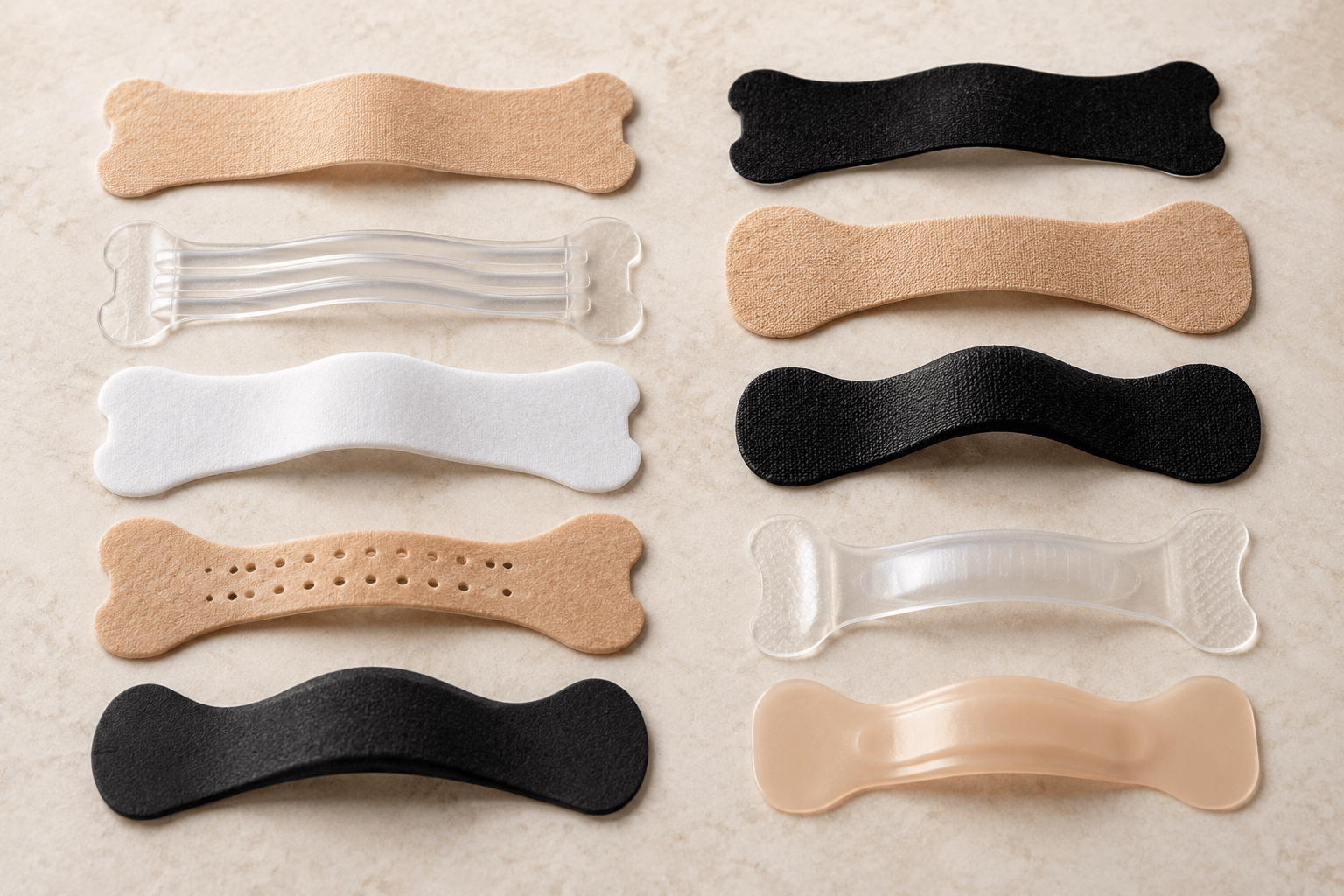
Yes, nasal strips work the same way later in life. A strip has springy bands that lift the sides of the nose from the outside. In a 1997 placebo-controlled study, strips significantly increased the area of the nasal valve, the narrowest part of the nasal airway, in every group the researchers measured. A 2016 meta-analysis noted that nasal dilators improve nasal breathing. How nasal strips work covers the mechanics.
Research: limited (what this means)There aren't trials of nasal strips in older adults specifically, so the evidence rating here is limited. What we do know is that the nose changes with age in ways that can make a strip appealing. A 2016 review of the aging nose, which its authors call presbynasalis, found that people often feel more nasal obstruction as they get older, and that a runny nose becomes more common. That happens even though the inside of the nose tends to get bigger: a CT study of 62 adults found intranasal volume rose steadily from the 20s to 70 and over.
Breathing route shifts with age too, at least in men. A small 1986 sleep study of 14 healthy adults found that men breathed a larger share of their air through the mouth during sleep than women did, and that the share rose with age in men. Our guide to signs you breathe through your mouth at night helps you check whether that's you.
Is older skin more fragile under a strip?
Older skin can be more fragile under a strip. MedlinePlus explains that the outer layer of skin thins with age, blood vessels in the skin become more fragile and bruise easily, and rubbing or pulling on the skin can cause skin tears. Aging skin also repairs itself more slowly, with wounds healing up to four times slower. Oil glands make less oil too, especially in women after menopause, which leaves skin drier.
Clinical guidance on medical adhesives reflects this. A 2025 evidence summary lists older age and dry skin among the risk factors for skin injury from adhesives. A 2017 case report describes the skin on the face of a 52-year-old woman tearing when a strong medical tape was removed, and explains that falling estrogen after menopause makes facial skin more prone to injury.
None of that rules strips out. It means the way you put them on and take them off matters more. If your skin is dry or sensitive, one major strip maker suggests its clear strips, which use a non-porous material that it says is easier to remove. Which nasal strips suit sensitive skin goes into the options.
Could your medicines play a part?
Your medicines could play a part in two ways. First, some medicines can cause a blocked nose. The NHS lists ACE inhibitors, beta blockers, aspirin and anti-inflammatory painkillers such as ibuprofen among the causes of non-allergic rhinitis, along with hormone replacement therapy and an underactive thyroid. It says a GP may change a medicine if they think it's causing the symptoms. A strip can make breathing easier in the meantime, but don't stop or swap a prescription on your own.
Second, some medicines affect the skin. The 2025 evidence summary lists anticoagulant drugs, anti-inflammatory drugs and corticosteroids among the risk factors for skin injury from adhesives, and the 2017 case report also names long-term steroid use. If you take a blood thinner or a steroid, be especially gentle with removal and check the skin each morning.
Two more points are worth knowing. The NHS says nasal sprays you buy without a prescription to unblock your nose shouldn't be used for more than a week, because longer use can make the problem worse. And it says sleeping pills can make sleep apnea worse, so take them only if a doctor recommends them.
How do you put on and take off a strip gently?
To put on and take off a strip gently, a few habits protect thinner skin:
- Wash with a mild cleanser. The 2025 evidence summary suggests mild cleansers for older skin and advises avoiding irritating or alkaline soaps.
- Dry the nose completely. Strip makers say the adhesive won't stick to wet, oily or moisturized skin.
- Lay the strip on without stretching it, just above the flare of the nostrils, then press it down gently so there are no creases. The evidence summary recommends applying adhesives without tension.
- In the morning, wet the strip with warm water for about 10 seconds, then lift each side slowly. The 2017 case report advises keeping tape close to the skin as you peel and supporting the newly exposed skin with a finger.
Strip makers also say not to wear a strip for more than 12 hours a day, not to use one over sores, sunburn or irritated skin, and to stop if a rash appears. One major maker says its packaging contains natural rubber latex, so check the box if you have a latex allergy. Our step-by-step application guide and nasal strip skin irritation have more detail.
When should you see a doctor?
See a doctor if you snore along with signs of sleep apnea, which is the main reason to go. The National Heart, Lung, and Blood Institute (NHLBI) says the risk of sleep apnea increases as you get older, partly because fatty tissue can build up in the neck and tongue. Its list of symptoms includes breathing that starts and stops, frequent loud snoring, gasping for air, daytime sleepiness, headaches and waking often during the night to urinate. The 2016 meta-analysis found nasal dilators haven't been shown to improve sleep apnea, so a strip isn't the answer if those signs are present. Sleep apnea warning signs has the full list.
See a doctor about your nose too if it's blocked most of the time, if one side is always worse, or if the NHS checklist applies: symptoms that are getting worse, affecting your sleep or with no clear cause. And see a doctor about your skin if it tears, bleeds or doesn't heal after a strip.
Can you pair a strip with mouth tape?
Many people pair a nasal strip with mouth tape once the nose feels clear at bedtime. Close your mouth and breathe through your nose with the strip on for a minute or two. If that's easy, tape can help keep your lips closed. The Sleep Foundation says mouth tape shouldn't be used by people with untreated sleep apnea or chronic nasal congestion. Mouth taping for older adults covers dentures, dry mouth and the other checks that matter after 60, and our two-minute nose test is a good place to start.
Check this first. Skip mouth tape and see a doctor if you snore loudly, wake up gasping, have been told you stop breathing in your sleep, or can't breathe comfortably through your nose. More on safety
Our pick (paid partner)
For older adults who want to try strips, our pick is TitanAir Nasal Strips. Titan describes them as drug-free external nasal dilators with flexible spring-loaded bands, says to place them just above the flare of the nostrils on the soft part of the nose, and recommends loosening them with warm water and peeling slowly from the ends inward, which suits thinner skin. Titan says they're third-party tested and certified PFAS-free, and it offers a 30-night guarantee.
You'll find all our strip guides in the nasal strips topic.
Read next
- 12 tips for getting more out of nasal strips
- Why nasal strips sometimes don't work
- Questions to ask your doctor about snoring
Common questions
Are nasal strips safe for older adults?
For most older adults, yes, as long as the skin on the nose is healthy. Strips are drug-free and work from the outside. Take care with thin or fragile skin, don't use them over sores or irritated skin, and stop if you get a rash.
Can nasal strips tear thin skin?
They can if they're pulled off quickly. Clinical guidance lists older age as a risk factor for skin injury from adhesives. Wet the strip with warm water first, then peel it slowly, keeping it low to the skin while a finger holds the skin beside it.
Can my blood pressure medicine cause a stuffy nose?
It can. The NHS lists ACE inhibitors and beta blockers among the medicines that can cause non-allergic rhinitis, along with aspirin and anti-inflammatory painkillers. Don't stop a prescription yourself. A doctor can review whether a medicine is the cause.
Why does my nose feel more blocked as I get older?
A 2016 review of the aging nose found that people often feel more nasal obstruction with age, even though the inside of the nose tends to get larger. A runny nose also becomes more common. Allergies, medicines and a deviated septum can add to it.
Do nasal strips help sleep apnea in older people?
No. A 2016 meta-analysis found nasal dilators haven't been shown to improve obstructive sleep apnea. Since the risk of sleep apnea rises with age, loud snoring with pauses in breathing, gasping or daytime sleepiness should be checked by a doctor.
Sources
- Aging changes in skin
- Summary of the best evidence for the prevention and management of medical adhesive-related skin injuries in patients with tracheal intubation
- Facial skin injury caused by acrylate-based adhesive tapes in a post-menopausal patient: a preventable cause
- Non-allergic rhinitis
- Presbynasalis
- Intranasal volume increases with age: Computed tomography volumetric analysis in adults
- Breathing route during sleep
- Physiologic effects of an external nasal dilator
- Nasal Dilators (Breathe Right Strips and NoZovent) for Snoring and OSA: A Systematic Review and Meta-Analysis
- Breathe Right FAQs
- Sleep apnea: causes and risk factors
- Sleep apnea: symptoms
- Sleep apnoea
- Mouth taping for sleep: does it work?
- TitanAir Nasal Strips
About this article
- Research
- 15 published sources, listed above.
- Evidence
- Limited. How we rate it
- Last checked
- October 6, 2026
- Funding
- Paid partner of Titan Recovery. Their ads are labeled.
- Found an error?
- Tell us. We log fixes on the corrections page.
* This content is for informational and educational purposes only and is not medical advice. It is not intended to diagnose, treat, cure or prevent any disease or health condition. Talk to a qualified healthcare provider about your health.