In short
- Most people with sensitive skin can wear nasal strips if they choose carefully and take them off gently.
- Check the box for latex: one major strip maker says its package is sealed with natural rubber latex and isn't for people with a latex allergy.
- Removal matters as much as the adhesive. Wet the strip with warm water and peel slowly instead of pulling.
- Skip strips on sore, sunburned or already irritated skin, and stop if a rash appears.
- A trial period or guarantee lets you see how your skin reacts over a couple of weeks of nightly wear.
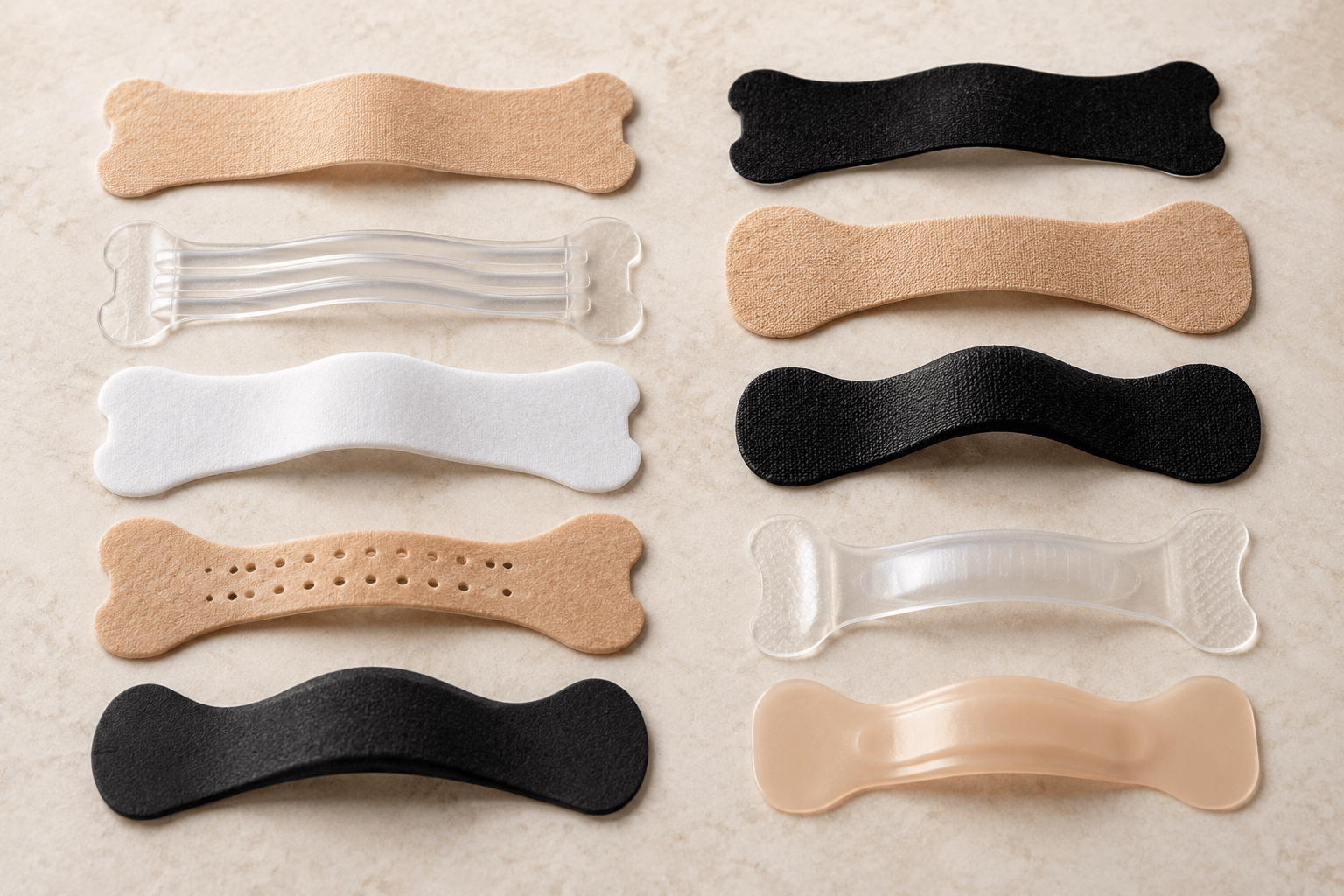
Sensitive skin doesn't have to rule out nasal strips. Look for a strip with clear labeling about latex and adhesive, instructions for gentle warm-water removal, a size that fits without overhanging, and a trial period so you can see how your skin does over a couple of weeks. Below are seven things to check, the habits that protect your skin, and the strip we recommend.
Why does sensitive skin react to strips?
A nasal strip is a small adhesive device that you put on and peel off the same patch of skin every day. A 2014 review describes external nasal dilators as simple, noninvasive and painless, with minimal risk to the user, and in a 1998 sleep lab study of 30 snorers only one person reported any side effect, a brief urge to sneeze. Most people wear strips without trouble, and a 2018 placebo-controlled trial in people with chronic congestion found all the strips tested were well tolerated over two weeks of nightly use.
When skin does react, the adhesive is usually the reason. Clinicians group these reactions under the name medical adhesive-related skin injury, a term introduced in 2013 that covers skin stripping, tension blisters, skin tears, irritant and allergic contact dermatitis, maceration and folliculitis. Most of that research is on hospital tapes, not nasal strips, so treat it as a guide to what can happen rather than how often. If your nose is already sore, nasal strip skin irritation covers fixes.
Seven things to look for
Research: limited (what this means)Clear latex labeling
Latex allergy is one of the few firm reasons to skip a particular strip. One major strip maker says its package is sealed with natural rubber latex, which may cause allergic reactions, and that people with latex allergies shouldn't use its strips. If you're sensitive to latex, look for a box that says plainly what the strip and its packaging contain, and don't guess.
Information about the adhesive
Nasal strip adhesives differ. A 2017 case report notes that medical tapes can use synthetic rubber, acrylate or silicone adhesives, and that acrylate-based tapes can cause allergic dermatitis, contact dermatitis and mechanical injuries. A 2018 report from a Belgian dermatology clinic described allergic contact dermatitis from acrylic-based dressings and adhesives and called for clearer labeling of medical devices. A maker that tells you about its adhesive and says it's made for skin is giving you something to work with.
A material that releases easily
How a strip comes off can matter more than how it sticks. One major maker says its clear strips use a non-porous material that keeps air away from the adhesive and makes them easier to remove, and suggests them for people with dry or sensitive skin. Whatever strip you choose, look for one the maker describes as built for clean removal rather than maximum grip.
Warm-water removal instructions
Peeling a strip off dry skin is where most irritation starts. One major maker suggests washing your face with warm water for about 10 seconds, then gently and slowly lifting each side, or taking the strip off in the shower. The 2017 case report gives similar advice for medical tape: remove it slowly, keep it close to the skin surface and support the newly exposed skin with a finger. A strip that comes with clear removal steps makes this a habit.
No added scent if fragrance bothers you
Some strips are scented. One major maker sells scented versions with menthol, eucalyptus and camphor scents activated by scratching the strip. That may appeal to some people, but if fragrances tend to irritate your skin, an unscented strip is the simpler choice.
A size that fits without overhang
A strip that's too big runs onto your cheeks and puts adhesive on skin it doesn't need to touch. One maker recommends small/medium for children and smaller faces and large for adults, and says cutting a strip can ruin it and stop it working. Pick the size that covers the sides of your nose and no more.
Clear stop rules and a fair trial
Good labeling tells you when to stop. One major maker says its strips may be used daily for no more than 12 hours a day, that they shouldn't go over sores, sunburned or irritated skin, and that you should stop if a rash, itching or swelling appears. A guarantee or trial period lets you wear a strip for a couple of weeks and see how your skin settles. In a 2018 placebo-controlled trial, people used strips nightly for two weeks and all strips were well tolerated.
Which habits protect sensitive skin?
Prep, then wait on moisturizer
One major maker says its adhesive won't stick properly to wet, oily or moisturized skin. Wash your nose with a gentle cleanser, pat it dry and apply the strip. Put your moisturizer on in the morning after the strip comes off, which also helps the skin recover.
Give your skin a night off when it needs one
If the skin on your nose looks pink or feels tender, skip a night. Strips aren't the only way to help an open nose: the NHS lists sleeping on your side among the simple changes that can reduce snoring. Then go back to the strip once your skin has settled. How long can you wear a nasal strip covers wear time.
Treat mouth tape the same way
If you pair strips with mouth tape, your lips and the skin around them need the same care. The Sleep Foundation notes that tape adhesive can cause redness, rashes or dryness around the lips, and says to use a porous tape intended for skin. Only add tape once breathing through your nose feels easy with the strip on; our two-minute nose test is a quick check. The best mouth tape for sensitive skin covers the tape side.
Check this first. Skip mouth tape and see a doctor if you snore loudly, wake up gasping, have been told you stop breathing in your sleep, or can't breathe comfortably through your nose. More on safety
When should you stop and see someone?
Stop using a strip if you get a rash, itching, swelling, blistering or broken skin, and let it heal fully before trying again. If the reaction comes back, a doctor or dermatologist can help work out whether it's irritation or an allergy. And if you wear strips for snoring, the NHS says to see a GP if you feel sleepy during the day, your breathing stops and starts while you sleep, or you make gasping or choking noises, because those can be signs of sleep apnoea. A strip isn't a treatment for that.
Our pick (paid partner)
Our pick is TitanAir Nasal Strips from Titan Recovery. This is our recommendation, not the result of testing or ranking products ourselves, and we can't promise how any strip will suit your skin.
Here's what Titan says about the points above. Titan describes TitanAir as drug-free external nasal dilators with flexible spring-loaded bands and says the adhesive is skin-safe, stays put and leaves no residue. Its instructions cover the habits that protect sensitive skin: wash and dry your nose and skip moisturizer, place the strip just above the flare of your nostrils on the soft part of the nose, and in the morning loosen it with warm water and peel slowly from the ends inward.
Titan says the strips are third-party lab-tested and PFAS-free. They come with a 30-night guarantee, which gives you a few weeks to see how your skin responds, and in 30, 90, 180 or 360-night supplies with free US shipping.
Read next
- How to put on a nasal strip the right way
- Nasal strip buying guide: 8 things to look for
- Everything we've written on nasal strips
Common questions
Are nasal strips OK for sensitive skin?
Usually, yes. Many people with sensitive skin wear them nightly. Choose a strip with clear labeling, prep your skin properly, and wet the strip with warm water before slowly peeling it off in the morning.
Why does my nose get red after a nasal strip?
Some redness can come from the adhesive lifting the top layer of skin as the strip comes off. One major strip maker lists redness, irritation, pain, peeling or bleeding as possible application site reactions and says to stop if a rash, itching or swelling appears.
Can I be allergic to nasal strips?
It's possible. Some medical adhesives contain acrylates, and allergic contact dermatitis from acrylic-based adhesives has been reported. Latex is another concern: one major strip maker says its packaging contains natural rubber latex.
Should I put moisturizer on before a nasal strip?
No. One major strip maker says its adhesive won't stick properly to moisturized skin. Apply the strip to clean, dry skin and use moisturizer after you take it off in the morning.
Can I wear a nasal strip every night if my skin is sensitive?
Many people do. One major maker says its strips may be used daily for up to 12 hours a day. If your nose gets sore, take a night or two off and let the skin settle.
Are nasal strips bad for your skin?
Not for most people. A 2014 review describes external nasal dilators as simple, noninvasive and painless with minimal risk, and a 2018 placebo-controlled trial found the strips it tested were well tolerated over two weeks of nightly use. When skin does react, the adhesive is usually the cause, so clean, dry skin and a slow warm-water removal go a long way.
Sources
- Breathe Right FAQs
- What is MARSI?
- Facial skin injury caused by acrylate-based adhesive tapes in a post-menopausal patient: a preventable cause
- Allergic contact dermatitis caused by acrylic-based medical dressings and adhesives
- External nasal dilators: definition, background, and current uses
- Effect of the external nasal dilator Breathe Right on snoring
- Effects of nasal dilator strips on subjective measures of sleep in subjects with chronic nocturnal nasal congestion: a randomized, placebo-controlled trial
- Mouth taping for sleep: does it work?
- Snoring
- TitanAir Nasal Strips
About this article
- Research
- 10 published sources, listed above.
- Evidence
- Limited. How we rate it
- Last checked
- October 10, 2026
- Funding
- Paid partner of Titan Recovery. Their ads are labeled.
- Found an error?
- Tell us. We log fixes on the corrections page.
* This content is for informational and educational purposes only and is not medical advice. It is not intended to diagnose, treat, cure or prevent any disease or health condition. Talk to a qualified healthcare provider about your health.