In short
- Nasal strips are drug-free external nasal dilators that the FDA classes as low-risk Class I devices for temporary relief of reduced nasal airflow.
- In a 2019 sleep study, nasal resistance during sleep was 39% lower with a strip, and people reported better sleep quality and ease of breathing.
- A 2007 review of randomised trials found nasal dilators seemed to reduce snoring, and a placebo-controlled trial found they cut how often people with chronic rhinitis snored.
- Side effects are uncommon and mostly skin related, such as irritation; in one study 2 of 54 users reported problems including skin irritation.
- The main limits are that strips only open the front of the nose and don't treat sleep apnea, so loud snoring with gasping still needs a doctor.
Nasal strips are a simple, drug-free way to open the front of your nose, and the main pros are that they're easy, low-risk and backed by studies showing lower nasal resistance and less snoring. The cons are that they only reach the front of the nose, can irritate skin, and don't treat sleep apnea. Side effects are uncommon and mostly mild skin problems.
What are nasal strips?
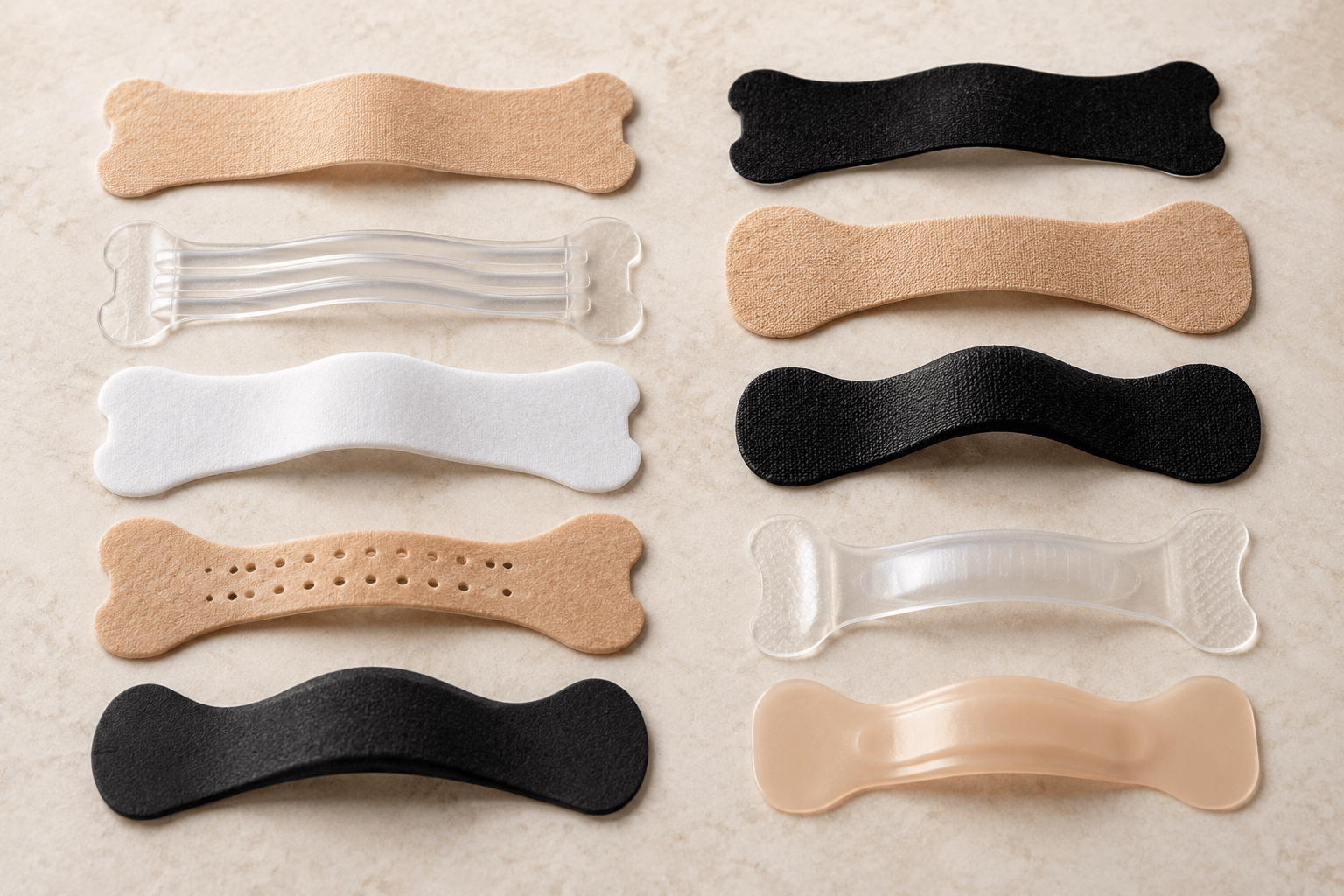
A nasal strip is an external nasal dilator: a layer of material with spring bands and a skin adhesive that sits across your nose. In US federal rules, the FDA describes nasal dilators as devices for temporary relief of breathing difficulty from structural problems or short-term congestion. It says they decrease airway resistance and increase nasal airflow, and that the external type works by pulling the nostrils open. They're Class I devices, the lowest-risk group. How nasal strips work explains the mechanics in detail.
What are the pros of nasal strips?
Research: moderate (what this means)The main pro of nasal strips is that they make breathing through your nose measurably easier. In a 2019 study in Advances in Therapy, researchers measured nasal resistance while people with chronic night-time congestion slept. Median resistance was 39% lower on the night they wore a strip. Over 28 days of use, people also reported easier breathing, better sleep quality, staying asleep more easily and feeling more refreshed in the morning. The study was exploratory and funded by a strip maker, and overnight sleep measures were mostly similar with and without the strip.
They can help you feel you slept better. A 2018 randomised trial gave 59 people with chronic congestion and sleep problems a real strip or a placebo strip without springs for two weeks. The real strips improved satisfaction with sleep and symptoms on waking compared with placebo, and all the strips were well tolerated.
They may help some people with insomnia. A 2006 randomised trial in Sleep and Breathing gave 80 adults with trouble staying asleep and mild to moderate breathing symptoms either general sleep education alone, or the same education plus nasal strips and a short lesson on sleep breathing. After four weeks, the strip group had large improvements in insomnia severity and sleep quality, while the control group changed little. The authors noted that the result still needs confirming in placebo-controlled studies.
They can reduce snoring. A 2007 review in the European Respiratory Journal looked at randomised trials of treating nasal blockage and found that nasal dilators seemed to reduce snoring. In one placebo-controlled trial from 2000, 12 people with chronic rhinitis snored 173 times an hour on average with a strip compared with 258 with a placebo, although loudness didn't change. Cleveland Clinic lists nasal strips among the safer ways to reduce snoring.
They're drug-free. That matters if you've been reaching for decongestant sprays. Cleveland Clinic explains that overusing those sprays causes rebound congestion, and the usual limit is three days. Strips work mechanically, so that problem doesn't apply.
They're easy to try and easy to stop. You stick one on at bedtime and peel it off in the morning, and if it doesn't suit you, nothing has changed. They also pair well with mouth tape, which keeps your lips closed while the strip opens your nose. Mouth tape and nasal strips together covers that combination.
What are the cons of nasal strips?
The main con of nasal strips is that they only open the front of the nose. A strip lifts the sides of the nose near the nostrils. It won't do much for swelling or a blockage further back, such as nasal polyps or a badly deviated septum. Cleveland Clinic says strips can help manage symptoms of nasal valve collapse, but many people with that condition need surgery, especially when there are other structural problems.
They don't treat sleep apnea. A 2017 study gave 26 people with severe sleep apnea a strip, and it had no significant effect on any sleep study measure. The 2007 review also found only minor improvements in sleep apnea from treating nasal blockage. Loud snoring with gasping, choking or daytime sleepiness needs a doctor, and snoring vs. sleep apnea explains the difference.
They need clean, dry skin. Titan says to apply its strips to clean, dry skin and skip moisturiser, so a strip may not suit a quick bedtime routine straight after skincare. Why nasal strips don't work for some people goes through the common fit problems.
How do strips compare with other ways to open your nose?
Strips are one kind of nasal dilator. The FDA's definition also covers internal dilators, made of metal or plastic, which sit inside the nostrils and push them open. Strips stay outside the nose, while internal dilators avoid putting adhesive on the skin. Nasal strips vs. nasal dilators compares the two.
Decongestant sprays work on swelling inside the nose rather than on its shape. That makes them useful for a short cold, but Cleveland Clinic says overuse leads to rebound congestion, so they're not a nightly tool. A strip and a short course of spray do different jobs, and nasal strips vs. nasal spray explains when each fits.
What are the side effects of nasal strips?
The side effects of nasal strips are mostly skin related, and uncommon. In a 2022 study where 54 pregnant women wore a strip for a night, two reported side effects linked to it, including skin irritation, sleep disturbance and a runny nose. The 2018 trial reported that strips were well tolerated over two weeks of nightly use.
Gentle removal helps. Titan suggests loosening its strips with warm water and peeling slowly from the ends inward, and placing them on clean, dry skin with no moisturiser. If your skin gets red or sore, give it a few nights off. Nasal strip skin irritation has more on prevention.
Who are nasal strips best for?
Nasal strips are best for adults whose nose feels narrow or stuffy at night, people who snore lightly without signs of sleep apnea, and mouth breathers who want to make nose breathing easier before trying mouth tape. They're less useful if your nose is blocked deep inside, and they aren't a substitute for seeing a doctor about a nose that's blocked most of the time. For more on the topic, browse our nasal strips articles.
If you'd like to try them, our pick is TitanAir Nasal Strips. Titan says they're drug-free with flexible spring-loaded bands, are designed to pair with its mouth tape, and come with a 30-night guarantee.
Read next
- How nasal strips work, and when they help most
- Do nasal strips improve sleep?
- How to apply nasal strips
Common questions
What are the pros of nasal strips?
They're drug-free, quick to put on and easy to stop using. Studies show they lower nasal resistance, and trials found they can reduce snoring and improve how well people with a congested nose feel they slept.
What are the cons of nasal strips?
They only open the front of the nose, so they won't help much with a blockage further back. They can irritate skin, need to be stuck to clean, dry skin, and don't treat sleep apnea.
Do nasal strips have side effects?
Side effects are uncommon. In a 2022 study where 54 pregnant women wore a strip for a night, two reported side effects such as skin irritation, sleep disturbance or a runny nose. Removing strips slowly with warm water helps protect the skin.
Is it OK to use nasal strips every night?
For most adults, yes. Strips are drug-free, so unlike decongestant sprays they don't cause rebound congestion. Give your skin a break if it gets red or sore, and see a doctor if you need them because your nose is blocked most of the time.
Do nasal strips help sleep apnea?
No. A 2017 study in people with severe sleep apnea found a strip had no significant effect on any sleep study measure, and a 2007 review found only minor effects on sleep apnea. If you might have it, see a doctor.
Are nasal strips better than decongestant sprays?
They work differently. Sprays shrink swollen tissue but can cause rebound congestion if used for more than a few days. Strips mechanically lift the sides of the nose, so they can be used nightly but won't reduce swelling.
Sources
- 21 CFR 874.3900 Nasal dilator
- Objective and subjective effects of a prototype nasal dilator strip on sleep in subjects with chronic nocturnal nasal congestion
- Effects of nasal dilator strips on subjective measures of sleep in subjects with chronic nocturnal nasal congestion: a randomized, placebo-controlled trial
- Nasal dilator strip therapy for chronic sleep-maintenance insomnia and symptoms of sleep-disordered breathing: a randomized controlled trial
- The role of the nose in the pathogenesis of obstructive sleep apnoea and snoring
- External nasal dilation reduces snoring in chronic rhinitis patients: a randomized controlled trial
- Nasal dilator strip is an effective placebo intervention for severe obstructive sleep apnea
- Impact of nasal dilator strips on measures of sleep-disordered breathing in pregnancy
- Nasal valve collapse
- Rhinitis medicamentosa (rebound congestion)
- Mouth taping: is it safe to use?
- TitanAir Nasal Strips
About this article
- Research
- 12 published sources, listed above.
- Evidence
- Moderate. How we rate it
- Last checked
- October 10, 2026
- Funding
- Paid partner of Titan Recovery. Their ads are labeled.
- Found an error?
- Tell us. We log fixes on the corrections page.
* This content is for informational and educational purposes only and is not medical advice. It is not intended to diagnose, treat, cure or prevent any disease or health condition. Talk to a qualified healthcare provider about your health.