In short
- Mouth tape can suit older adults who breathe comfortably through the nose, but most of the research was done in younger people. The best-known 2022 study only enrolled adults aged 20 to 60.
- Dry mouth is common with age mainly because of medicines. The ADA estimates it affects about 30% of people over 65 and up to 40% of people over 80, and tape only helps the part caused by an open mouth.
- The NHS advises taking dentures out every night unless your dentist recommends otherwise, so practice with tape the way you'll actually sleep.
- Older skin can tear more easily under adhesive. Silicone-based tape and slow, low removal are the gentler choices.
- Sleep apnea becomes more common with age. Loud snoring with gasping, or lung or heart conditions, mean checking with a doctor first.
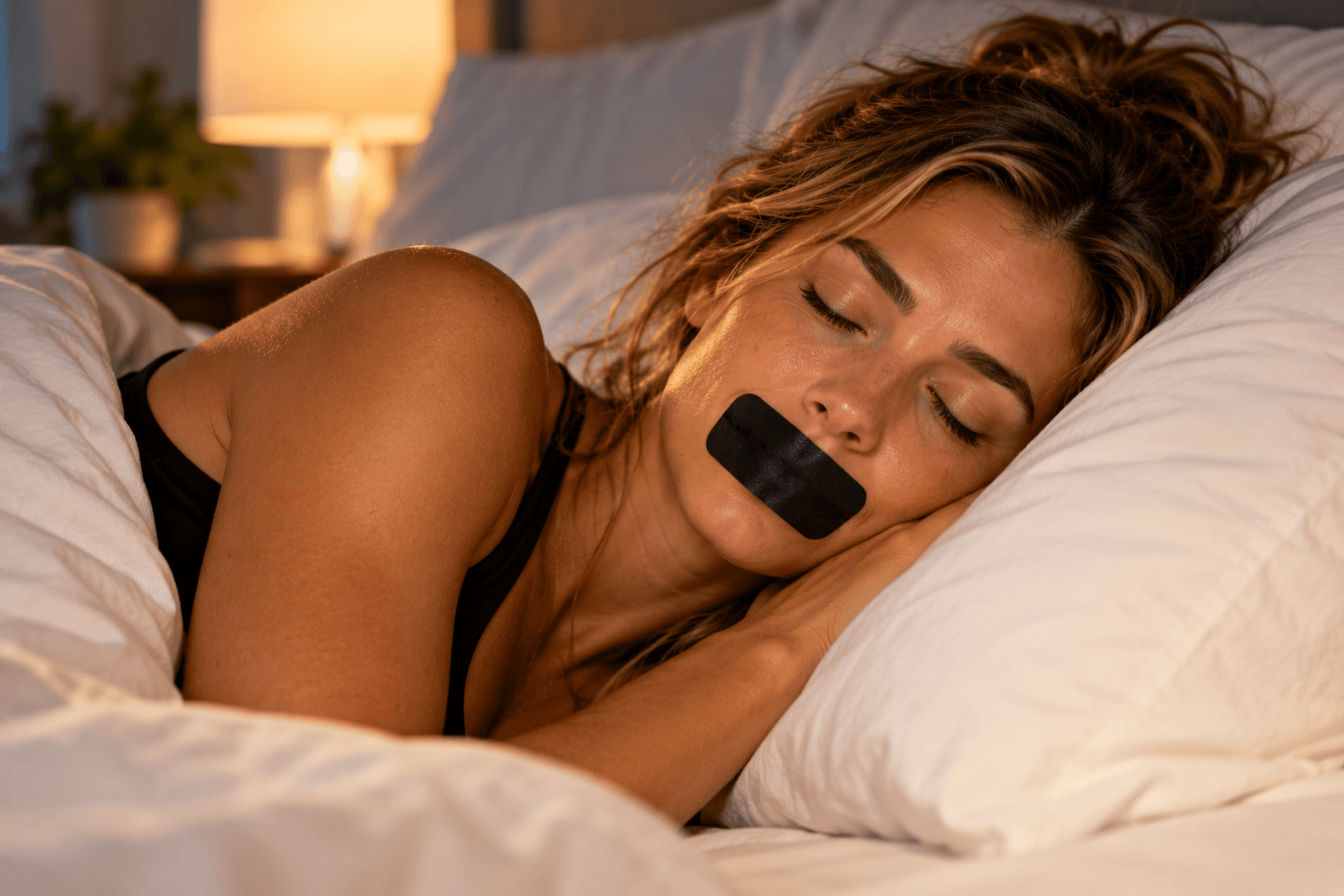
Mouth tape can work for older adults the same way it works for anyone: a small strip over the lips keeps the mouth closed so you breathe through your nose. Age doesn't rule it out. It does make a few checks more important before your first night, mainly around medicines, dentures, skin and the warning signs of sleep apnea.
Is mouth tape a good idea after 60?
For an older adult who breathes comfortably through the nose and sleeps with the mouth open, it's a reasonable thing to try. The reasons people tape don't change with age. Sleep Foundation describes the tape as a gentle reminder that nudges the body into nasal breathing, and people mostly try it for snoring or a dry mouth.
What does the research say about older adults?
Research: limited (what this means)There's no research on mouth taping specifically in older adults. The best-known study, published in Healthcare in 2022, only enrolled people aged 20 to 60, and their median age was 38. In that group of mouth breathers with mild sleep apnea, snoring roughly halved after a week of taping (the research).
Those results are encouraging, and nothing in them suggests tape stops working with age. It does mean older adults are going a little beyond what the studies covered, which is why the checks below are worth a few minutes.
Could a medicine be behind your dry mouth?
A medicine is often behind dry mouth in older adults. The American Dental Association (ADA) estimates that dry mouth affects about 30% of people over 65 and up to 40% of people over 80, and says this is mainly a side effect of medicines. It notes that people taking several medicines are at higher risk, and lists blood pressure medicines, decongestants, pain medicines, diuretics and antidepressants among those that can add to dryness.
The NIDCR is clear that dry mouth is not a normal part of aging, and suggests seeing a dentist or doctor to find out why your mouth is dry. Sometimes a different medicine or dose helps. The ADA notes that some medicines cause less dry mouth than others, and that taking certain ones during the day rather than at night may reduce night-time symptoms. Those are decisions for your doctor or pharmacist, so don't change a prescription on your own.
Mouth tape only helps the part of dryness that comes from breathing through an open mouth. If your mouth is driest first thing in the morning and better by midday, an open mouth at night is a likely contributor, and tape is worth testing. If it's dry all day, start with the medicine question. Our guide to mouth tape for dry mouth covers this in more detail.
What if you wear dentures?
The NHS advises removing dentures every night unless your dentist recommends otherwise. It explains that trapped food raises the risk of gum infections and tooth decay, and that there's a risk of choking on them if they're left in while you sleep.
Your lips sit differently without dentures, so practice with the tape the way you'll actually sleep. Put it on after the dentures come out, sit with it for 15 minutes or so, and check that your lips stay comfortable and you can breathe easily through your nose. If your dentist has told you to wear dentures at night for a specific reason, ask them about tape before you try it.
Is older skin more sensitive to tape?
Older skin can be more sensitive to tape. A 2017 report in the Indian Journal of Anaesthesia describes skin stripping on the face of a 52-year-old woman after a strong acrylate tape was removed. The authors list extremes of age and long-term steroid use among the risk factors for adhesive skin injuries, and explain that falling estrogen after menopause leaves facial skin more prone to injury.
The same report offers practical fixes. It notes that silicone-based adhesives have much lower peel adhesion and cause far less skin trauma on removal. It advises peeling tape slowly, keeping it close to the skin, supporting the newly exposed skin with a finger, and using moisturizer to soften stubborn tape.
For mouth tape, that points toward a gentle silicone-based or hypoallergenic tape and an unhurried removal in the morning. Our articles on mouth tape skin irritation and how to remove mouth tape go into this further.
Which health conditions mean checking with a doctor first?
Sleep Foundation says people with asthma or COPD shouldn't tape unless a doctor advises it, along with anyone who has sleep apnea and isn't using CPAP, anyone with a blocked nose, people with anxiety or panic disorders, and anyone at risk of vomiting during sleep. Cleveland Clinic adds sinus infections, enlarged tonsils and heart issues.
Sleep apnea deserves extra attention. The National Institute on Aging says sleep disorders, including sleep apnea, become more common with age, and that snoring can be a sign, though not everyone who snores has it. It says to talk to your doctor if you suspect sleep apnea, because untreated sleep apnea can lead to serious health problems. Mouth tape doesn't treat sleep apnea, so loud snoring with gasping, choking or pauses in breathing is a reason to see a doctor before trying it. Our page on snoring vs. sleep apnea explains the signs.
If you already use CPAP and your mouth falls open during the night, that's a conversation to have with your sleep doctor.
How to start mouth taping safely
If the checks above are clear, here's a gentle way to begin.
- Test your nose. Close your lips and breathe through your nose for two minutes. Our nose test walks you through it.
- Practice awake. Sleep Foundation recommends testing the tape during the day to make sure you can breathe easily through your nose.
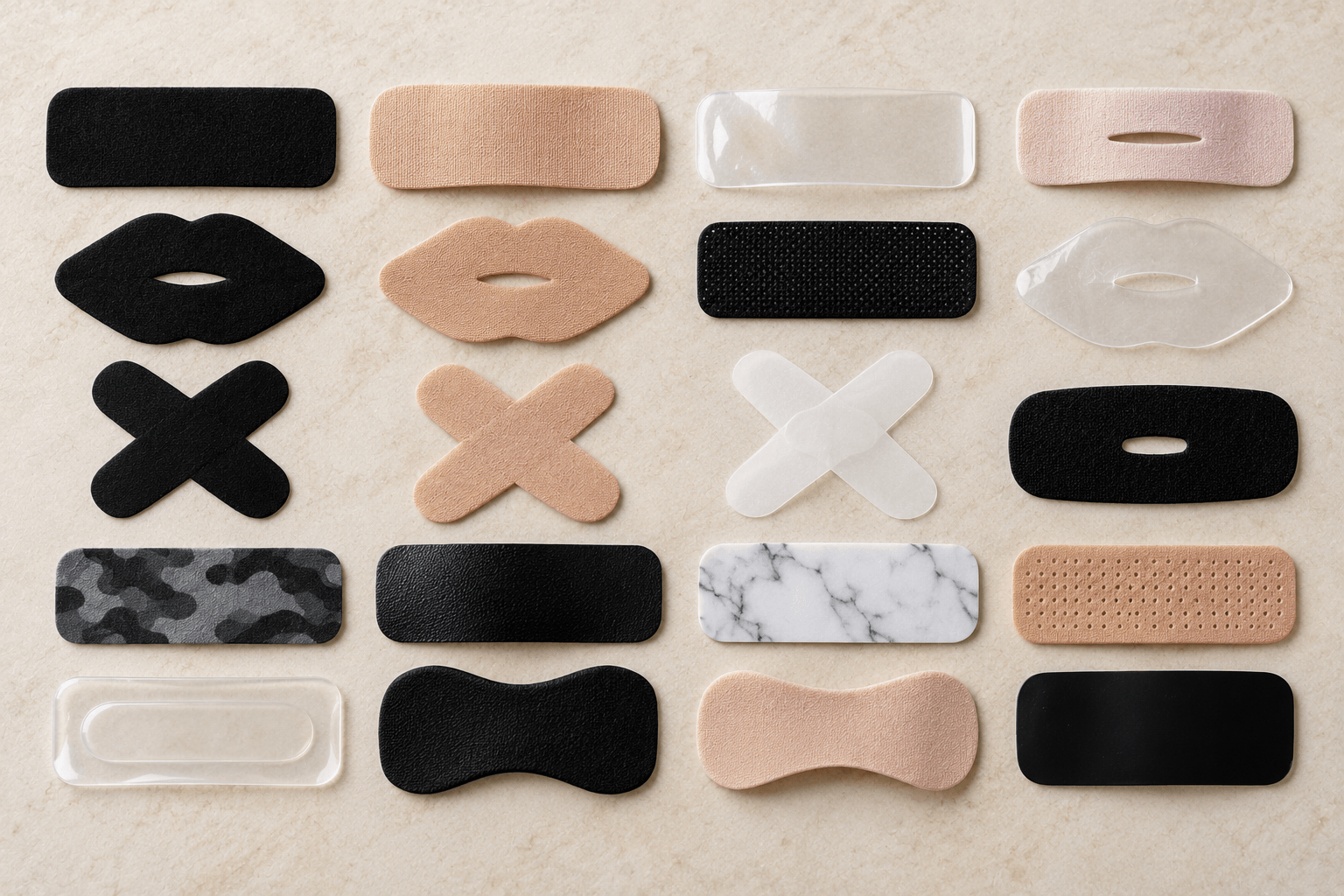
- Choose a porous tape made for skin. Sleep Foundation warns that tape not meant for the body is more likely to cause irritation or an allergic reaction.
- Use a small vertical strip over the middle of the lips, so the corners of your mouth stay free.
- Fold over one corner, as Sleep Foundation suggests, so it's easy to peel off. Make sure you can find and lift it easily with your fingers before you sleep.
- Skip it on any night your nose is blocked from a cold or allergies.
Check this first. Skip mouth tape and see a doctor if you snore loudly, wake up gasping, have been told you stop breathing in your sleep, or can't breathe comfortably through your nose. More on safety
If you live with a partner or caregiver, it helps to tell them you're trying it. They can also tell you whether your snoring sounds different, which is one of the easiest ways to judge whether it's helping.
Read next
Common questions
Is mouth taping safe for older adults?
For an older adult who breathes easily through the nose and has no warning signs of sleep apnea, the basic rules are the same as for anyone. There's no research specific to older adults, so it's worth checking medicines, dentures and skin first, and asking a doctor if you have lung or heart conditions.
Can I use mouth tape with dentures?
The NHS advises removing dentures every night unless your dentist recommends wearing them, partly because of a choking risk. If you sleep without them, practice the tape without them too. If your dentist has told you to keep them in at night, ask them before adding tape.
Will mouth tape fix dry mouth caused by my medicines?
No. The NIDCR says hundreds of medicines reduce saliva, and tape doesn't change that. It may still help if you also sleep with your mouth open. Ask your doctor or pharmacist about the medicine, and don't stop any prescription on your own.
What tape is gentlest on older skin?
A 2017 report on a tape injury notes that silicone-based adhesives have much lower peel adhesion and cause far less skin trauma on removal. Peel slowly, keep the tape low to the skin and support the skin with a finger as you go.
Who should check with a doctor before trying mouth tape?
Sleep Foundation says people with COPD or asthma should only tape if a doctor agrees, and Cleveland Clinic advises against it with heart issues. Anyone who snores loudly and gasps or stops breathing in their sleep should see a doctor first.
Sources
- Xerostomia (dry mouth)
- Dry mouth
- Dentures (false teeth)
- Facial skin injury caused by acrylate-based adhesive tapes in a post-menopausal patient: a preventable cause
- A good night's sleep
- The impact of mouth-taping in mouth-breathers with mild obstructive sleep apnea: a preliminary study
- Mouth taping for sleep: does it work?
- Is mouth tape safe to use while sleeping?
About this article
- Research
- 8 published sources, listed above.
- Evidence
- Limited. How we rate it
- Last checked
- October 4, 2026
- Funding
- Paid partner of Titan Recovery. Their ads are labeled.
- Found an error?
- Tell us. We log fixes on the corrections page.
* This content is for informational and educational purposes only and is not medical advice. It is not intended to diagnose, treat, cure or prevent any disease or health condition. Talk to a qualified healthcare provider about your health.