In short
- Hay fever is an allergic reaction to pollen, and nasal congestion from it is linked to disturbed sleep and daytime tiredness.
- Keeping pollen out of the bedroom starts with showering and changing after being outside and keeping windows shut at night.
- A 2025 meta-analysis of 18 trials found that steroid nasal sprays improved sleep quality scores in people with allergic rhinitis.
- Nasal strips widen the front of the nose, and in a 2018 placebo-controlled trial they improved some sleep measures in people with chronic nighttime congestion.
- See a doctor if symptoms are severe, stop responding to treatment or keep getting worse.
Hay fever can make sleep harder by blocking your nose, and a 1998 study linked allergy congestion to disturbed sleep and daytime tiredness. The best nights in pollen season come from keeping pollen out of the bedroom, treating the congestion itself and making nasal breathing easier at bedtime. These nine tips cover all three.
Hay fever is an allergic reaction to pollen. MedlinePlus says the plants behind it are trees, grasses and ragweed, whose pollen is carried by the wind, and that hot, dry, windy days tend to have the most pollen in the air. The NHS lists a runny or blocked nose, sneezing, itchy eyes and feeling tired among its symptoms.
It helps to know your own pattern. MedlinePlus says the plants that cause hay fever vary from person to person and from area to area, and that on cool, damp, rainy days most pollen is washed to the ground. In the UK, the NHS says symptoms are usually worse between late March and September, especially when it's warm, humid and windy. Checking a local pollen forecast lets you plan the evening steps below for the worst days.
Why does hay fever hit your sleep?
The 1998 study, in the Journal of Allergy and Clinical Immunology, explained the idea: congestion from allergic rhinitis may lead to more tiny awakenings during the night, which can leave people tired the next day. In 20 people with allergies, a steroid nasal spray improved congestion and sleep compared with placebo.
Lying down adds to it. A 2021 meta-analysis of studies on body position found that lying down increases nasal resistance and reduces nasal airflow. So a nose that feels fine during the day can feel much tighter once you're in bed. There's more on this in why is my nose stuffy at night?
Keep pollen out of the bedroom
Shower and change before bed
The NHS suggests showering and changing your clothes after you've been outside to wash pollen off. Doing it in the evening means you aren't carrying the day's pollen into bed on your hair and skin.
Keep the windows shut at night
The NHS recommends keeping windows and doors shut as much as possible, and MedlinePlus suggests sleeping with the windows closed during pollen season. If your bedroom gets warm, a fan can keep the air moving with the windows closed.
Dry laundry indoors and keep pets out
The NHS advises against drying clothes outside, because they can catch pollen, and suggests keeping pets out of the house if possible, since they can carry pollen indoors. If keeping pets out isn't realistic, keeping them off the bed is a smaller step. Our bedroom allergy checklist has more ideas like this.
Vacuum and dust the right way
The NHS suggests vacuuming regularly with a HEPA filter and dusting with a damp cloth, so pollen is picked up rather than stirred back into the air.
Treat the congestion itself
Rinse your nose with saline
MedlinePlus says a nasal wash can help remove mucus from the nose in mild allergic rhinitis. A rinse in the evening also clears out pollen that settled during the day. Our guide on how to use a saline rinse covers safe water and technique.
Ask about a steroid nasal spray
MedlinePlus calls steroid nasal sprays the most effective treatment for allergic rhinitis, and says they work best when used regularly. The sleep evidence is good: a 2025 meta-analysis of 18 randomized trials with 6,019 participants found that steroid sprays improved sleep quality scores in people with allergic rhinitis, in both seasonal and year-round allergies. A pharmacist can help you choose one, and the NHS notes that some antihistamines make you sleepy, so ask about non-drowsy options for daytime.
Decongestant sprays are different. MedlinePlus says not to use them for more than 3 days. We explain why in decongestant spray rebound.
Use a barrier around your nostrils
The NHS suggests putting petroleum jelly around your nostrils to trap pollen. It's a cheap step for days spent outside. The NHS also suggests wraparound sunglasses, a mask or a wide-brimmed hat to stop pollen getting into your nose and eyes, and avoiding cutting grass during the season. The less pollen you collect during the day, the less you bring to bed.
Make breathing easier at bedtime
Wear a nasal strip
Research: limited (what this means)Nasal strips are a simple, drug-free way to open the front of the nose. US regulations describe the external nasal dilator as a strip with a spring material and skin adhesive that acts with a pulling action to open the nostrils, intended for temporary relief of breathing difficulties, including from nasal congestion.
The research is encouraging. In a 2018 randomized trial in people with chronic nighttime congestion and sleep difficulties, nasal strips improved some measures of sleep satisfaction and symptoms on waking compared with placebo strips without springs. In a 1998 study, an external dilator increased the narrowest part of the nasal airway and lowered resistance in people with mucosal congestion, though the effect was bigger in people with a deviated septum, and congested users didn't always feel the difference. Strips work alongside treatment for the allergy, not instead of it. See do nasal strips help with allergy congestion?, which covers how to pair strips with sprays and rinses.
Raise your head a little
healthdirect Australia suggests raising your head when sleeping to help with nighttime stuffiness. An extra pillow or a wedge can take some pressure off a congested nose, given that lying flat increases nasal resistance.
Can you use mouth tape in pollen season?
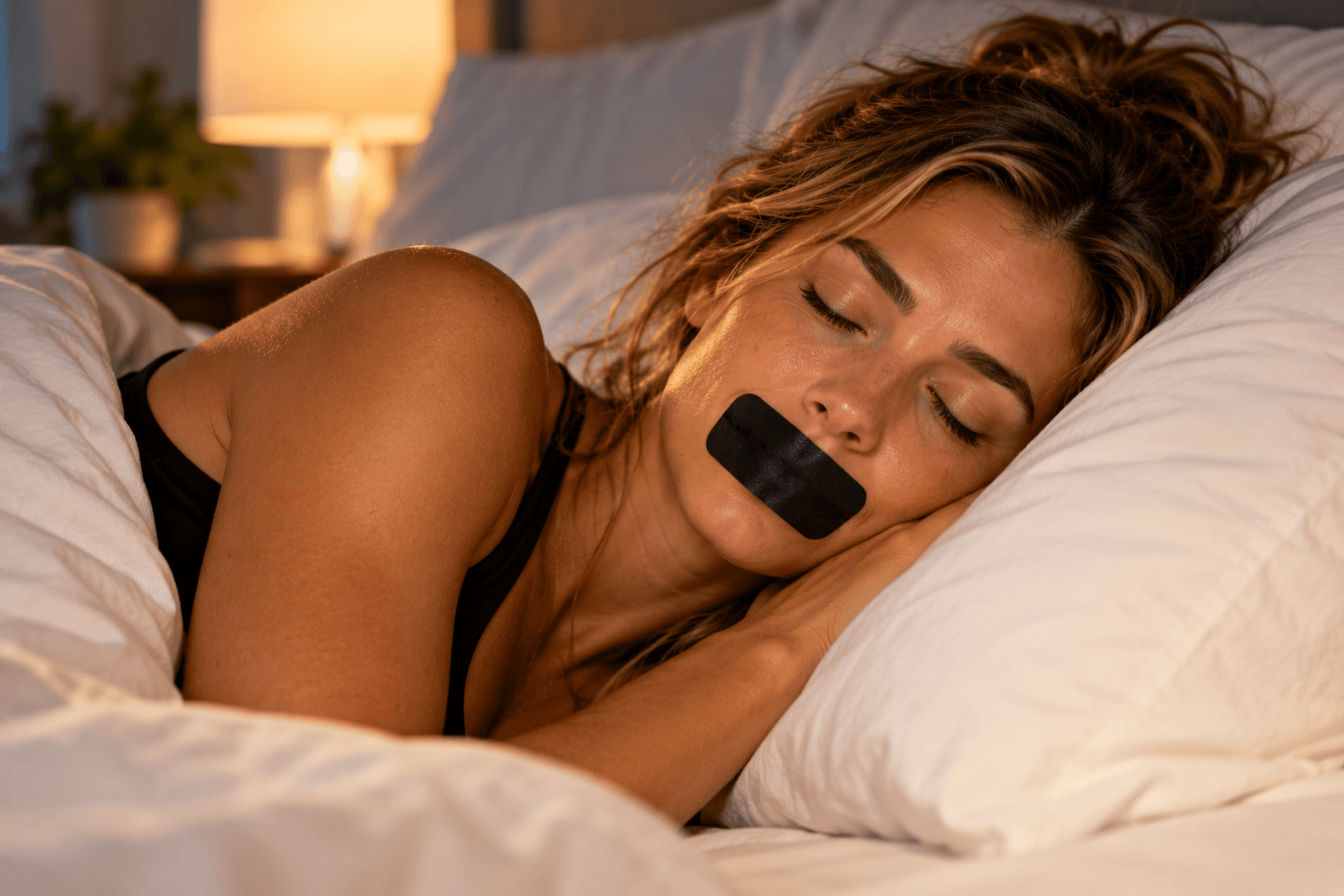
If you use mouth tape, keep it for nights when you can breathe comfortably through your nose. On a blocked night, skip it and focus on the steps above. The nose test is a quick check before bed.
Check this first. Skip mouth tape and see a doctor if you snore loudly, wake up gasping, have been told you stop breathing in your sleep, or can't breathe comfortably through your nose. More on safety
When should you see a doctor?
MedlinePlus says to contact your provider if your hay fever symptoms are severe, if a treatment that once worked stops working or if your symptoms don't respond to treatment. The NHS adds that a GP may prescribe stronger treatment or refer you for immunotherapy, which uses small amounts of pollen to build up tolerance and usually starts a few months before the season. MedlinePlus says allergy testing can show which pollen or other substances trigger your symptoms, and that skin testing is the most common method. Knowing your triggers makes the bedroom steps easier to target. If one side of your nose stays blocked all year, it may be worth reading deviated septum or allergies?
Our pick (paid partner)
For pollen season nights, our pick is TitanAir Nasal Strips. This is our recommendation, not the result of testing or ranking products ourselves.
Titan says the strips are drug-free external nasal dilators with flexible spring-loaded bands, meant to sit just above the flare of the nostrils on clean, dry skin. Titan offers a 30-night guarantee. More on breathing through your nose is on our nasal breathing topic page.
Read next
- Why do allergies feel worse at night?
- Do nasal strips help with allergy congestion at night?
- How to sleep with a stuffy nose
Common questions
Why is hay fever worse at night?
Lying down plays a part. A 2021 meta-analysis found that lying down increases nasal resistance and reduces nasal airflow. Pollen carried into the bedroom on hair, clothes and pets can also keep symptoms going overnight.
Do nasal strips help with hay fever?
They can make breathing feel easier by widening the front of the nose, but they don't treat the allergy. In a 2018 trial in people with chronic nighttime congestion, strips improved some sleep measures compared with placebo strips.
What is the best treatment for hay fever at night?
MedlinePlus calls steroid nasal sprays the most effective treatment for allergic rhinitis, and a 2025 meta-analysis found they improved sleep quality scores. A pharmacist or doctor can help you choose one.
Should I keep my windows closed during pollen season?
Yes. The NHS suggests keeping windows and doors shut as much as possible, and MedlinePlus suggests sleeping with the windows closed during pollen season.
Can I use mouth tape when I have hay fever?
Only on nights you can breathe comfortably through your nose. If your nose is blocked, skip the tape that night and focus on clearing your nose first.
When should I see a doctor about hay fever?
MedlinePlus advises contacting a provider if symptoms are severe, if a treatment that worked stops working or if symptoms don't respond to treatment. The NHS says to see a GP if symptoms get worse.
Sources
- Hay fever
- Allergic rhinitis
- Nasal congestion secondary to allergic rhinitis as a cause of sleep disturbance and daytime fatigue and the response to topical nasal corticosteroids
- Effectiveness of intranasal corticosteroids for sleep disturbances in patients with allergic rhinitis: a systematic review and meta-analysis
- The recumbent position affects nasal resistance: a systematic review and meta-analysis
- Effects of nasal dilator strips on subjective measures of sleep in subjects with chronic nocturnal nasal congestion: a randomized, placebo-controlled trial
- Role of the external nasal dilator in the management of nasal obstruction
- 21 CFR 874.3900: Nasal dilator
- Deviated septum
- TitanAir Nasal Strips
About this article
- Research
- 10 published sources, listed above.
- Evidence
- Limited. How we rate it
- Last checked
- October 6, 2026
- Funding
- Paid partner of Titan Recovery. Their ads are labeled.
- Found an error?
- Tell us. We log fixes on the corrections page.
* This content is for informational and educational purposes only and is not medical advice. It is not intended to diagnose, treat, cure or prevent any disease or health condition. Talk to a qualified healthcare provider about your health.