In short
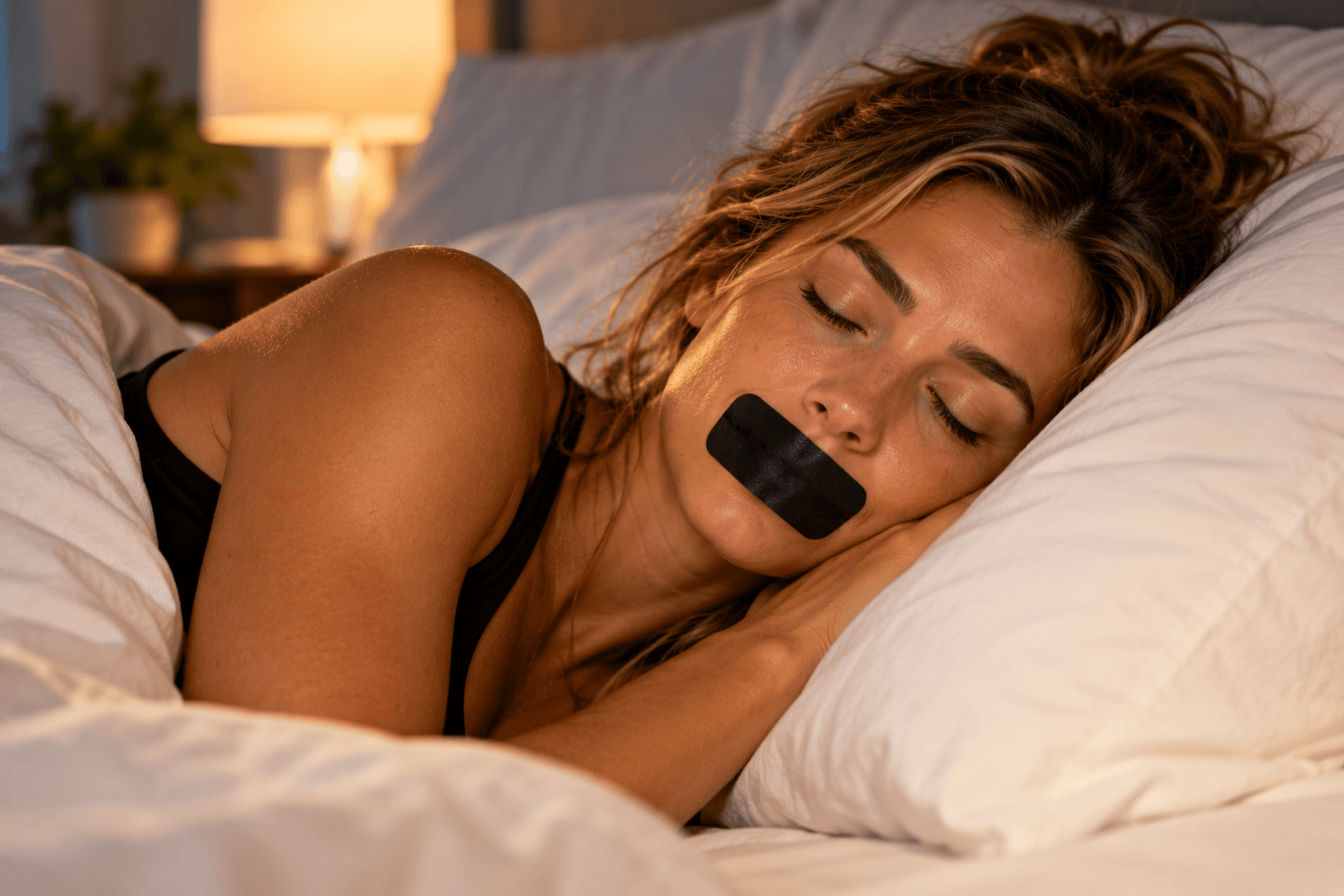
- Don't use mouth tape while your nose is blocked. The 2025 review of mouth taping research lists suffocation as a possible risk when the nose is obstructed.
- Nasal strips widen the front of the nose. A 2016 meta-analysis found nasal dilators improve nasal breathing.
- Large-volume saline rinses have low-quality evidence of helping people with chronic sinus problems, and limited evidence for colds.
- Raising your head, a steamy shower before bed and a nasal strip are simple ways to make a blocked nose easier to sleep with.
- If your nose is blocked most nights for weeks, see a doctor to find out why.
To sleep with a stuffy nose, raise your head on a wedge or an extra pillow, rinse your nose with saline before bed, and try a nasal strip to widen the front of your nose. Skip mouth tape until you can breathe through your nose again. A blocked nose pushes you into mouth breathing all night, which is why you can wake with a dry mouth and a sore throat.
Why does your nose get stuffy when you sleep?
Sleep Foundation says lying down often makes sinus congestion worse, possibly because of changes in blood flow. It lists the usual causes of a blocked nose at night as allergies to things like dust mites, pet dander, mold and pollen, colds and other infections, dry bedroom air, and rebound congestion from overusing decongestant sprays. Acid reflux and hormone changes, including pregnancy, can play a part too. Knowing which one applies to you helps you pick the right fix, and why is my nose stuffy at night? goes into each of them.
First, put the mouth tape away
If you use mouth tape, skip it until your nose is clear. Taping your mouth when your nose is blocked leaves you with nowhere to breathe comfortably. The 2025 systematic review of mouth taping research lists suffocation as a possible risk when the nose is obstructed. Go back to it once you can pass our two-minute nose test again. Mouth tape with a cold covers this in more detail.
What helps you sleep with a stuffy nose?
Research: limited (what this means)Nasal strips
A nasal strip lifts the sides of your nose and widens the narrowest part of the nasal passage, just inside the nostrils. A 2016 meta-analysis found nasal dilators improve nasal breathing. They don't clear mucus or treat what's causing the congestion, but they can make the air you do get through easier to pull in. More in how nasal strips work.
Strips are one of the easiest things to reach for on a blocked night, because there's no medicine involved. Sleep Foundation says strips placed on the nose before sleep can relieve overnight congestion for some people, and notes there are different styles, from ones that sit across the bridge of the nose to larger ones that stretch toward the cheeks. If allergies are behind your congestion, nasal strips for allergies explains how they fit alongside allergy treatment, and how to apply nasal strips covers getting a good fit.
Raise your head
Sleep Foundation suggests sleeping with your head raised to reduce the feeling of congestion. A wedge pillow keeps your head up without sliding off in the night, and a thick pillow or two regular ones can work too.
Saline rinses
Rinsing your nose with salt water before bed is a common recommendation. Sleep Foundation explains that rinsing can flush out some of the mucus and moisten the nasal passages. The evidence is modest. A 2016 Cochrane review found low-quality evidence that large-volume rinses (around 150 ml) improve symptoms for people with chronic rhinosinusitis. For colds, a 2015 Cochrane review found only limited evidence of benefit. Rinses are considered safe if you use the right water. The FDA says not to use tap water straight from the tap, because it can carry organisms that are harmless to swallow but can cause serious infections in the nose. Use distilled or sterile water, or tap water boiled for 3 to 5 minutes and cooled until lukewarm. The FDA also says to wash the device and let it dry between uses, and to go back to your doctor if you get a fever, nosebleeds or headaches while rinsing. Our guide on how to use a saline rinse walks through it step by step.
Other things people try
Many people find a warm shower before bed or a humidifier in the bedroom more comfortable when congested. The NHS suggests breathing in steam to ease a blocked nose, for example by sitting in the bathroom with a hot shower running, and warns not to let children breathe steam from a bowl of hot water because of the risk of scalding. Sleep Foundation adds a warm (not hot) compress over the nose and drinking enough clear fluids to help thin mucus. These are comfort measures rather than proven treatments, and using a humidifier for sleep covers how to run one safely.
Medicines, used carefully
Medicines can help, but each has limits. Sleep Foundation says antihistamines treat allergy symptoms including a stuffy nose but may not work for congestion from a cold, and some cause drowsiness. Steroid nasal sprays reduce inflammation and can help congestion from allergic and non-allergic causes.
Decongestants need the most care. The NHS says decongestant sprays and drops shouldn't be used for more than 5 days at a time, because longer use can make your stuffiness worse, and that they shouldn't be given to children under 6. It advises against combining more than one blocked-nose medicine, and says to ask a pharmacist or GP first if you take other medicines, since some antidepressants taken with decongestants can cause a dangerous rise in blood pressure. Sleep Foundation adds that decongestants can raise blood pressure and make it harder to sleep. There's more on the rebound effect in decongestant spray rebound.
If you're pregnant
Sleep Foundation says nasal congestion in pregnancy is common and often caused by hormone changes. Saline sprays or rinses can help without medication, but talk to your doctor before using any decongestant or medicated spray. The NHS says it isn't clear whether decongestants are safe in pregnancy, so only use them if a healthcare professional tells you to. Nasal strips during pregnancy covers the drug-free option.
When should you see a doctor?
A stuffy nose from a cold should clear within a week or two. The NHS says you're usually infectious until your symptoms have gone, which takes 1 to 2 weeks, and to see a GP if cold symptoms don't improve after 10 days. Sleep Foundation suggests contacting a doctor if congestion continues for more than three weeks.
See a doctor if your nose is blocked most nights for weeks, if it's only ever one side, or if you snore loudly, gasp in your sleep or feel exhausted during the day. Long-term blockage often has a cause that can be treated, like allergies or a deviated septum.
How do you get back to nose breathing?
Once the cold has passed, it's worth getting back into the habit of breathing through your nose at night. A nasal strip can make the first few nights easier, since it widens the front of the nose while any leftover swelling settles. When you can breathe comfortably through your nose with your mouth closed, mouth tape is back on the table. Retake the two-minute nose test, and if you're new to it, start with how to start mouth taping.
Check this first. Skip mouth tape and see a doctor if you snore loudly, wake up gasping, have been told you stop breathing in your sleep, or can't breathe comfortably through your nose. More on safety
If you want to try nasal strips, our pick is TitanAir Nasal Strips.
Read next
- Why do I breathe through my mouth at night?
- Nasal strips vs. nasal dilators
- How to unblock your nose before bed
Common questions
Should I use mouth tape when I have a cold?
No. Wait until you can breathe comfortably through your nose. Taping your mouth while your nose is blocked makes breathing harder, and the 2025 review lists suffocation as a possible risk when the nose is obstructed.
Do nasal strips help with a stuffy nose?
They can make breathing through a stuffy nose easier, though they don't clear mucus or treat the cause. A strip lifts the sides of the nose to widen the front of the nasal passage, and a 2016 meta-analysis found nasal dilators improve nasal breathing. Sleep Foundation says strips worn before sleep can relieve overnight congestion for some people.
What are nasal strips used for?
Nasal strips are used to make breathing through the nose easier, most often at night. They lift the sides of the nose and widen the narrowest part of the nasal passage, just inside the nostrils, and a 2016 meta-analysis found nasal dilators improve nasal breathing. They involve no medicine, which makes them an easy first thing to try on a congested night.
Do saline rinses work for congestion?
Cochrane reviews found low-quality evidence that large-volume saline irrigation helps people with chronic rhinosinusitis, and limited evidence that it helps with colds. They're considered safe.
Does sleeping propped up help a stuffy nose?
It can. Sleep Foundation says lying down often makes sinus congestion worse and that sleeping with your head raised could help. A wedge pillow, a thick pillow or two regular pillows can do the job.
How long can I use a decongestant nasal spray?
The NHS says decongestant sprays and drops shouldn't be used for more than 5 days at a time, because using them for too long can make your stuffiness worse. Ask a pharmacist before using them if you take other medicines or have a health condition.
When can I go back to mouth tape after a cold?
Once you can breathe comfortably through your nose again with your mouth closed. Our two-minute nose test is a simple way to check before the first night back.
Sources
- Breaking social media fads and uncovering the safety and efficacy of mouth taping in patients with mouth breathing, sleep disordered breathing, or obstructive sleep apnea: A systematic review
- Nasal Dilators (Breathe Right Strips and NoZovent) for Snoring and OSA: A Systematic Review and Meta-Analysis
- Saline irrigation for chronic rhinosinusitis
- Saline nasal irrigation for acute upper respiratory tract infections
- Is rinsing your sinuses with neti pots safe?
- Treatment for a blocked nose at night
- Decongestants
- Common cold
About this article
- Research
- 8 published sources, listed above.
- Evidence
- Limited. How we rate it
- Last checked
- October 10, 2026
- Funding
- Paid partner of Titan Recovery. Their ads are labeled.
- Found an error?
- Tell us. We log fixes on the corrections page.
* This content is for informational and educational purposes only and is not medical advice. It is not intended to diagnose, treat, cure or prevent any disease or health condition. Talk to a qualified healthcare provider about your health.