In short
- Lying down raises nasal resistance and lowers nasal airflow, according to a 2022 meta-analysis of nine studies, so a nose that's fine by day can be tighter by morning.
- Mucus drains less well when you're lying flat, and allergens in the bedroom such as dust, pet dander and mold can add to the congestion overnight.
- Allergy symptoms follow a daily rhythm that tends to peak between midnight and morning. In a survey of 1,000 adults with allergic rhinitis, nasal congestion was the most common symptom on waking.
- Dry air, overuse of decongestant sprays and acid reflux can all leave you stuffy in the morning.
- Raising your head, rinsing with saline and wearing a nasal strip can help you wake clearer. Once your nose is open, mouth tape keeps you breathing through it.
Most morning stuffiness comes from the hours you just spent lying down. Lying flat makes the nose a little narrower and stops mucus from draining. Allergy symptoms also tend to peak overnight, and the bedroom holds plenty of dust and dander. The good news is that most of these causes respond to small changes at bedtime.
What happens to your nose while you sleep?
Research: moderate (what this means)Your nose gets narrower while you sleep, because it changes shape when you lie down. A 2022 meta-analysis in The Laryngoscope pooled nine studies with 291 people and found that lying down increases nasal resistance and reduces nasal airflow. The effect was about twice as large in people who snore or have sleep apnea as in healthy people. So a nose that feels open at your desk can be noticeably tighter after a night on your back.
Drainage changes too. Cleveland Clinic explains that you swallow a lot of mucus during the day, which is how the body clears the dirt and germs it traps. When you lie down, gravity stops helping, and mucus can pool in the sinuses instead of sliding down the throat. Cleveland Clinic notes that people with sinus inflammation often feel worse lying down for this reason.
Then there's the nasal cycle. Cleveland Clinic says that every four to six hours, one side of the nose becomes more congested while the other opens up. It's normal, but at night it can combine with lying on your side. Cleveland Clinic says it's common to be stuffy in the nostril facing down on the pillow, and that if it clears soon after you get up and move around, side sleeping is likely the reason. The nasal cycle explains this in more detail.
Why do allergies make mornings worse?
Allergies make mornings worse because allergy symptoms aren't flat across the day. A 2018 review in Frontiers in Immunology notes that allergic rhinitis and asthma have long shown symptoms at their worst between midnight and morning. The authors link this to the body's circadian clock, which affects the immune cells that release histamine.
People with allergies notice it. In a 2007 survey of 1,000 US adults with allergic rhinitis diagnosed by a doctor, 83% said they had morning symptoms and 49% said their symptoms were worst in the morning. Nasal congestion was the most common symptom on waking, reported by 85% of those who had symptoms when they first woke up. A third of those taking allergy medicine said it wore off before the next dose most or all of the time.
The bedroom adds to this. Cleveland Clinic points to dust, pet dander and mold in the home, plus pollen you bring in on your hair and skin. Why do allergies feel worse at night? covers the bedroom changes that help with each of these.
What else can leave you stuffy in the morning?
A few other things can leave you stuffy in the morning and are worth checking, according to the Sleep Foundation and Cleveland Clinic.
Dry air is one. The Sleep Foundation says sleeping in a room with low humidity can dry out the nasal passages and lead to irritation and congestion, especially in winter or in air-conditioned rooms.
Decongestant sprays are another. Overusing them can cause rebound congestion, where the nose gets more blocked each time the spray wears off. If you've been reaching for the spray every night, decongestant spray rebound explains how to step off it.
Acid reflux can play a part. Cleveland Clinic explains that when you lie down, stomach acid can travel up and irritate the throat and sinuses, which can lead to congestion. It suggests avoiding late meals and, if you sleep on your side, trying your left side.
Colds, nasal polyps, a deviated septum and chronic sinusitis can all cause congestion that's worse at night as well as during the day. The Sleep Foundation also lists cigarette and fireplace smoke among common nasal triggers, and notes that alcohol contains histamine, which can give some people a runny or stuffy nose.
How can you wake up with a clearer nose?
To wake up with a clearer nose, focus on the hour before bed, when most of the useful steps happen. Here's a routine that pulls together advice from Cleveland Clinic and the Sleep Foundation.
- Shower and change clothes before bed to wash off pollen from the day.
- Rinse your nose with saline. The Sleep Foundation says it can flush out mucus and moisturize the nasal passages. Use boiled, distilled or purified water, as covered in how to use a saline rinse.
- Raise your head and shoulders with a wedge or an extra pillow, which both sources suggest.
- Run a humidifier if the air is dry. The Sleep Foundation suggests keeping humidity at 50% or below to avoid mold, and cleaning the humidifier daily. Our humidifier guide has the details.
- Keep pets out of the bedroom and change your sheets at least once a week, as Cleveland Clinic recommends.
- Put on a nasal strip once your skin is clean and dry.
Do nasal strips help with morning congestion?
Nasal strips can help with morning congestion by making the night easier on your nose. The Sleep Foundation says nasal strips help open the nasal passages to allow more airflow and may help people who get congested at night.
The research supports trying them. In a 2018 placebo-controlled trial, 59 adults with chronic nighttime congestion and sleep trouble used a nasal strip or a placebo strip each night for two weeks. After a week, both real strips improved satisfaction with sleep compared with placebo, and both did better than placebo on symptoms on waking in the morning. The strips were well tolerated.
A strip won't fix the cause of the congestion, but it's a simple, drug-free way to keep air moving while you work on the rest. How nasal strips work explains the mechanics and how to get a good fit.
Where does mouth tape fit in?
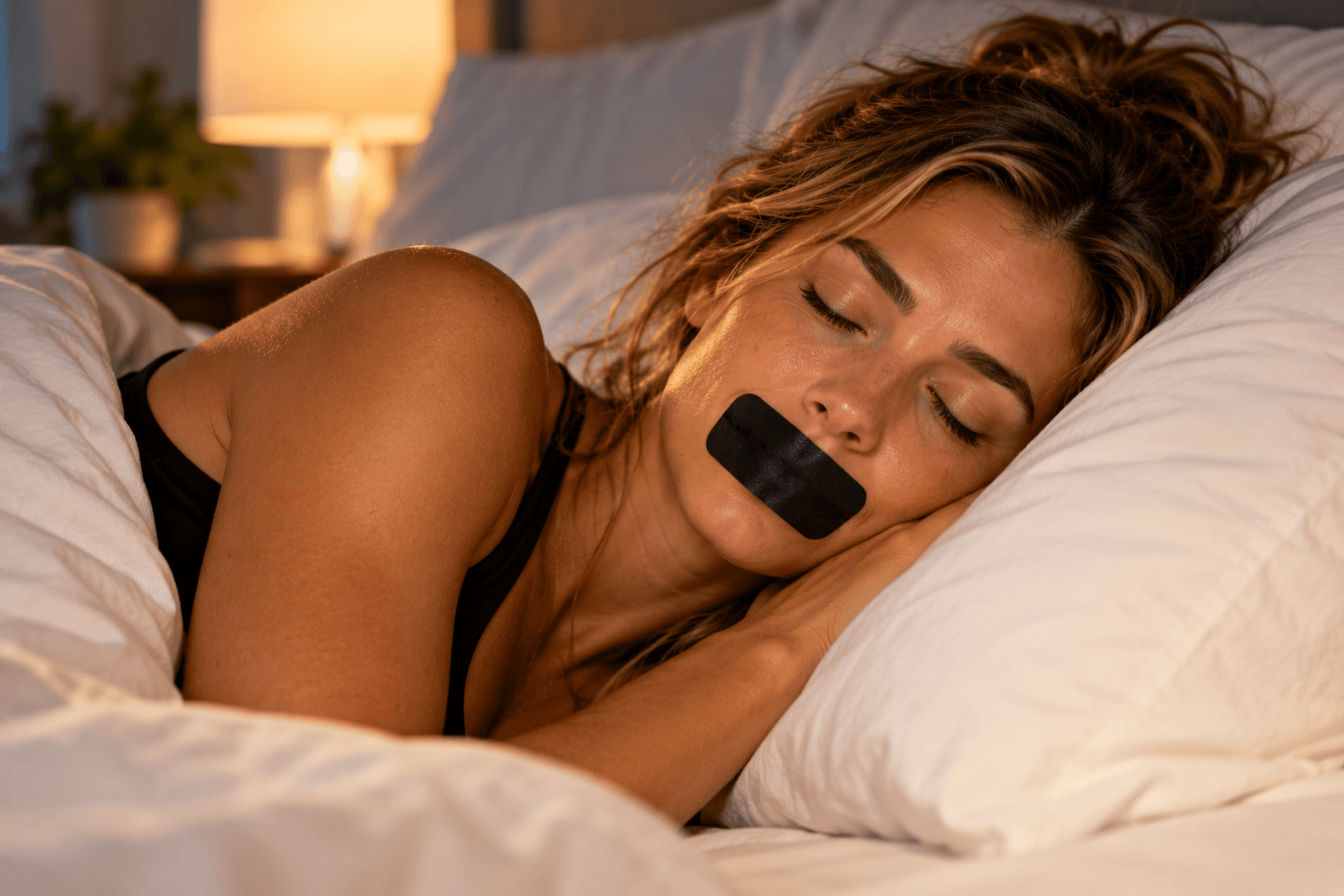
Mouth tape fits in once your nose is clear, because morning stuffiness and mouth breathing often go together. When the nose tightens up overnight, the mouth tends to fall open, and you wake with a dry mouth as well as a blocked nose.
Once your nose is clear, mouth tape is a gentle way to keep your lips closed so you stay a nose breather through the night. You can pair it with a nasal strip on the same night. How to start mouth taping walks through the first week.
The nose has to come first. A 2025 systematic review in PLOS One found the mouth taping research is still small, with 10 studies and 213 patients, and it listed asphyxiation as a potential risk when the nose is blocked. So skip the tape on nights when you're congested, and take the two-minute nose test before you start.
When should you see a doctor?
Talk to a doctor if you wake up congested most mornings, if it lasts for weeks, or if one side is always blocked. Cleveland Clinic notes that a doctor can check for reflux, polyps or a deviated septum, and prescribe treatment if needed. See a doctor too if you snore loudly, gasp or stop breathing in your sleep.
Check this first. Skip mouth tape and see a doctor if you snore loudly, wake up gasping, have been told you stop breathing in your sleep, or can't breathe comfortably through your nose. More on safety
If you want to try nasal strips, our pick is TitanAir Nasal Strips.
Read next
Common questions
Why is my nose stuffy every morning but fine during the day?
Lying flat makes the nose narrower and lets mucus pool instead of draining, and allergy symptoms tend to peak overnight. Once you're upright and moving, gravity helps the nose clear, so the stuffiness often fades within a short while.
Why is only one side of my nose blocked when I wake up?
Often it's the side you slept on. Cleveland Clinic says it's common to be stuffy in the nostril facing down on the pillow. Your nose also swaps which side is more congested every four to six hours as part of the normal nasal cycle.
Can dust mites cause a stuffy nose in the morning?
They can if you're allergic to them. Dust, pet dander and mold in the home are common triggers for nighttime congestion, and you spend hours with your face close to bedding where dust collects.
Can a nasal spray make morning stuffiness worse?
Decongestant sprays can. Overusing them can lead to rebound congestion, where the nose gets more blocked as the spray wears off. Use them only as directed and for a short time.
Do nasal strips help with a stuffy nose in the morning?
They can make the nose easier to breathe through overnight. In a 2018 placebo-controlled trial of people with chronic nighttime congestion, nasal strips improved some measures of congestion and sleep, including symptoms on waking.
Can nasal strips cause bleeding or sore skin?
They can irritate the skin they stick to. One major strip maker lists redness, irritation, pain, peeling or bleeding at the application site as possible reactions, along with rash, itching or swelling, and says to stop using the strips if any of these happen. It also says to remove strips gently while washing with warm water and not to use them over sores, sunburned or irritated skin.
When should I see a doctor about morning congestion?
If it happens most mornings, lasts for weeks, is always on one side, or comes with loud snoring or gasping in your sleep. A doctor can check for causes like allergies, reflux, nasal polyps or a deviated septum.
Sources
- Why Does My Nose Get Stuffy at Night?
- Why Do I Sometimes Get Congested in One Nostril?
- The Recumbent Position Affects Nasal Resistance: A Systematic Review and Meta-Analysis
- The Circadian Clock Drives Mast Cell Functions in Allergic Reactions
- Findings from a 1000-patient internet-based survey assessing the impact of morning symptoms on individuals with allergic rhinitis
- Treatment for a Blocked Nose at Night
- Effects of nasal dilator strips on subjective measures of sleep in subjects with chronic nocturnal nasal congestion: a randomized, placebo-controlled trial
- Breathe Right FAQs
- Breaking social media fads and uncovering the safety and efficacy of mouth taping in patients with mouth breathing, sleep disordered breathing, or obstructive sleep apnea: A systematic review
About this article
- Research
- 9 published sources, listed above.
- Evidence
- Moderate. How we rate it
- Last checked
- October 10, 2026
- Funding
- Paid partner of Titan Recovery. Their ads are labeled.
- Found an error?
- Tell us. We log fixes on the corrections page.
* This content is for informational and educational purposes only and is not medical advice. It is not intended to diagnose, treat, cure or prevent any disease or health condition. Talk to a qualified healthcare provider about your health.