In short
- Mouth tape and nasal strips are small, drug-free and easy to pack, which makes them handy for sleeping away from home.
- Airline cabin air is dry, recirculated and cool, and Sleep Foundation suggests nasal strips if congestion makes you snore on a flight.
- Sleeping upright in a plane seat may cut snoring compared with lying flat, so on planes the strip is often the more useful of the two.
- Hotels bring the first-night effect, where one side of the brain stays more alert in a new place. Using your usual tape and strips keeps one part of bedtime familiar.
- The usual safety rules travel with you: skip the tape if your nose is blocked, and see a doctor if you snore loudly and gasp in your sleep.
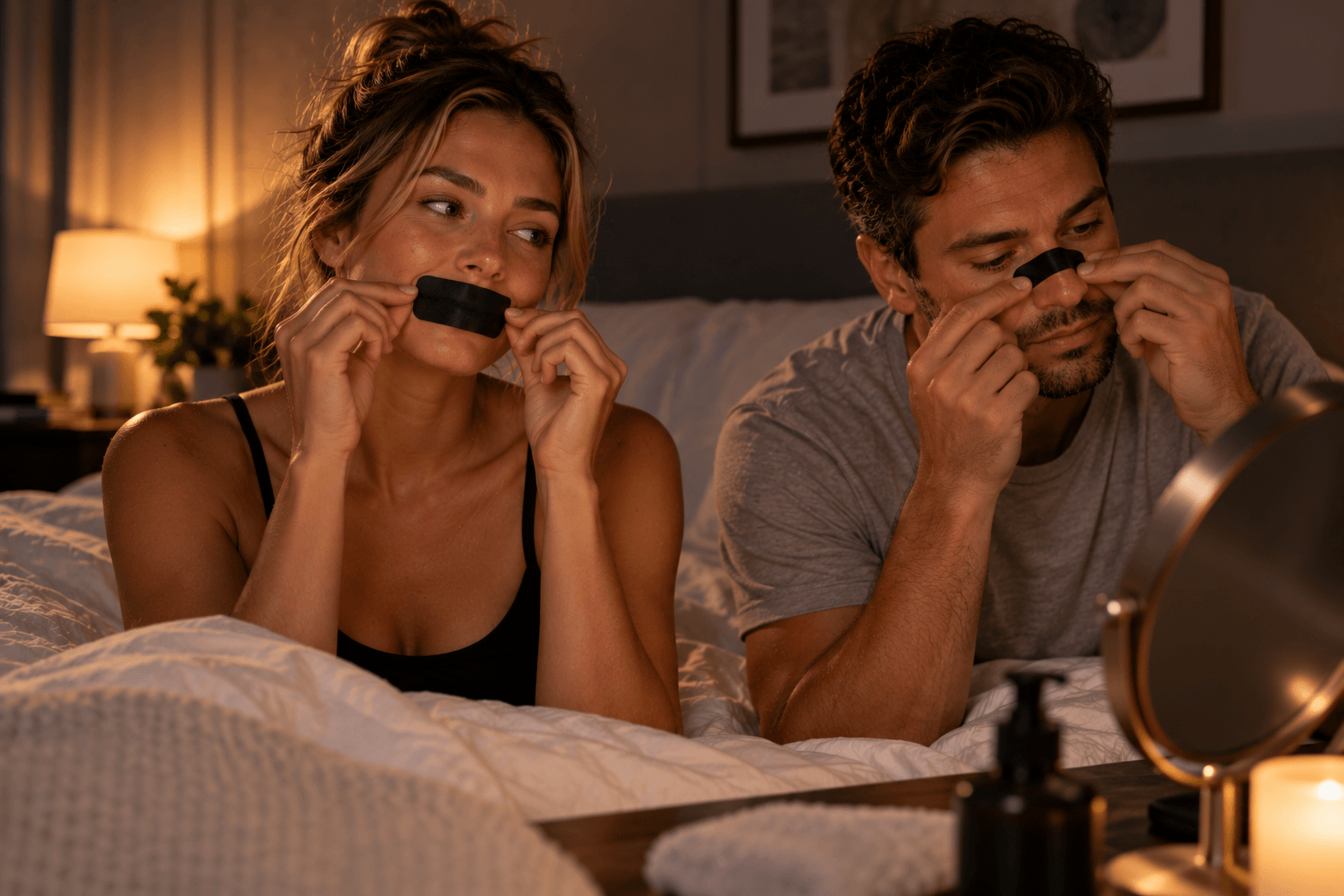
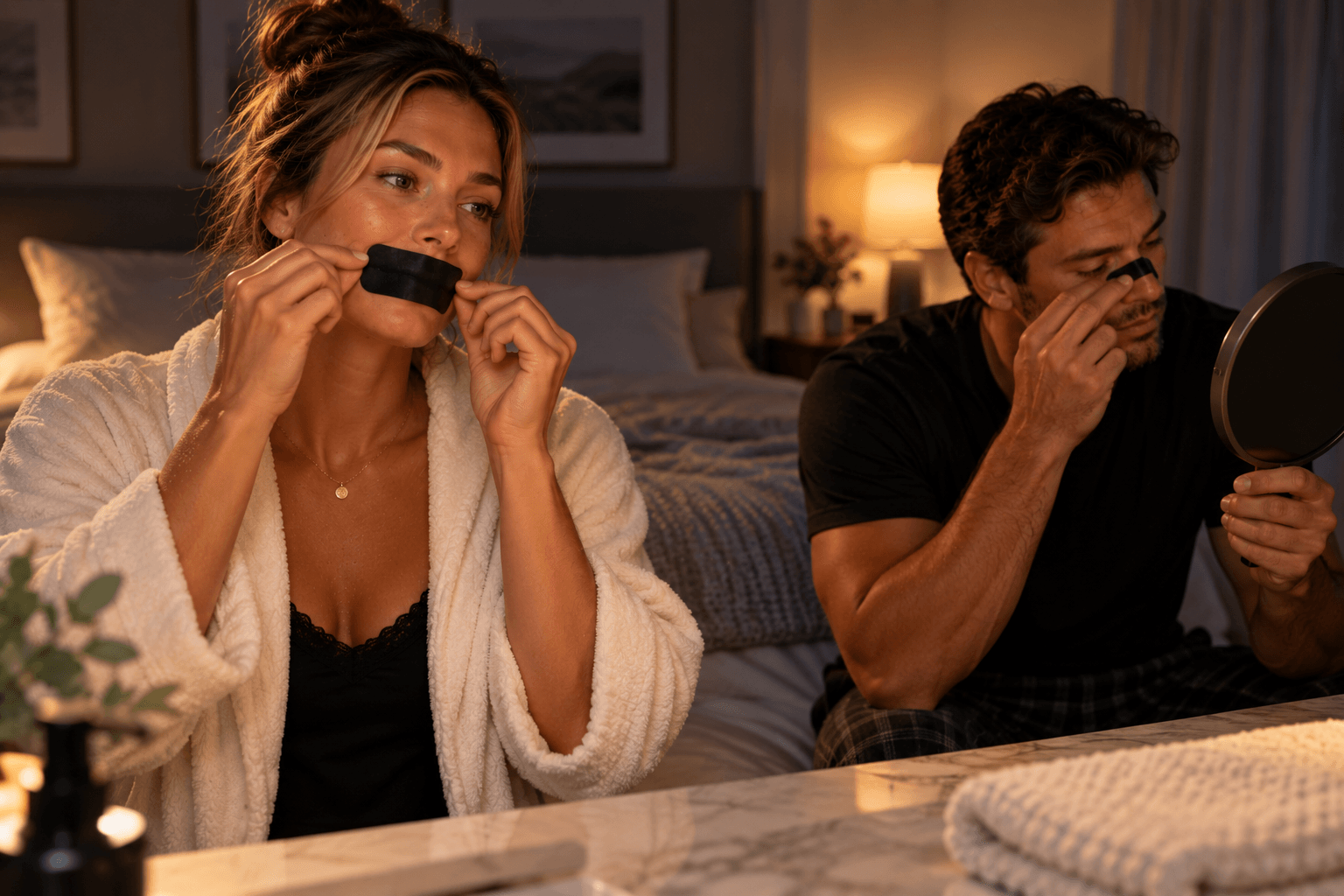
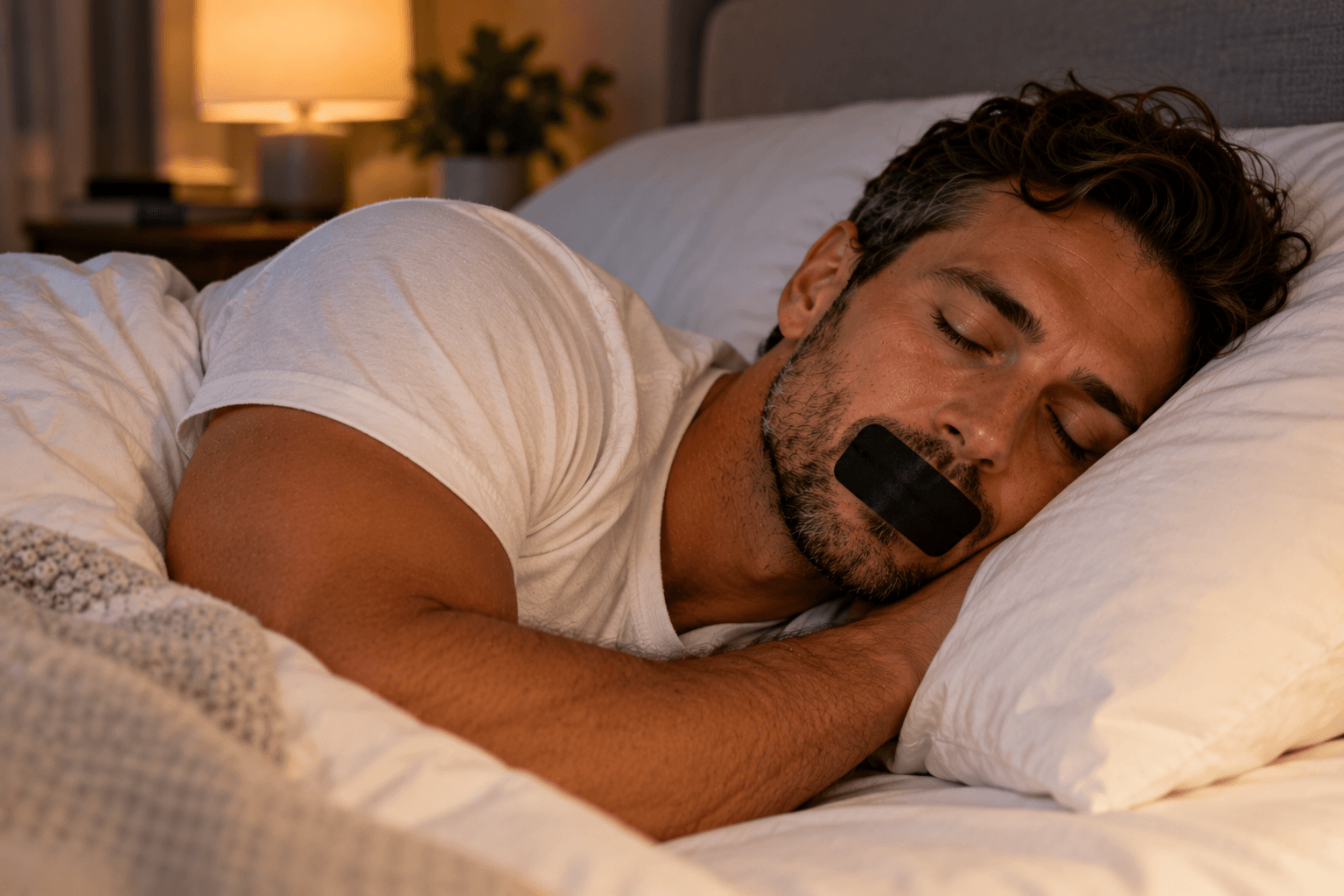
Mouth tape and nasal strips are two of the easiest sleep aids to travel with. They weigh almost nothing and need no power or water. A strip helps when dry cabin air or a stuffy room makes your nose feel tight, and tape helps if your mouth tends to fall open once you're asleep.
Why is it harder to sleep on planes and in hotels?
On a plane, almost everything works against you. Sleep Foundation points to the upright seat, along with noise, light, turbulence and cabin air. A 2020 review in Nutrients describes the cabin as dry, recirculated and cool air kept at a lower pressure than at sea level.
Hotels have a quieter problem. Most people sleep worse on the first night somewhere new, and researchers call this the first-night effect. A 2016 study in Current Biology found that on a first night in an unfamiliar place, one side of the brain sleeps less deeply and stays more alert to unusual sounds, as if keeping watch. The more uneven the sleep depth between the two sides, the longer people took to fall asleep. None of this was seen in later sleep sessions.
What does the research say about tape and strips for travel?
Research: limited (what this means)No study has tested mouth tape or nasal strips on planes or in hotels, so the case for travel rests on what they do at home.
For mouth tape, a small 2022 study of mouth breathers with mild sleep apnea found snoring roughly halved after a week of taping (the research).
For strips, the NHS lists nasal strips and dilators among the treatments for snoring caused by blocked or narrow airways in the nose. Sleep Foundation's advice on sleeping on a plane says that if nasal congestion or sinus inflammation is making you snore, nasal strips or decongestants might help while you sleep on the flight. Our guide to how nasal strips work covers the research behind them.
Should you use mouth tape on a plane?
Whether to use mouth tape on a plane depends on why you use it. Sleep Foundation notes that elevating the head can ease snoring, and that sleeping upright in a plane seat might reduce snoring compared with lying flat. So if snoring is your only reason for taping, a flight may be the night you need it least.
If your mouth drops open and you wake up parched, tape still has a job to do, especially with dry cabin air. A few things make it work better in the air:
- Only tape on a flight if you've slept with it comfortably at home.
- Check your nose before you put it on. If cabin air or a cold leaves it blocked, skip the tape and use a strip.
- Fold over one corner, as Sleep Foundation suggests, so you can peel it off in a second when you're woken for a meal or a seat belt sign.
- Use a small vertical strip over the middle of your lips, so the corners of your mouth stay free.
Sleep Foundation also suggests skipping alcohol before trying to sleep on a plane, since it can disrupt sleep and affect your breathing at night. On nights you've been drinking, leave the tape off and use a strip alone. Mouth tape and alcohol explains why.
Water helps too. Sleep Foundation says breathing the dry, recirculated cabin air can leave you dehydrated, and suggests drinking plenty of water on the plane, though not so much that you're up for the bathroom all night. If you wake up with a dry mouth after a flight, the cabin air may be part of the reason.
For many travelers, a nasal strip on its own is the simplest choice for a flight. It's discreet, has no drug in it, and the main thing it does is make breathing through your nose easier.
Timing matters as well. Sleep Foundation suggests avoiding very early or late flights that cut into your normal sleeping hours, when you can, so you don't need to sleep on the plane at all. When you can't avoid it, having your strip and tape in a pocket rather than your checked bag means you can use them the moment you're ready to sleep.
How long can you wear a nasal strip on a long-haul flight?
Breathe Right says its strips may be used daily but not for more than 12 hours a day, and that each strip is single use, so don't reapply one after you take it off. On a very long flight, put a strip on when you're ready to sleep rather than at takeoff.
Breathe Right says the adhesive won't stick properly to wet, oily or moisturized skin, so wash and dry your nose first, then place the strip right above where your nose flares out and rub it gently into place. Our guides to how to apply nasal strips and how long you can wear a nasal strip go into more detail.
How to use them in a hotel room
The hotel is where both shine. You're lying flat, so the snoring case for tape applies just as it does at home, and a strip helps if the room's air leaves your nose feeling tight.
A few habits help:
- Bring the tape and strips you already use. A trip isn't the time to test a new brand, and Sleep Foundation recommends trying tape during the day first to make sure you can breathe easily through your nose.
- Pack enough for every night plus a few spares, since each strip and piece of tape is used once.
- Put the strip on first, take a few slow breaths through your nose with your lips closed, then add the tape.
- Keep the rest of your routine as close to home as you can. Given the first-night effect, anything familiar at bedtime is worth keeping.
If you sleep next to someone on the trip, ask them in the morning whether your snoring sounded different. That's useful feedback you may not get at home.
When should you leave the tape at home?
The same rules apply on the road as in your own bed. Cleveland Clinic says not to use mouth tape with nasal congestion, chronic allergies or a sinus infection, among other conditions. On those nights a strip alone is the better option. Our article on mouth tape with a cold covers what to do.
Check this first. Skip mouth tape and see a doctor if you snore loudly, wake up gasping, have been told you stop breathing in your sleep, or can't breathe comfortably through your nose. More on safety
If you want to try mouth tape and nasal strips together, our pick is the Titan Sleep System, which pairs TitanAir Nasal Strips with Titan Mouth Tape.
Loud snoring with choking or gasping is a reason to see a doctor whether you're home or away. The NHS says to see a GP if your breathing stops and starts while you sleep, or if you make gasping or choking noises, as these can be signs of sleep apnea. Mouth tape doesn't treat sleep apnea.
Read next
Common questions
Can I wear mouth tape on a plane?
You can if your nose is clear and you've used tape comfortably at home. Fold a corner so you can peel it off quickly, and skip it if cabin air or a cold leaves your nose blocked. Many travelers find a nasal strip alone is enough on a flight.
Do nasal strips help on long flights?
Breathe Right says its strips gently lift the sides of the nose to open it, which can make breathing easier when you feel stuffy. Sleep Foundation suggests nasal strips or decongestants if congestion is making you snore on a flight. Breathe Right says not to wear a strip for more than 12 hours a day.
Why do I sleep badly on the first night in a hotel?
Researchers call it the first-night effect. A 2016 study found that one side of the brain sleeps less deeply and stays more alert to unfamiliar sounds on the first night somewhere new. The effect wasn't seen in later sleep sessions.
Should I try a new brand of mouth tape on a trip?
It's better to try anything new at home first. Sleep Foundation recommends testing mouth tape during the day to check you can breathe easily through your nose, and that's easier in your own space than on the road.
Can I use mouth tape if I'm drinking on vacation?
Sleep Foundation advises skipping alcohol before sleeping on a plane because it can disrupt sleep and affect night-time breathing. On nights you've been drinking, a nasal strip alone is the gentler choice. Our article on mouth tape and alcohol covers this.
Sources
- How to sleep on a plane
- Up in the air: evidence of dehydration risk and long-haul flight on athletic performance
- Night watch in one brain hemisphere during sleep associated with the first-night effect in humans
- Breathe Right FAQs
- Snoring
- The impact of mouth-taping in mouth-breathers with mild obstructive sleep apnea: a preliminary study
- Mouth taping for sleep: does it work?
- Is mouth tape safe to use while sleeping?
About this article
- Research
- 8 published sources, listed above.
- Evidence
- Limited. How we rate it
- Last checked
- October 4, 2026
- Funding
- Paid partner of Titan Recovery. Their ads are labeled.
- Found an error?
- Tell us. We log fixes on the corrections page.
* This content is for informational and educational purposes only and is not medical advice. It is not intended to diagnose, treat, cure or prevent any disease or health condition. Talk to a qualified healthcare provider about your health.