In short
- You can use mouth tape for a nap if you can breathe comfortably through your nose. The same safety rules apply as at night.
- No study has looked at mouth tape during naps. The research so far covers overnight use in people who sleep with their mouths open.
- A short nap is a practical step between daytime practice and a full night, since Sleep Foundation recommends testing the tape during the day first.
- Sleep Foundation suggests naps of about 20 minutes and no longer than 30 for most adults, which also keeps a first taped sleep short.
- If you feel sleepy enough to need naps most days, that's worth raising with a doctor, as it can be a sign of a sleep disorder.
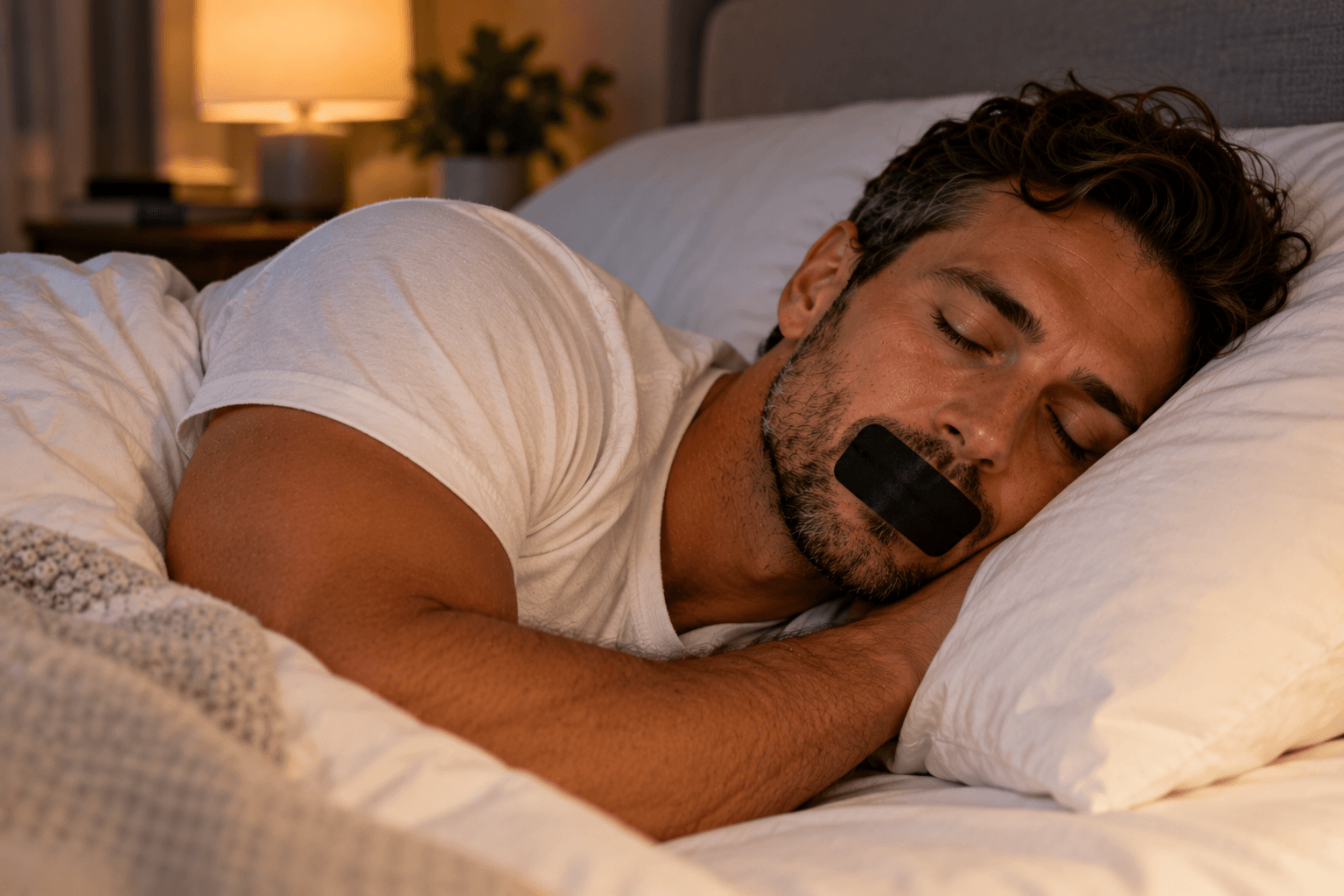
Yes, you can use mouth tape for a nap. If you can breathe comfortably through your nose, a strip of skin-safe tape works during a daytime snooze the same way it does at night, by keeping your lips together so you breathe through your nose. A short nap is also one of the easiest ways to get used to tape before you try a full night.
The same safety rules apply no matter what time it is. A blocked nose, signs of sleep apnea or a child in the bed all mean no tape.
Why would you tape your mouth for a nap?
People tape their mouths for naps for the same reasons they tape at night. Your mouth can fall open during any kind of sleep. Sleep Foundation explains that during sleep, muscle relaxation can cause the mouth to fall open, especially when someone is lying on their back. If you wake from naps with a dry mouth, or someone tells you that you snore on the couch, tape is a simple thing to try.
There's a second, very practical reason. Sleep Foundation recommends testing mouth tape during the day first to make sure you can breathe easily through your nose. Wearing tape while you read for 15 minutes is a good start, but it doesn't tell you how it feels to fall asleep with it on. A nap fills that gap. You get a short stretch of real sleep with tape, at a time of day when you can easily take it off and carry on if it doesn't suit you.
What does the research say about mouth tape and naps?
Research: limited (what this means)Nobody has studied mouth tape during naps specifically, so we can't point to nap data. The research we have looks at overnight use, and it's worth knowing what it found because the reasons tape helps don't depend on the clock.
In a 2022 study in Healthcare, 20 adults who slept with their mouths open and had mild sleep apnea wore a short strip of silicone tape over their lips each night for a week. Their median snoring index fell from 303.8 to 121.1 events an hour. The tape didn't need anything special, just a 4 cm piece placed from the groove under the nose down across both lips.
Comfort over time looks good too. In a 2009 trial in people with asthma, 50 participants taped their mouths at night with microporous tape for a median of 26 out of 28 nights, and 36 of them said it was very or fairly acceptable. That trial found no effect on asthma control, so taping isn't a fix for every breathing problem, but it shows plenty of people find the tape easy to live with.
The wider evidence is still thin. A 2025 systematic review in PLOS One found only 10 studies with 213 patients in total and called for more research. It also noted that many studies excluded anyone with nasal obstruction, which is why a clear nose is the first thing to check before any taped sleep, nap or not.
How do you use mouth tape for a nap?
- Check your nose first. Close your lips and breathe through your nose for a minute or two. If that feels easy, go ahead. If not, skip the tape today.
- Use a porous tape made for skin and put it on clean, dry lips. A short vertical strip over the middle of the lips is enough.
- Fold over one corner so it's easy to peel off, a tip from Sleep Foundation.
- Set an alarm. Sleep Foundation suggests that the best nap length for most adults is about 20 minutes and no longer than 30, so you get light sleep without waking groggy from deep sleep.
- When you wake, peel the tape off slowly and close to the skin. Our guide on how to take mouth tape off walks through it.
If your nose feels a bit tight, a nasal strip can make nasal breathing easier for a nap just as it does at night.
Check this first. Skip mouth tape and see a doctor if you snore loudly, wake up gasping, have been told you stop breathing in your sleep, or can't breathe comfortably through your nose. More on safety
If you want to try mouth tape, our pick is the Titan Bamboo Silk Mouth Tape.
When is the best time for a taped nap?
The tape doesn't change the usual nap advice. Sleep Foundation says experts typically recommend adults nap eight or more hours before bedtime, which for most people means before 3 p.m. Napping too late in the day may contribute to nighttime sleep problems.
A cool, quiet, dark room helps too. If you nap at work, Sleep Foundation suggests earplugs or an eye mask to cut down on disruptions. Sleep Foundation also warns against hitting snooze when the alarm goes off, since that risks slipping into deeper sleep. Naps longer than about 30 minutes can bring you into deep sleep, and waking from deep sleep often leaves you groggy. Keeping a taped nap short avoids that and keeps your first experiences with tape easy. Our napping tips cover timing in more detail.
Can you use mouth tape for a nap sitting up?
The same rules hold for a nap sitting up. What matters is whether your nose is clear and whether the tape is easy to remove, not whether you're in bed or in a chair. Check your nose each time, and keep the strip small so you can peel it off quickly if you need to. A small strip with a folded corner is easy to peel off wherever you are, which makes it a good fit for a nap away from home.
Who should skip mouth tape for naps?
Anyone who should skip mouth tape at night should skip it for naps too. Sleep Foundation lists people with sleep apnea who aren't using CPAP, anyone with a blocked nose from allergies, a deviated septum or a cold, people with asthma or COPD unless a doctor says otherwise, children unless under medical supervision, people with anxiety or panic disorders, and anyone at risk of vomiting during sleep. We don't recommend mouth tape for children.
Needing a lot of naps can itself be a clue. Sleep Foundation notes that excessive daytime sleepiness may point to a sleep disorder and should be checked by a professional. The American Academy of Sleep Medicine lists fatigue and daytime sleepiness among the warning signs of sleep apnea, alongside snoring and choking or gasping in sleep. Mouth tape doesn't treat sleep apnea, so if that pattern sounds familiar, see a doctor before taping. Our page on snoring vs. sleep apnea explains the signs.
Is a nap a good first step toward taping at night?
A nap is a good first step toward taping at night for many people. Going from a few minutes of daytime practice to eight hours with tape is a big jump. A couple of short taped naps let you learn how the tape feels as you drift off, how your nose behaves lying down and how easy it is to peel off when you wake. Once that feels routine, a full night is a smaller step. Our guide to how long it takes to get used to mouth tape covers the adjustment period.
Read next
- How to start mouth taping: your first week
- Mouth tape and side sleeping
- Is mouth taping safe for me?
Common questions
Is it safe to wear mouth tape during a nap?
For most adults who can breathe easily through their nose, a nap with tape follows the same rules as a night with tape. Skip it if your nose is blocked, if you've been told you stop breathing in your sleep, or if you have a condition that Sleep Foundation lists as a reason to avoid mouth taping.
Does mouth tape help with snoring during naps?
No study has measured this. Overnight studies in mouth breathers found less snoring with tape, and naps involve the same kind of sleep, but nap results haven't been tested directly.
Is a nap a good way to get used to mouth tape?
It can be. Sleep Foundation recommends testing mouth tape during the day first to make sure you can breathe easily through your nose. A 20 minute nap lets you try sleeping with tape for a short stretch before committing to a whole night.
Can I wear mouth tape while napping sitting up, like on a plane?
The same checks apply wherever you nap. Make sure your nose is clear and the tape is easy to peel off. Check your nose before each use, since how clear it feels can change from day to day.
How long should a nap with mouth tape be?
Sleep Foundation suggests about 20 minutes and no longer than 30 minutes for most adults, so you get light sleep without waking groggy from deep sleep. The tape doesn't change that advice.
Can kids wear mouth tape for naps?
No. Sleep Foundation says children shouldn't use mouth tape unless under medical supervision, and that mouth taping in children has not been studied. We don't recommend mouth tape for children.
Sources
- Mouth taping for sleep: does it work?
- Napping: benefits and tips
- The impact of mouth-taping in mouth-breathers with mild obstructive sleep apnea: a preliminary study
- Effect of mouth taping at night on asthma control: a randomised single-blind crossover study
- Breaking social media fads and uncovering the safety and efficacy of mouth taping in patients with mouth breathing, sleep disordered breathing, or obstructive sleep apnea: A systematic review
- Is it more than a snore? Recognizing sleep apnea warning signs
About this article
- Research
- 6 published sources, listed above.
- Evidence
- Limited. How we rate it
- Last checked
- October 4, 2026
- Funding
- Paid partner of Titan Recovery. Their ads are labeled.
- Found an error?
- Tell us. We log fixes on the corrections page.
* This content is for informational and educational purposes only and is not medical advice. It is not intended to diagnose, treat, cure or prevent any disease or health condition. Talk to a qualified healthcare provider about your health.